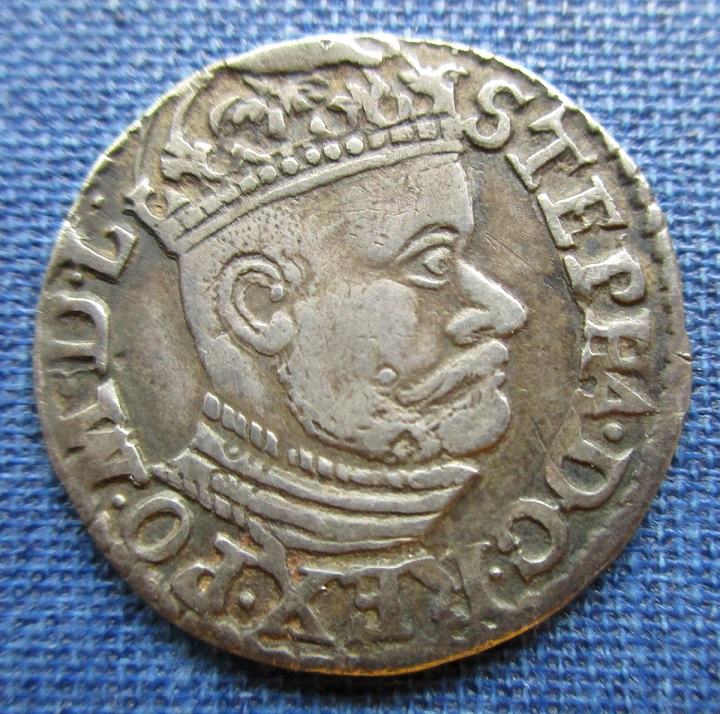
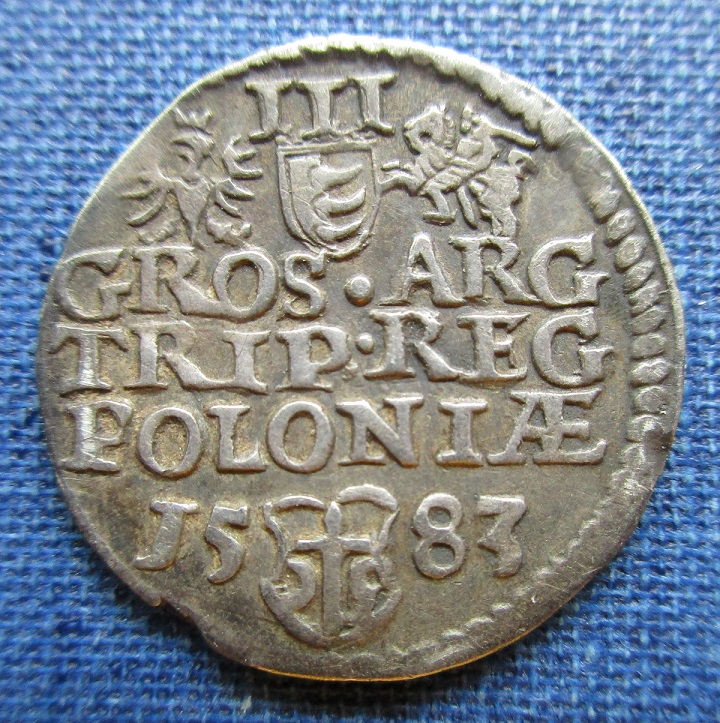
@tdziemia and @spence, thanks!
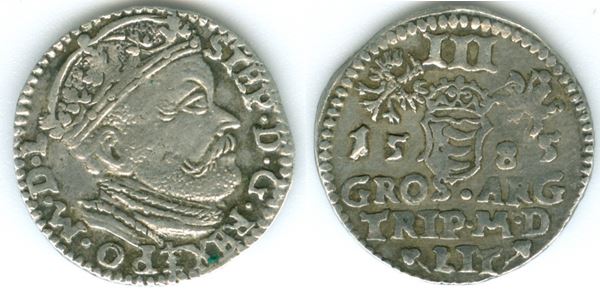
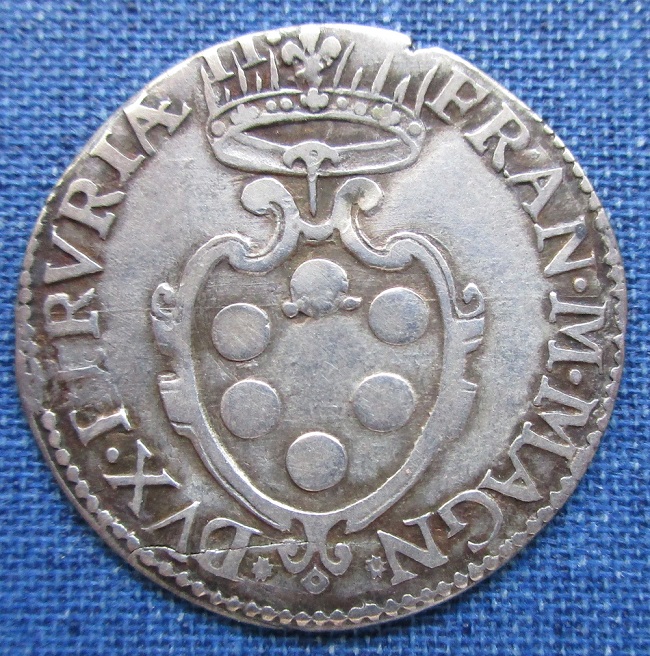
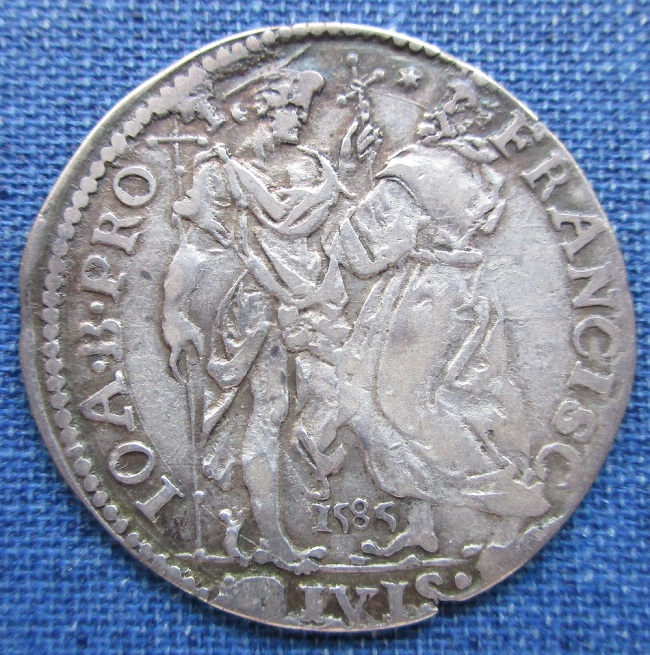
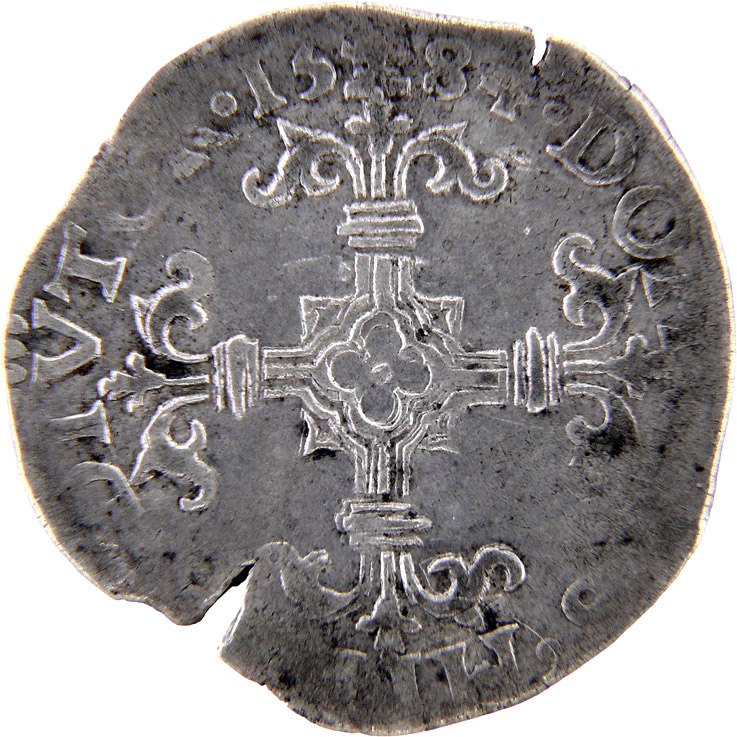
wonderful 1585 giulio of the Grand Duchy of Tuscany and splendid 1 franc, Henry III, 1584 !
On the 10th of July 1584,
William of Orange was assassinated in his headquarters in Delft by
Balthasar Gerardts a man hired by
king Philip II of Spain to murder the main leader of the Dutch Revolt against the Spanish Habsburgs. Below two jetons and one silver daalder that connects to this important moment in the story of the Dutch revolt
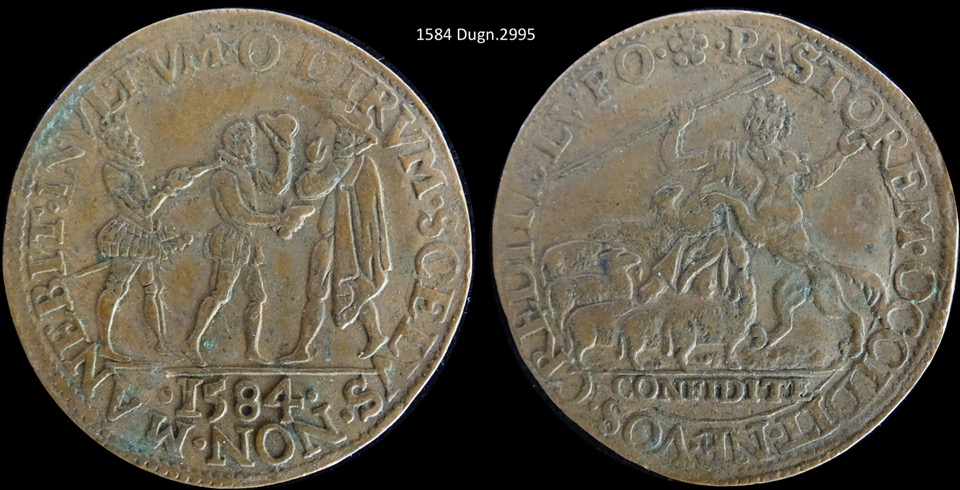
1584 Jeton Dordrecht 'assassination of William of Orange'
Dugniolle 2995, van Loon I 344, Tas208
Obverse: Balthasar Gerards salutes politely and then shoots William of Orange from small distance; behind the scene Philip II gives "instructions" (with a pointed gun an hand on his sword)
O DIRVM SCELVS NON MANEBIT INVLTVM / 1584
Reverse:Shepard between his sheep attacked by wolf
PATORVM OCCIDIT NE VOS CREDITE LVPO / CONFIDITE
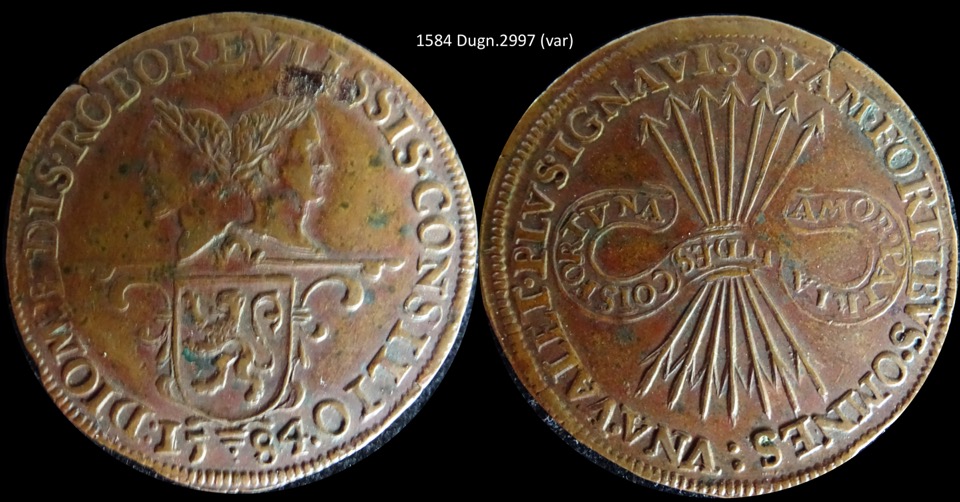
1584 Jeton Dordrecht 'praise of the qualities of William of Orange'
Dugniolle 2997 (var); van Loon I347
Obverse: Portraits of William the Silent and Ulysses
DIOMEDIS ROBORE VLISSIS CONSILIO 1584
Reverse:
Seven arrows (the seven provinces) united into a strong bundle (one country)
on a strip AMOR PATRIA FIDES COIS FORTVNA
Legend VNA VALET PLVS IGNAVIS QVAM FORTIBVS OMNES (unity is worth more than all individual forces)
Prinsendaalder (Gehelmde Rijksdaalder) Dordrecht mint, province of Holland. This is the first year that these daalders bearing the portrait of William of Orange were minted. They would be produced posthumously for the next two decades in different dutch provinces.
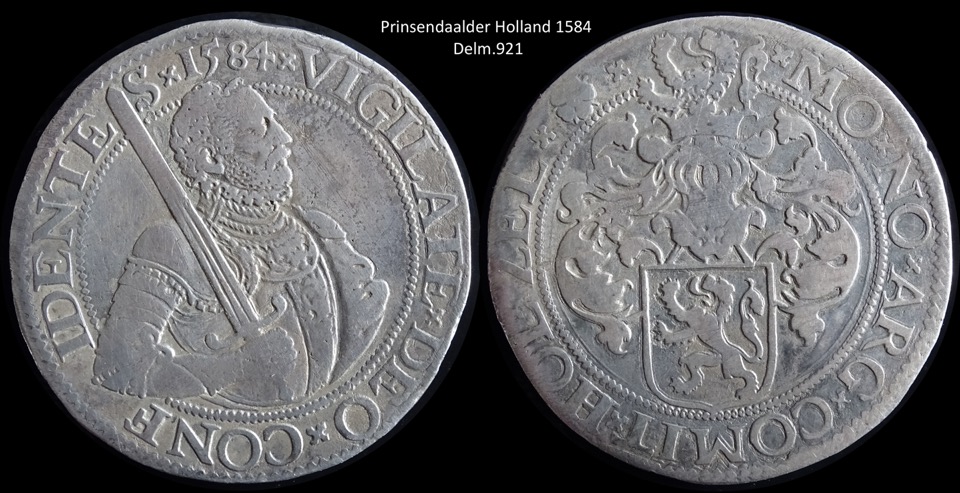
Willem van Oranje is called the
Vader des Vaderlands (father of the Netherlands); indeed he is seen even today ad the founder of the country we know today. The Dutch national anthem (called the
Wilhelmus) was written by Marnix van Sint Aldegonde (the major of Antwerp see previous post) in his honor.
His departure created a vacuum that added to the chaos of who and how the Netherlands were ruled. Outstanding wiki:
https://en.wikipedia.org/wiki/William_the_SilentThe chaos in the Low Countries was not diminished by the death in 1584 of another ruler,
François d'Alençon, the duke of Anjou, who we will meet in this thread tomorrow. In this chaos the star of
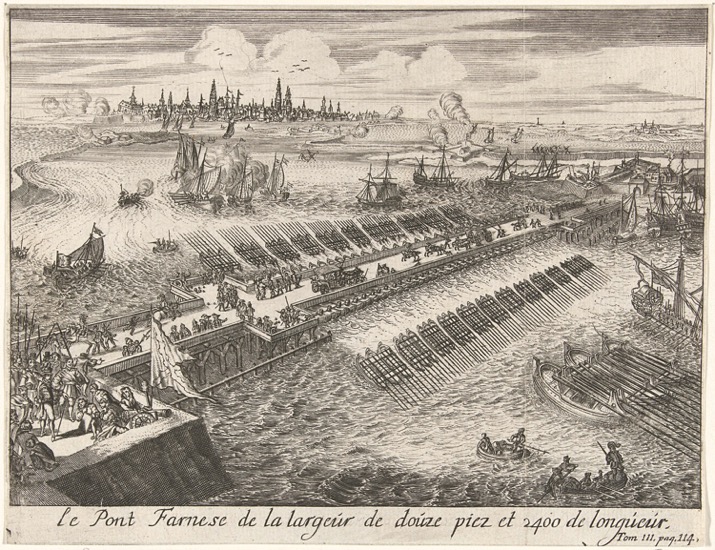
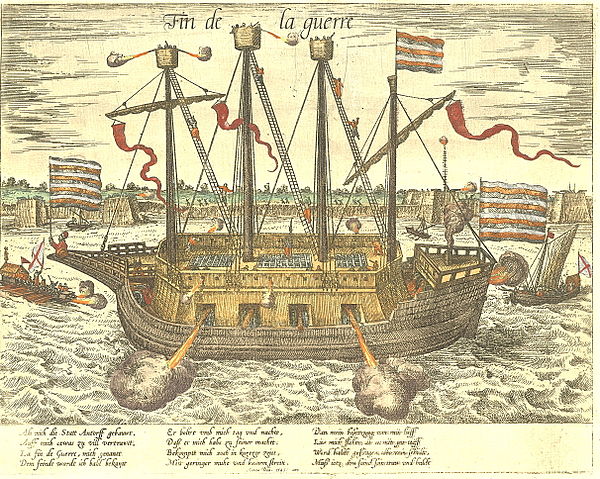
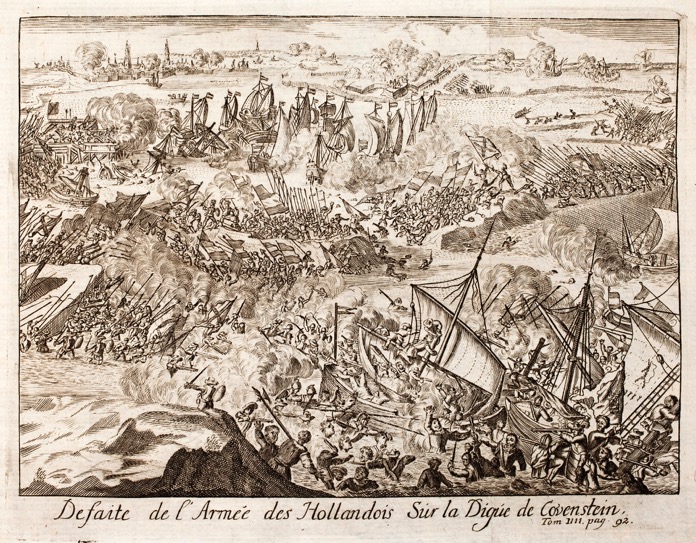
Alexander Farnese, the duke of Parma was rapidly rising, the next year (see 1585) he would take the metropole of Antwerp by a brilliant act of closing the Scheldt.






 First Page
 Previous Page



 Posted 08/31/2019 01:35 am














 I forget if we had a 1624 poltorak/dreipolker posted, but that would have shown the same type of coincidence.