| Author |
 Replies: 5,294 / Views: 290,845 Replies: 5,294 / Views: 290,845 |
|
|
|
Pillar of the Community
Belgium
1185 Posts |
1587 first year of minting of the Leicesterrijkdaalders (taler sized silver pieces bearing the portrait of Robert Dudley, earl of Leicester). These hand hammered pieces were made with great care and are an early example of the idea to coordinated one type of coin in all the provindes. The Habsburg period had achieved this earlier but since 1568 and the revolt there was little unity. Type I Leicesterrijkdaalders are characterized by the coat-of-arms of six of the United Provinces Type II (minted after 1590, I posted 2 for the year 1595) have one extra coat-of-arms, that of Overijssel Obverse: portrait of Leicester holding 6 arrows, CONCORDIA RES PARVAE CRESCVNT (unity makes strength) then code for the province (e.g. GEL for Ghelders) Reverse: date above the coat-of-arms of six of the United Provinces (two rows of three) . MO ORD PROVIN FOED BELG AD LEG IMP example 1: mint of Harderwijk, province of Gelderland   example 2: mint of Dordrecht, province of Holland 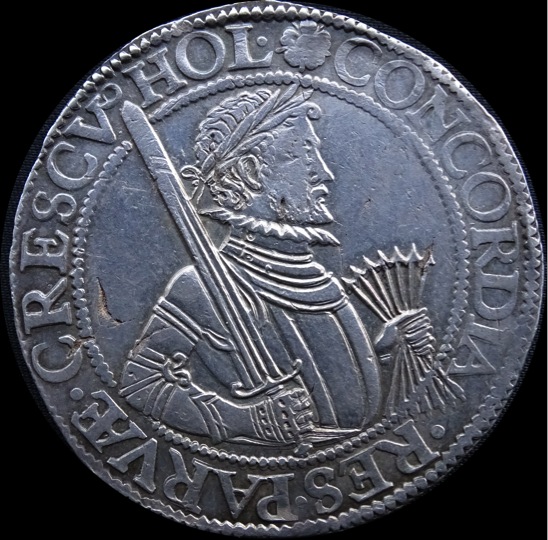 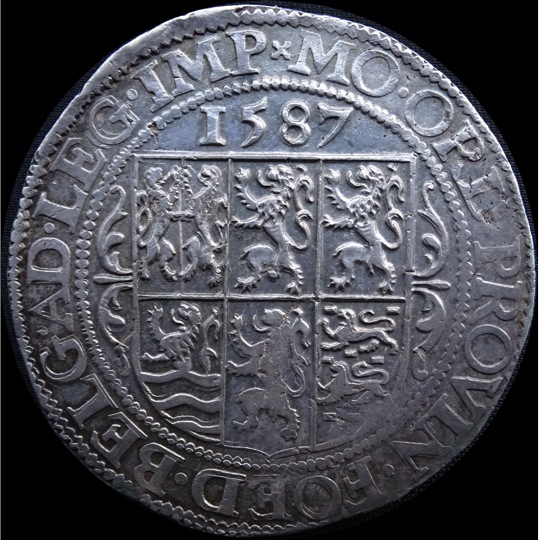 |
|
Pillar of the Community
 United States
8056 Posts |
Quote:
These hand hammered pieces were made with great care and are an early example of the idea to coordinated one type of coin in all the provindes. First, two wonderful coins! It is interesting to compare this "coordination" among different nation/states in Europe at this time. In @t360's French coins of the Louis (XIII/XIV) we saw great coordination/standardization of design acroiss the many mints/regions, and I think we will even see this in the reign of Henry III? (I will let others with more experience in France comment). In the Polish-Lithuania commonwealth, on the other hand, we still saw differences in the design of the Sigismund large silver in the 1610s and 1620s which were posted here, with the Gdansk mint using the Gdansk city arms reverse, but the coins from Bydgoszcz mint using the Poland-Lithuania national arms. In the next (earlier) reign of Stefan Bathory we will again see Gdansk, Vilnius and Riga with their own reverse designs, even if there is some attempt to make the obverse the same. Edited by tdziemia
08/29/2019 5:37 pm
|
|
Moderator
 United States
34562 Posts |
Here is a Pfennig from the German Free City of Regensberg dated AD 1587: 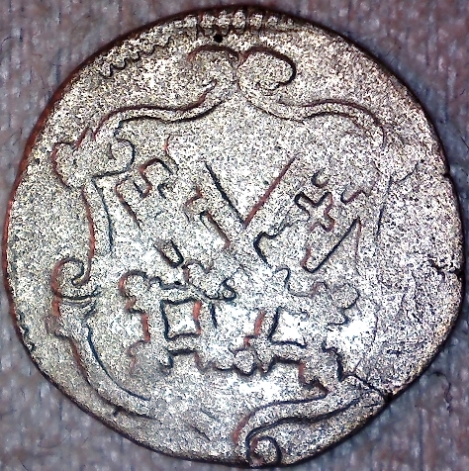 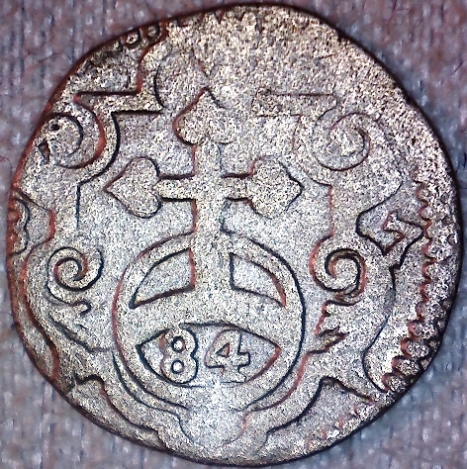 "If you climb a good tree, you get a push."
-----Ghanaian proverb
"The danger we all now face is distinguishing between what is authentic and what is performed."
-----King Adz
Edited by Spence
08/29/2019 6:32 pm
|
|
Pillar of the Community
United States
9395 Posts |
1586 -- Kingdom of Hungary, 1 denar:  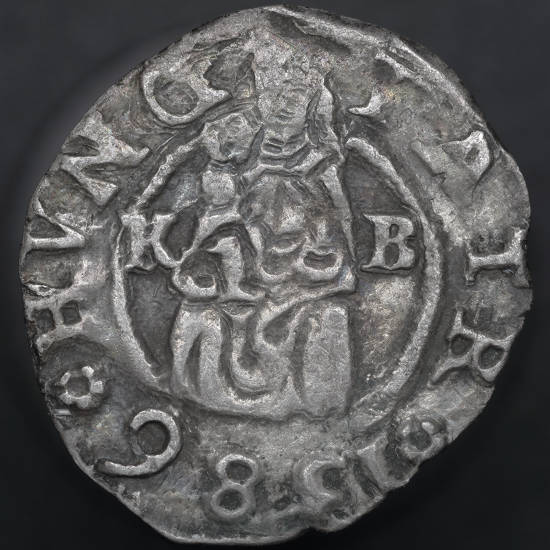 |
|
Pillar of the Community
Belgium
2895 Posts |
16th century Duchy of Brabant Liard 1586 Ruler: Philips II (1555-1598) Mint: Maastricht (1580-1594) star Literature: Van Gelder / Hoc 232-2 DOMINUS MIHI ADIUTOR the lord is my helper 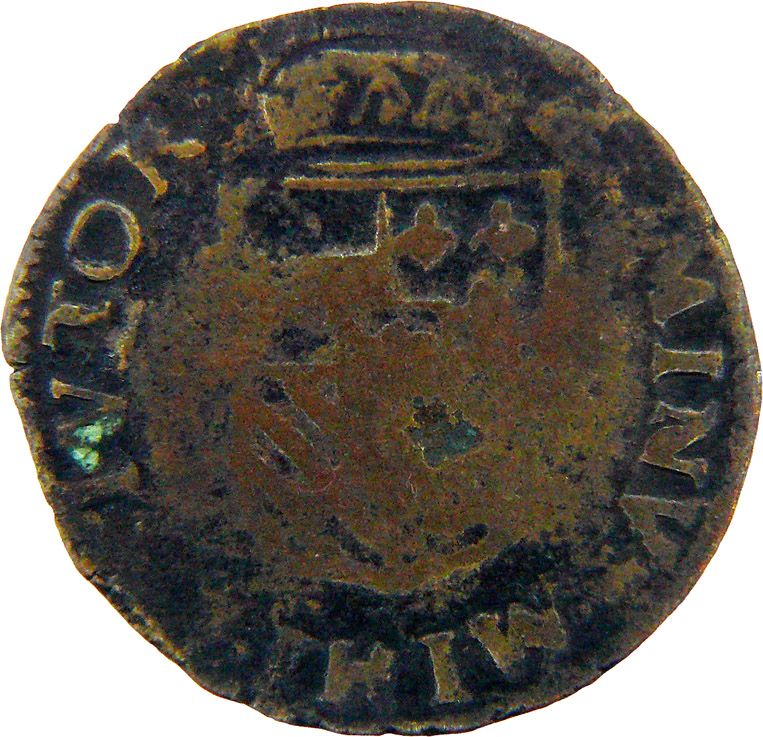 PHS.D.G.HISP.Z.REX.DUX.B. (the Z is a 'notae tironianae', Tironian character) Plilip(p)us dei gratia Hispaniarum etc rex dux brabantiæ Philip, by the grace of god, king of Spain etcetera, duke of Brabant 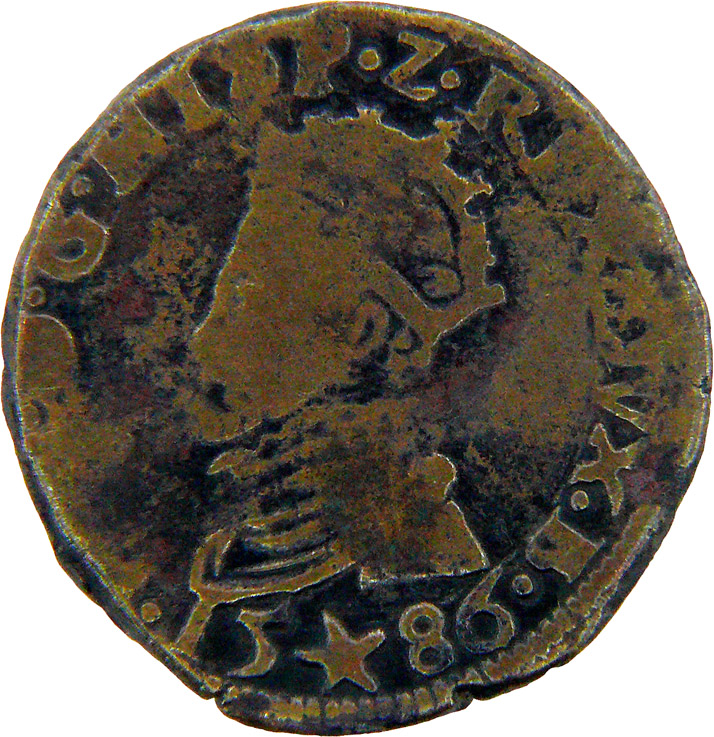 DOMINUS MIHI ADIUTOR the lord is my helper 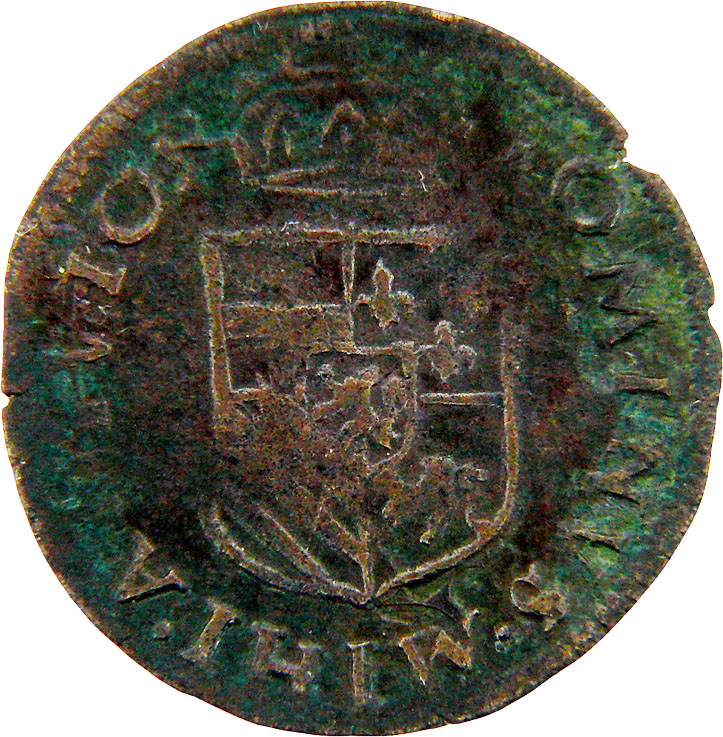 PHS.D.G.HISP.REX.DUX.B. Plilip(p)us dei gratia Hispaniarum rex dux brabantiæ Philip, by the grace of god, king of Spain, duke of Brabant 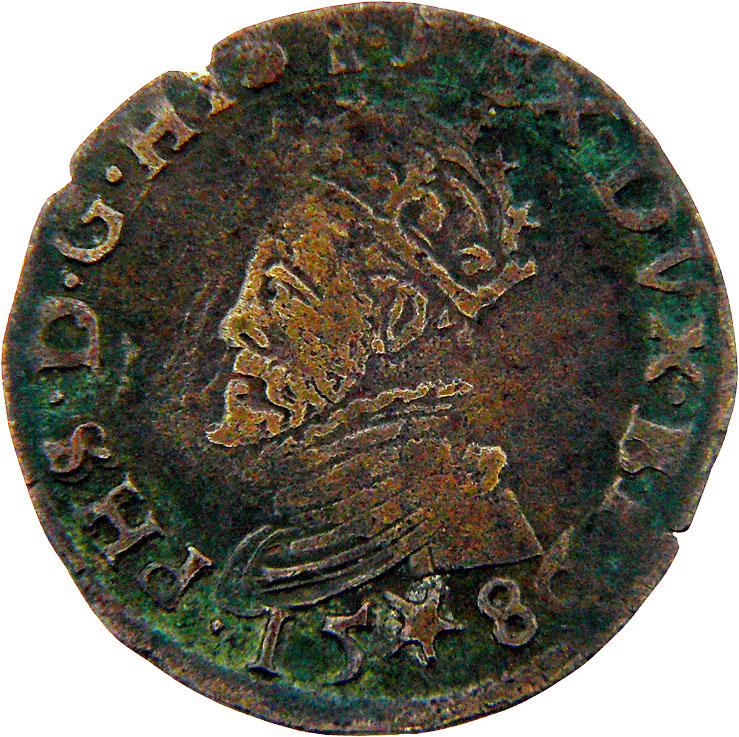 Edited by Petrus
08/30/2019 06:07 am
|
|
Pillar of the Community
United States
8056 Posts |
Nice detail on that second liard. I am looking for a 1587, and have noticed that the date is often strong on this type, but the portrait usually quite worn. I will stay in Poland for the next 9 years. Stefan Batory reigned as monarch of the Poland-Lithuanian commonwealth (including parts of the Duchy of Livonia) from 1576 to his death in 1586. He was a Hungarian prince who married Anna Jagiellon, sister of the last Jagiello king of Poland-Lithuania, and was elected king after Henry III of France forfeited the crown to ascend the throne of France. 1586 trojak, Riga mint. 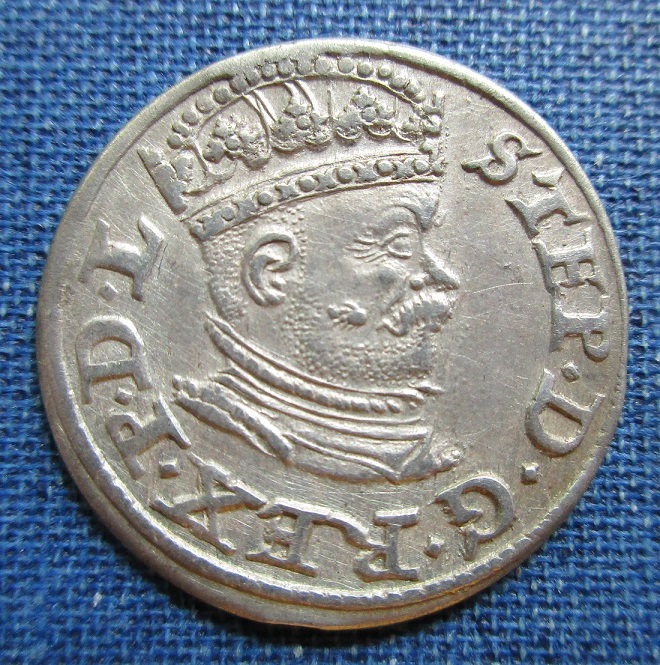 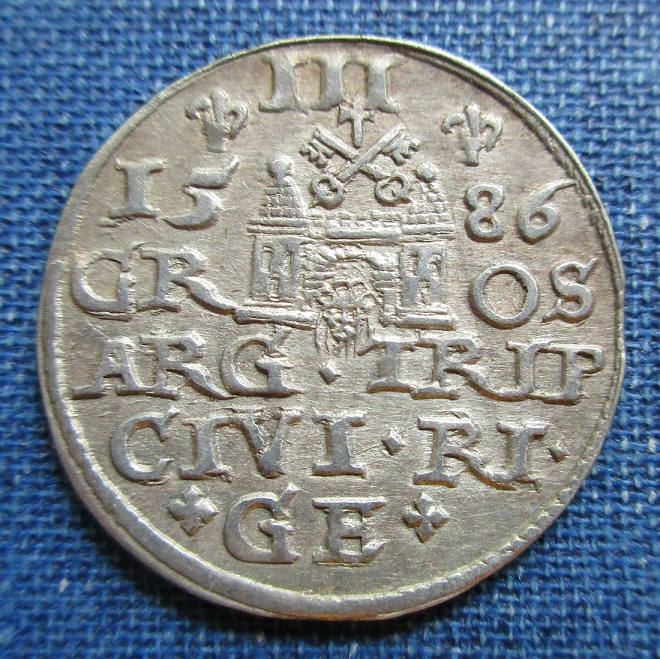 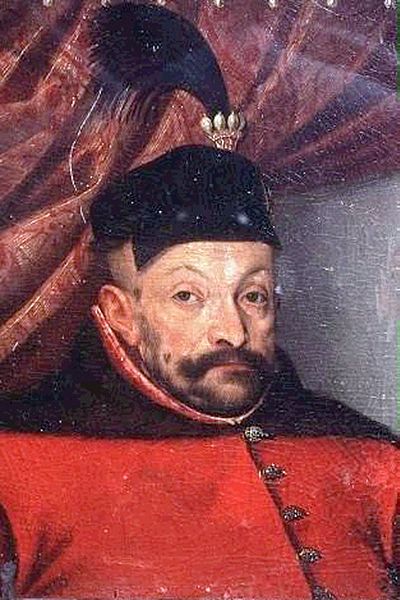 |
|
Pillar of the Community
United States
789 Posts |
Is that a mole on his face, or did he sleep on a spider?
|
|
Pillar of the Community
United States
8056 Posts |
Quote:
Is that a mole on his face, or did he sleep on a spider?  I'm curious what he thought of this facial feature being displayed so prominently in his portrait on coins (we'll also see it on coins from the Vilnius and Gdansk mints). It first shows up a Gdansk grosz I'll post for 1578. When Batory was elected, there was a faction in Poland (bishops and nobility) who had wanted a Hapsburg elected king instead. Gdansk refused to acknowledge his sovereignity, and Batory marched there with an army and laid siege in 1577. After 6 months, there was a negotiated settlement. Gdansk paid 200,000 zloty in reparations (a large sum for a small place), and Batory agreed to extend certain rights the city had enjoyed under previous kings. I wonder if the Gdansk engraver decided his portrait of the king would remind the burghers of Gdansk that his legitimacy was not without blemish? And other mints followed suit. |
|
Pillar of the Community
Belgium
1185 Posts |
Jeton from 1576 from Dordrecht showing the help Elizabeth I was giving to the United Provinces that were in deep trouble: their leader William of Orange assassinated and Alexander Farnese winning victory after victory. 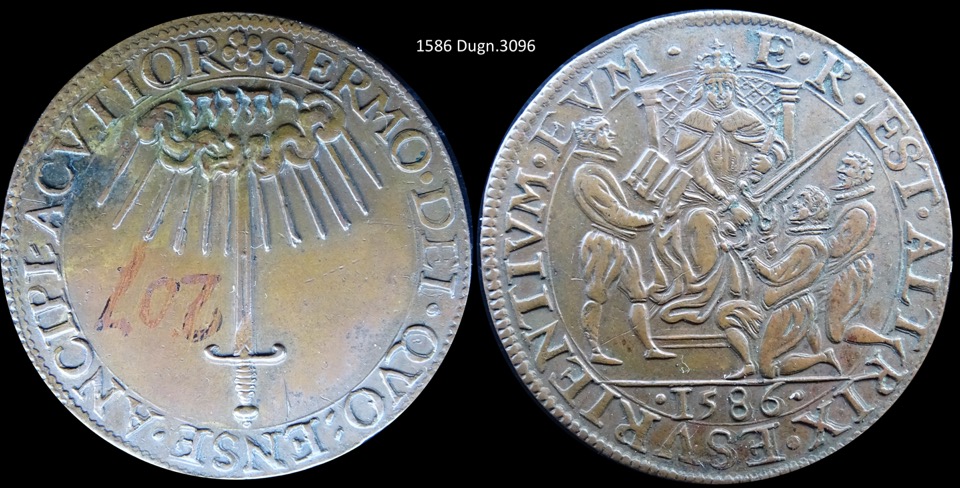 Obverse: Jahweh giving a sword as aid SERMO DEI QVO ENSE ANCIPI ACVTIOR Reverse: Dutch diplomats (Johan Van Oldenbarnevelt was one of them) receiving a sword from the queen; the Earl of Leicester is standing on the left E R EST ALT RIX ESVRIENTIVM EVM 1586 a previous collector has numbered this jeton with ink, I hesitate whether or not I should get it removed |
|
Pillar of the Community
United States
2703 Posts |
Quote:
a previous collector has numbered this jeton with ink, I hesitate whether or not I should get it removed Looks like a museum ID number. To my mind, it does not detract. Some collectors view these favorably as authentication. |
|
Pillar of the Community
Sweden
2124 Posts |
 It doesn't look that disturbing. Also, it may be hard to remove without leaving traces. The area under the ink may have a different patination, and that would look more disturbing, I think. |
|
Pillar of the Community
Sweden
2124 Posts |
Quote:
It is interesting to compare this "coordination" among different nation/states in Europe at this time. In @t360's French coins of the Louis (XIII/XIV) we saw great coordination/standardization of design acroiss the many mints/regions, and I think we will even see this in the reign of Henry III? (I will let others with more experience in France comment). Well, I can say something about France  France has always had a large number of mints spread over the country, and until the mid 16th century each mint engraved its own dies based on drawings and written descriptions dispatched from the central mint in Paris. Naturally, a large variation in appearance resulted, but the important aspect was really that weight and alloy were correct. When in the early 16th century coins began to have the king's portrait, not only did the dissimilarities between coins from different mints become an issue, also the widely varying quality of the portrait was disturbing. While the countryside engravers mastered letters, crosses, and fleur-de-lis well enough, a portrait was something quite different, and not everyone was good at it. It is not easy to judge from the testons with the image of Francis I what he really looked like - although there seems to have been agreement on a prominent nose  So, in 1547, Henry II instituted the office of engraver general (graveur general). He made the dies for the Paris mint and he also made punches with the king's portrait to be used by the other mints, for the making of their dies. This improved both quality and uniformity of the coins' appearances. The office was reinstated in a somewhat different form by Louis XIII in the 1640s and then lasted until 2001 (although the last 130 years or so distribution of punches was no longer required, with all coins minted in one location). There was still some intentional variation between coins from different mints. For instance Navarre, Bearn, Flanders, and Dauphine used variations of coat of arms, inscriptions, and symbols - although the basic design and portrait were the same. |
|
Pillar of the Community
United States
8056 Posts |
Great summary @erafjel, which explains much about what we see with French coinage. The comments about the "far-flung" provinces like Flanders, Bearn, Navarre sound a bit like the situation in Poland, where there is some consistency between the crown mints, but the mints in Vilnius, Gdansk and Riga use different coat of arms and inscriptions reverse. For instance, on the trojaks of Stefan Batory, today's coin says GROS ARG TRIP CIVI RIGE on the reverse (silver 3 groschen of the city of RIga). On coins from the two crown mints, Poznan and Olkusz, we will see GROS ARG TRIP REG POLONIAE (silver 3 gr of the Kingdom of Poland), and on coins from Vilnius, GROS ARG TRIP M D LITVA (silver 3 gr of the Grand Duchy of Lithuania).
|
|
Pillar of the Community
Belgium
1185 Posts |
Quote:
To my mind, it does not detract. Some collectors view these favorably as authentication. Quote:
It doesn't look that disturbing. Also, it may be hard to remove without leaving traces. thanks for your valuable comments ! an old collection is quite likely authenticity is an issue - this jeton and some others I (e.g. my best jeton I'll post tomorrow) I picked up ±30 years ago are accompanied by circular old papers with a description of the piece; how old the papers are is hard to say, maybe 100 years |
|
Pillar of the Community
United States
8056 Posts |
Quote:
accompanied by circular old papers with a description of the piece; how old the papers are is hard to say, maybe 100 years I have these same small circular tags with some of the coins I have purchased through Elsen. Am very curious what collection these are from. |
| |
Replies: 5,294 / Views: 290,845 |






 First Page
 Previous Page


 Posted 08/29/2019 5:33 pm


