Thanks to all for the kind words.
Again from wikipedia
The Fifth Crusade and early policies in northern Italy[edit]
An augustale coin of Frederick II, from the Messina mint of Sicily, struck some time after 1231
At the time he was elected King of the Romans, Frederick promised to go on crusade. He continually delayed, however, and, in spite of his renewal of this vow at his coronation as the King of Germany, he did not travel to Egypt with the armies of the Fifth Crusade in 1217. He sent forces to Egypt under the command of Louis I, Duke of Bavaria, but constant expectation of his arrival caused papal legate Pelagius to reject Ayyubid sultan Al-Kamil's offer to restore the Latin Kingdom of Jerusalem to the crusaders in exchange for their withdrawal from Egypt and caused the Crusade to continually stall in anticipation of his ever-delayed arrival. The crusade ended in failure with the loss of Damietta in 1221.[12] Frederick was blamed by both Pope Honorius III and the general Christian populace for this calamitous defeat.[13]
In 1225, after agreeing with Pope Honorius to launch a Crusade before 1228, Frederick summoned an imperial Diet at Cremona, the main pro-imperial city in Lombardy: the main arguments for holding the Diet would be to continue the struggle against heresy, to organize the crusade and, above all, to restore the imperial power in northern Italy, which had been long been usurped by the numerous communes located there. Those assembled responded with the reformation of the Lombard League, which had already defeated his grandfather Frederick Barbarossa in the 12th century, and again Milan was chosen as the league's leader. The Diet was cancelled, however, and the situation was stabilized only through a compromise reached by Honorius between Frederick and the League.[9] During his sojourn in northern Italy, Frederick also invested the Teutonic Order with the territories in what would become East Prussia, starting what was later called the Northern Crusade.[9]
The Sixth Crusade[edit]
Main article: Sixth Crusade
Frederick II (left) meets Al-Kamil (right).
Problems of stability within the empire delayed Frederick's departure on crusade. It was not until 1225, when, by proxy, Frederick had married Yolande of Jerusalem, heiress to the Kingdom of Jerusalem, that his departure seemed assured. Frederick immediately saw to it that his new father-in-law John of Brienne, the current king of Jerusalem, was dispossessed and his rights transferred to the emperor. In August 1227, Frederick set out for the Holy Land from Brindisi but was forced to return when he was struck down by an epidemic that had broken out. Even the master of the Teutonic Knights, Hermann of Salza, recommended that he return to the mainland to recuperate. On 29 September 1227, Frederick was excommunicated by Pope Gregory IX for failing to honor his crusading pledge.[9]
Many contemporary chroniclers doubted the sincerity of Frederick's illness, and their attitude may be explained by their pro-papal leanings. Roger of Wendover, a chronicler of the time, wrote:
... he went to the Mediterranean sea, and embarked with a small retinue; but after pretending to make for the holy land for three days, he said that he was seized with a sudden illness. this conduct of the emperor redounded much to his disgrace, and to the injury of the whole business of the crusade.[14]
Frederick eventually sailed again from Brindisi in June 1228. The pope, still Gregory IX, regarded that action as a provocation, since, as an excommunicate, Frederick was technically not capable of conducting a Crusade, and he excommunicated the emperor a second time. Frederick reached Acre in September. Since all the local authorities and most of the military orders denied him any help, and because the crusading army was a meagre force, Frederick negotiated along the lines of a previous agreement he had intended to broker with the Ayyubid sultan, Al-Kamil. The treaty, signed in February 1229, resulted in the restitution of Jerusalem, Nazareth, Bethlehem, and a small coastal strip to the Kingdom of Jerusalem, though there are disagreements as to the extent of the territory returned.[9]
Statue of Frederick II from the Black Tower of Regensburg, circa 1280-1290, Historical Museum in Regensburg
The treaty also stipulated that the Dome of the Rock and al-Aqsa Mosque were to remain under Muslim control and that the city of Jerusalem would remain without fortifications.[9] Virtually all other crusaders, including the Templars and Hospitallers, condemned this deal as a political ploy on the part of Frederick to regain his kingdom while betraying the cause of the Crusaders. Al-Kamil, who was nervous about possible war with his relatives who ruled Syria and Mesopotamia, wished to avoid further trouble from the Christians, at least until his domestic rivals were subdued.
The crusade ended in a truce and in Frederick's coronation as King of Jerusalem on 18 March 1229, although this was technically improper. Frederick's wife Yolande, the heiress, had died, leaving their infant son Conrad as rightful king. There is also disagreement as to whether the "coronation" was a coronation at all, as a letter written by Frederick to Henry III of England suggests that the crown he placed on his own head was in fact the imperial crown of the Romans.
In any case, Gerald of Lausanne, the Latin Patriarch of Jerusalem, did not attend the ceremony; indeed, the next day the Bishop of Caesarea arrived to place the city under interdict on the patriarch's orders. Frederick's further attempts to rule over the Kingdom of Jerusalem were met by resistance on the part of the barons, led by John of Ibelin, Lord of Beirut. In the mid-1230s, Frederick's viceroy was forced to leave Acre, and in 1244, following a siege, Jerusalem itself was lost again to a new Muslim offensive.
Whilst Frederick's seeming bloodless recovery of Jerusalem for the cross brought him great prestige in some European circles, his decision to complete the crusade while excommunicated provoked Church hostility. Although in 1230 the Pope lifted Frederick's excommunication at the Treaty of Ceprano, this decision was taken for a variety of reasons related to the political situation in Europe. Of Frederick's crusade, Philip of Novara, a chronicler of the period, said, "The emperor left Acre [after the conclusion of the truce]; hated, cursed, and vilified."[15] Overall this crusade, arguably the first successful one since the First Crusade, was adversely affected by the manner in which Frederick carried out negotiations without the support of the church. He left behind a kingdom in the Levant torn between his agents and the local nobility, a civil war known as the War of the Lombards.
The itinerant Joachimite preachers and many radical Franciscans, the Spirituals, supported Frederick. Against the interdict pronounced on his lands, the preachers condemned the Pope and continued to minister the sacraments and grant absolutions. Brother Arnold in Swabia proclaimed the Second Coming for 1260, at which time Frederick would then confiscate the riches of Rome and distribute them among the poor, the "only true Christians."[16]







 he was Emperor of the Romans from his papal coronation in 1220 until his death; he was also a claimant to the title of King of the Romans from 1212 and unopposed holder of that monarchy from 1215. As such, he was King of Germany, of Italy, and of Burgundy. At the age of three, he was crowned King of Sicily as a co-ruler with his mother, Constance of Hauteville, the daughter of Roger II of Sicily. His other royal title was King of Jerusalem by virtue of marriage and his connection with the Sixth Crusade.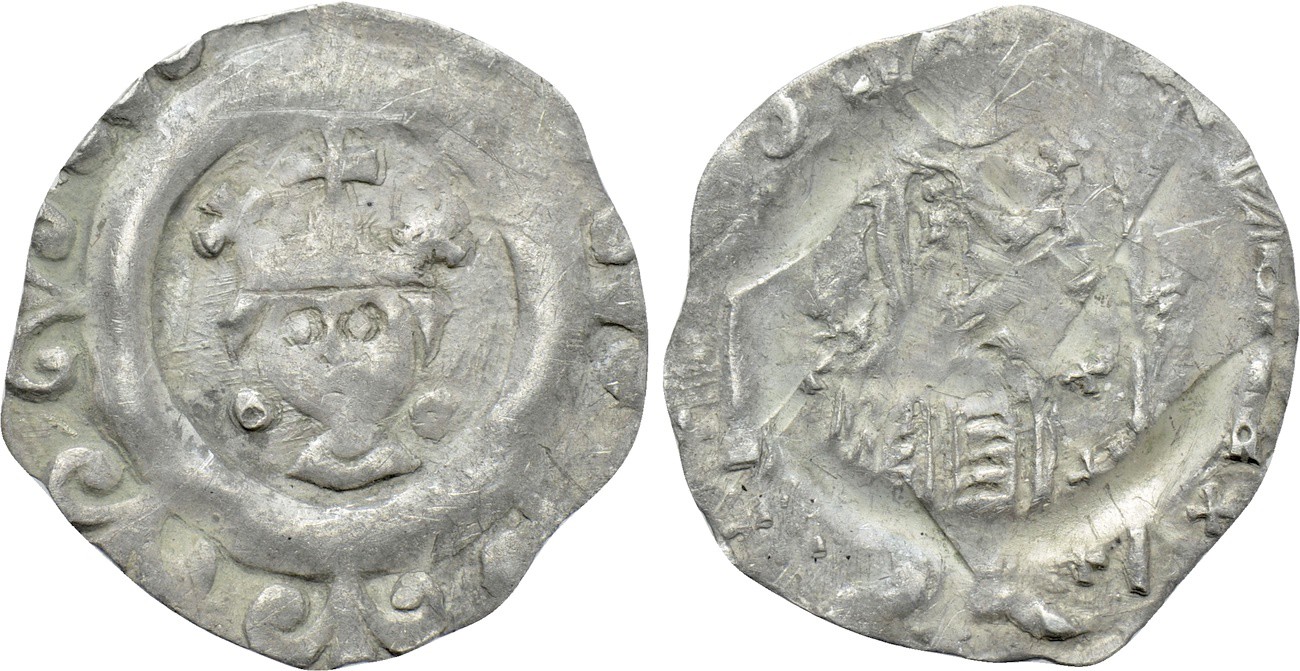


 Posted 07/02/2018 5:43 pm





