| Author |
 Replies: 14 / Views: 9,765 Replies: 14 / Views: 9,765 |
|
|
Bedrock of the Community
United States
62064 Posts |
Die polishing. How does that affect the coins?Actually die polishing doesn't affect the coins, it affects the dies that strike the coins. This shows up as missing areas on the coins struck with that die. There has been some incorrect ideas about die polishing. But lets start with what does a die look like? The die is a negative of the coins struck. What does that mean? The coin is a positive. the devices are raised. The fields are in the background. The bust is raised the most and the rim is raised. So what is the negative for the die? The bust is the deepest into the die. The devices are the less deeper and some devices are slightly lower on the die. The fields instead of being in the background, are not the outside part of the die. 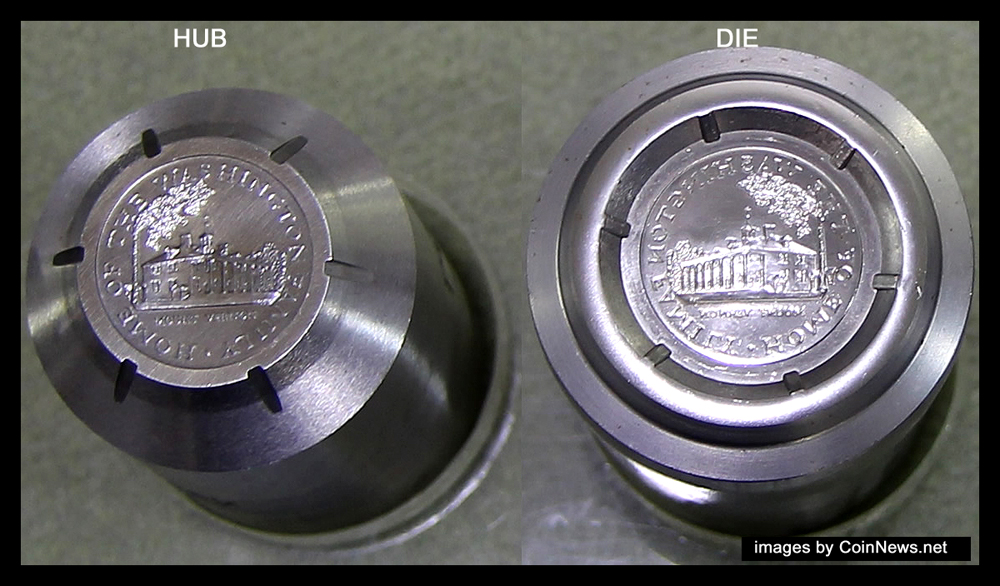 Note on the hub, the positive design is on it. Pressed into the die making the negative on the die. Note on the die, the devices are mirrored, the bust is deep into the die. The outside of the die is the fields. 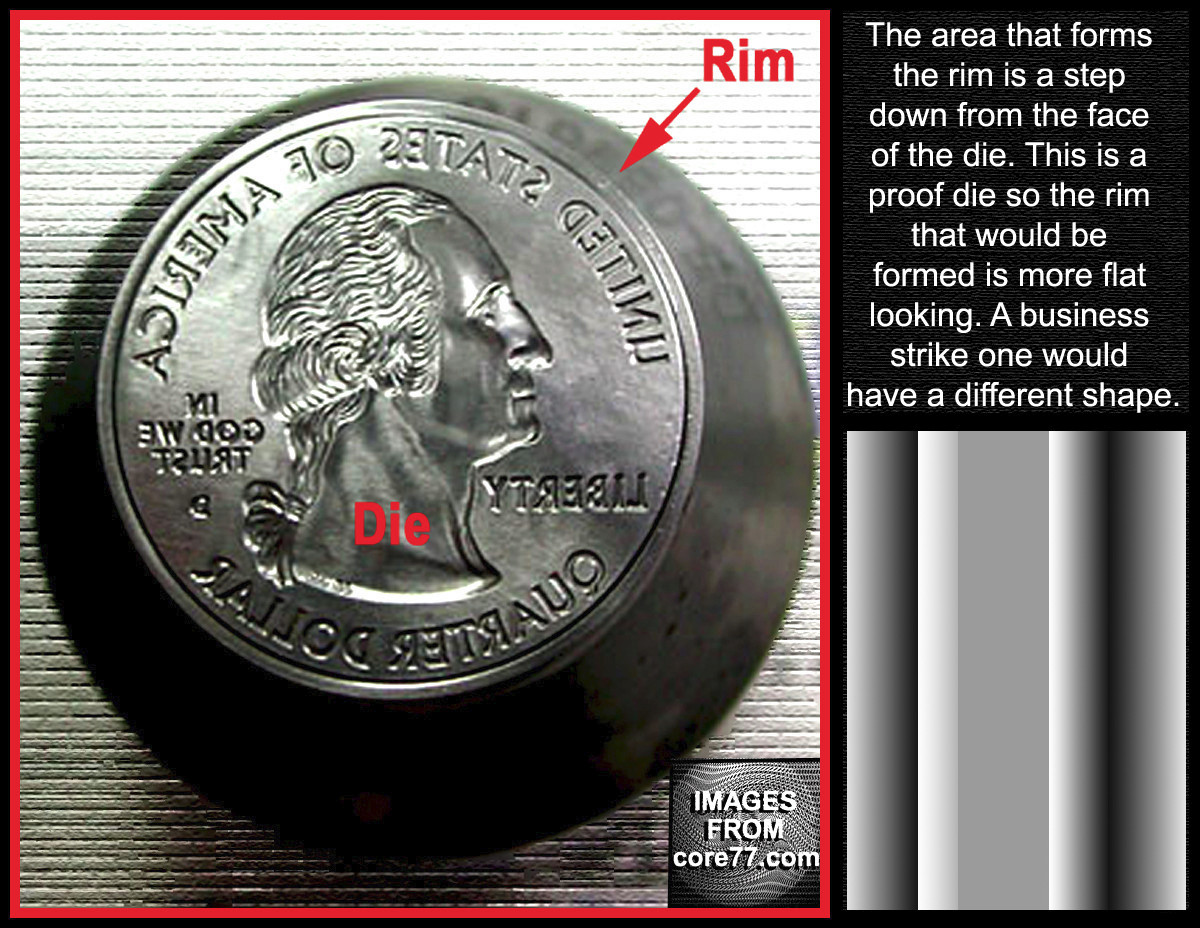 So when a die clash happens the fields are polished. leaving the clash marks on the opposite dies thus struck with both sets of devices outlines on each die. Also not the outside edge of the die. The rims are created by the step down on the die and the collar to for that area. 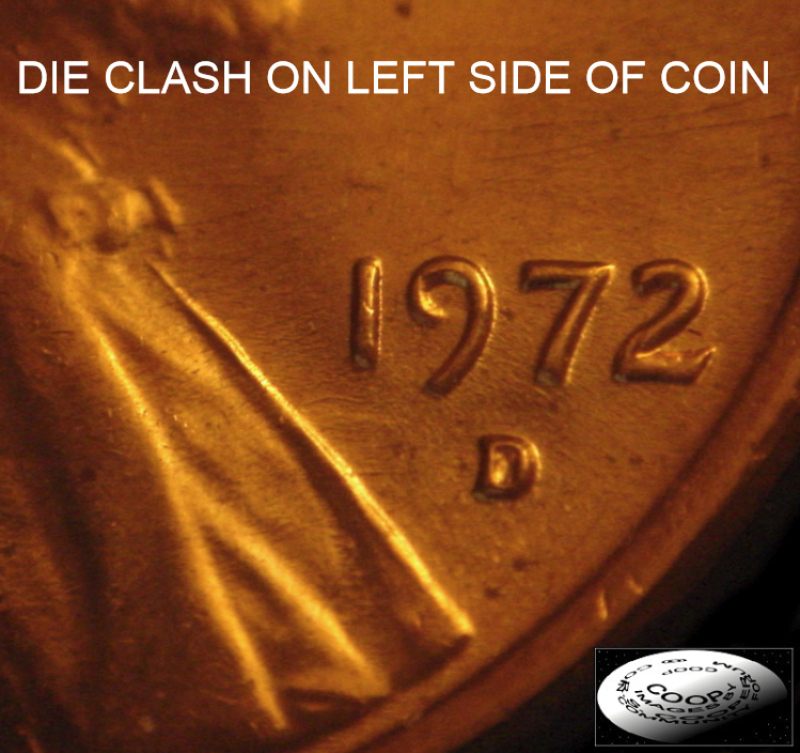 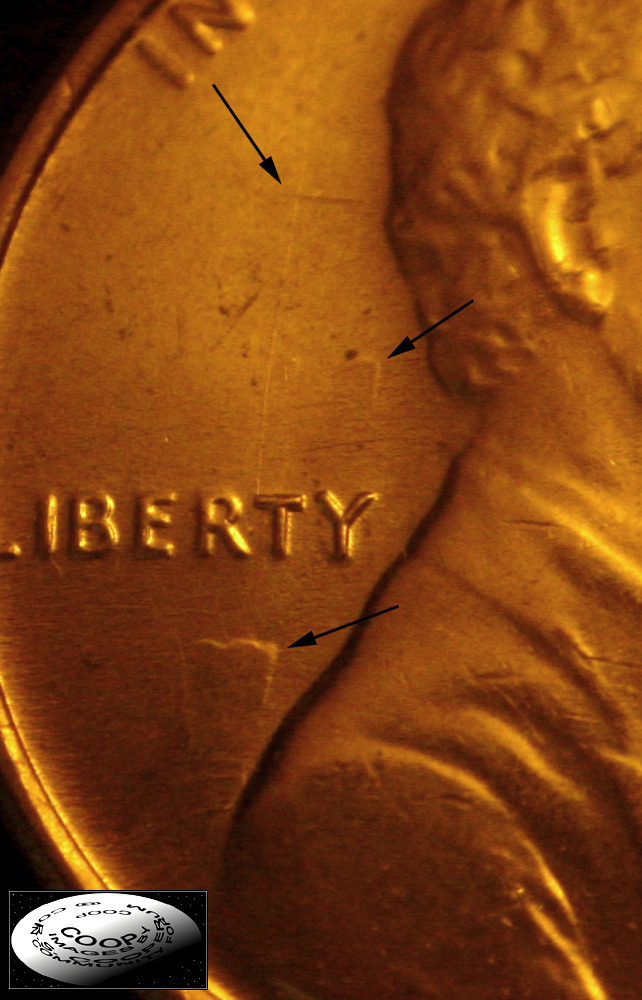 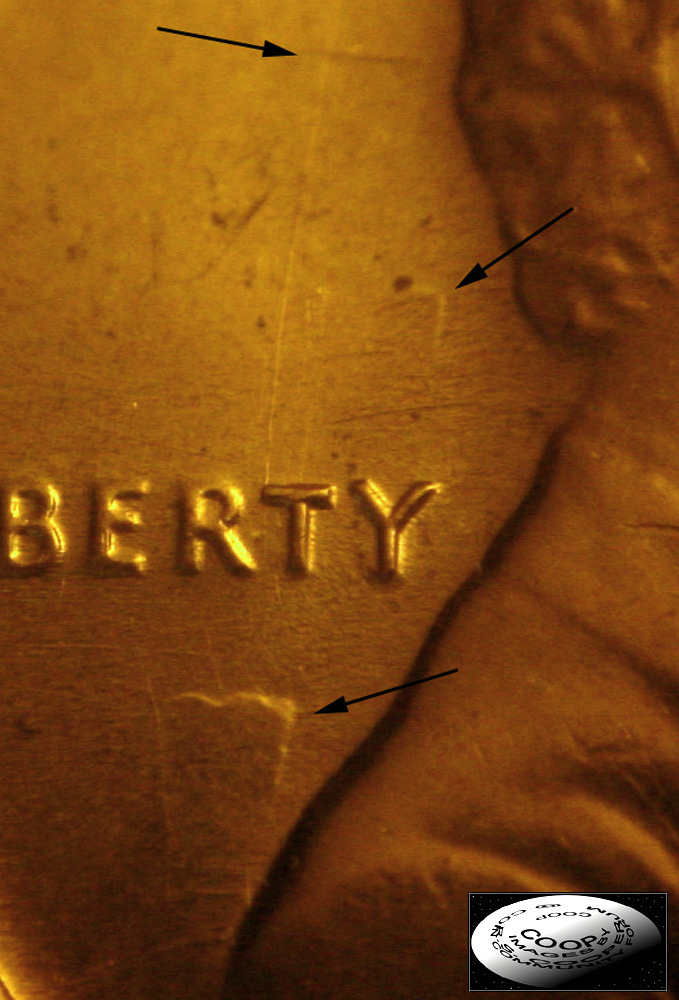 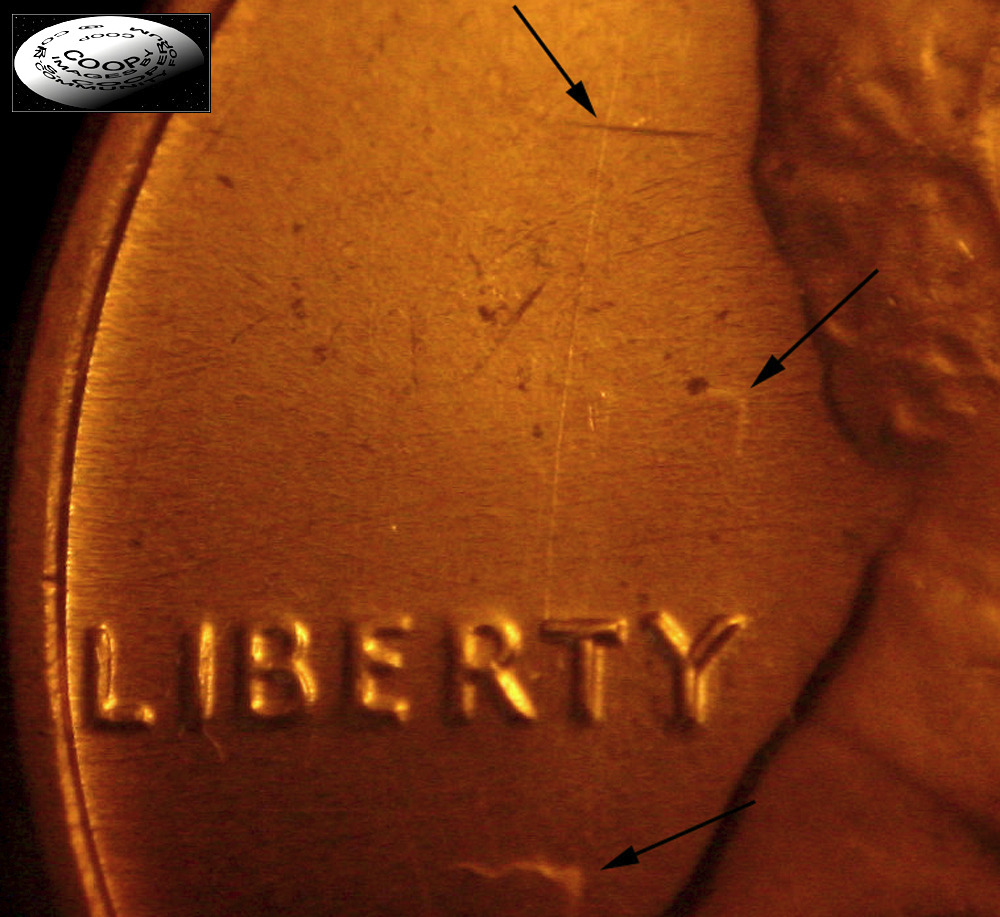 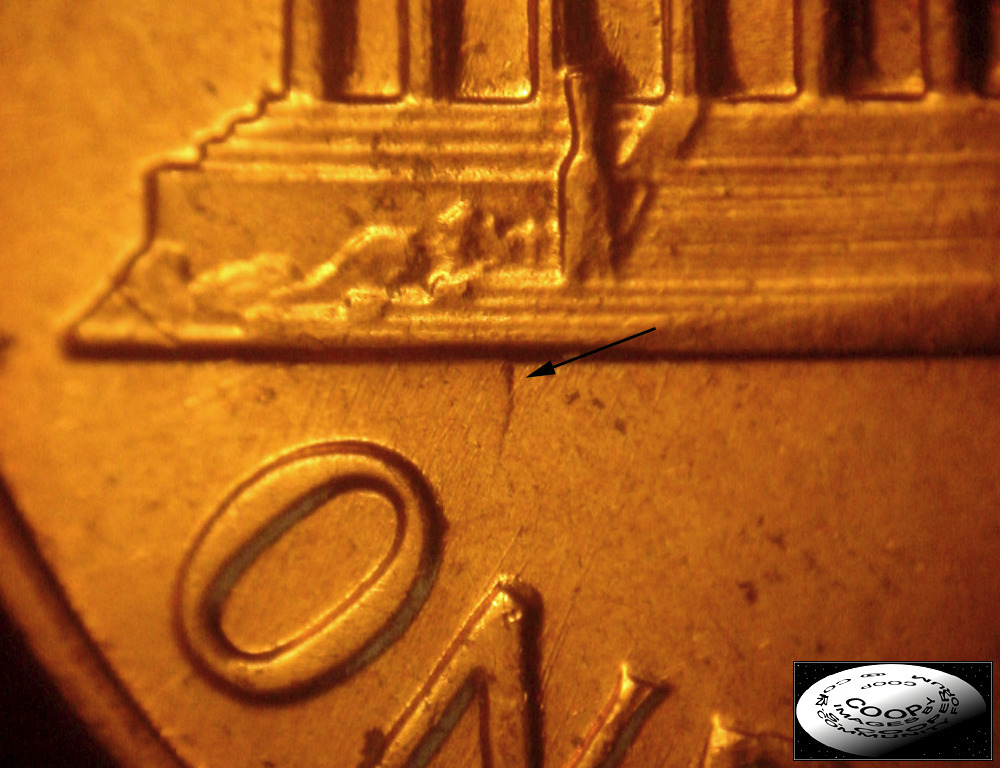 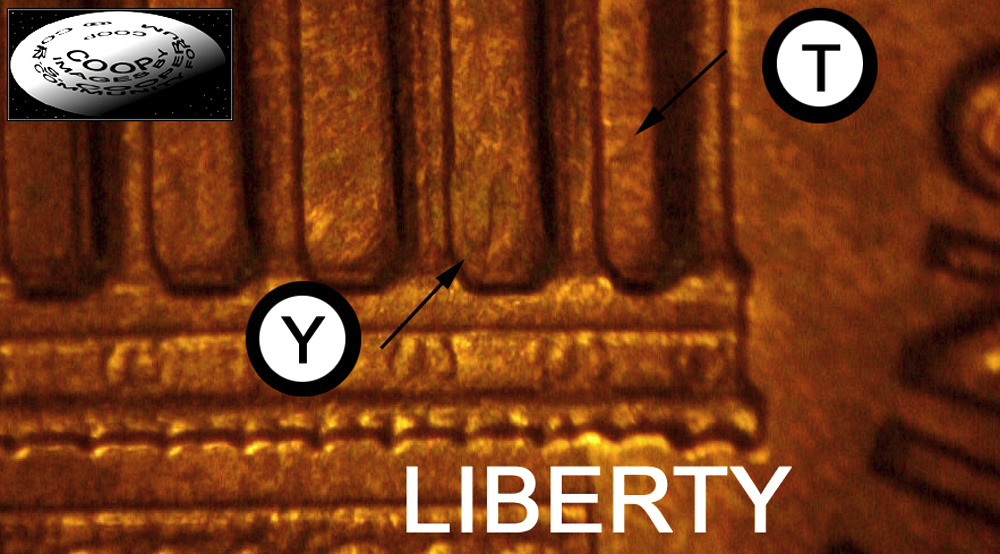 This was a light clash. But not a common one to find. The Jail house cents are the more desired ones:  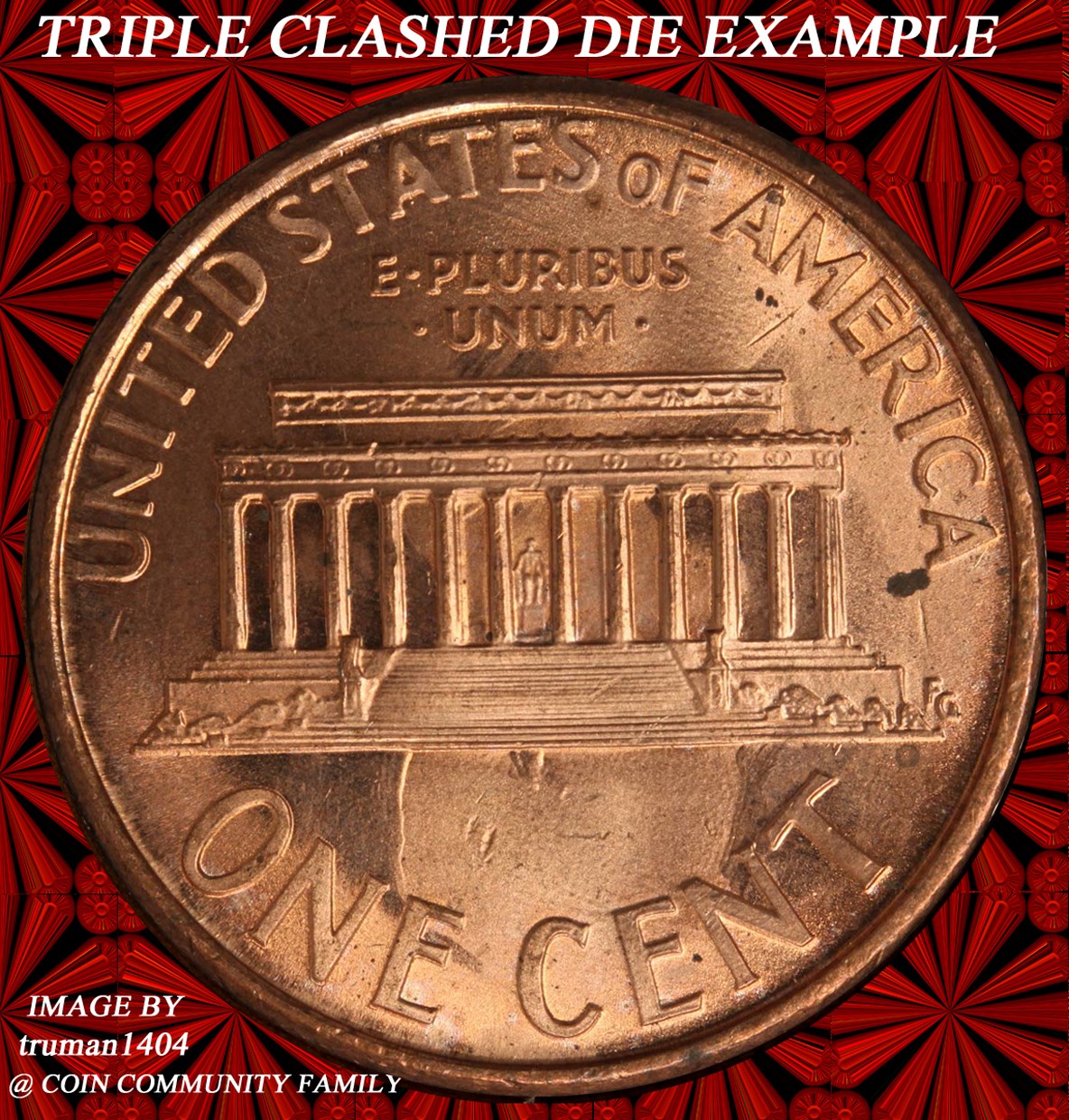 Shield clashes:  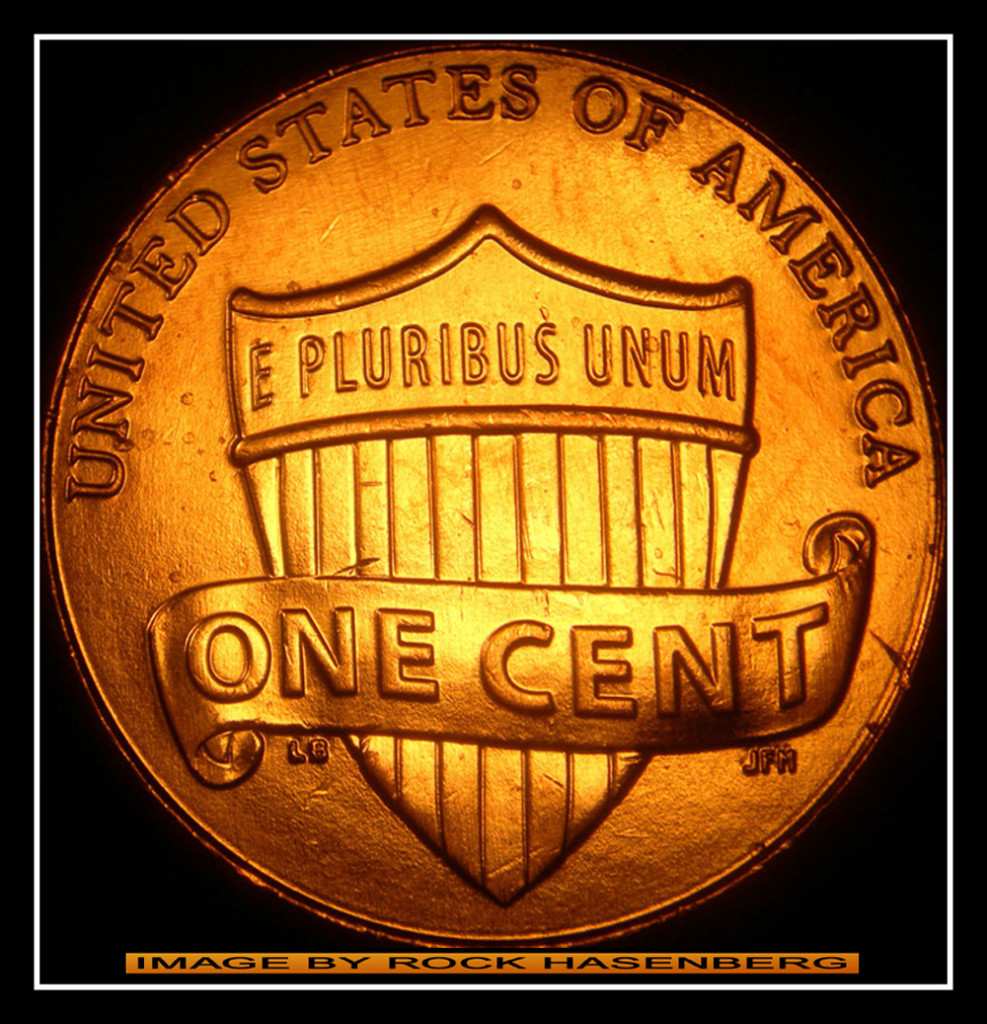 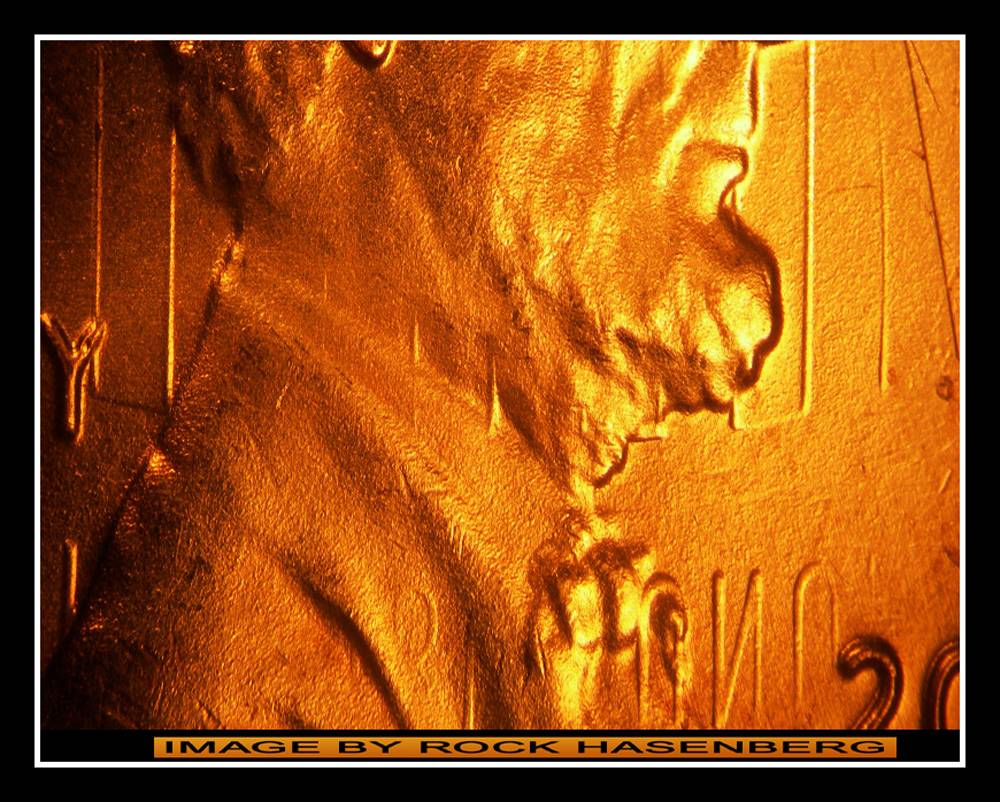 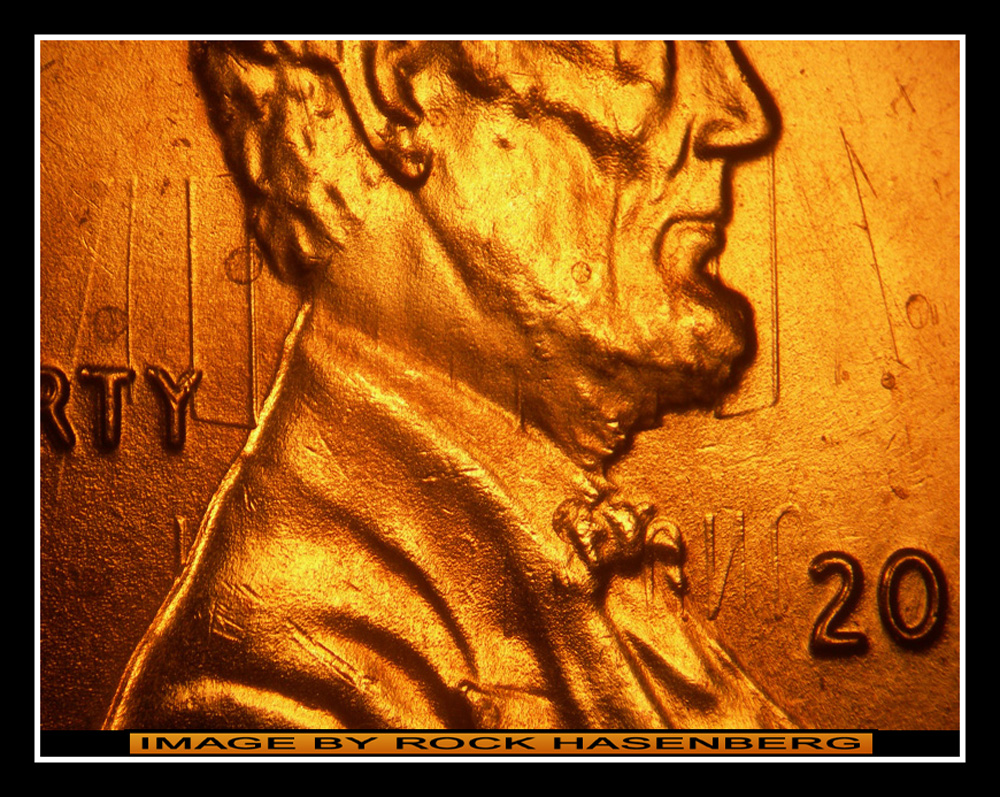 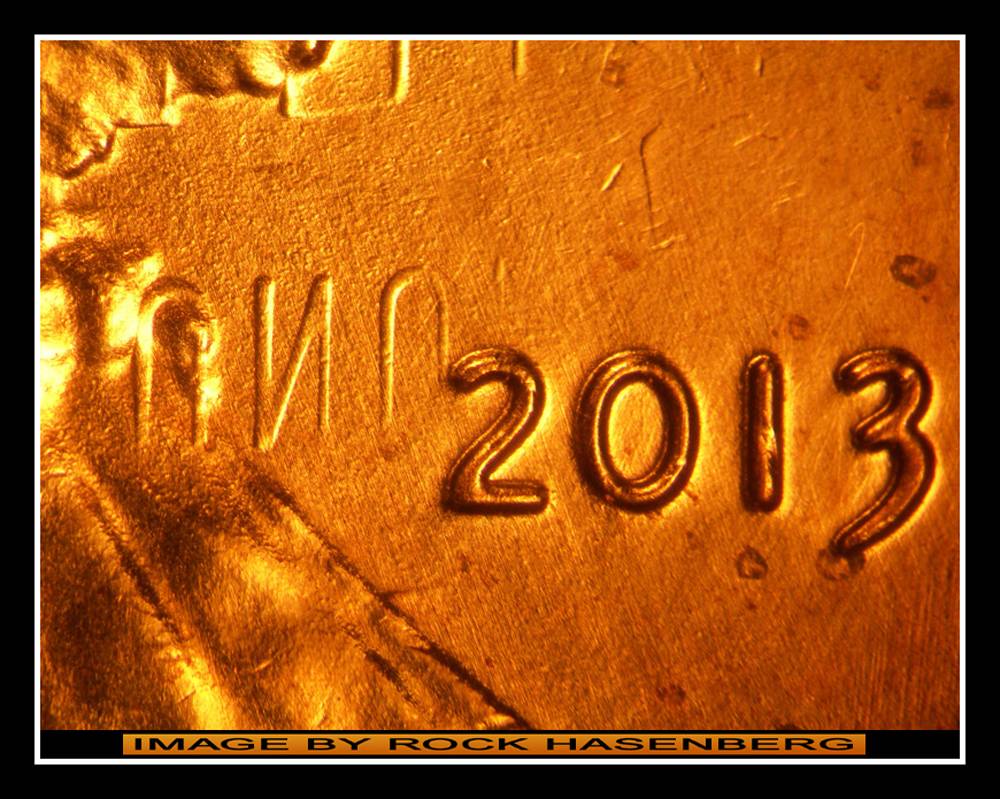 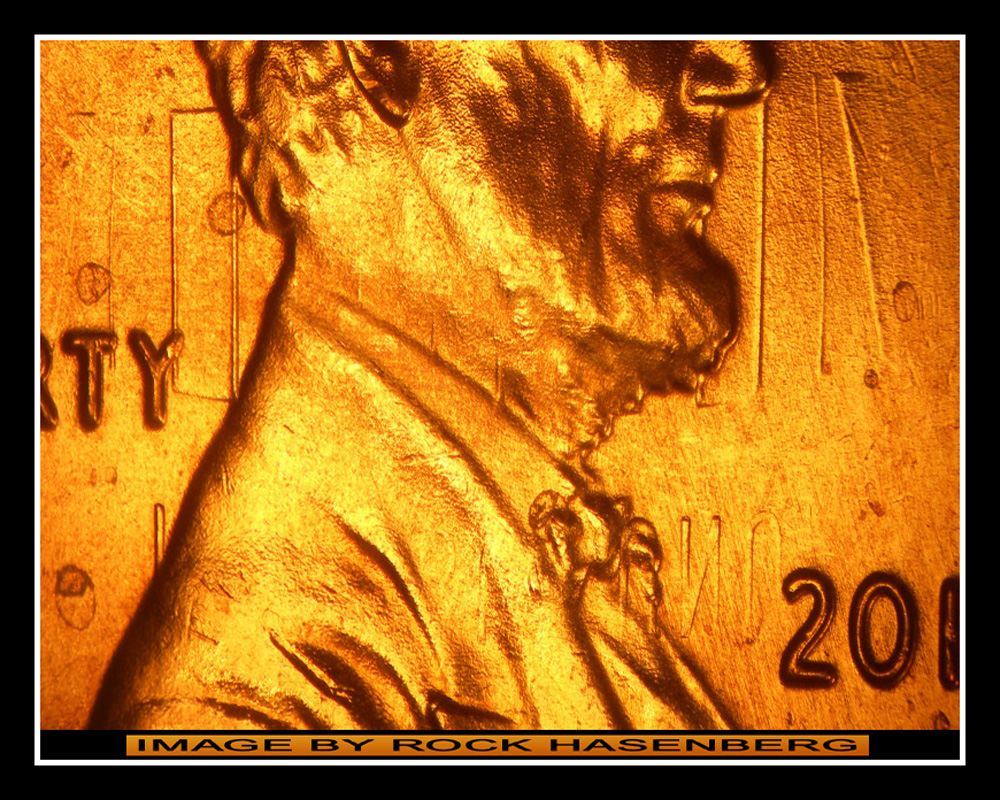 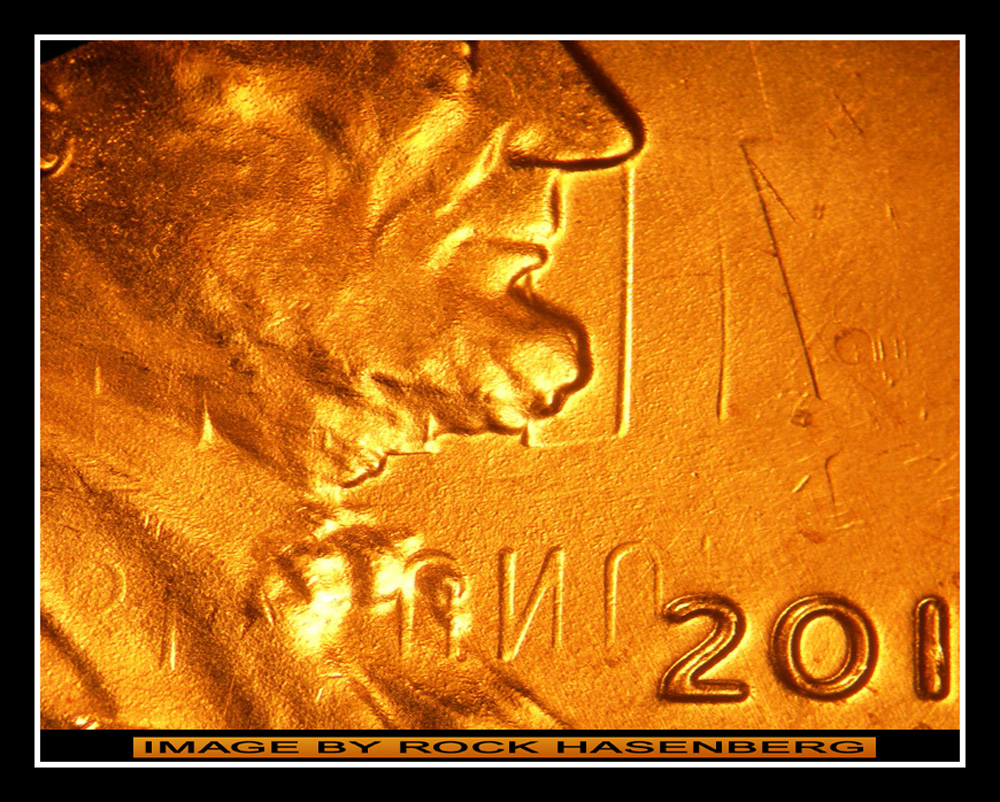 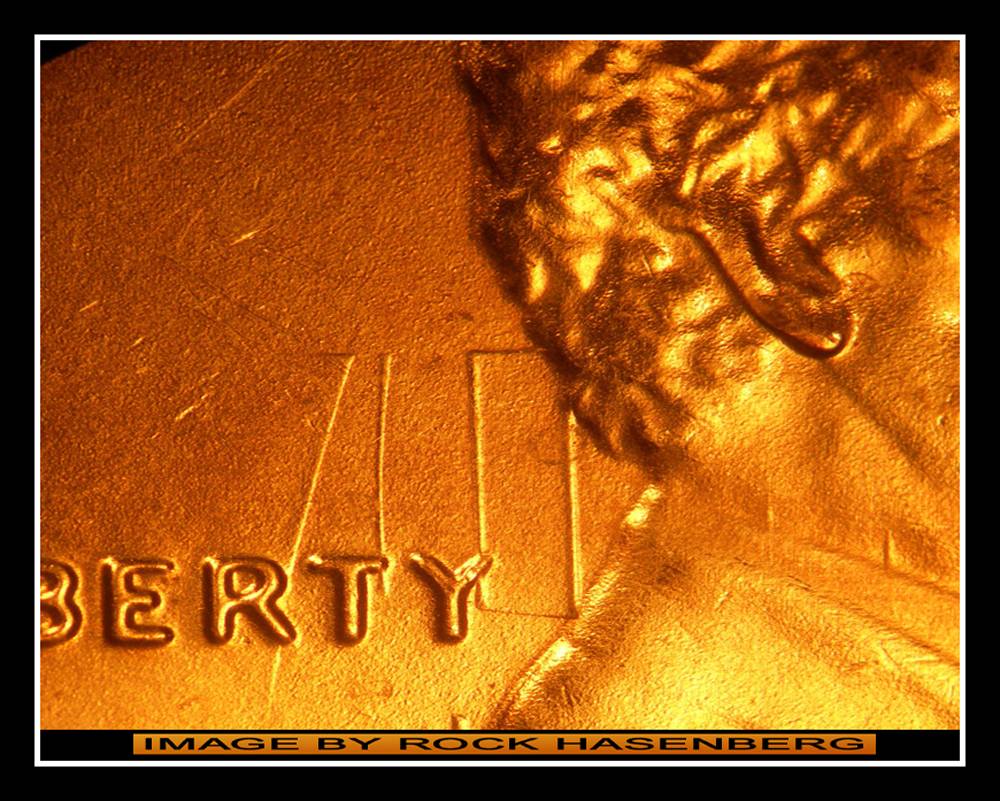 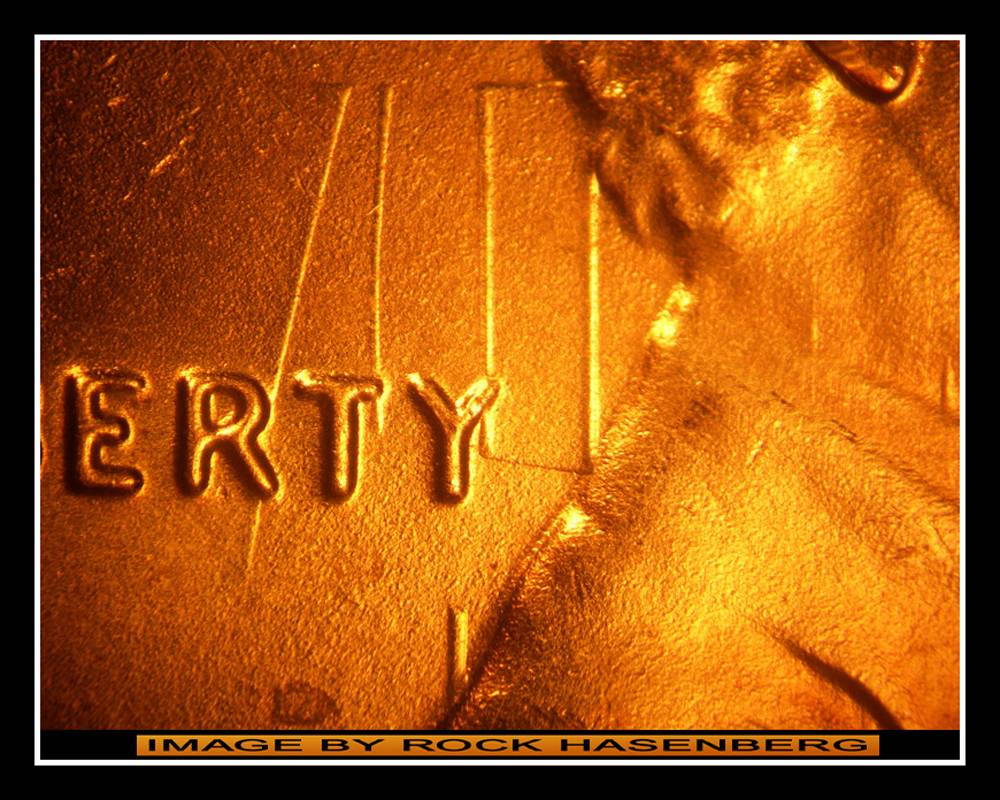 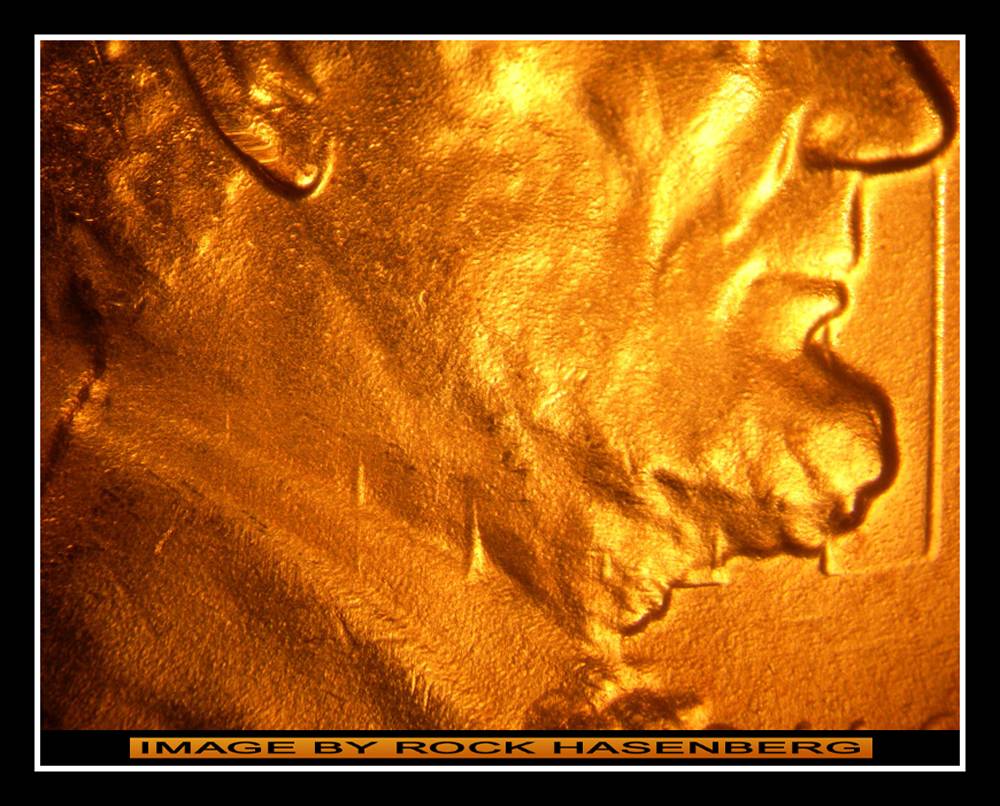 The deeper the clash, the more devices show up on the struck coins. Obverse: 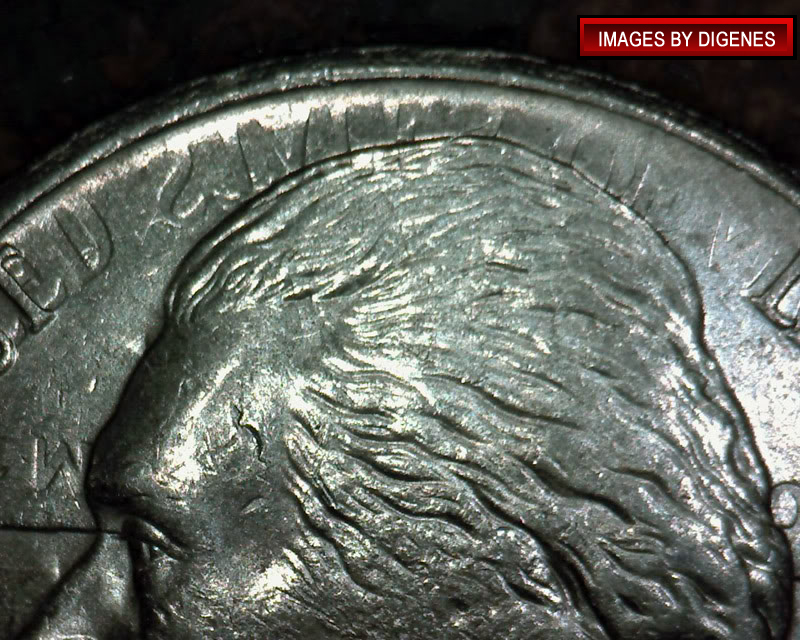 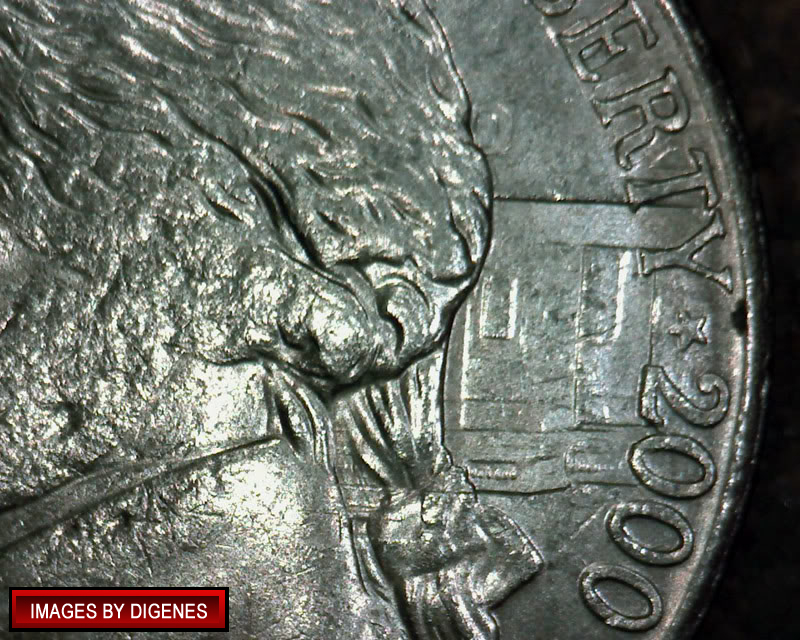 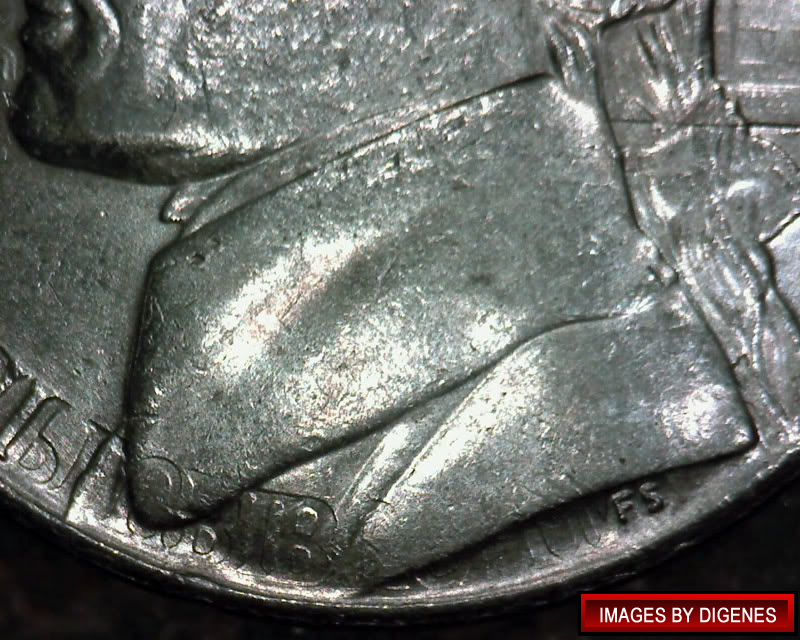 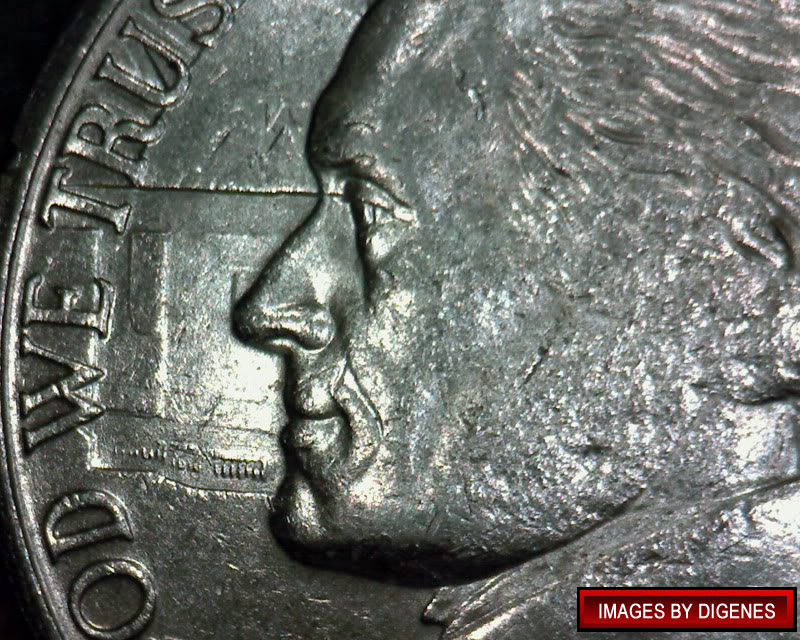 Reverse: 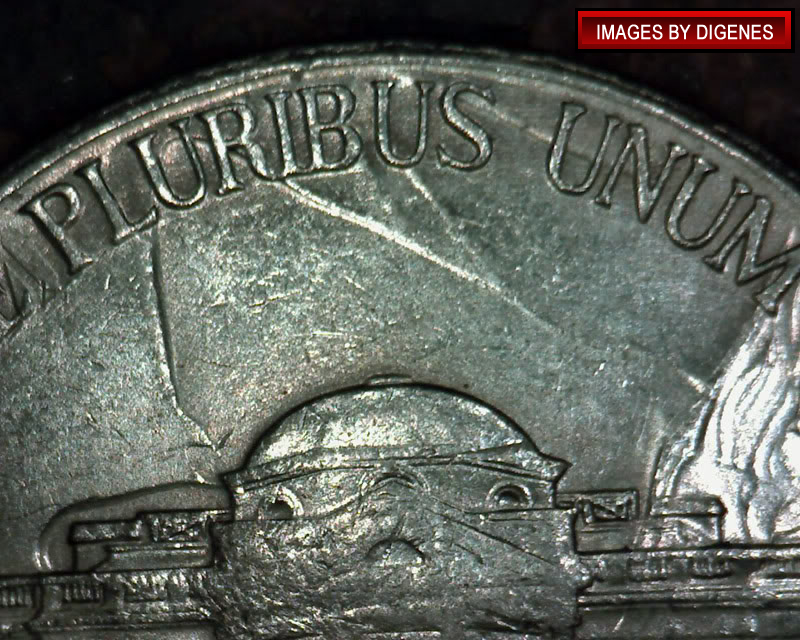 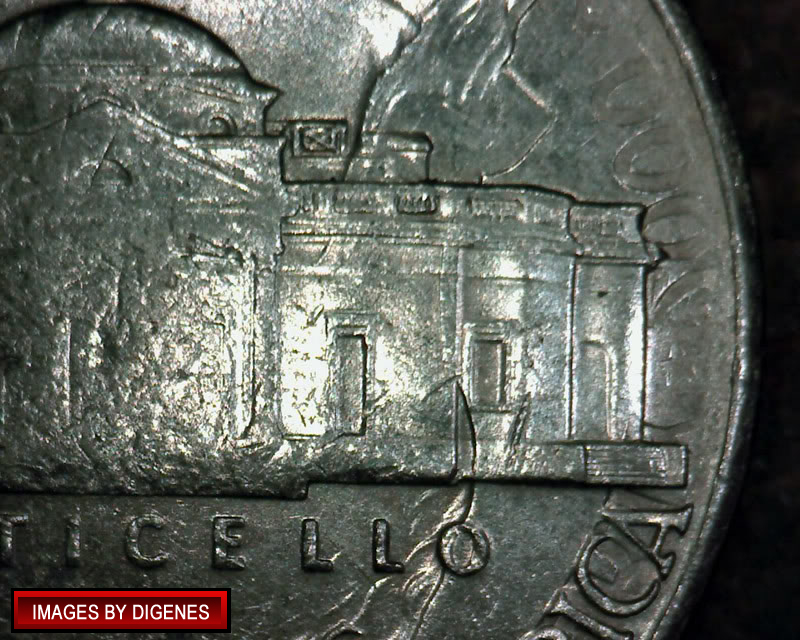 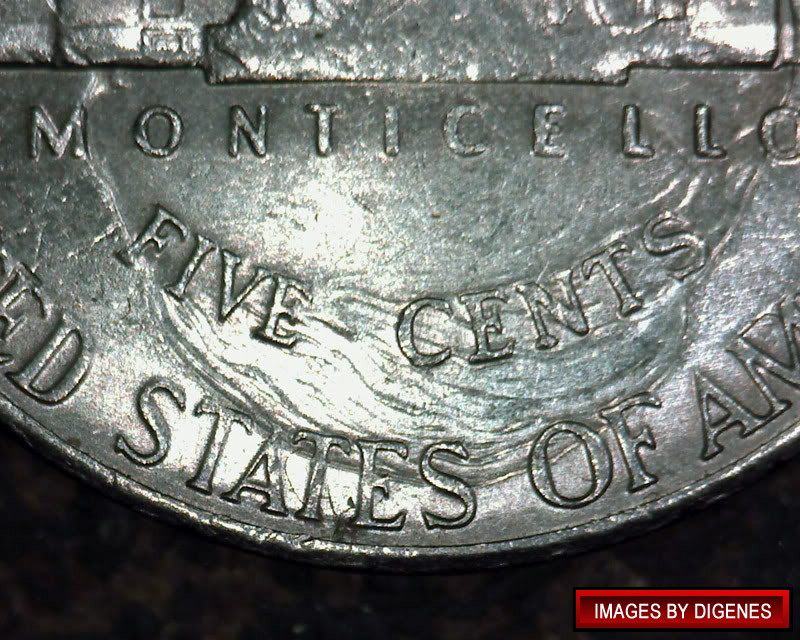 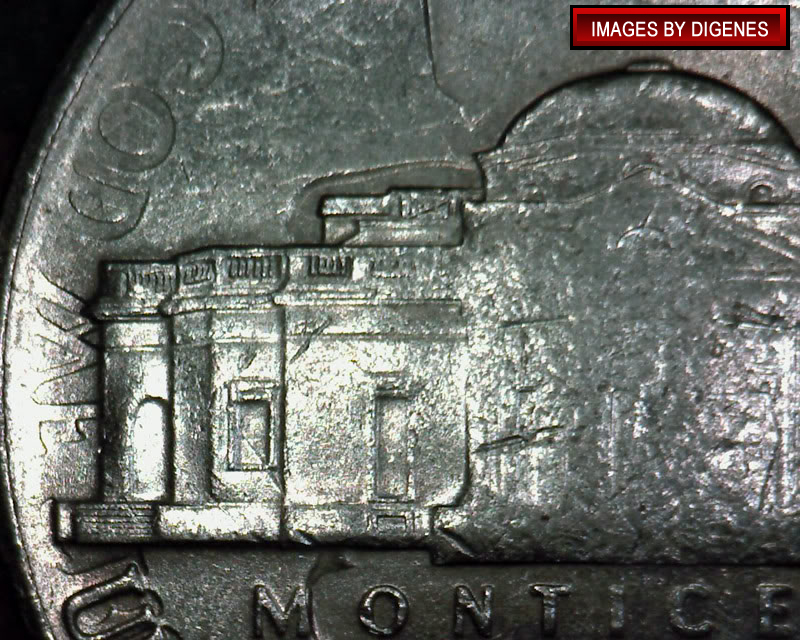 When this happens, the dies are polished to remove the clash outlines on the dies. Sometimes when the devices are over polished because of working on an affected area, the over polishing is isolated and really affects certain devices: 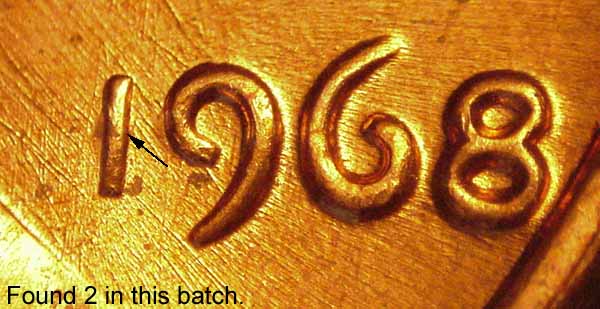 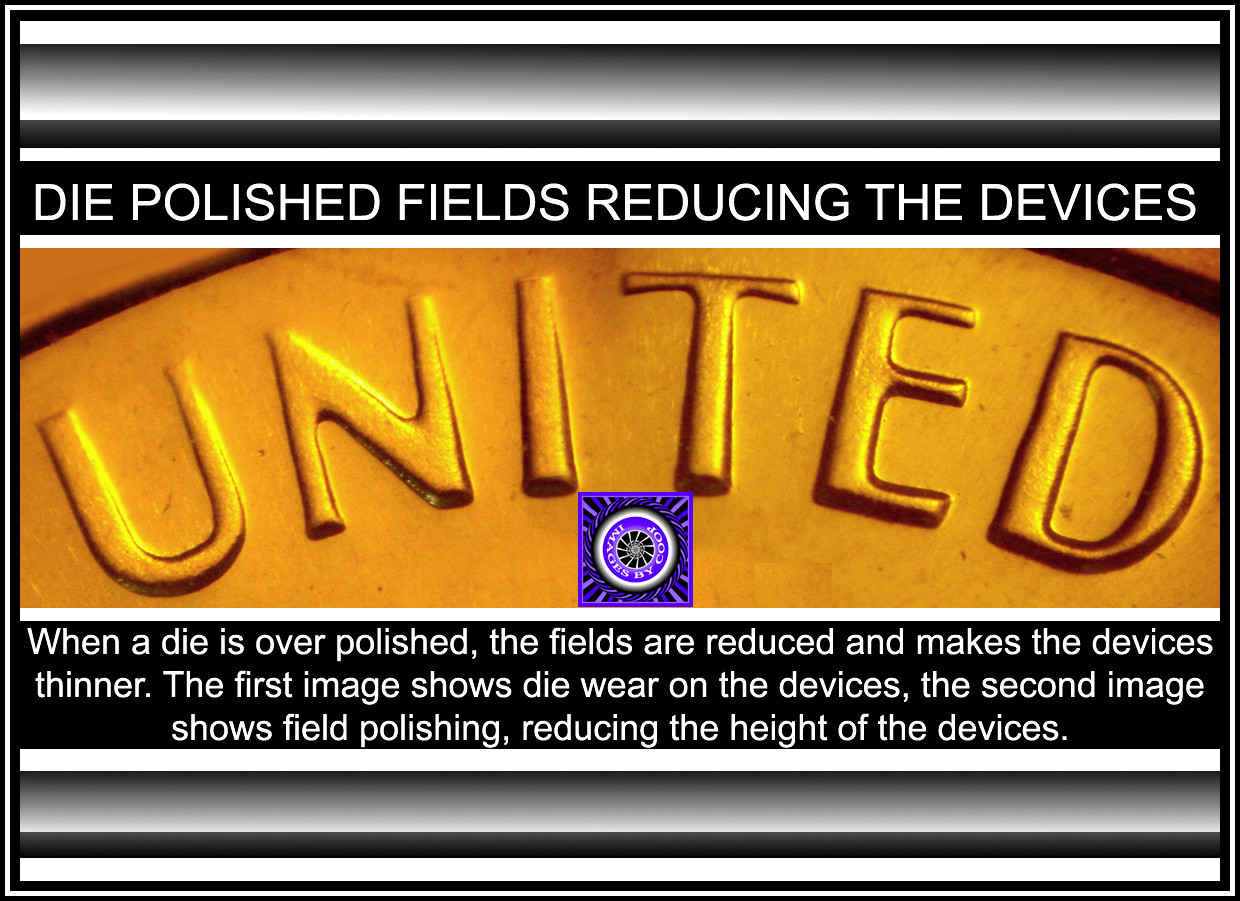  On some polishing the die gets reduced with a lot of abrasion: 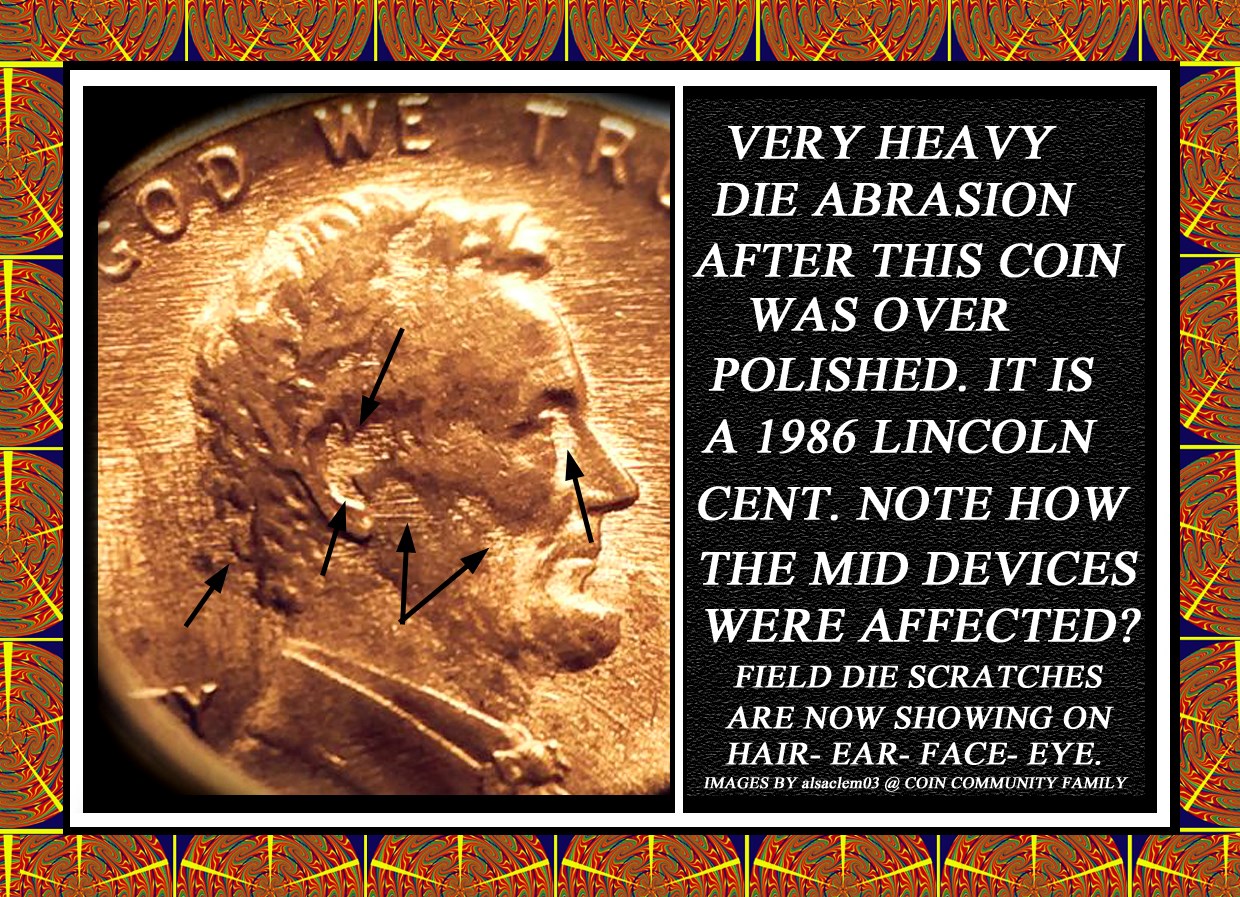 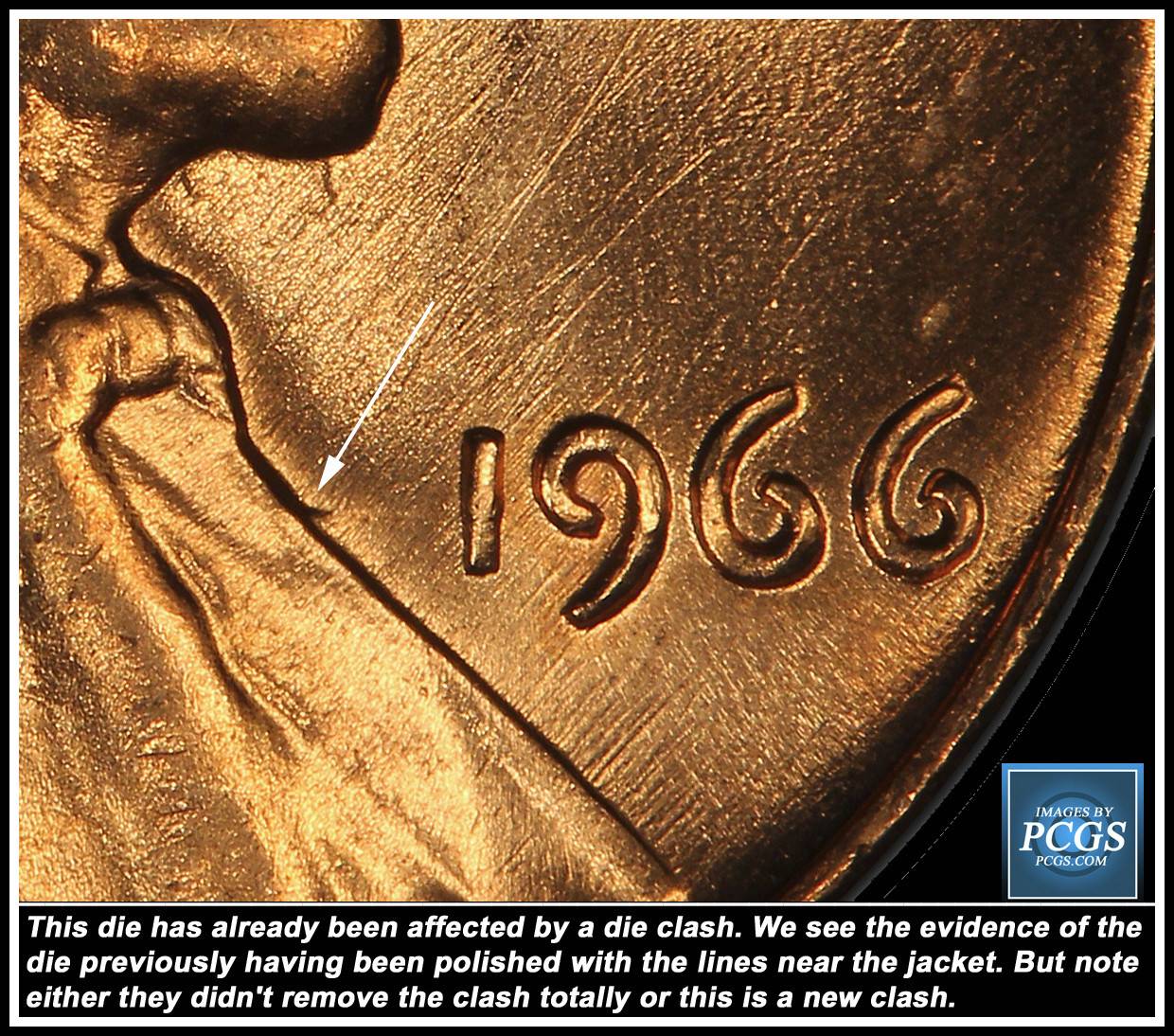 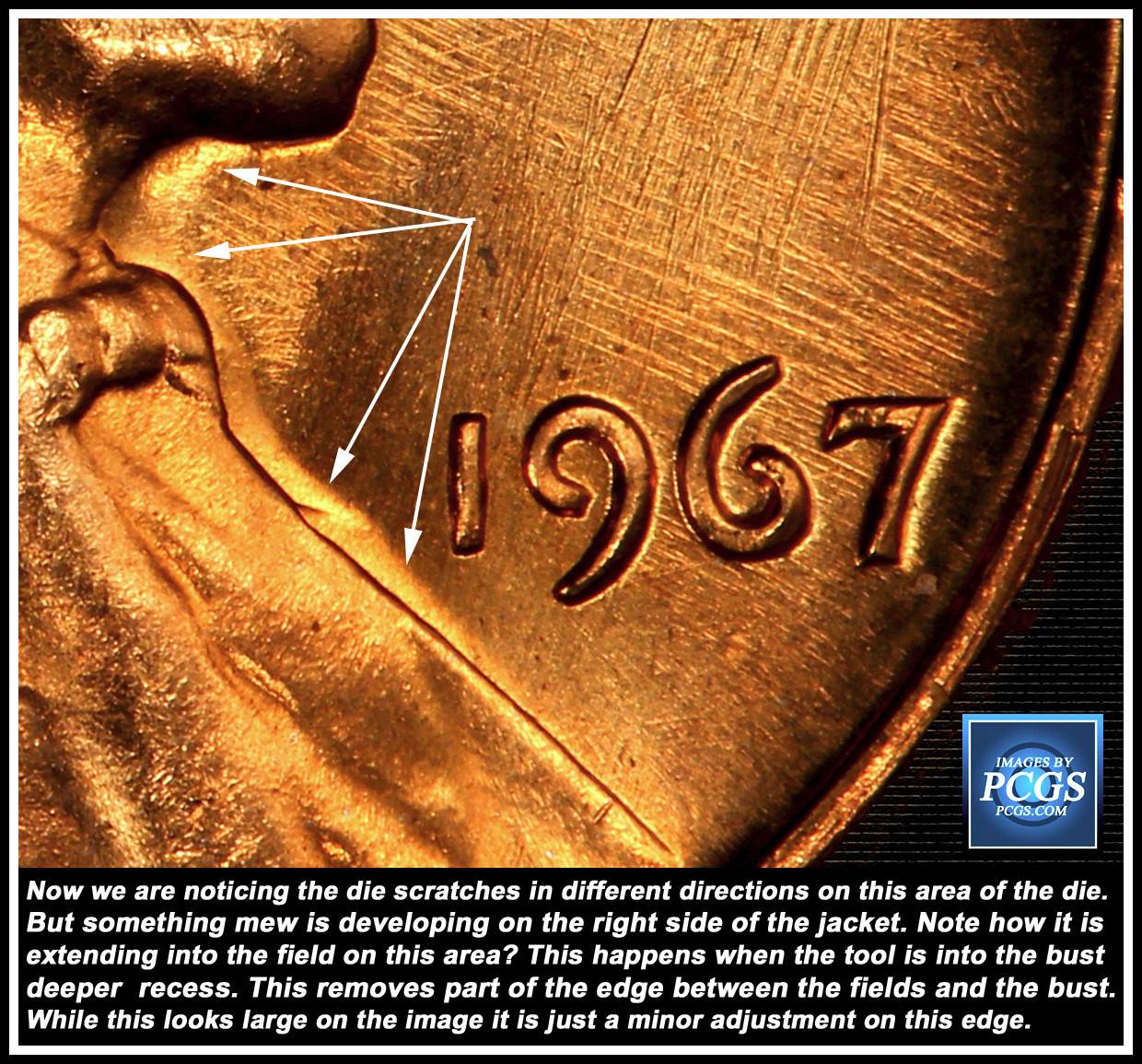 Even proof dies get altered: 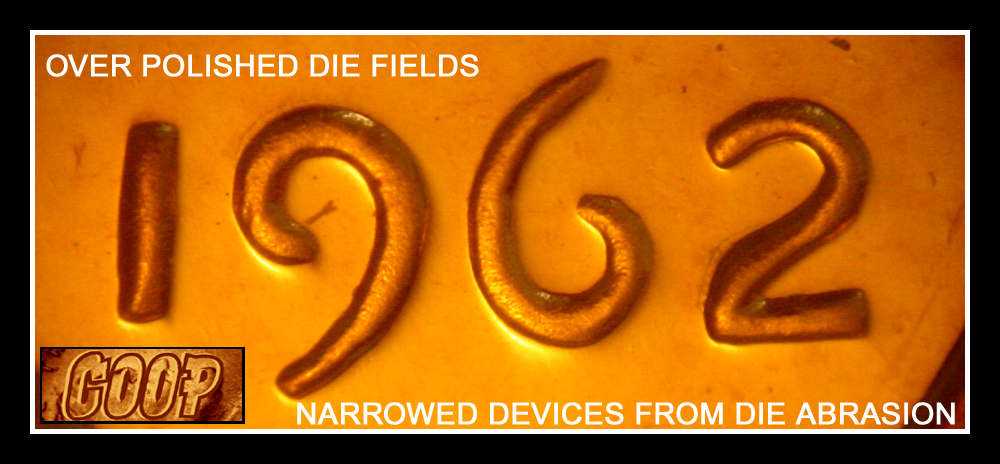 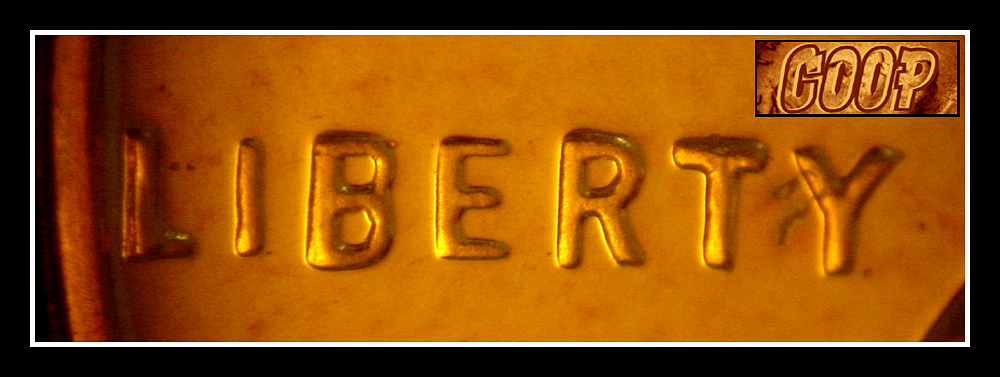 So why do certain areas suffer so much abrasion? So why do certain areas suffer so much abrasion? Because of the same events happening over and over. Some years are worse than others for this. 1983/4 had a lot of events those years.    Note how the 'L' on LIBERTY almost was removed from this die? The dies field was so over polished that the field was reduced to the point where the sunken in devices on the edge of the die, was removed so the rim would not rise above the edge of the coin. Note how the 'L' on LIBERTY almost was removed from this die? The dies field was so over polished that the field was reduced to the point where the sunken in devices on the edge of the die, was removed so the rim would not rise above the edge of the coin.


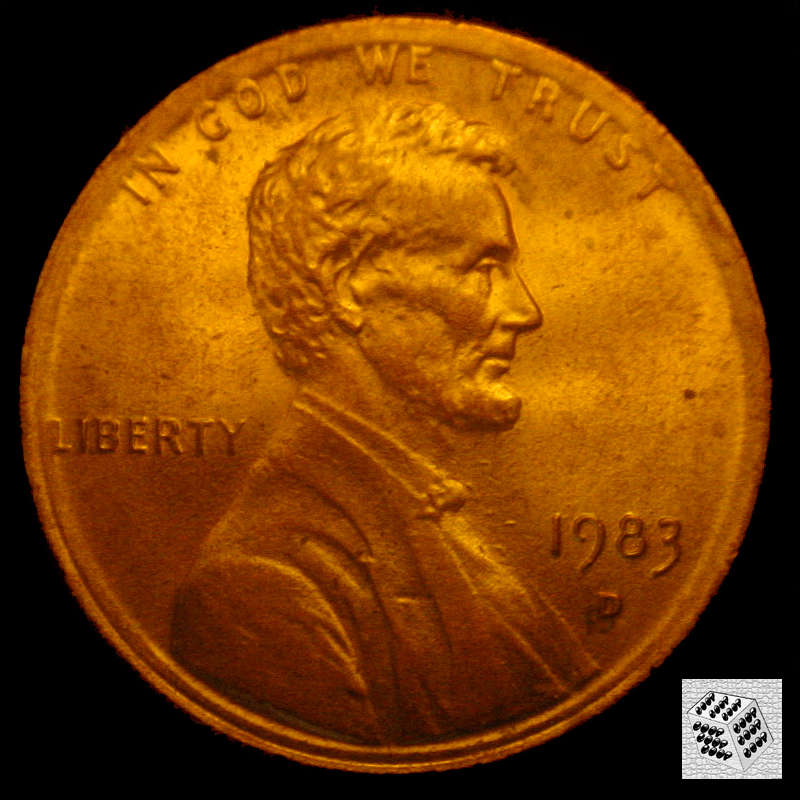
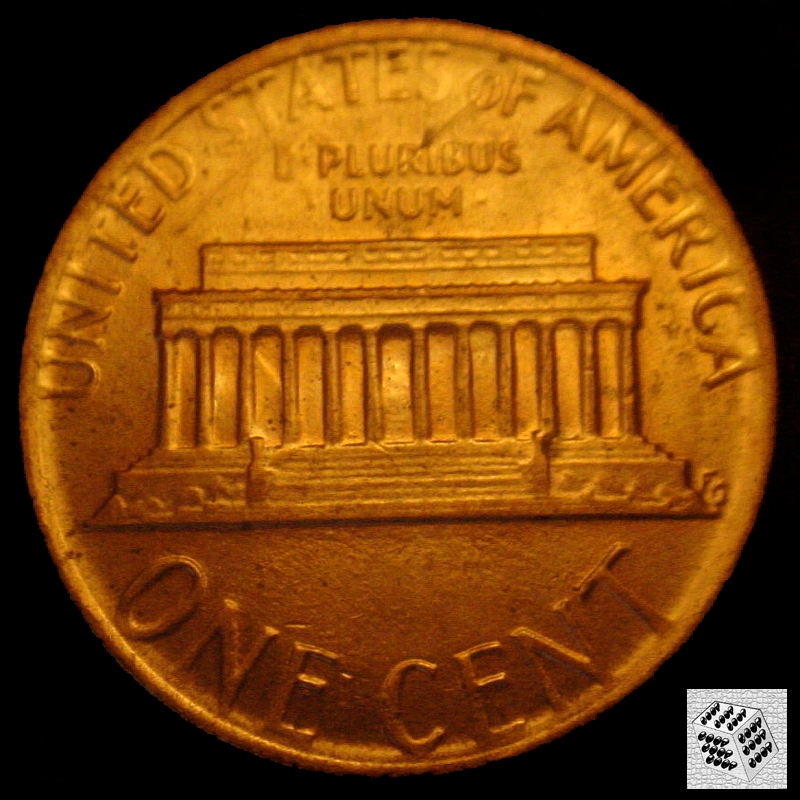
Not how die wear also set in on top of the die abrasion.[b]
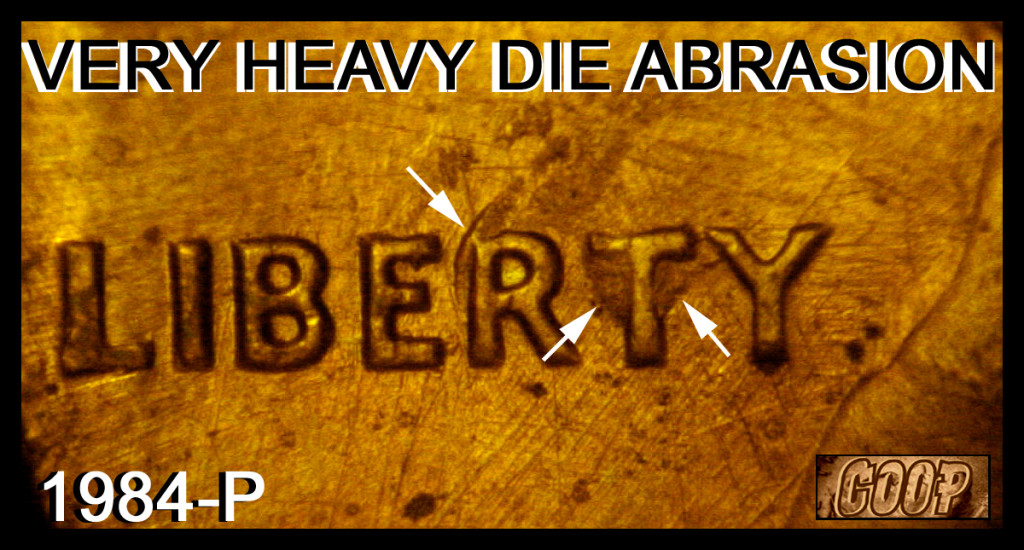
So when we say die over polishing what area of the die is affected?
The fields is the easy answer. But the more of the fields affected, the more of the devices and designs may disappear. It is the bases of the devices that are reduced. Not the tops of the devices. Why? Because the tops of the devices are deeper into the die. If the all the devices tops were missing, you would have a blank die. Nothing would appear. It is the pressing in of the devices and design that is hubbed into the die, that creates the devices we see on a coin.
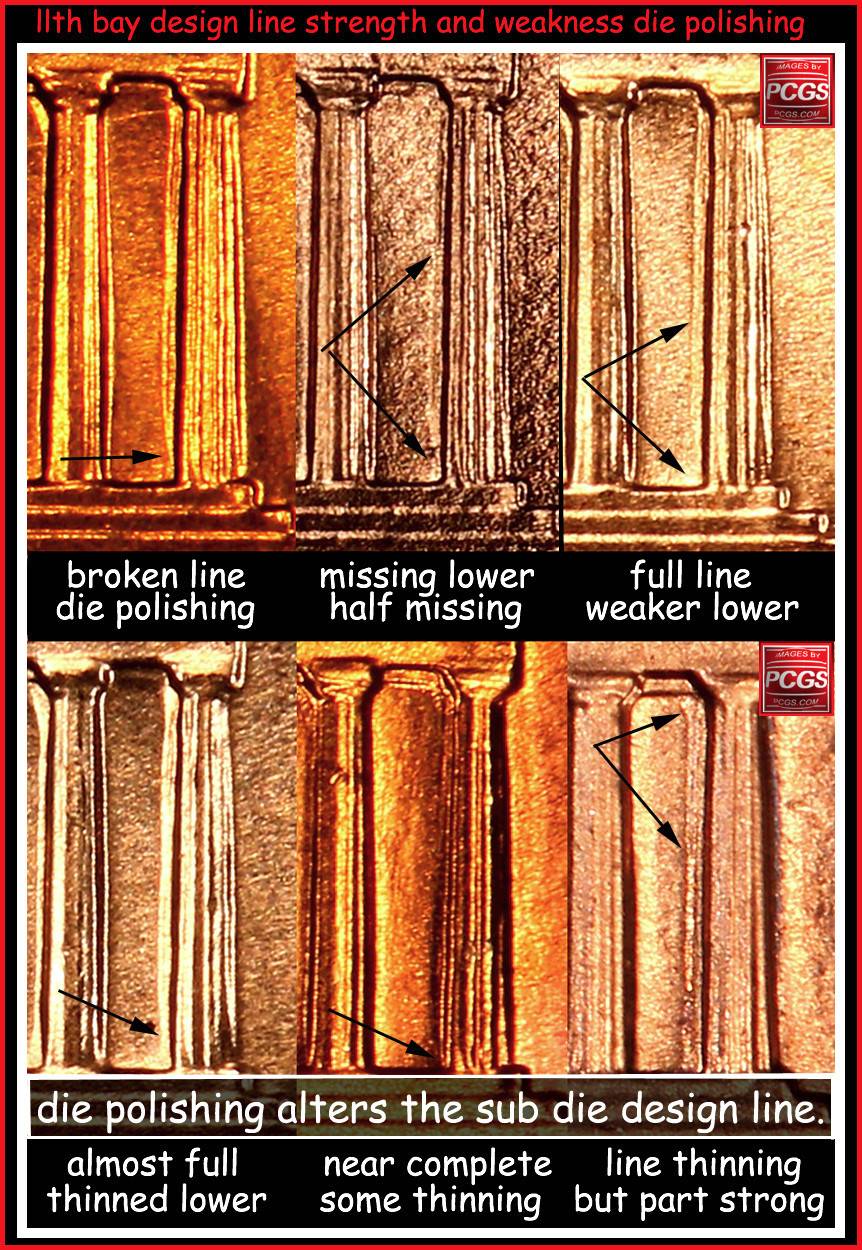
So what are the fields on a coin? Well the easy answer is the areas next to the devices. But even some areas are also fields. The bays on the Memorial cents. They are the fields. So when polishing happens on them, the shallow devices on the coin can go away first. What are the shallow devices? The false columns on the reverse of the Memorial cents are what I'm thinking of.[b]
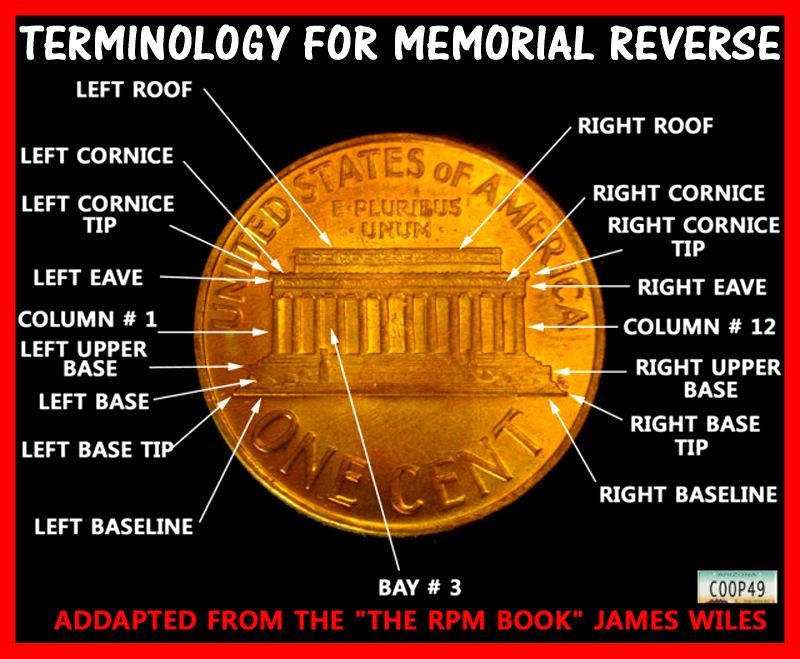
These 4 extra false columns are located here:
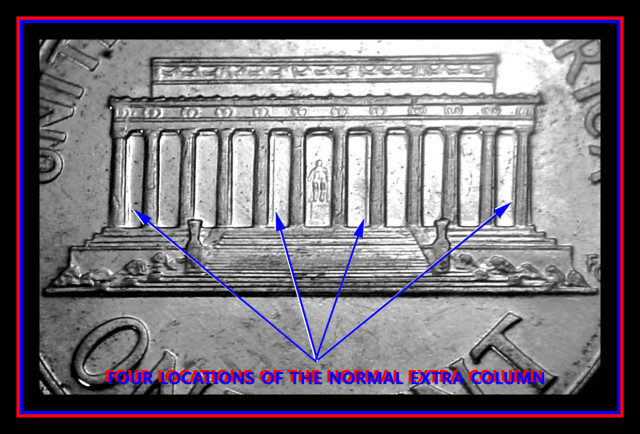
When die clash removal is done to remove the clash marks, these can go away as they are shallow devices.
Another area could be around the face of a bust that is affected by strong die polishing:
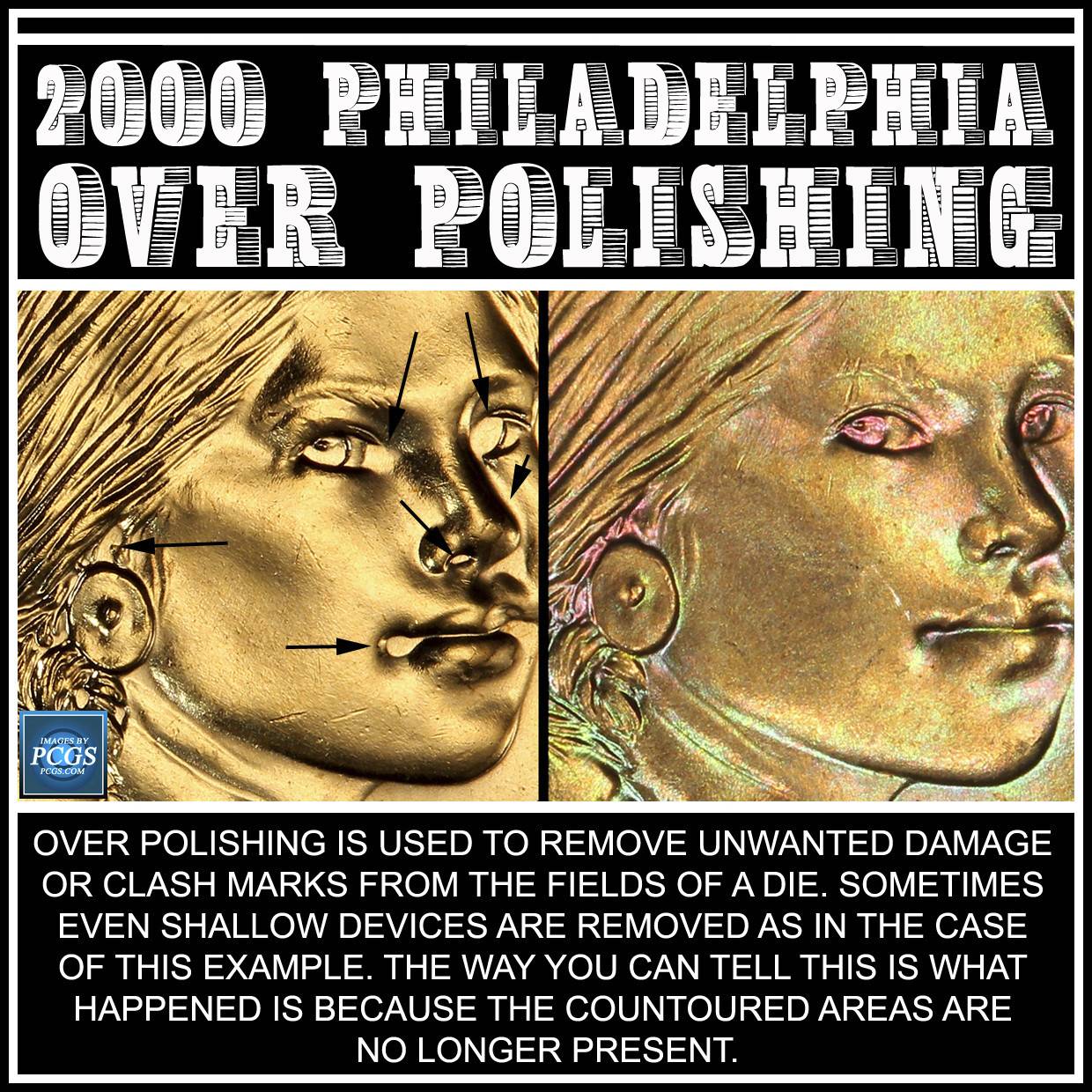
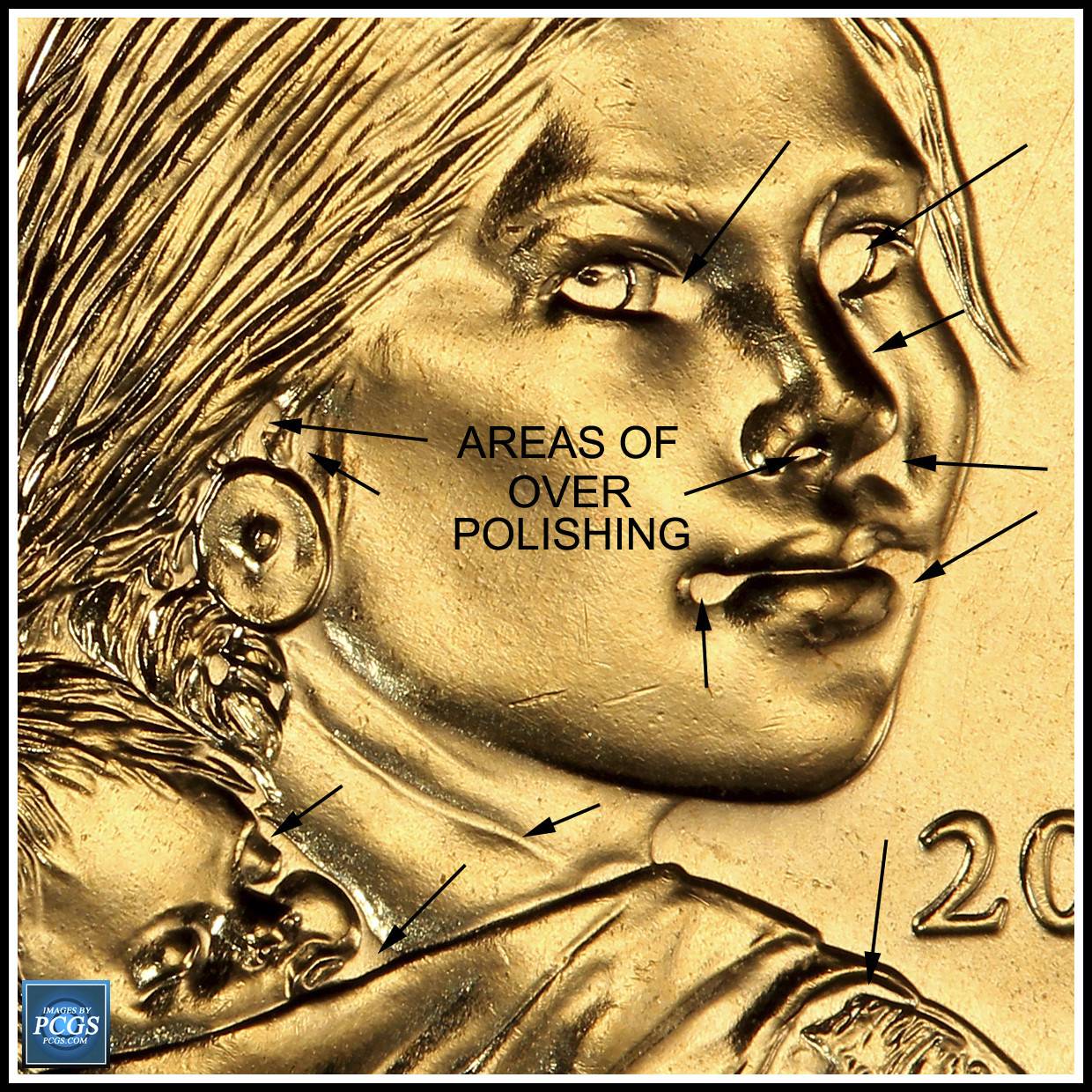 The deeper devices are on a coin, the closer they are to field level, the more they will be affected by die polishing. So when a die polishing happens, what area is affected first, the fields.
|
|
|
|
Bedrock of the Community
United States
80554 Posts |
Very helpful and easy to understand Coop! Thank you for sharing this! It's very educational!
Errers and Varietys.
|
|
Bedrock of the Community
 United States
62064 Posts |
Thanks. The subject kept coming up. I got the feeling when polishing was mentioned, they thought it referred to coin polishing, and not die polishing. Also the bottoms of the devices being affected rather than the tops of the devices may have been hard to understand. Hope that clears this up for everyone? CoopHome: Die polishing affects |
|
Pillar of the Community
United States
7604 Posts |
Awesome work and a very informative subject matter with perfect references,all going into my archives.I particularly like the Sacagawea !
Thank you coop.
|
|
Bedrock of the Community
United States
62064 Posts |
I spotted that on the PCGS site. When I see something interesting, I save them. I've learned to save it the first time seen. Sometimes when you got back to find it, you can spot it again.
|
|
Pillar of the Community
United States
1937 Posts |
Thanks MR. Coop learn a lot from this information and pic..Crystal clear..Appreciate that Sir
|
|
Pillar of the Community
United States
4212 Posts |
As usual, this post is most screamin'.
|
|
Bedrock of the Community
United States
80554 Posts |
This very educational thread was needed. This is a very important thread. It definitely helped me understand the whole process better.
Errers and Varietys.
|
|
Pillar of the Community
United States
7604 Posts |
Quote:
Sometimes when you got back to find it, you can spot it again. And don't I know it! have done it many times.  |
|
Pillar of the Community
United States
986 Posts |
Outstanding explanation! Will be posting my own topic with reference to Coop's post. This one needs to be pinned.
"We are all flawed, some MD and some PMD." NYI |
|
Bedrock of the Community
United States
62064 Posts |
Glad all appreciate this information. It makes it all worth the effort to do this so other can see what I see when I look at a coin. Knowing the reason why things happen during a strike, helps out eyes to be trained. I often use the term, "Thinking like a Die" to enhance how a die is a negative, and a coin is a positive. So when you hear the terms, Master die and Working die, you remember they are negatives, and Master Hub and Working hubs and coins are positives. 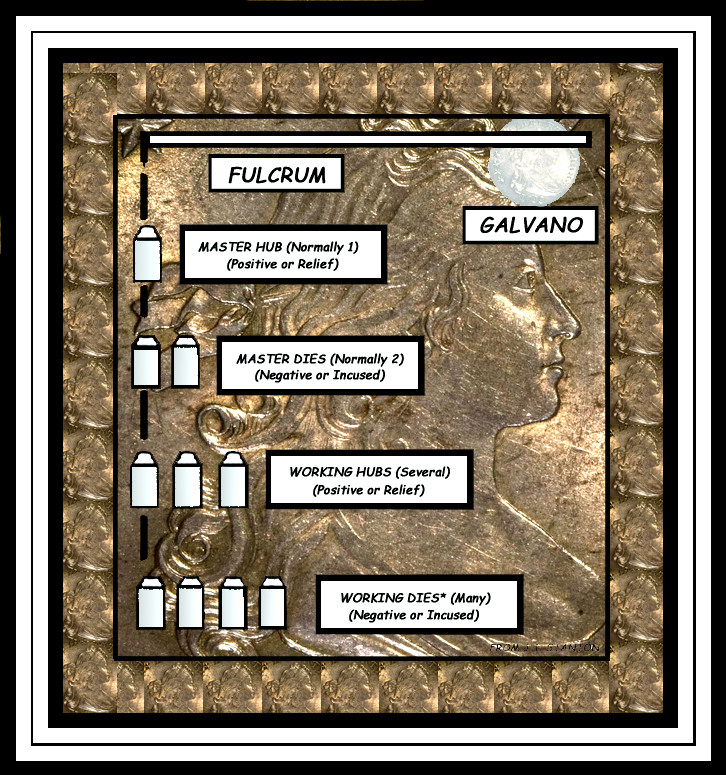 To make you down Example of what they would look like, you could take a piece of aluminum foil and a coin and a paint brush. Place the shiny side on the top of the coin. Then flatten the foil down with the brush, pushing the tips of the brush down on the coin to flatten the foil on the coins surface. When you remove it, it looks like the coin, but when you look at the opposite side the foil (dull side) you see what the die would look like to make the positive to strike up a coin. Dull side negative, shiny side a positive. That is what I'm trying to paint a picture of then I use the term, think like a die. Of then this is followed by if there is a die crack, what would you see on the die? 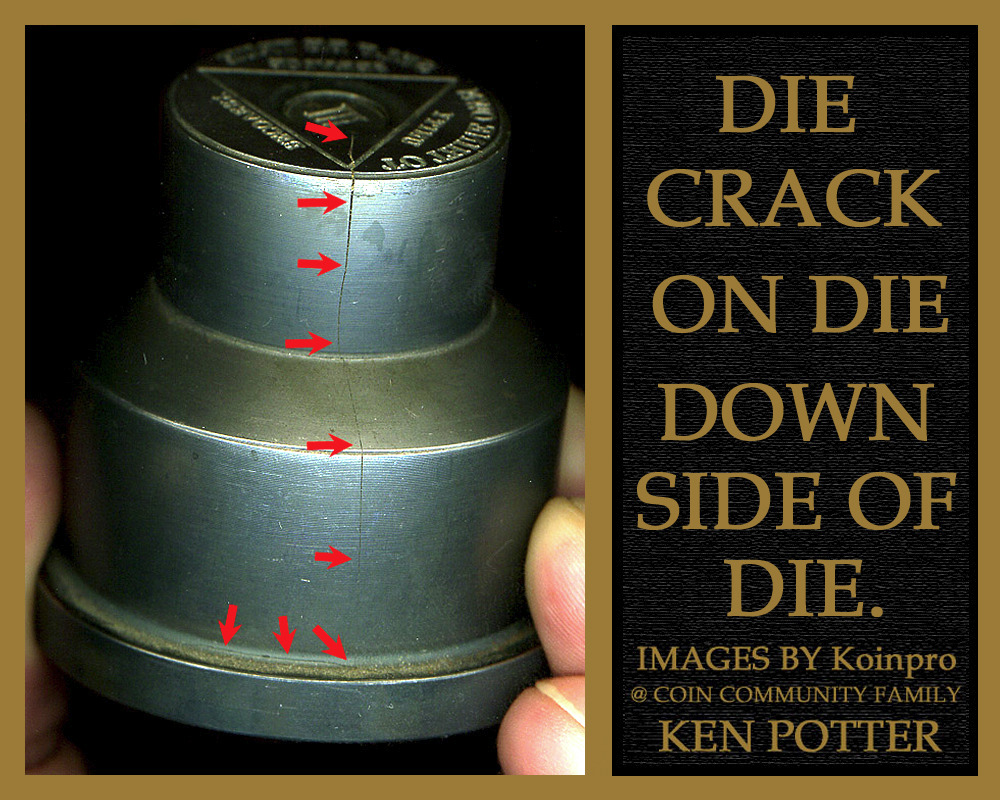 Note the die crack on the top of the die? Note that that crack leaves avoid. Thus when we see a die crack on a coin, the die crack will be raised on the surface of the coin. Thus thinking like a die, the opposite happens to damage on a die. It is raised because of the void on the die. Always nive to add what we already know with just a bit more. (Then you see what I see on a coin) |
|
Valued Member
Hong Kong
155 Posts |
A very educational, outstanding and comprehensive US numismatic knowledge thread.
|
|
Pillar of the Community
United States
4707 Posts |
|
|
Moderator
 United States
110438 Posts |
thanks Coop! very concise.
|
|
New Member
United States
31 Posts |
Hum, I'm not sure that this is correct. The Hub is a positive, and the die is a negative...correct? Okay, well, when the planchet is squeezed under pressure, the metal flows into the deep negative area in the die, thus giving a positive image on the face of the planchet...aka: Coin! Well, if the die gets polished, the only thing a polishing does is take away the high areas from the die...not the low or negative areas within the die. If the polishing were to go deeper into the die, you would now have a Cud like image because it is no longer at the same level as the base of the die. Now, die clashes are different. If you see a die clash on a coin, that's due "HUB" doubling, due to the HUD hitting the die. Remember, ALL dies are negative. HUB's are positive! |
| |
Replies: 14 / Views: 9,765 |
|







 Posted 07/14/2018 3:51 pm