| Author |
 Replies: 16 / Views: 2,071 Replies: 16 / Views: 2,071 |
|
Pillar of the Community
United States
4883 Posts |
Plucked from a group of a few dozen today, none of which were identified. I picked this trio partly because I found them aesthetically pleasing, but also on account that the designs seemed distinctive enough to me that I thought I'd have at least a shot of figuring out more precisely what they were. On the whole, I tend toward frustration in that regard insofar as Greek coins are concerned, and find the references I have less than user friendly. That said, here goes. Coin #1I believe this is from Pella in Macedonia. It's about 19 by 20 mm in size, with the weight coming in at 7.52 grams. 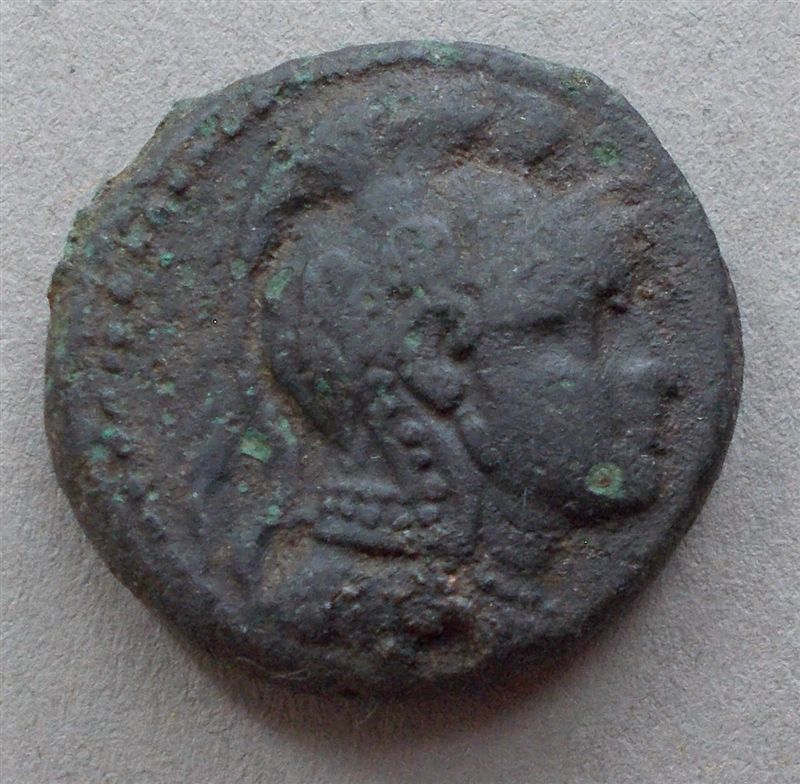 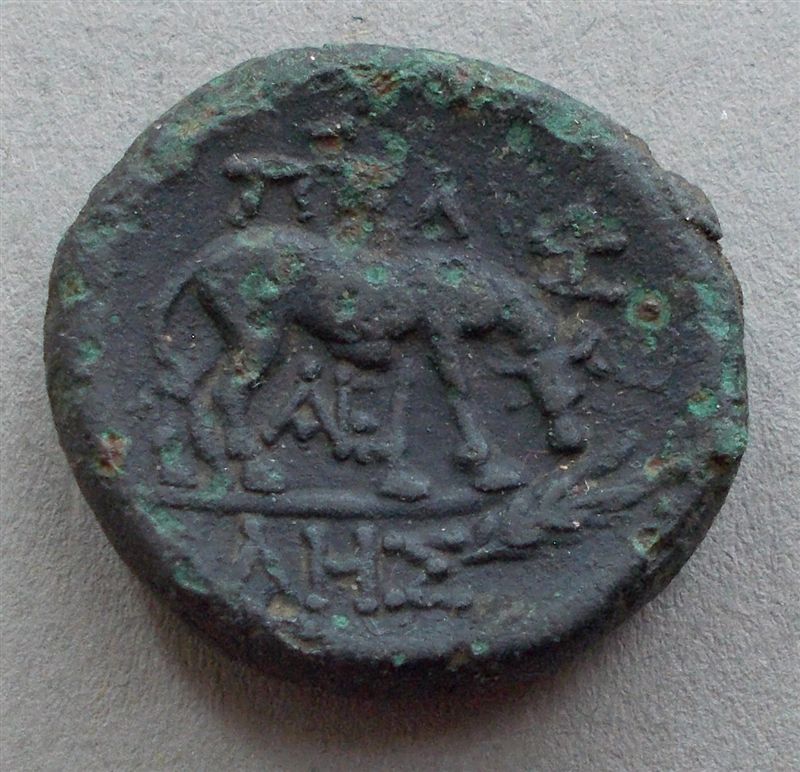 Coin #2 Coin #2I think this is an issue of the Mamertini (conquerors in the third century BC of the strategically located port of Messana in Sicily). Just over 18mm in diameter, and weighing 5.42 grams. 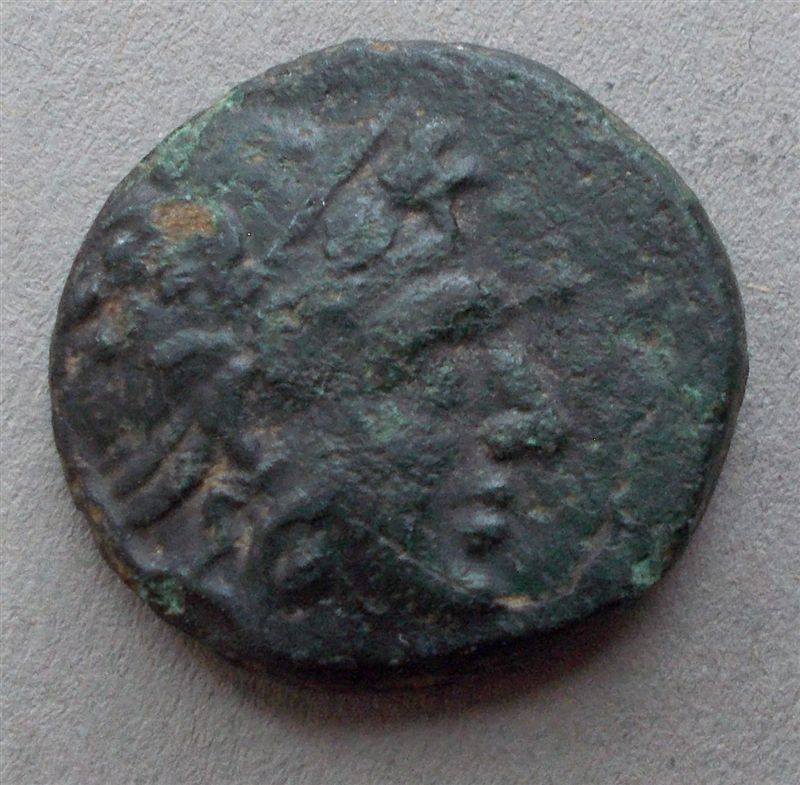 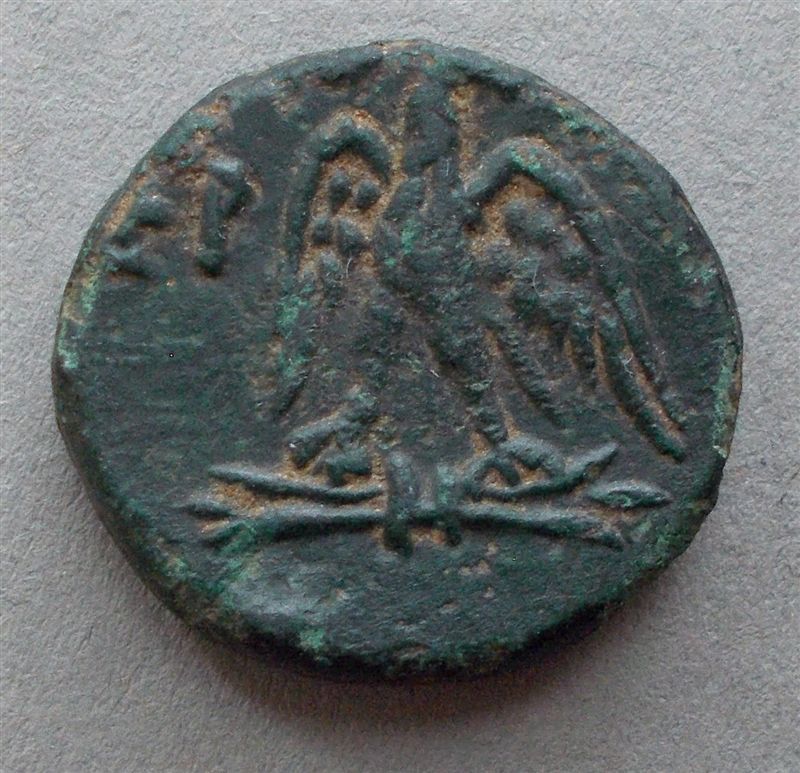 Coin #3 Coin #3With its simple and legible reverse, I thought this'd be the easiest to attribute, but it turns out to be the one that has me totally stumped. Smaller than either of the other two at just a bit over 14mm across, weight at 3.43 grams. 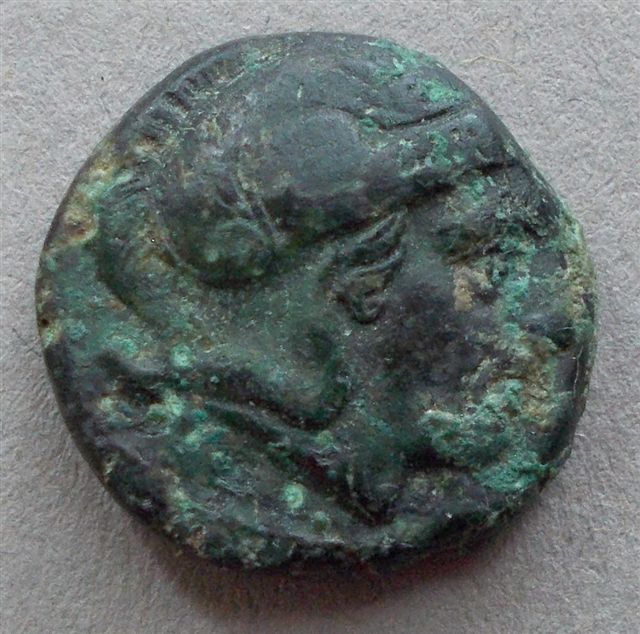 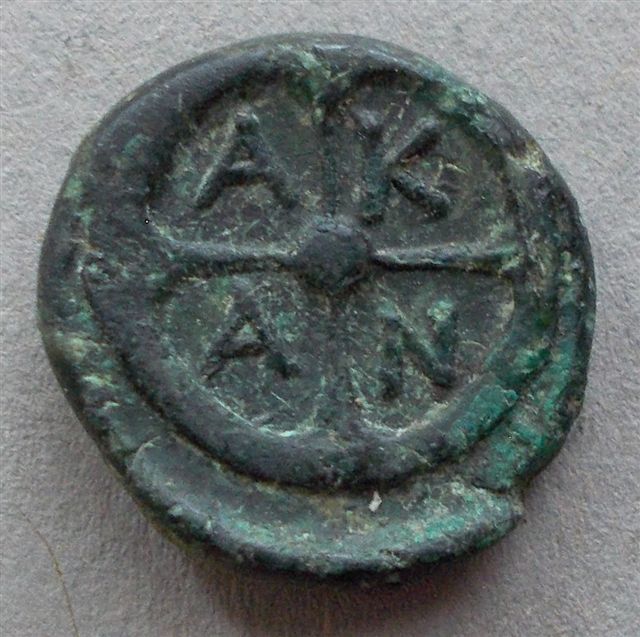 Colligo ergo sum
Edited by Lucky Cuss
07/16/2018 7:38 pm
|
|
|
|
Pillar of the Community
United States
7067 Posts |
Quote:
turns out to be the one that has me totally stumped Akanthos, Macedon. |
|
Pillar of the Community
United States
7067 Posts |
Quote:
think this is an issue of the Mamertini Disagree. If you look carefully, that obverse figure is wearing a winged helmet. Pretty sure that's Perseus and the coin was issued in Macedon. Recommend looking at the Macedonian kings. Edit: EP monogram (upper left reverse field) equates to Perseus (179-168 BC), I believe. Edited by Kamnaskires
07/16/2018 7:30 pm
|
|
Pillar of the Community
United States
1554 Posts |
Let's assume that you've correctly identified coin #1 as Macedonian, struck at Pella. Remembering that Greek bronzes rarely traveled far from their parent city and that all three coins come from the same lot with very similar patinas...
(Hint) Coin #2 has EP (or ΠEP, with parts of E and P also forming Π) monogram and an eagle on a thunderbolt.
(Hint) Coin #3 is inscribed AKAN.
Edited by Kushanshah
07/16/2018 7:59 pm
|
|
Pillar of the Community
 United States
4883 Posts |
Quote:
Akanthos, Macedon. Bingo. Coin #3 is cataloged as SNGANS 56. Seems to be the sole bronze Akanthos issue in a sea of silver ones. Colligo ergo sum
|
|
Moderator
 United States
23731 Posts |
I agree with Bob coin 2 does appear to be Perseus Sear #6807.
|
|
Pillar of the Community
United States
4883 Posts |
Quote:
Remembering that Greek bronzes rarely traveled far from their parent city, all three coins come from the same lot with very similar patinas. I absolutely wouldn't (and didn't) make that assumption - the lot was an older collection that might've been acquired from multiple sources over an extended period of time. Quote:
...an eagle on a thunderbolt That's exactly what I interpreted the symbology to be. Since the Mamertini employed that very same motif (per Seaby 395), I'm not going to be shamed for making an error in that direction. What's easy and obvious to those long immersed in the field isn't so much so for somebody like myself for whom interest in the genre is a fairly recent development.That said, I'll concede it looks more likely that it is indeed an issue of Perseus, similar to if not the same as that cataloged as Mionnet 942. Colligo ergo sum
|
|
Bedrock of the Community
United States
12057 Posts |
Lovely coins with lovely patina. I really need to get into adding some Greek coinage into my collection...this is a good reminder that I am sorely lacking there.
As an aid to understanding, can one of you fine folks with a bit more understanding of Attic Greek confirm that the Greek on the first coin is to be read as PELLES? Just trying to improve my rather limited Attic Greek grammar (I am reading it as the 3sg gen. = "of Pella")
Member ANA - EAC - TNA - SSDC - CCT #890 "Most of the things worth doing in the world had been declared impossible before they were done." -- Louis D. Brandeis |
|
Pillar of the Community
United States
1554 Posts |
@Lucky Cuss I wasn't trying to shame you, for goodness sake. I was trying to lead you to discover the attribution yourself by hinting at my own thought process based on decades of experience. However, while I was typing someone else gave the IDs, making my post mostly irrelevant.
Edited by Kushanshah
07/17/2018 04:16 am
|
|
Pillar of the Community
Belgium
1194 Posts |
@paralyse . You are right .On Greek coins , usualy the origine of the coin in indicated by the genitive , ΠΕΛΛΗΣ = of ΠΕΛΛΑ. On this coin , you have also on the reverse a monogram between the legs of the cow and another above the neck .albert
|
|
Bedrock of the Community
United States
12057 Posts |
Thank you Antwerpen2306. :) I find that learning a bit helps me interpret the legends.
Member ANA - EAC - TNA - SSDC - CCT #890 "Most of the things worth doing in the world had been declared impossible before they were done." -- Louis D. Brandeis |
|
Pillar of the Community
United States
4883 Posts |
I went back and picked up one more of these today, hoping I might be able to improve my batting average, so to speak. I'm fairly certain I'm correct in identifying this latest specimen as an issue of Amphipolis. Diameter varies from about 18 to 19 mm, and it weighs 7.28 grams. 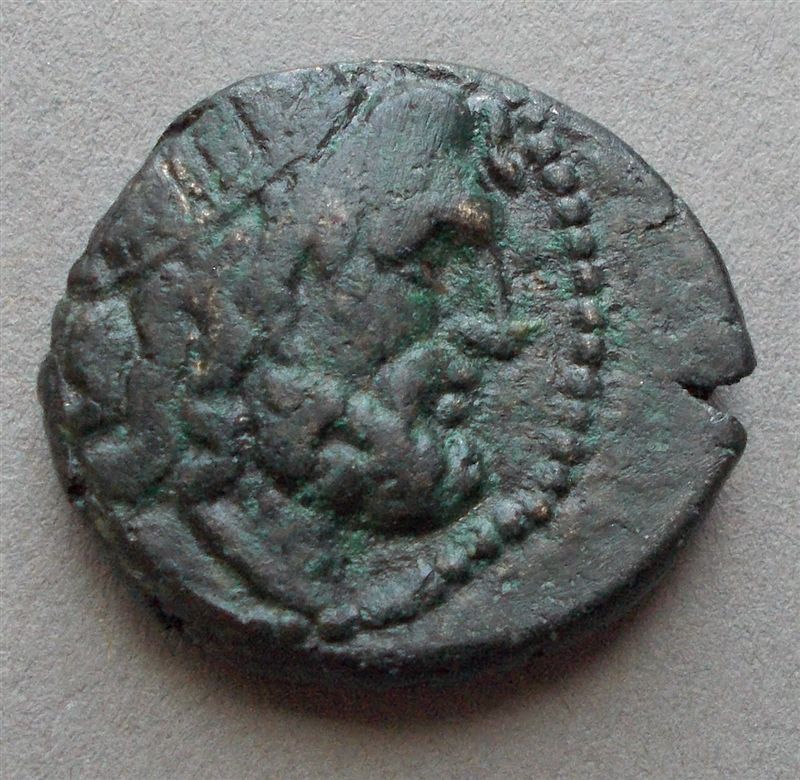 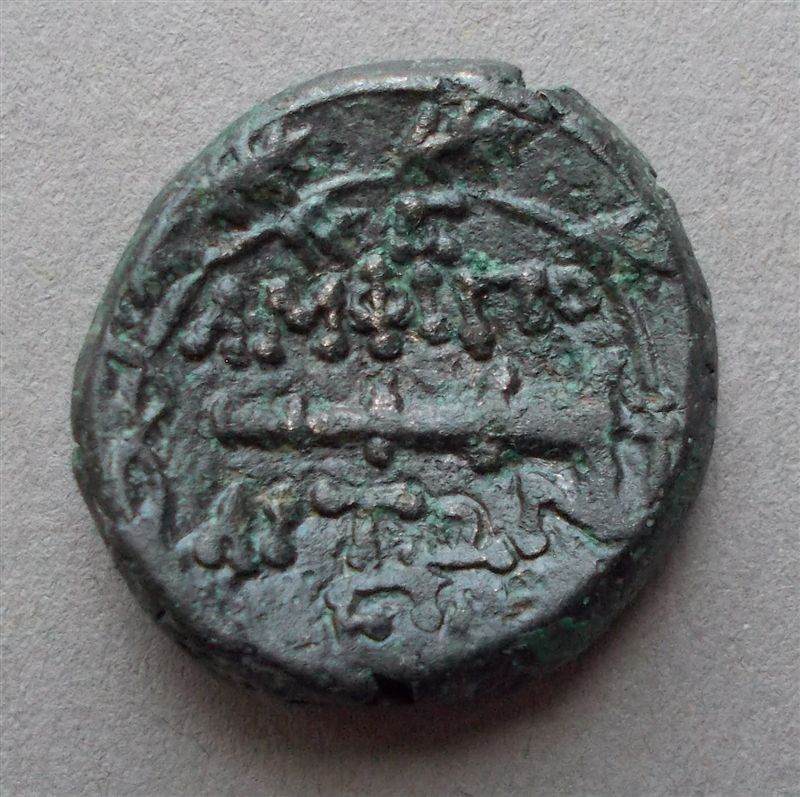 Colligo ergo sum
|
|
Pillar of the Community
United States
7067 Posts |
Nice addition, LC. Congrats. I agree on the attribution.
|
|
Bedrock of the Community
United States
12057 Posts |
Reverse appears to read AMFIPO/LITOS or AMFIPO/LITOI, so it looks like you're on the right track, yes?
Member ANA - EAC - TNA - SSDC - CCT #890 "Most of the things worth doing in the world had been declared impossible before they were done." -- Louis D. Brandeis Edited by paralyse
07/19/2018 6:03 pm
|
|
Pillar of the Community
United States
1554 Posts |
Yes, Amphipolis. @paralyse The reverse legend is AMΦIΠO/ΛITΩN = "of the Amphipolitans". The genitive plural is the more common form of the Greek ethnic, referring to the people rather than the place (cf. ΠEΛΛHΣ = "of Pella", genitive singular).
Edited by Kushanshah
07/19/2018 7:05 pm
|
|
Moderator
United States
23731 Posts |
|
| |
Replies: 16 / Views: 2,071 |










 Posted 07/16/2018 7:24 pm


