Coin Community Family of Web Sites Join Thousands of Coin, Bullion, & Money Collectors
Coin, Banknote and Medal Collectors's Online Mall Vancouvers #1 Coin and Paper Money Dealer Specializing in Modern Numismatics 300,000 items to help build your collection! Join Thousands of Coin, Bullion, & Money Collectors Royal Estate Auctions - $1 Coin AuctionsRoyal Canadian Mint products, Canadian, Polish, American, and world coins and banknotes.


Username:
Password:
Save Password
Forgot your Password?


This page may contain links that result in small commissions to keep this free site up and running.

Welcome Guest! Registering and/or logging in will remove the anchor (bottom) ads. It's Free!

Arab/Byzantine Imitation Follis Justin II

To participate in the forum you must log in or register.
Author Previous TopicReplies: 12 / Views: 1,599Next Topic  
Pillar of the Community

United States
3443 Posts
 Posted 07/21/2018  4:18 pm Show Profile   Bookmark this topic Add FVRIVS RVFVS to your friends list Get a Link to this Message Number of Subscribers
I am reminded of a History class back from away back in 1980
The Late Roman Empire
The professor (whose name I have thankfully forgotten) put forth the question as "How did the cities of the west fall under the sway of Ostrogoths Visigoths Franks etc. ?"
As good little boys and girls we repeated (one after another) everything we had learned in High School.

Those "nasty" barbarians, helped out of course by all the "nasty" German immigrants to the empire, had forced themselves on the "good" Christians of Western Europe and killed off all the noble Romans to set up Kingdoms on the ashes of the empire. A post apocalyptic world ..... sort of a Mad Max meets Conan the Barbarian thing.
Well it was 1980 and going to the movies was still a really big deal.

Our good professor proceeded to explain to us just exactly how an empire operated and how they generally declined over time.
First and foremost an empire is a glorified "protection racket". No matter whom we look at (Roman Byzantine Ottoman British or Russian) the general idea is this
We have a huge military and know how to use it
You have a really beautiful city ...... shame if something were to happen to it !
As is natural in human affairs, accommodations and understandings are reached (usually after a taste of the alternatives) and agreements undertaken.
You pay all your taxes, refrain from nationalist rhetoric, provide troops for the Imperial Army and we will give you protection from attack and make sure the roads are safe and the rich folks well taken care of.
If not ....... we burn the whole place down to the ground.

The Roman, Byzantine and every other empire since has operated in this way.
Despite what we learned in High School.

By the 5th century the Roman bargain had seriously frayed
Cities were routinely sacked by marauding barbarians out on the make and the Imperial authorities usually showed up around 3 months later and accompanied by rapacious imperial tax collectors.
The tax collectors knew that like all "smart" provincials the cities had gold and siver which had been hidden and buried away and the barbarians had carted away around half the wealth. Now they wanted the other half to help cover expenses ! The primary interest of the Roman governors was annually creaming off around half the wealth. If the barbarians had already taken half they gave you their condolences and then demanded the other half. If you refused they had special methods of getting your cooperation.
So the answer to his original question was rather simple !
The organised tribes of barbarians offered a better deal
In return for perhaps a quarter of your annual revenues the barbarian kings (like Theodoric) would show up when needed and give you the protection you craved at a bargain price and ....... they actually delivered ! Showing up within days off the first alarm.
No need of any puny Roman provincials enlisting either
Just pay your taxes (in gold of course) and we will take care of all the heavy lifting.
When Justinian made his great campaign to "restore" the West to the empire he did so because the kings of the west were more than happy to acknowledge him as emperor but when he asked for tax money all he ever got was a nice postcard in return saying "Weather is here wish you were beautiful !"

By the time of the Muslim conquests the people of North Africa and the Middle East were ready for a better deal too.
Pay our "modest" taxes and behave yourselves and the new "barbarian" princes offered protection in the form of lightening fast cavalry that showed up literally within hours of distress and often out of the vast desert behind the guys besieging your city. These guys were not only fast but they wielded blades that could cut a man in half faster than you can say "pass the Syrian bread"
Oh and you can keep all your local language, law courts, churches, customs, coinage etc but ......
FYI Converts to the faith pay a lower tax rate.
Not hard to see where that often leads too after a few hundred years pass by does it
The good citizens of Carthage were quite happy to see the Byzantine tax collectors sail off into the early morning sunrise.
"Bye ..... give my regards to the emperor !"
Tell him we love him ...... bye

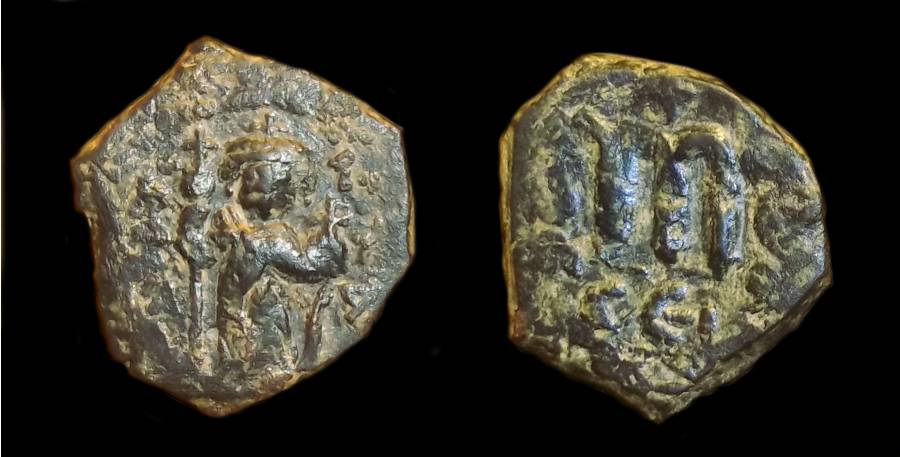
So here we have an interesting bronze coin
A very early "Islamic" issue from the Emesa aka Homs
(according to the sellers attribution)
The Emperor Heraclius had hightailed it out of town after getting his butt kicked by a much smaller army of Rashidun Muslims under the Caliph Umar ibn al-Khattab during the Battle of Yarmouk in southern Syria.
The people of Emesa knowing which side of the Syrian bread their hummus was on, promptly cut a better deal with the new regime.
They even gave the emperor his due respect (as long as he stayed put in Constaninople !)
So ...... basically just an ordinary follis of Justin II with a few minor "improvements" of course


Æ Follis Byzantine Emperor image of Constans II
3.54 grams 18-21mm
AD 641-68
Emesa (Homs) mint

Obv. NOΛAK
Emperor Constans II wearing crown and chlamys facing holding cross and cross on globe

Rv Large M
EMI to left
dot star dot above
CHC to right
tayyib (arabic) in exergue


4.52 grams 20-1mm
Sica 542


Arab/Byzantine-Imitation-Follis-Justin-II

I apologize for being long winded
Sometimes I just don't know when to stop
Edited by FVRIVS RVFVS
07/21/2018 4:26 pm
Pillar of the Community
Kamnaskires's Avatar
United States
7066 Posts
 Posted 07/21/2018  5:05 pm  Show Profile   Bookmark this reply Add Kamnaskires to your friends list Get a Link to this Reply
I love your writing, FR. Thanks for the context. Really nice pick-up. Congrats.
CCF Advertiser
Learn More...
louisvillekyshop's Avatar
United States
1306 Posts
 Posted 07/21/2018  6:34 pm  Show Profile   Bookmark this reply Add louisvillekyshop to your friends list Get a Link to this Reply
FVRIVS RVFVS:

Fun reading! I think about this stuff a lot also, what was going through their minds. So when you say, "They even gave the emperor his due respect (as long as he stayed put in Constaninople!" I have to wonder if that was the case, they "saw" this image as the emperor. Obviously it can't be anyone else but I kind of felt they might have just saw the continuation of a coinage that would be recognizable to the people and easy to accept but no official thought that the design was anyone special other than a design. But they of course could have seen this as the Byzantine emperor. But then think of this coin:

http://www.forumancientcoins.com/mo...ids_004.html

That coin, an Islamic coin, is copying a true mystical creature or a centaur. And others have what was copied from true old religion Gods and Goddesses. If these were just comfortable designs in those cases as they did not believe in the past God and Goddesses maybe that is how they saw copying the Emperor?

Like in Judaism, we have a bunch of ancient prayers where we hope people see our one God is better than all the other Gods. Like someday Gods name will be one and sure there are probably other Gods not as good as ours. Of course our ancient prayers are pretty childlike compared to the amazing stuff the Christians and Islam have with so much more depth. So many of ours translate to, Boy you are a big God and we like the sun and oh wow Jacob how great your tent looks today...
Edited by louisvillekyshop
07/21/2018 6:35 pm
Pillar of the Community
United States
3443 Posts
 Posted 07/21/2018  6:50 pm  Show Profile   Bookmark this reply Add FVRIVS RVFVS to your friends list Get a Link to this Reply
You make some good points
But I believe in this "Byzantine" type the emperor is seen in his role as de facto head of the "Greek" Church.
There was no formal schism yet between east and west but the people of Emesa were for the most part Christians.
I think they probably viewed Constans as the leader if not the head of the Church.
The patriarch of Constantinople no doubt had a nice palace.
The emperor had a bigger one
And an imperial army too
Moderator
Learn More...
echizento's Avatar
United States
23731 Posts
 Posted 07/21/2018  7:38 pm  Show Profile   Bookmark this reply Add echizento to your friends list Get a Link to this Reply
FR excellent coin and outstanding and enjoyable write-up. I am inclined to your idea of the emperors role as the overall head of the church and army. A degree of respect was afforded him by the Arabs.
Pillar of the Community
United States
1554 Posts
 Posted 07/21/2018  8:23 pm  Show Profile   Bookmark this reply Add Kushanshah to your friends list Get a Link to this Reply
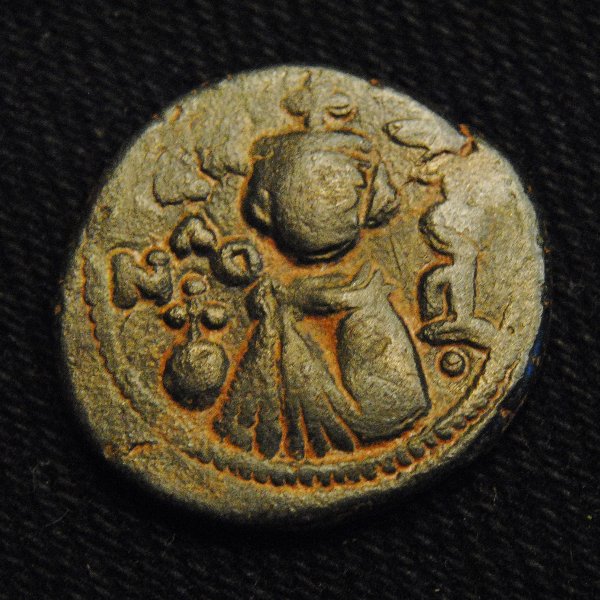
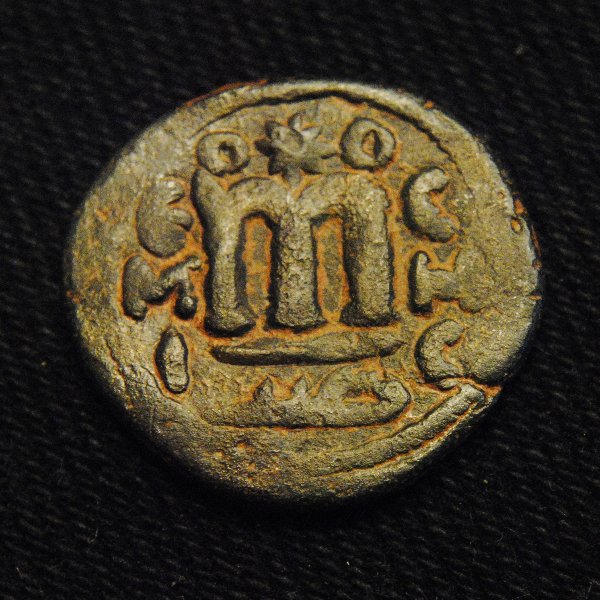
Coins of this type were struck between about 670/680 and 693 under Umayyad authority and represent one step in the post-conquest transition from the former Byzantine coinage to a purely Islamic coinage. Under the Umayyad Caliphate, Syria was divided into military districts and the copper coinage was under the control of the various Arab military governors with supervision from Damascus. Coins of the type shown here belong to the "imperial image" or "bilingual" series. The imperial image coins followed the "pseudo-Byzantine" coins which had been more or less straight-forward imitations of Byzantine types and had been in use since the 640s. The imperial image series continued to rely on Byzantine prototypes but included new elements such as mint names in both Greek (EMICHC) and Arabic (bi-Hims). This coin of Hims also bears the word "good" in both Greek (KAΛON) and Arabic (tayyib). In 693, the imperial image coins were replaced by the "standing caliph" coins, which removed remaining Byzantine and Christian references. A final reform in 698 eschewed figural representation altogether with a simple inscription stating "There is no god but Allah" on the obverse and "Muhammad is the apostle of Allah" on the reverse.
Edited by Kushanshah
07/21/2018 9:19 pm
Pillar of the Community
Learn More...
tdziemia's Avatar
United States
7953 Posts
 Posted 07/22/2018  07:44 am  Show Profile   Bookmark this reply Add tdziemia to your friends list Get a Link to this Reply
Kudos to all for both the political history and numismatic history. I'm wading my way through a book on the history of Christianity and had just reached the 4th century, when the terms of that "protection racket" changed appreciably (not much of a numismatic angle to that reading, but maybe it will stir an interest in ancients that I don't yet have).
Pillar of the Community
United States
3443 Posts
 Posted 07/22/2018  6:06 pm  Show Profile   Bookmark this reply Add FVRIVS RVFVS to your friends list Get a Link to this Reply
If you are willing to as you say "wade" through a book on early Christianity
I am quite sure we could find you some small bronze token of the periods you are studying
that might 'infect' you with this often debilitating disease.
Then you can join us in celebrating (and lamenting) the gems we find scattered amidst the detritus of this thing we call "Civilization" !
On another note ........
If you truly find pleasure in studying the early Church you might well enjoy reading what Edward Gibbon had to say about the religious controversies of the 4th & 5th centuries.
He has many chapters devoted to the various sects and discusses how they affect us right down to today.
Be advised though
He was writing this by candle light back in 1776
The world around him was changing fast
Many of his observations were considered disrespectful if not downright insulting to authority
But he also has a Monty Python type of humor which catches up on you unexpectedly
Don't skip the footnotes either
Outside of the direct quotes given in original Greek and Latin he often adds riotously funny comments
Pillar of the Community
United States
1120 Posts
 Posted 07/23/2018  3:08 pm  Show Profile   Bookmark this reply Add travelcoin to your friends list Get a Link to this Reply
Great Read - Great Insight - THANK YOU
Moderator
Learn More...
Spence's Avatar
United States
34423 Posts
 Posted 07/23/2018  4:19 pm  Show Profile   Bookmark this reply Add Spence to your friends list Get a Link to this Reply
Yes thx to all for helping me learn something today.
"If you climb a good tree, you get a push."
-----Ghanaian proverb

"The danger we all now face is distinguishing between what is authentic and what is performed."
-----King Adz
Pillar of the Community
chrsmat71's Avatar
United States
4966 Posts
 Posted 07/25/2018  12:32 am  Show Profile   Bookmark this reply Add chrsmat71 to your friends list Get a Link to this Reply
Interesting! I'd love to get an Arab-Byzantine that has some Arabic on it!

I have this coin of Constans II, someone told me it was an Arab imitative coin at one time, but I'm not certain. Anyone know? I think it isn't. It has the strange ANA NEOS legend flanking the M, and the year below (KEI maybe?), which is different for Byzantine coins, but doesn't seem that strange compared to other ones I"ve seen online.

Arab/Byzantine-Imitation-Follis-Justin-II
Edited by chrsmat71
07/25/2018 12:42 am
Pillar of the Community
United States
1554 Posts
 Posted 07/25/2018  07:02 am  Show Profile   Bookmark this reply Add Kushanshah to your friends list Get a Link to this Reply
@chrsmat71 To my eye your coin is an official Byzantine issue, year 6, officina E. The figure that looks like "K" is the Greek numeral 6 and the "I" is actually the S of NEOS. Sear 1005. It can sometimes be difficult to tell the difference between a well-made "pseudo-Byzantine" fals and a poorly-struck or over-struck official follis but there will usually be something amiss on the Arab pieces such as reversed letters or unusual symbols.
Edited by Kushanshah
07/25/2018 07:11 am
Pillar of the Community
chrsmat71's Avatar
United States
4966 Posts
 Posted 07/25/2018  10:27 pm  Show Profile   Bookmark this reply Add chrsmat71 to your friends list Get a Link to this Reply
Thank you Kurshanshah!
  Previous TopicReplies: 12 / Views: 1,599Next Topic  

To participate in the forum you must log in or register.


Disclaimer: While a tremendous amount of effort goes into ensuring the accuracy of the information contained in this site, Coin Community assumes no liability for errors. Copyright 2005 - 2026 Coin Community Family- all rights reserved worldwide. Use of any images or content on this website without prior written permission of Coin Community or the original lender is strictly prohibited.
Contact Us  |  Advertise Here  |  Privacy Policy / Terms of Use

Coin Community Forum © 2005 - 2026 Coin Community Forums
It took 0.47 seconds to rattle this change. Forums