









 Posted 07/23/2018 9:44 pm


Quote:
And cna anyone take a stab at what the originals of these assumed fakes are?
And cna anyone take a stab at what the originals of these assumed fakes are?
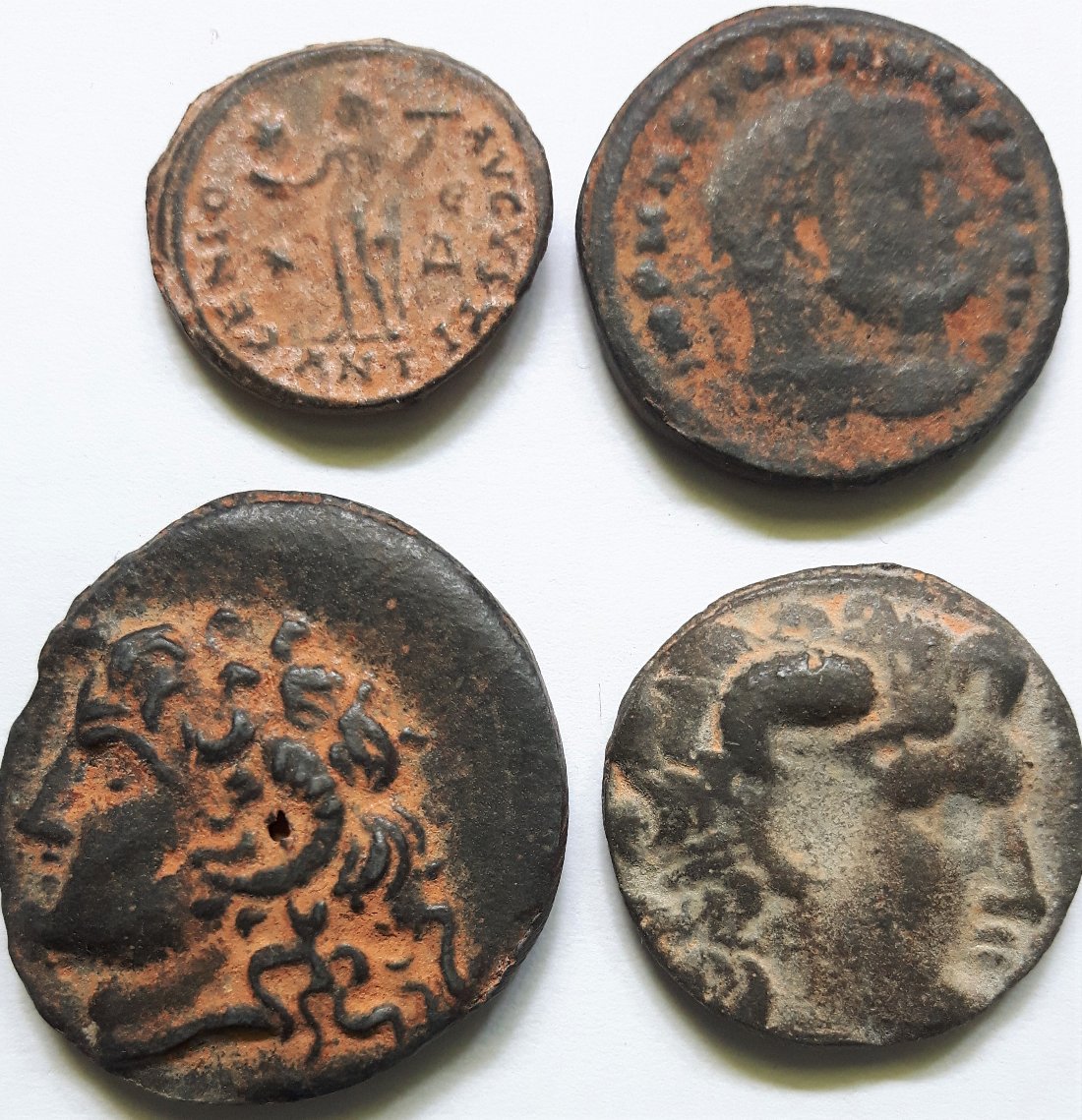
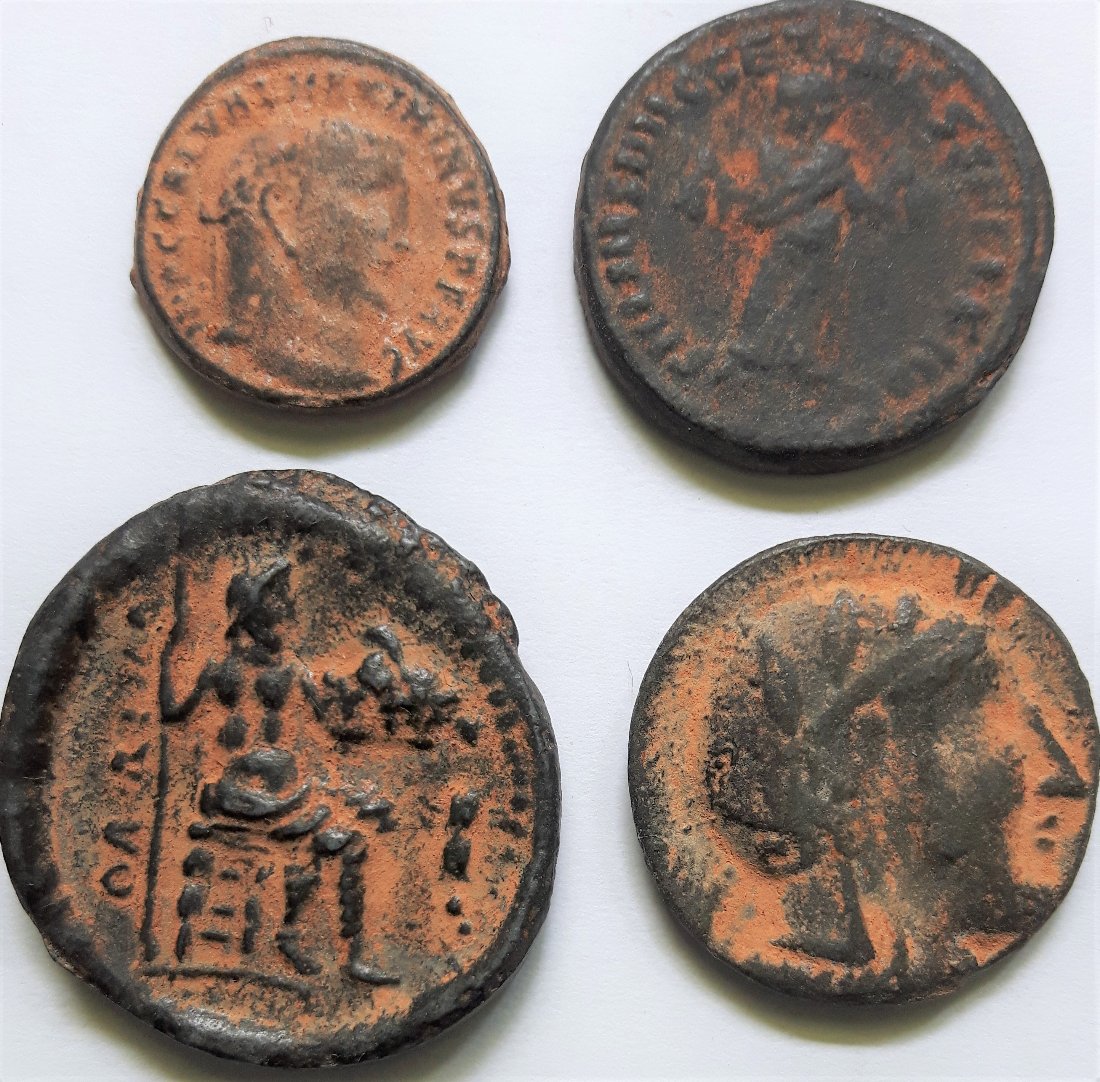
Top left is a "late Roman bronze" of emperor Maximinus II, Antioch mint, fourth office. There is suspicion this one might be genuine, because coins dug up in sandy conditions can look like that and the genuine coins in this condition are cheap enough and common enough, making this coin almost "too cheap to fake". Almost; there isn't really such a thing as "too cheap to fake". See this Wildwinds page, scroll down about a quarter of the way, to "Antioch RIC VII 164b delta".
Top right another late Roman bronze, this time from emperor Maximianus (note the slightly different spelling with an extra "A") and commemorating the re-founding of Carthage; on this page, scroll about 2/5ths down to the "Carthage" coins. This one is suspected fake mainly for the mushy details.
Bottom left I'm not entirely sure what it is, but it too seems to be a mule. The obverse shows Zeus-Ammon, a Greco-Egyptian syncretism of Zeus and Amun worshipped after Alexander the Great's conquest of Egypt and commonly featured on Egyptian bronze coins. The seated Zeus on the reverse, however, is rarely seen on Egyptian coins or bronze coins generally and appears to be taken from a silver Tetradrachm of one of Alexander's successors.
Bottom right seems to be a complete double-obverse fantasy.
Don't say "infinitely" when you mean "very"; otherwise, you'll have no word left when you want to talk about something really infinite. - C. S. Lewis


