| Author |
 Replies: 9 / Views: 1,625 Replies: 9 / Views: 1,625 |
|
|
Moderator
 United States
34564 Posts |
Hi. I need a little help with this coin. As stated in the title I have here a silver Hvid (4 Pfennig) from Malmö in what was Denmark when this coin was struck, but is now just across the Φresund Bridge in modern-day Sweden. The obv inscription is NOVA REGNI DACIE while the rev inscription is MON MAL MOI ENS. There is one peck mark on the obv and one on the rev. It has been attributed as Galster 22, but not only do I not have this reference, but also I have a huge gap in my numismatic library for Scandinavia between the 11th and 17th Centuries AD. I have ordered a copy of Pilegaard and Juul's "Siegs Montkatalog", but until that arrives, I only have what is on the interwebs for my research. Evidently in Galster, Schou, and the other old numismatic references (and then dutifully entered into Numista), this coin was issued under the authority of the Privy Council of 1444 AD and therefore can be dated to this year. However, I am seeing one website ( https://www.danskmoent.dk/rigsraad.htm ) which rejects this attribution and favors the later Council of Governors, which ruled from 1481 to 1483 AD. Anyone out there have any further thoughts on why the change of issuing bodies (and resulting dates)? I have reached out to the good folks at danskmoent.dk and will post any answer that I receive here, but was hoping for more opinions. Thanks in advance! 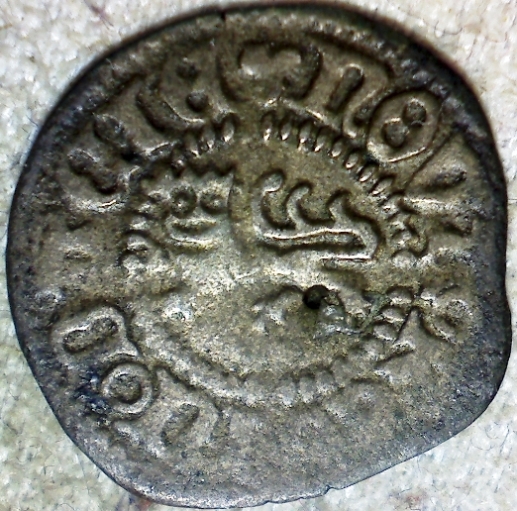 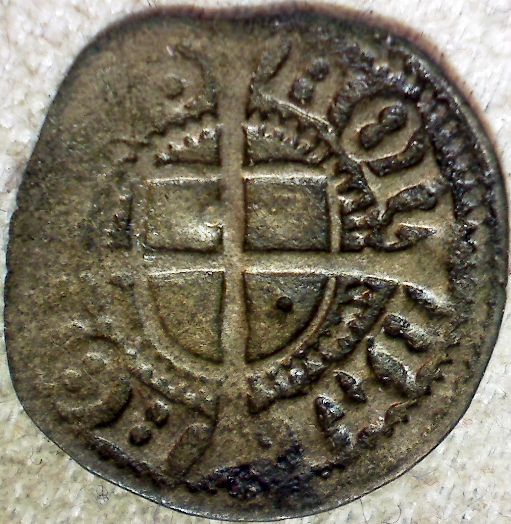 "If you climb a good tree, you get a push."
-----Ghanaian proverb
"The danger we all now face is distinguishing between what is authentic and what is performed."
-----King Adz
Edited by Spence
09/01/2018 2:30 pm
|
|
|
|
Bedrock of the Community
United States
12057 Posts |
A 19th c. German reference (1834 Berlin auction catalog) offers the following:
Christoffer III. 1439-1448
4916. Solidus. AV (Gold). CRISTOF REX DSN. In der Mitte ein gekröntes R.
Rev: Ein leerer Schild über welchem ein grosses, die Umschrift: MON MAL MOI ENS theilen des Kreuz liegt.
Johannes. 1482-1513
4919. Seltener Solidus desgl. (= desgleichen)
AV. NOVA REGNI DACIE Kleeblatt. In der Mitte in einem punktirten Kreis, ein Löwe. Rev wie No. 4916.
Translated approximately:
An uncommon solidus, likewise gold.
Obverse: NOVA REGNI DACIE / clover. A lion in the middle of a dotted circle. The reverse is as #4916 (above.)
For #4916 above:
Rev: A large blank/empty shield, the legend: MON MAL MOI ENS divided by a cross.
While your coin is quite obviously not a solidus, this might help you narrow down the time frame of a Hvid with similar design and legends. John of Denmark (Johannes) reigned from 1455-1513. This, to me at least, makes the 1481-1483 date more probable.
Member ANA - EAC - TNA - SSDC - CCT #890 "Most of the things worth doing in the world had been declared impossible before they were done." -- Louis D. Brandeis |
|
Moderator
United States
23731 Posts |
Interesting coin Dave, we don't see many coins from that part of the world.
|
|
Moderator
 United States
34564 Posts |
Ok thanks Adam for the leads. I'm not convinced that this was issued by either Christoffer III or Johannes, but I'm going to chase this down a little more.
Yes Ron, I agree that we don't see enough medieval coins from Northern Europe.
It seems like @ultrarant has slowed his participation, but perhaps @X2an will weigh in. Or @wallet--any thoughts from either of you? I'm probably forgetting others from Scandinavia who frequent our little corner of CCF.
"If you climb a good tree, you get a push."
-----Ghanaian proverb
"The danger we all now face is distinguishing between what is authentic and what is performed."
-----King Adz
Edited by Spence
09/01/2018 3:57 pm
|
|
Bedrock of the Community
United States
12057 Posts |
It was just a suggestion of some possibilities I found that had similar designs as your coin. This is not an area with which I have much experience, so I couldn't really offer much more, unfortunately, that might be of use.
Member ANA - EAC - TNA - SSDC - CCT #890 "Most of the things worth doing in the world had been declared impossible before they were done." -- Louis D. Brandeis |
|
Moderator
United States
34564 Posts |
For those interested parties, here is the answer which I received via email, along with a link to the full description for those who want additional information (Google translate does an adequate job if you aren't Danish-speaking). I now feel pretty comfortable dating my Hvid to 1481-1483 AD. Quote:Until 1995 it was commonly accepted, that the Hvid and the Skilling bearing the name of the Rigsraad (council of nobles electing the new king as Denmark was at the time not automatically a father-to-eldest-son monarchy) were both struck in the interregnum 1448 between the death of Christoffer of Bavaria and the election of Christian 1. However in that periode, Denmark had one more interregnum, namely the one between the death of Christian 1. in 1481 and the election of his son Hans in 1483 and as the hoards containing Rigsraadshvid (Galster 22) are mainly seen in hoards also containing coins from king Hans and never in hoards containing only coins from Christian 1., Ostergaard in 1995 wrote an article where he suggested, that the skilling was from the 1448 interregnum whereas the hvid was from the 1481-83 interregnum. This is now generally accepted. The article is: http://www.danskmoent.dk/hvidrigs.htmBest wishes - and thanks for your interest in Danish coins! Niels Jorgen, Danish coins. http://www.danskmoent.dk/hvidrigs.htm"If you climb a good tree, you get a push."
-----Ghanaian proverb
"The danger we all now face is distinguishing between what is authentic and what is performed."
-----King Adz
|
|
Bedrock of the Community
United States
12057 Posts |
Outstanding, Spence! I'm glad you were able to nail that one down.
Member ANA - EAC - TNA - SSDC - CCT #890 "Most of the things worth doing in the world had been declared impossible before they were done." -- Louis D. Brandeis |
|
Pillar of the Community
 Spain
2752 Posts |
Very nice coin! Really like the toning...
As you know its not my collecting area ..Yet! But because of yours and others posts I´ve started taking an interest in medieval coins and will probably start by buying some of the kings from here in Spain....
Glad you got the correct attribution and thanks for sharing,really nice addition to your collection...Paul
|
|
Bedrock of the Community
United States
12057 Posts |
Ancients get a lot of love, but medieval coins don't always get the same appreciation from collectors. I think this is in part due to a general lack of research material at affordable prices in easy-to-use formats, much less in the English language; the legends on many medieval issues are often both abbreviated and inscrutable, especially when written with early letter styles and forms.
That being said, medievals give you the chance to own coins from the reigns of famous kings, queens, generals, shahs, khans, etc. often for much less than trying to put together a set of the 12 Caesars or a couple of Athenian owls. If you go into Early Modern, a nearly-complete set of Spanish monarchs from Fernando V (1452, first of Trastamara) to Carlos II (1700, last of Habsburg) can be put together in decent collectible grades with a very reasonable budget, and even the most expensive/rarest won't go much over 100 euros in a decent lower grade.
Member ANA - EAC - TNA - SSDC - CCT #890 "Most of the things worth doing in the world had been declared impossible before they were done." -- Louis D. Brandeis |
|
Moderator
United States
34564 Posts |
Quote:
I´ve started taking an interest in medieval coins and will probably start by buying some of the kings from here in Spain.... ¡Felicitaciones!  Glad to have you coming on board. For me, the only book of medieval Spanish coins needed has been my Cayon & Castan, "Las monedas Españolas desde Don Pelayo a Juan Carlos. I anos 718 A 1979." "If you climb a good tree, you get a push."
-----Ghanaian proverb
"The danger we all now face is distinguishing between what is authentic and what is performed."
-----King Adz
|
| |
Replies: 9 / Views: 1,625 |
|







 Posted 09/01/2018 3:22 pm





