| Author |
 Replies: 39 / Views: 10,569 Replies: 39 / Views: 10,569 |
|
|
|
Pillar of the Community
Canada
1267 Posts |
Quote:
I always wondered how they mass-produce these things.
They don't because they can't. See the pull-away effect towards the rims on the stars and date? That can not be replicated. See the elevation chromatics (correct color progression between relief and recesses)? That also cannot be replicated. The coin you posted has the pull-away effect, correct color progression and elevation chromatics. It's the real deal, and totally unique. Here are a few artificially created pieces and a few natural ones to compare with. Artificial Notice the abrupt change in color, lack of elevation chromatics, and odd color progressions. The first Morgan was gassed in it's slab. 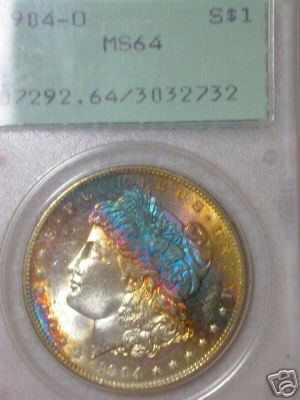 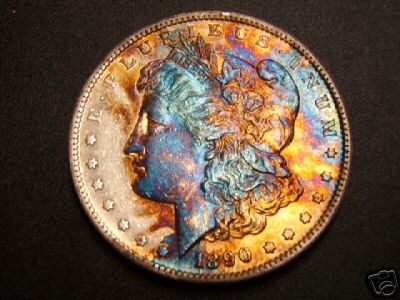 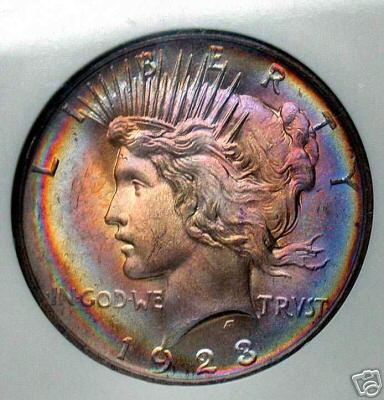 Now a couple of naturally toned examples. Notice how the color changes flow, elevation chromatics are present, color progression is correct, and textile is present (textile is both rare and impossible to replicate). 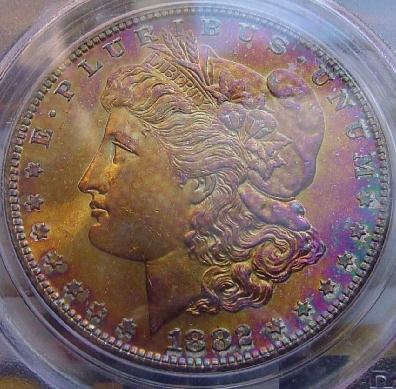 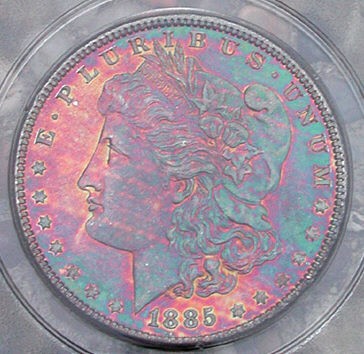 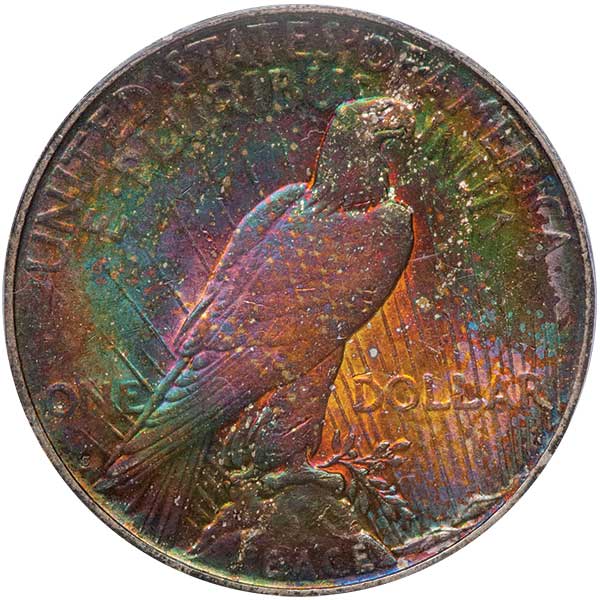 |
|
Bedrock of the Community
United States
12477 Posts |
Those are nice examples, hadleydog!  However, OP's intention is being lost. The point is to recreate the atmosphere and conditions in which all of those lovely "naturally" toned coins came about over decades. It is not about a quick fix or turnover. In Memory of Crazyb0 12-26-1951 to 7-27-2020
In Memory of Tootallious 3-31-1964 to 4-15-2020
In Memory of T-BOP 10-12-1949 to 1-19-2024
|
|
Pillar of the Community
Canada
1267 Posts |
You are correct, Spruett. I got a little side tracked there. Pennypride, there are countless methods of encouraging coins to tone, and it can be a wonderful learning exercise. Try placing an ASE in a Taco bell napkin on a windowsill (needs light). The ASE's work well because of the silver content, not sure why the taco bell napkin but it works. Try placing one in a potato, and bake for an hour. Heat does some strange things to silver, and it can happen quickly. As far as recreating something silmilar to the naturally toned examples I posted earlier, it can't be done. Those coins were placed in mintbags that were sprayed with a sulphur solution (to prevent the rats from chewing them), and then placed in warm, damp vaults for about 80 years. The particular way the mint prepared the planchets, and the washes they used played a significant role as well. I do encourage you to experiment, take lots of pictures, and spend some time on the web. You experiment enough, and you will develop a feel for what to look for and what to look out for. Have fun, and enjoy the hobby. Bruce Edited by hadleydog
09/04/2018 03:29 am
|
|
Valued Member
United States
441 Posts |
Quote:
The particular way the mint prepared the planchets, and the washes they used played a significant role as well. Yes, very important factors involved, here. I have learned quite a bit about these things over the years. Particularly, experienced dealers often have hidden jewels of knowledge about the histories of mint practices. Not the type of things that mere googling could ever lead you to, either. Pay attention to the colors and/or degree of toning among the varieties, the mints, and the metals as well. Today's coins use far purer metals than were used 100 years ago, also just because denver used a certain wash doesn't mean San Francisco did. |
|
Pillar of the Community
5464 Posts |
hadleydog- Very interesting synopsis and detailed explanation, which may very will be industry standards. Why........because everyone is making money. If these coins were viewed by the numismatic community and TPG'ers as damaged, detailed or corroded and all slabs indicated such, I would venture to say the popularity of these would decline. I guess it's a supply and demand thing. I guess this guy just happened to find all these.......sure he did! http://www.jhonecash.com/coins/tonedmorgans.aspIt's an industry.. |
|
Moderator
 United States
196572 Posts |
Quote:
Maybe... A market can choose to abandon what is good and right, so acceptability sometimes cannot be trusted. Quote:
Whether something is "market acceptable" is inextricably linked to profit, so I have to say that this topic does not address that, and has not requested any input on it. Here are two reasons why I say Market Acceptable is better than saying Artificial v. Natural... Badthad posted here: Quote:
I standby my opinion that there is no such thing as "artificial" or "natural" toning. It's hogwash. A coin is either market acceptable or it is not. Yes, people "create" toning - but, just like cleaning, when it's done right the coin can be market acceptable. That said, more often than not, such experiments end in a complete disaster ruining the coin forever. SsuperDdave posted here: Quote:
The toning you see is the product of what, in most cases, is called "corrosion." In numismatics, when it has a pleasing appearance, it is called "toning" instead of "corrosion" and fans pay exorbitant prices for it.
When you do this artificially - and it's relatively easy if you're willing to be exact about your work and patient - you become a pariah, someone we publicly identify and disparage, because the only "acceptable" toning is that which came about by natural processes, without deliberate human help.
Yet, when done right, there is no physical way to determine whether the toning has been created artificially or naturally.
Yes, that's a bit of a contradiction, isn't it?
More ground-engaged collectors therefore refer to toning not as "natural" or "artificial," but as "market acceptable" and "not market acceptable." Yet they still pay ludicrous prices for it. Go figure. |
|
Valued Member
 United States
84 Posts |
I love all of yall's feedback. I just wanted to clarify, that I am going to be storing coins for along time, mainly junk silver. This is for investment, and I already plan to slowly add more silver over time. And I just want to give it an slightly increased chance of it toning. I can also store some of my AU 50 1970-1982 RD LMC, with the silver, as they are not worth much now. Since they still have a decent mint luster, the will be able to tone, and be worth a little more in 30 years or so. I also plan on owing a coin store for youth, meaning no bullion, and I could sell the slightly toned pennies for a couple of cents each (as it is most of the time). I could also get lucky and get a beautifully toned penny. But again, I love all of the comments I got. And I love the debate about what classifies a coin as naturally toned or artificially tonned. I think it comes down to your own opinion. And also to someone who would be willing or not to pay a small premium for an aesthetically pleasing coin. |
|
Pillar of the Community
 United States
5720 Posts |
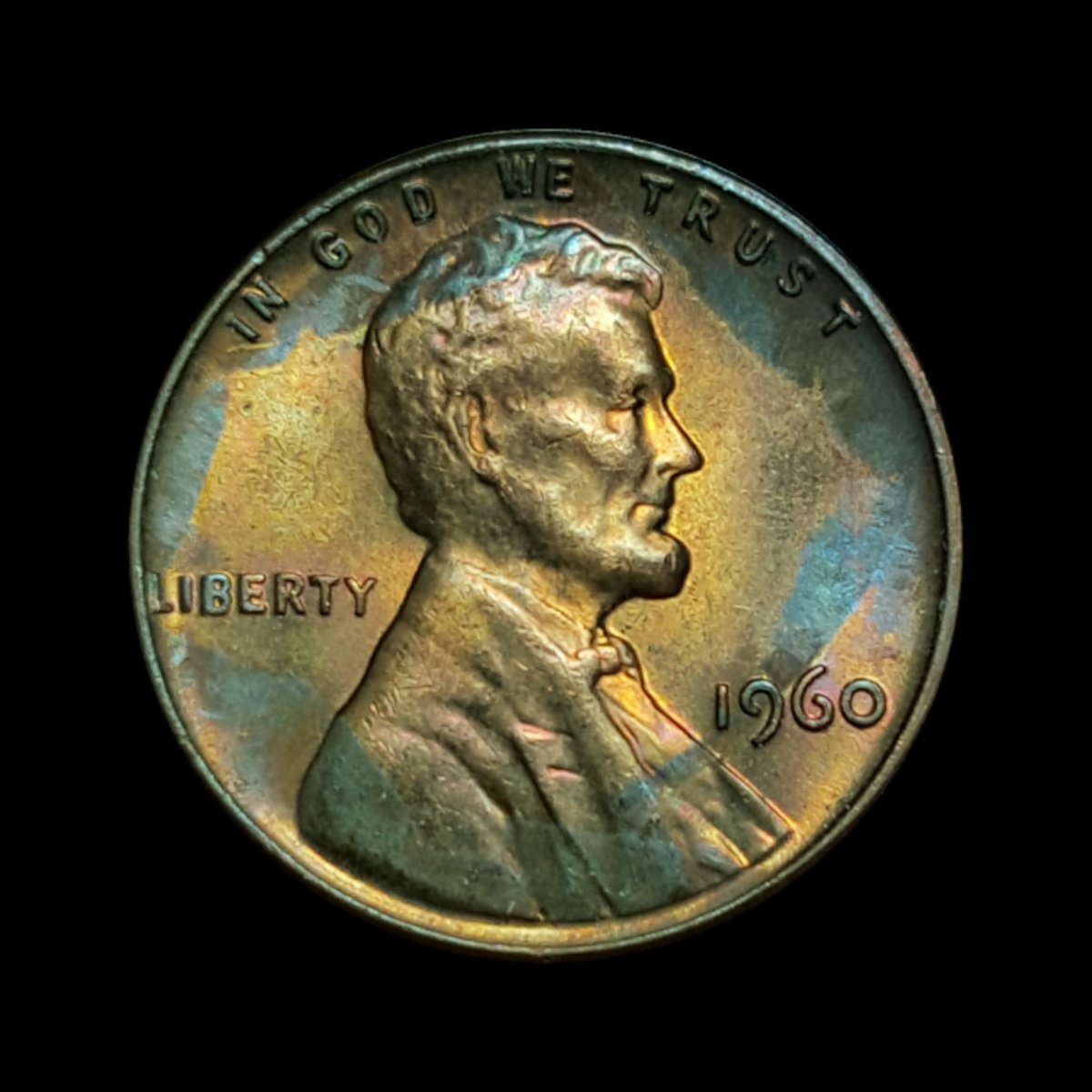
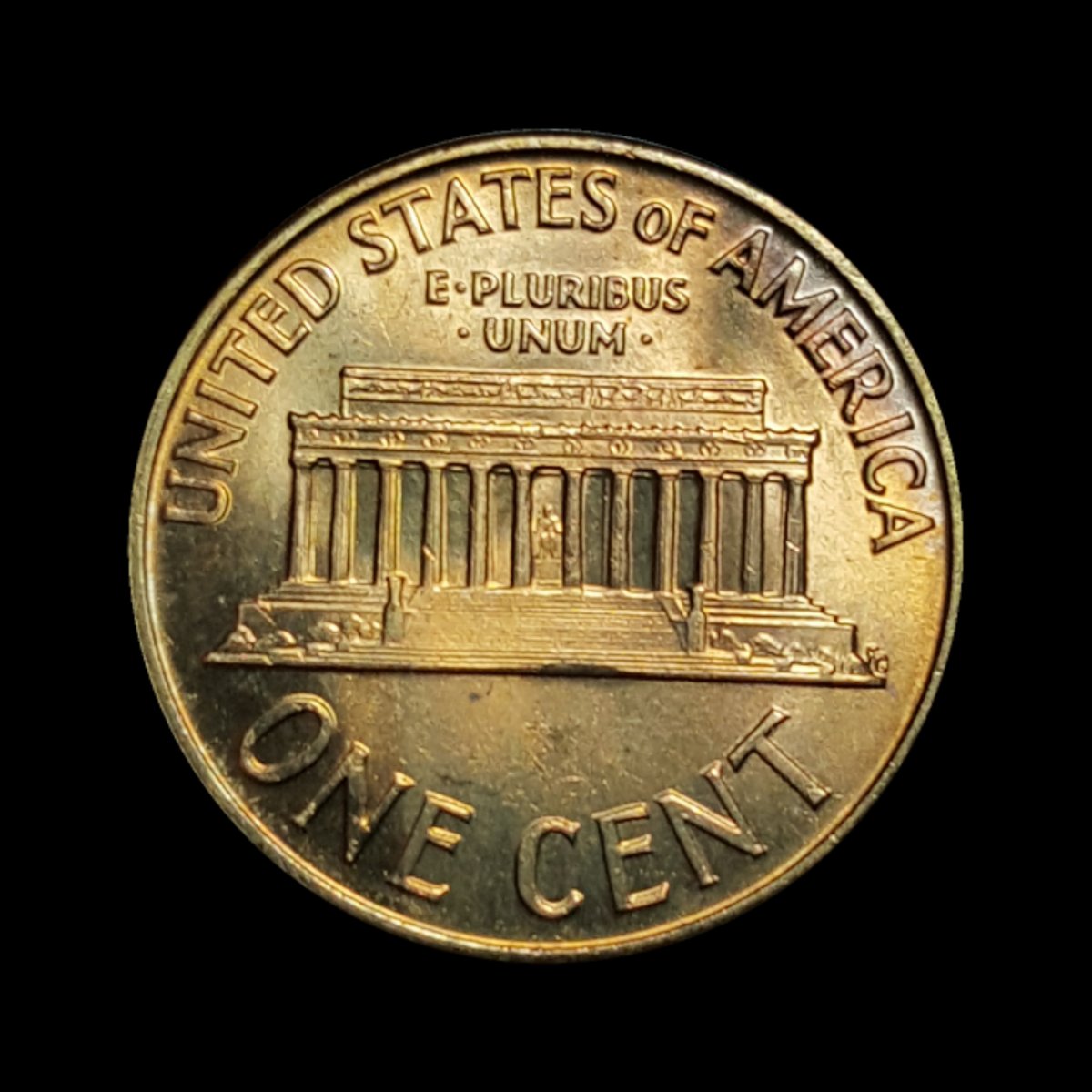
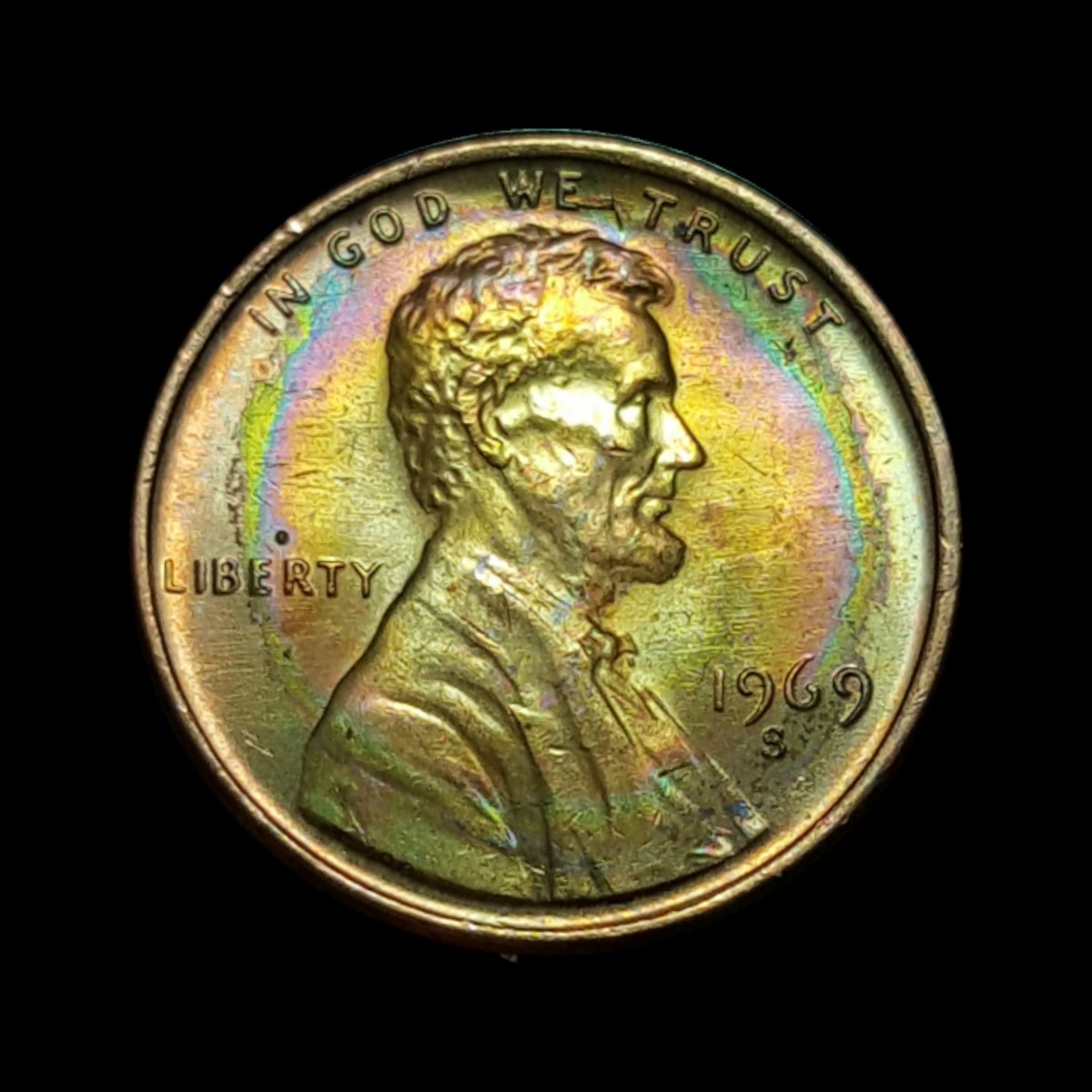
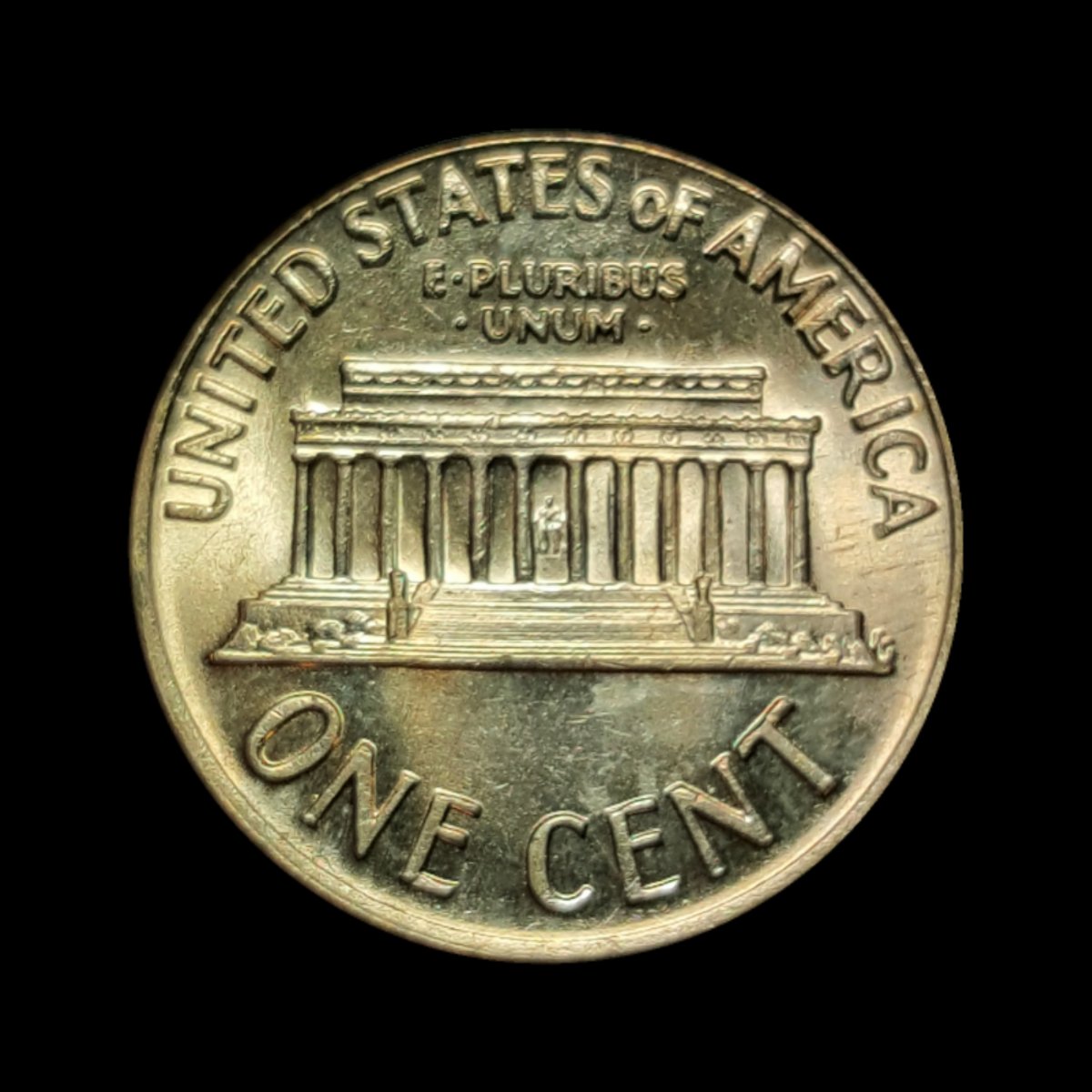
Modern copper like Lincolns tone so easily that I think it would almost always be more desirable to have an untoned, red unc cent than a partially toned one. Silver, of course, is different, but whether you will end up with attractive toning is entirely unpredictable.
|
|
Bedrock of the Community
13014 Posts |
Quote:
Modern copper like Lincolns tone so easily that I think it would almost always be more desirable to have an untoned, red unc cent than a partially toned one. Depends. The toning crowd will prefer the rainbow toned ones or a nice color, but plenty of people would prefer the red over a "toned" brown one |
|
Pillar of the Community
Canada
1267 Posts |
Quote:
The toning you see is the product of what, in most cases, is called "corrosion." In numismatics, when it has a pleasing appearance, it is called "toning" instead of "corrosion" and fans pay exorbitant prices for it. This statement is not entirely true. Lets start with the definition of corrosion. corrosion Damage that results when reactive chemicals act upon metal. When toning ceases to be a "protective" coating and instead begins to damage a coin, corrosion is the cause. Usually confined to copper, nickel and silver regular issues, although patterns in aluminum, white metal, tin, etc., also are subject to this harmful process. Toning therefore is not corrosion, although over time it will lead to corrosion. That timeframe could be decades or centuries. Now let's consider what toning actually is. The toning that we visualize comes from light refracting through the silver oxide layer that forms on all silver coins. Not all coins exhibit this visual effect, yet that silver oxide layer is there. It's what gives us that thick skinned appearance that many collectors value as a sign of originality. Anybody think that these thick skinned pieces will not eventually succumb to corrosion over time? From the moment a coin is struck, and this applies to every single silver coin struck, the natural process of oxidation begins.....eventually leading to corrosion. Some believe that by dipping a coin and making it all shiny and white again (by removing that silver oxide layer) they are restoring the piece back to how it came from the mint. What they are really doing is stripping a small layer off the surface ( where do you suppose the silver in the silver oxide layer comes from). This exposes a new surface to the environment, and the process begins again (only faster now). Dip and strip. Not long before the luster becomes subdued, and the coin appears dull and lifeless. The bottom line, all silver coins unless kept in a vacuum will eventually succumb to corrosion. Edited by hadleydog
09/05/2018 02:06 am
|
|
Bedrock of the Community
United States
20753 Posts |
All of the previous explanations are why I dislike anything on a coin. I just want them the way they were made.
|
|
Pillar of the Community
5464 Posts |
Quote:
All of the previous explanations are why I dislike anything on a coin. I just want them the way they were made. A totally unacceptable answer! Much it logical for this discussion!  |
|
Pillar of the Community
United States
1901 Posts |
|
|
Moderator
United States
196572 Posts |
Quote:
Lets start with the definition of corrosion.
corrosion
Damage that results when reactive chemicals act upon metal. And what causes toning? Reactive chemicals acting upon a metal. |
|
Pillar of the Community
United States
2963 Posts |
Quote:
All of the previous explanations are why I dislike anything on a coin. I just want them the way they were made.  To me, arguing over toned coins is an exercise in futility. You'll never find agreement. Very often, one man's trash is another's treasure. Whereas, with untoned coins, it's very black and white (most of the time) in terms of grade and desirability. Discussing toned coins is a lot like men discussing women. One man might find a certain girl extremely attractive, another will not. One guy will prefer the apple shaped woman, another will prefer the pear shaped one. It's all subjective to the particular tastes of the individual. CRH Nickeloholic. 1,600,000 nickels searched in eight years! Have found FOUR complete Jefferson sets!
|
| |
Replies: 39 / Views: 10,569 |








 First Page


 Posted 09/04/2018 02:08 am