Coin Community Family of Web Sites Join Thousands of Coin, Bullion, & Money Collectors
300,000 items to help build your collection! Royal Estate Auctions - $1 Coin AuctionsCoin, Banknote and Medal Collectors's Online Mall Join Thousands of Coin, Bullion, & Money Collectors Specializing in Modern Numismatics Vancouvers #1 Coin and Paper Money Dealer Royal Canadian Mint products, Canadian, Polish, American, and world coins and banknotes.


Username:
Password:
Save Password
Forgot your Password?


This page may contain links that result in small commissions to keep this free site up and running.

Welcome Guest! Registering and/or logging in will remove the anchor (bottom) ads. It's Free!

Misaligned Die Strike & Off-Set Strike Differences, Another Tutorial!

To participate in the forum you must log in or register.
Author Previous TopicReplies: 13 / Views: 2,171Next Topic  
Rest in Peace
Crazyb0's Avatar
10197 Posts
 Posted 09/07/2018  7:00 pm Show Profile   Bookmark this topic Add Crazyb0 to your friends list Get a Link to this Message Number of Subscribers
Difference between a Misaligned Die strike & Off-Set Strike?


Many beginning collectors struggle with the terminology. Seeming similar descriptive terms are confusing at first. To say a misaligned die isn't what it sounds like, some coin was struck off center? Huh? "But the coin wasn't struck in the center?"..."yes it was, but only SLIGHTLY"...and the mental meltdown begins. Let's start at the beginning, okay?

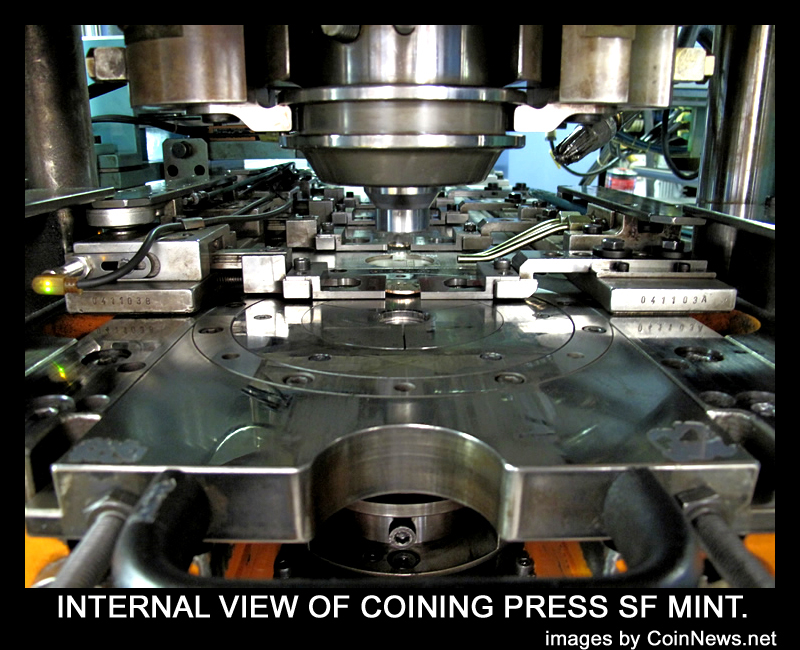
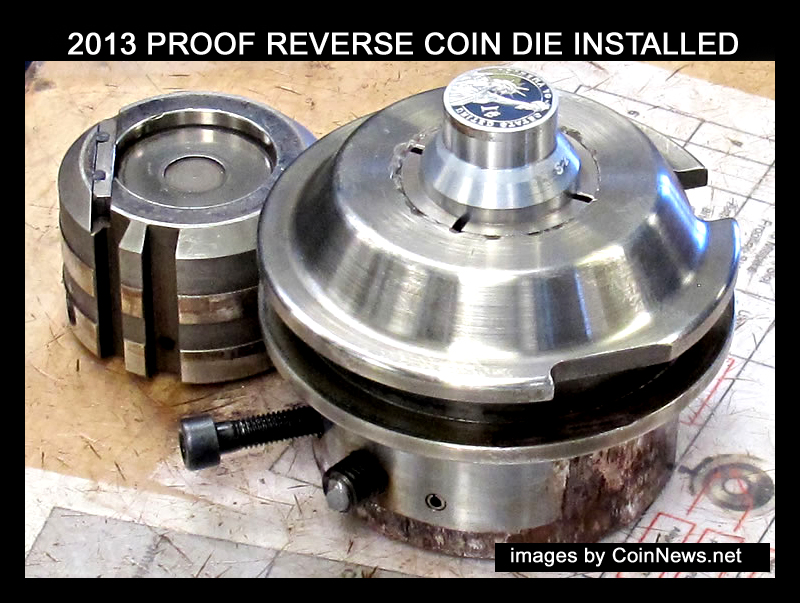
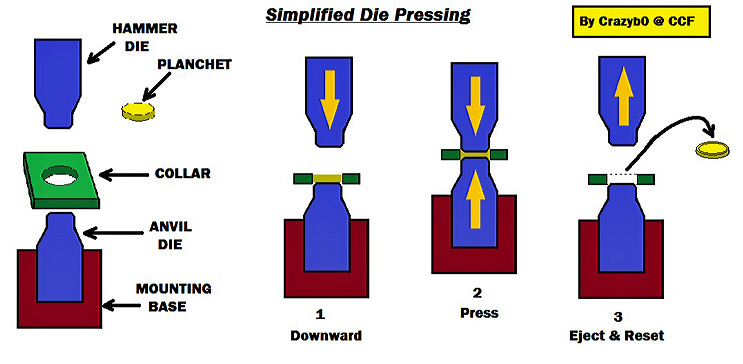
Begin with a bit of basic coin making What puts an image on a coin? A pair of metal cylinders with designs on their ends are pressed together with a previously prepared "planchet" in between. This transfers the designs known as the obverse (heads) and reverse (tails) images into the now-can-be-called "coin". But you knew that part, right? Here's a simplified diagram of a coin press's operating parts.
Misaligned-Die-Strike-&-Off-Set-Strike-Differences,-Another-Tutorial!

Now, with this picture in mind, realize this is a mechanical mechanism, many moving parts. Endless pounding causes a continuous vibration, that in turn causes wear on those moving parts, and loosens the devices holding the dies in place. Shake, rattle and roll, this is what the dies are doing.

Think of it this way, it is like the base of a Christmas tree. There are three or four adjustment screws that need to be tightened to have the tree be held upright. Any one of those screws gets loos, the tree tips to one side or another. The Die housings are of course more sophisticated in their mechanisms but the same principle applies, a loose screw means a misalignment. This misalignment usually occurs on the Hammer die, the upper one that is in motion. It can happen on the anvil die, but not as often as the Obverse side die. This is quite important when analyzing MAD's. Here is a formal definition of MADs:

Quote:
Horizontal Misalignment of the Hammer Die:

Definition: This occurs when the hammer die (typically the obverse die) shifts laterally to the anvil die. The die may shift within its recess when the bolts or clamp that anchors the die in place loosen up. The entire die assembly may also shift, carrying the die with it. A horizontal misalignment can be stable or dynamic. In a dynamic misalignment, the extent of a misalignment can grow or shrink. The direction of the misalignment can also change from one strike to the next. A loose die or die assembly can oscillate in opposite directions or spontaneously return to a centered position.
from http://www.error-ref.com


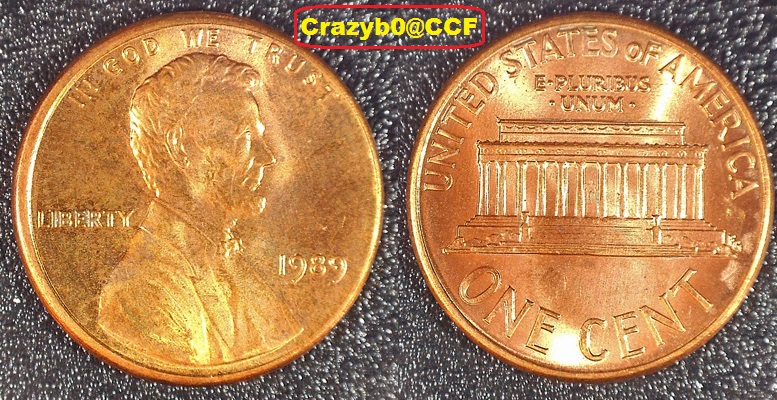
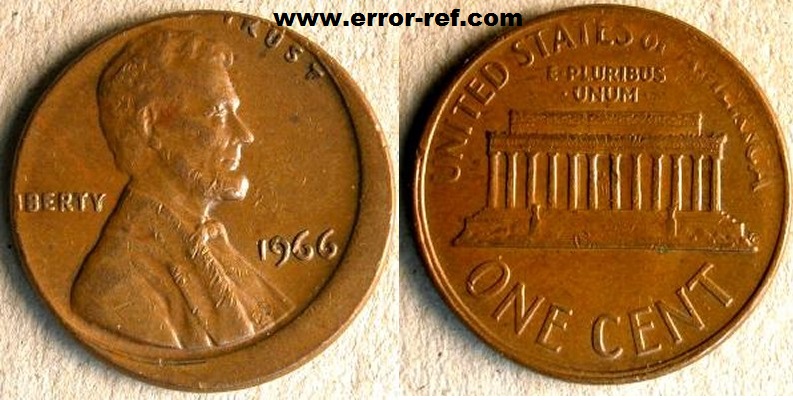
Now, let's take a look at an actual example of a MAD. As in the definition MADs vary, in amount affected and directions. The first picture is the example coin corresponding to the above quote, it is quite distinct. The second is a lot slighter, most commonly found of the MADs.
Misaligned-Die-Strike-&-Off-Set-Strike-Differences,-Another-Tutorial! Misaligned-Die-Strike-&-Off-Set-Strike-Differences,-Another-Tutorial!

Notice the horizontal shifting on these. On the first, details near the rim have completely disappeared, a coin like this does demand a major premium among collectors while this second coin is so common, it holds no real premium value. The MAJOR point of MAD identification is that the effect happens on just one side. There is no corresponding movement seen on the reverse it may look completely normal.

There is another related strike error called a "tilted die". Similar in how the die isn't completely horizontal when strike happens but what is going on in the mechanism is different, producing different results. If you are interested in more about "tilted dies" check here:
http://www.maddieclashes.com/vertic...d-die-error/


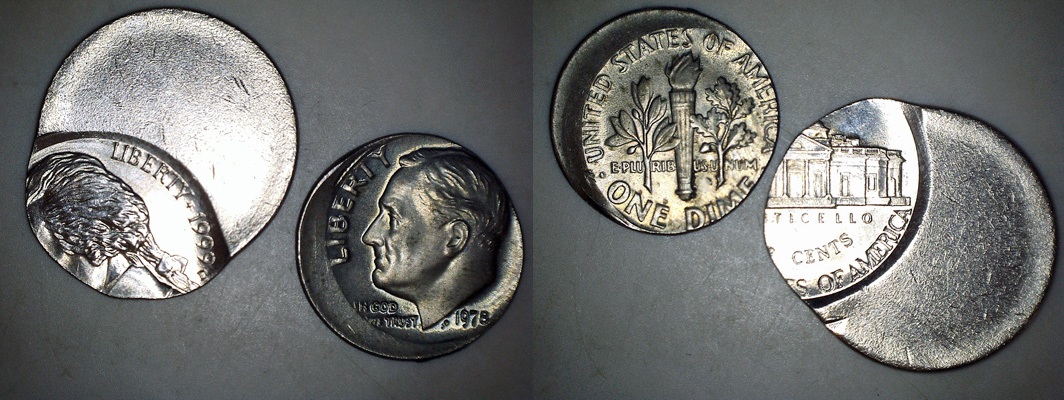
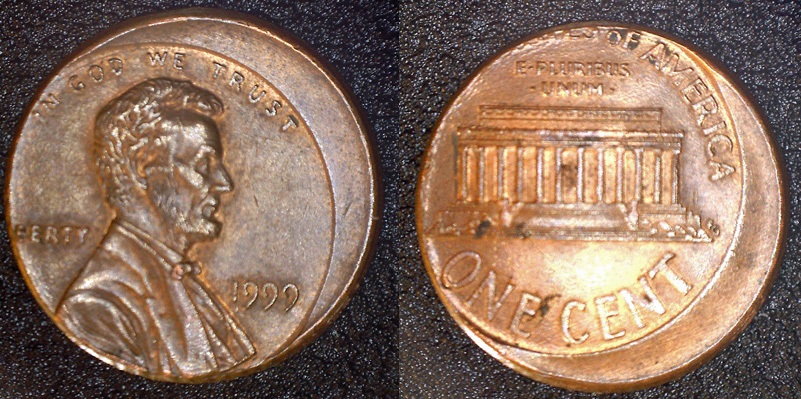
Now the Off-Set Strike. As I mentioned, it is indeed similar in how it first looks, but this differs in that both sides are effected in a like manner and direction. This is actually caused by a failure of the collar to fully deploy and hold the coin centered in the striking chamber. (See diagram above in green) The planchet is placed off center on the anvil die, when struck, whatever portion is off the dies, has no image impressed. These errors can be a minor offset or very dramatic. Those that command a higher premium will have the date or at least a portion thereof.
Misaligned-Die-Strike-&-Off-Set-Strike-Differences,-Another-Tutorial! Misaligned-Die-Strike-&-Off-Set-Strike-Differences,-Another-Tutorial!


The off-center struck coin may at time be referred to as an "out-of-collar strike", but it it only one of a variety of errors that happen when the collar fails to fully deploy. So for clarity's sake, it would be best to describe it by their actual names, such as an "off-set strike" or a "Broad-strike" since both are the failure of the collar to retain the coin correctly.

Pillar of the Community
aristarchus123's Avatar
United States
1695 Posts
 Posted 09/07/2018  7:15 pm  Show Profile   Bookmark this reply Add aristarchus123 to your friends list Get a Link to this Reply
Very helpful. And that example of the 1966 MAD is amazing!
Moderator
Learn More...
John1's Avatar
United States
56855 Posts
 Posted 09/07/2018  7:28 pm  Show Profile   Bookmark this reply Add John1 to your friends list Get a Link to this Reply
Is it possible to have a MAD on both sides of the same coin?
John1
Pillar of the Community
KenKat's Avatar
United States
4085 Posts
 Posted 09/07/2018  7:37 pm  Show Profile   Bookmark this reply Add KenKat to your friends list Get a Link to this Reply
That's great and all but everyone knows they are made by hand by elves that live in the basement of the mint.

Rest in Peace
Crazyb0's Avatar
10197 Posts
 Posted 09/07/2018  7:38 pm  Show Profile   Bookmark this reply Add Crazyb0 to your friends list Get a Link to this Reply

Quote:
Is it possible to have a MAD on both sides of the same coin?


Yes it is, but it is quite rare to happen. Usually a lot of other factors are happening, including impending failures of dies, and other moving mechanisms. But in standard runs, they are hard to find and mostly quite minor or are 180 degrees out that is a reaction to the MAD on the obverse.

If you you notice the examples above. The 1966 MAD is more of a tilted die strike. Pressure was greater by the date which caused a reaction on the reverse, 180 degrees out shows rim finning because of the pressure differentials and the area corresponding to the unstruck shows weakness from not having the pressure to fill the devices. On mine, there is almost a completely normal strike on the reverse. This tells me the hammer die moved laterally(side to side) and didn't tilt.

KenKat, that's really Johnny's Cousin Jo-JO, well he did until he changed jobs, now he's stamping license plates...
Edited by Crazyb0
09/07/2018 7:51 pm
Bedrock of the Community
JimmyD's Avatar
Canada
21631 Posts
 Posted 09/07/2018  9:15 pm  Show Profile   Bookmark this reply Add JimmyD to your friends list Get a Link to this Reply
Very nice tutorial Crazyb0.
Although I new what a MAD and Off-Set strike were to see them,
I've never had it explained in such detail with visuals.
Again-Good job!
Moderator
Learn More...
Spence's Avatar
United States
34427 Posts
 Posted 09/07/2018  10:01 pm  Show Profile   Bookmark this reply Add Spence to your friends list Get a Link to this Reply
Strong work @crazyb0!
"If you climb a good tree, you get a push."
-----Ghanaian proverb

"The danger we all now face is distinguishing between what is authentic and what is performed."
-----King Adz
Bedrock of the Community
Errers and Varietys's Avatar
United States
74707 Posts
 Posted 09/07/2018  10:16 pm  Show Profile   Bookmark this reply Add Errers and Varietys to your friends list Get a Link to this Reply
Awesome work Crazyb0! That's much better than I can do. This will be going in to my bookmarks.
Errers and Varietys.
Valued Member
CoinBuffalo's Avatar
United States
220 Posts
 Posted 09/07/2018  11:42 pm  Show Profile   Bookmark this reply Add CoinBuffalo to your friends list Get a Link to this Reply
Very informative. I learned something new today
Bedrock of the Community
Learn More...
spru's Avatar
United States
12477 Posts
 Posted 09/08/2018  12:17 am  Show Profile   Check spru's eBay Listings Bookmark this reply Add spru to your friends list Get a Link to this Reply
Great diagram, Crazyb0!

I feel this is the most important point regarding the differences (and why we ask to see pics of both sides of a coin):


Quote:
Now the Off-Set Strike. As I mentioned, it is indeed similar in how it first looks, but this differs in that both sides are effected in a like manner and direction.


And, as John1 brought up, a coin can have a MAD strike on both sides, even though rare. The same degree and direction of off-set is needed to call it an Off-Set Strike (what I call Off-Center).

Great topic all around.
In Memory of Crazyb0 12-26-1951 to 7-27-2020
In Memory of Tootallious 3-31-1964 to 4-15-2020
In Memory of T-BOP 10-12-1949 to 1-19-2024
Bedrock of the Community
Errers and Varietys's Avatar
United States
74707 Posts
 Posted 09/08/2018  12:58 am  Show Profile   Bookmark this reply Add Errers and Varietys to your friends list Get a Link to this Reply
This is a great topic. I've learned new information as well. Keep up the good work Crazyb0! It was very fun to read your tutorial.
Errers and Varietys.
Pillar of the Community
owatchman's Avatar
United States
1494 Posts
 Posted 09/08/2018  03:39 am  Show Profile   Bookmark this reply Add owatchman to your friends list Get a Link to this Reply
Thanks, Crazyb0! Glad to learn something new.
Moderator
Learn More...
John1's Avatar
United States
56855 Posts
 Posted 09/08/2018  04:46 am  Show Profile   Bookmark this reply Add John1 to your friends list Get a Link to this Reply

Quote:
That's great and all but everyone knows they are made by hand by elves that live in the basement of the mint.

Your thinking basement slabs
John1
Bedrock of the Community
coop's Avatar
United States
62064 Posts
 Posted 09/08/2018  2:51 pm  Show Profile   Bookmark this reply Add coop to your friends list Get a Link to this Reply
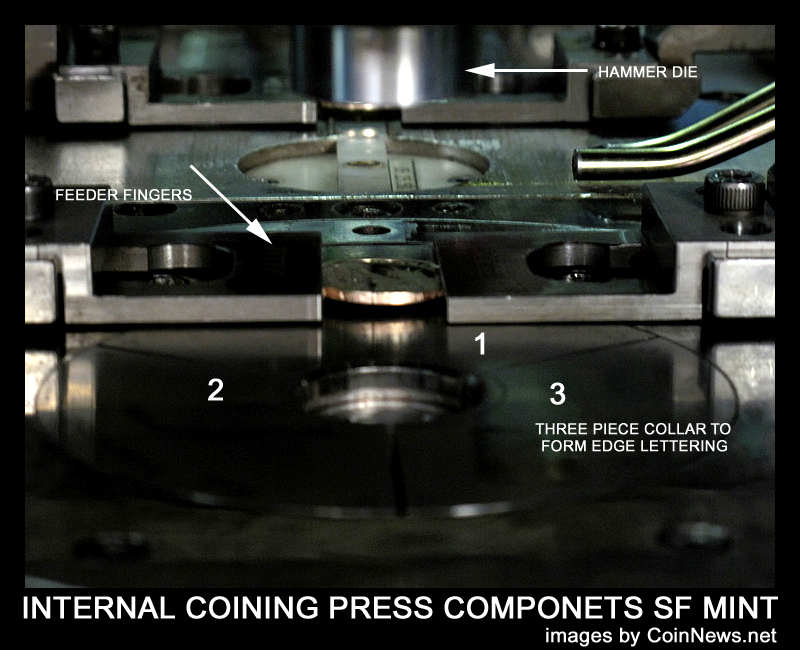
Only thing missing is the feeder fingers. Not sure where they would fit in?

The hammer die is adjustable. The anvil is usually stationary. (Some newer machines may be adjustable on both though) So to say the heads or tails side would be s dis-service, as they have changed the locations of the two sides at different times.

Nice simplified diagram.
Misaligned-Die-Strike-&-Off-Set-Strike-Differences,-Another-Tutorial!
  Previous TopicReplies: 13 / Views: 2,171Next Topic  

To participate in the forum you must log in or register.


Disclaimer: While a tremendous amount of effort goes into ensuring the accuracy of the information contained in this site, Coin Community assumes no liability for errors. Copyright 2005 - 2026 Coin Community Family- all rights reserved worldwide. Use of any images or content on this website without prior written permission of Coin Community or the original lender is strictly prohibited.
Contact Us  |  Advertise Here  |  Privacy Policy / Terms of Use

Coin Community Forum © 2005 - 2026 Coin Community Forums
It took 0.43 seconds to rattle this change. Forums