Squire Wilson You made a comment that needs just a bit of discussion to eliminate some apparent incorrect beliefs.
You say:
Quote:
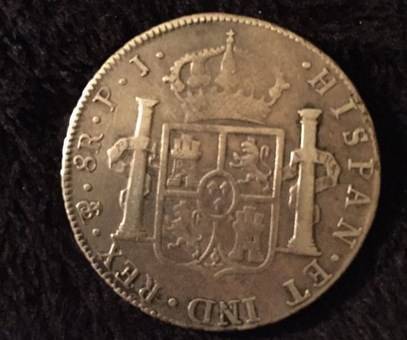
To me the central three "fleur de lis" do not look quite right. The top left hand side "fleur" looks skew, poorly rendered and different from the rest.
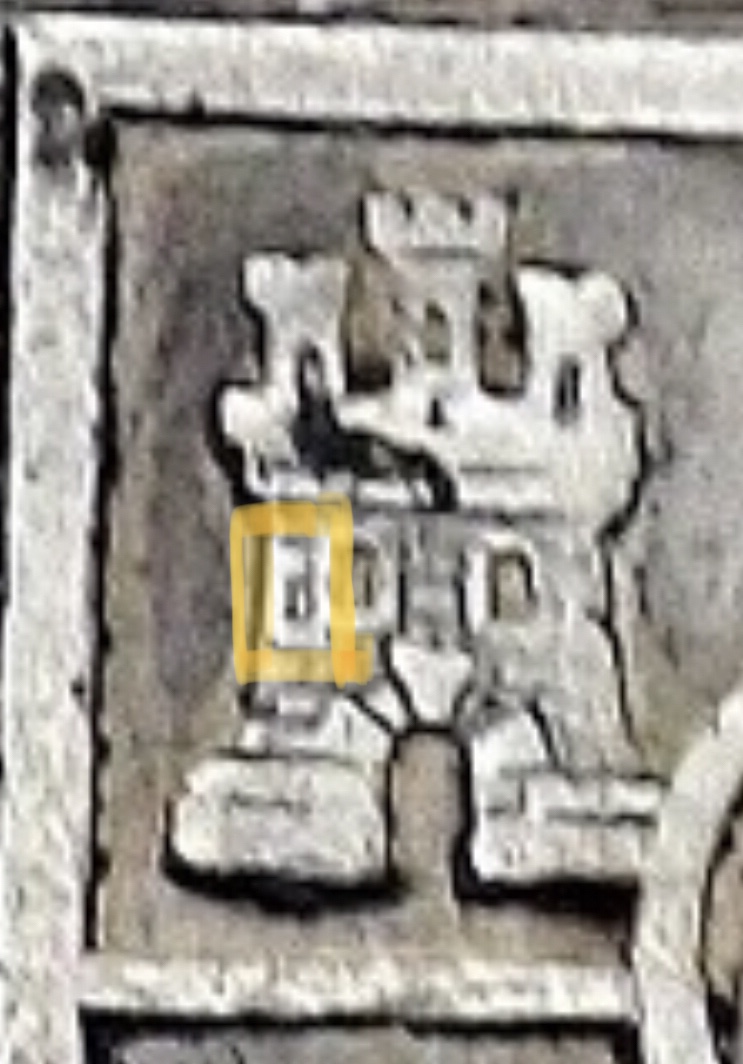
The small design within the window below the fleur de lis and between the lion (LHS) and the castle (RHS) is very poorly rendered.
On the reverse the dots punctuating the text are very close (too close) to the base of the pillars and I think the dot in the 240 degree position on the reverse is in the wrong location.
The varying lengths of the dendricles around the rim of the coin also make me suspicious
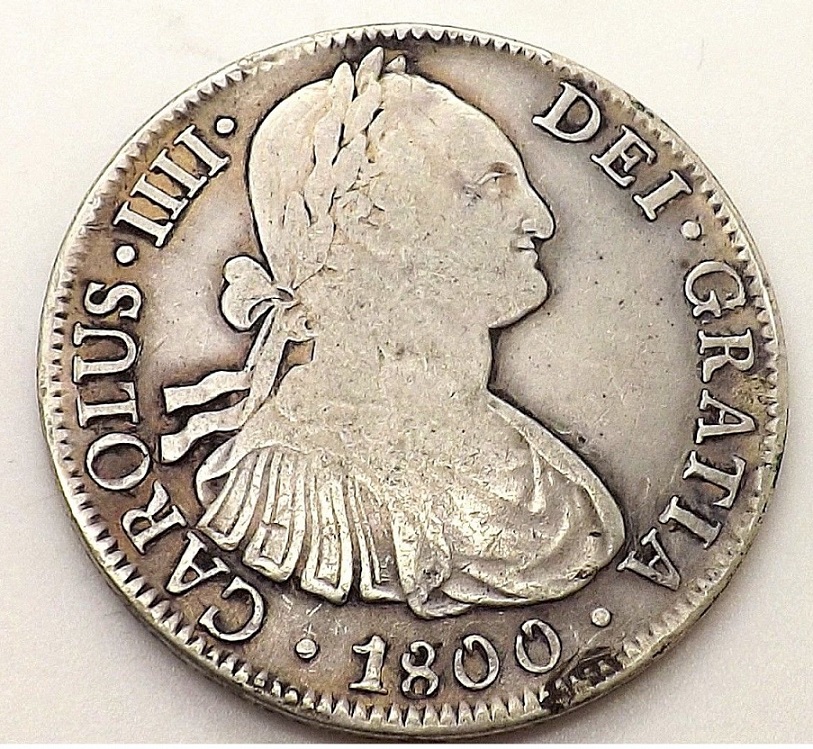
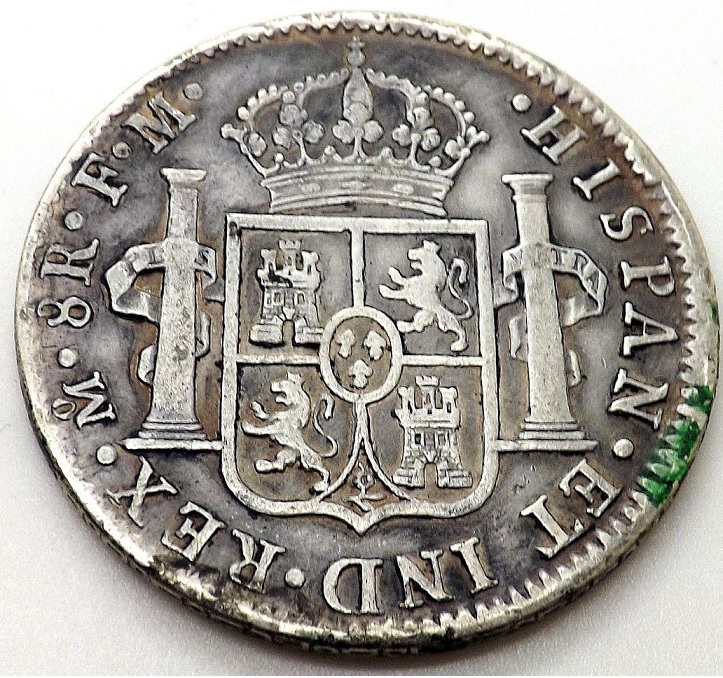
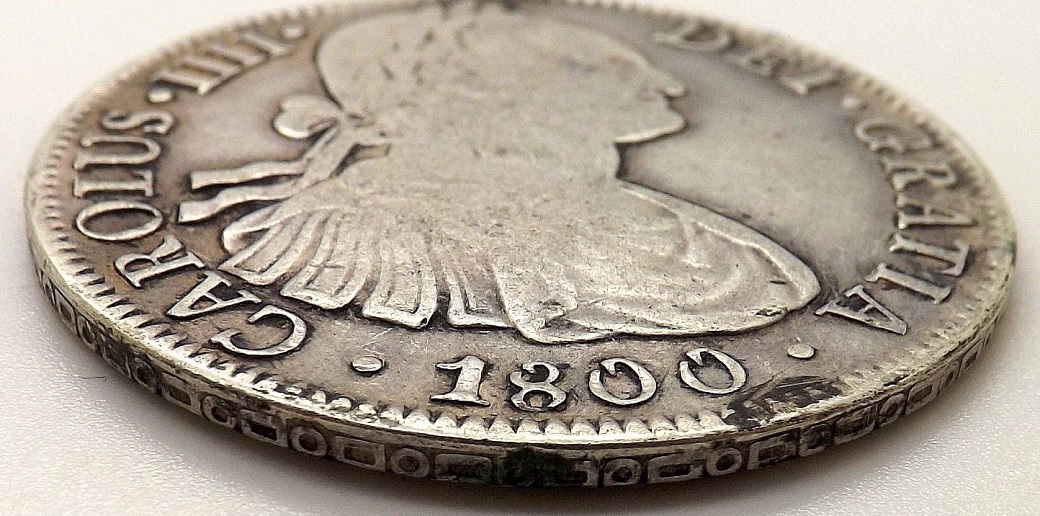
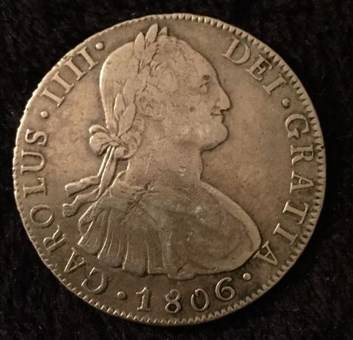
First I presume the comments refer to the 1800 Mexico City coin that I posted. This is critical because there is standard variation mint to mint.
Are you aware that each working die made in the colonial Spanish mints was individually made using a series of impressions made from elemental punches that were copied from a master punch made from a Matrix Block?
This Matrix Block was made in Spain and shipped to specific mints. The blocks were NOT IDENTICAL mint to mint. This makes it possible to identify 8Rs without visible mint marks.
So for example the three Fleur-de-Lis appeared on ONE punch and the spacing and orientation of the individual fleurs is different for each colonial mint. The Mexico City punches were made from a master die block which has the upper left fleur tilted to the right (final coin view). The 1800 Mo FM coin in fact uses the correct orientation and tilt for Mexico City. (The forgery was copied from a genuine coin.) Regarding the "poor" appearance of the fleur - that is rather typical and can be blamed on two things. First the punches used to make working dies were used many times and they did wear. The edges of the 3 fleur punch can lose sharpness due to away or chipping - but the internal spacing of the three fleurs is constant. If one fleur shifts location or orientation all three do as well. Small variations in appearance can also be attributed to die wear and chipping of the working die. Finally variations in appearance can and do occur because of wear and damage to the individual coin itself. When looking at these coins always try to eliminate wear and chipping evidence as you go long.
An extremely critical factor that you need to understand is which elements were found on EACH punch. I have studied thousands of examples of 8 reales just to identify these patterns. They do form a solid database which can be assembled from genuine examples of high grade coins.
Your second comment refers to the design below the fleurs and between the Lion and Castle. This is the representation of a pomegranate. Each of these features is a symbol found in the heraldic shield of Spain. The pomegranate is a feature that was punched into the die individually. So position inside the "window" can and does vary die to die. This is one feature which was virtually identical mint to mint (at least as far as I can ascertain at this time). Once again some variation in appearance can be attributed to punch, die or coin wear (or a combination of all three). I do not believe that there was an intentional variation in design. So for the 1800 I view any difference in appearance to damage to the punch element, die or coin.
The dots (stops) that divide the text were made with individual punches so spacing does vary and is a very useful way to distinguish between individual dies. The size of these stops vary so it is my belief that the stop punch was individually crafted in the mint and not created from the matrix block in all cases. Punch, die and coin wear again contribute to differences in appearance.
The final comment refers to denticles that form the border of the coin on both sides. Dentils are found on the matrix block iteself and they consist of a series of several lozenge shaped dentils in an arc. These short arc segments are punched in sequentially to create a circle. At pints where the arc seqments join/overlap there can be small errors in spacing that are EXTREMELY useful in identifying individual dies. That can be done for each of the 6 1800 coins to prove that they were all copied from one original. So how should you look at individual coins? There are a few "musts" that take place as a result.
1. The dentils were complete on the actual die and the diameter (outer edge to outer edge) of the die was larger than the size of the planchet. That means unless a strike is severely eccentric that the dentils should run OVER the edge all around. There is no way for a dentil to end before the edge unless the entire dentil image appears (in that case the dentil exactly opposite must be almost if not entirely missing.
2. The dentil arc is NOT a series of short straight lines but rather a more or less smooth circle of short arc segments. The die sinker could overlap the punch to make the circle close correctly. Spacing variations occur ONLY at the joins. Because dentils are on the edge of the die they are easily damaged so look for evidence of recutting on the die before assuming a coin is fake. Length also can vary slightly if the arc is set a fraction of a mm too close to center.
3. Some forgers making copy dies will extend the dentils to the edge of their fake dies by simply engraving straight lines to the edge of the die. This is incorrect. The dentils are actually losenge shaped with slightly curved sides.
4. I am still uncertain if the dentils are identical at all mints. They are so fragile that high grade examples for study are harder to get than for internal die features. The edge designs vary mint to mint by intent. When a banker stacked a pile of 8 reales he could theoretically distinguish the mints and remove coins from mints he either wanted or did not want. The edge was more than just a simple anti-counterfeiting devise.
So in summary the features on an 8R die are in almost all cases different and the difference was intentional on the part of Spanisg authorities.










 Posted 10/17/2018 11:30 pm


 -
-