| Author |
 Replies: 41 / Views: 4,796 Replies: 41 / Views: 4,796 |
|
|
|
Pillar of the Community
  United States
906 Posts |
Quote:
For me the only choice is to buy graded coins from the major auction houses that look original or have CAC approval. I have to agree with you on this. On-line auctions, I get nervous about paying a premium on coins. Live auction, you at least get to see the coins. I will say though that even a 2x2 holder can hide some flaws as I experienced this weekend. |
|
Bedrock of the Community
United States
11980 Posts |
Agree it is the OC-P2 proof. the more common of the two proof varieties, but still R4. 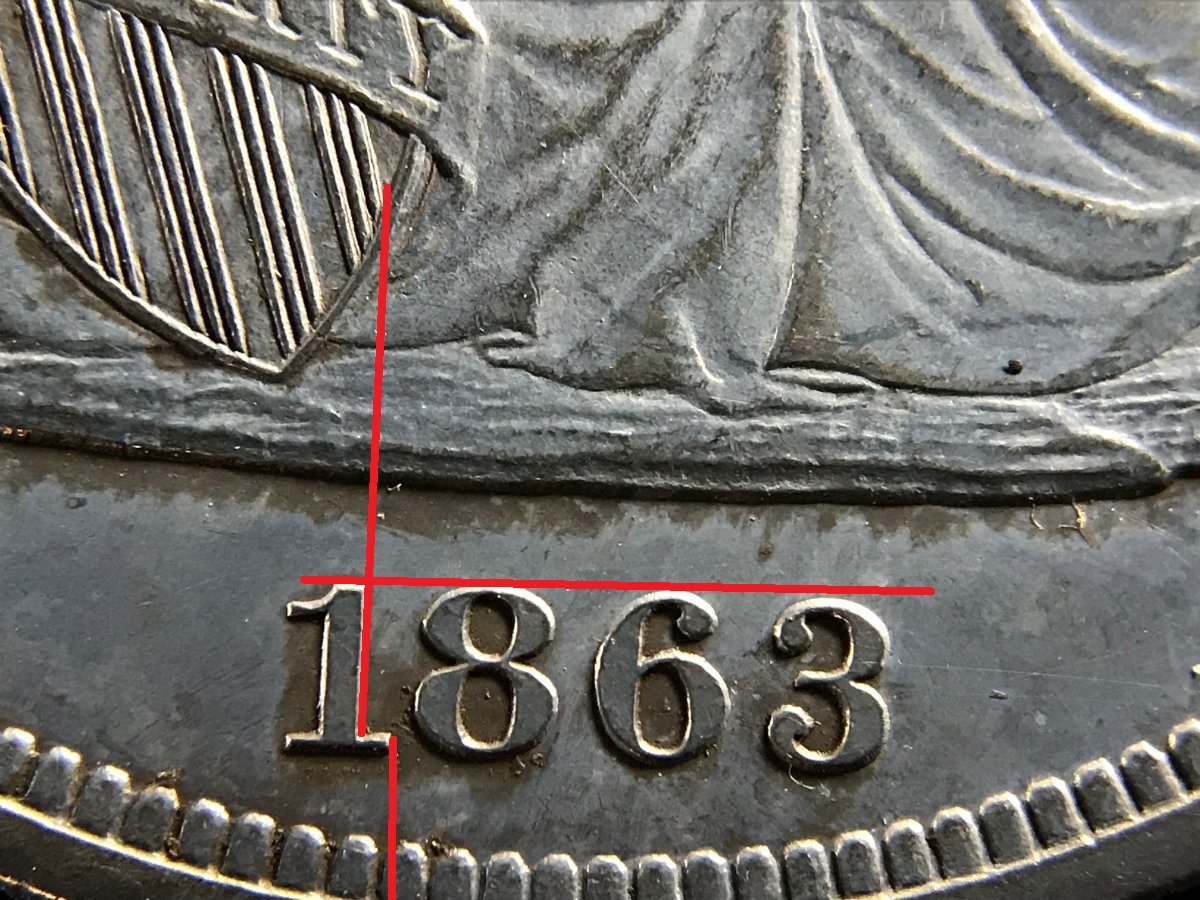 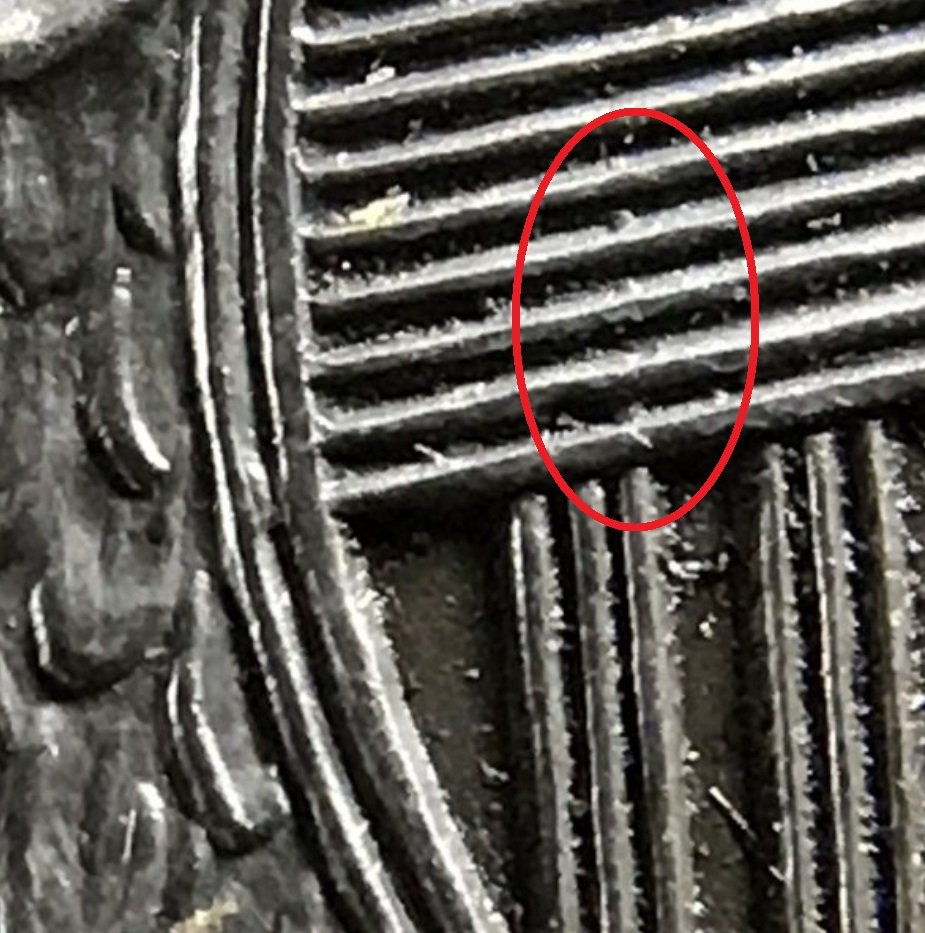 The reference pictures for the proof issues show perfectly flat surfaces under the lines in the shield, but your coin shows a lot of raised metal between the lines in the shiel. This may merit further research, because none of the reference pictures show this. You can email Dick Osburn or Brian Cushing, the authors of the reference with pictures of your coin to get their opinion. I have reached out to them before and they were very gracious. They may be able to let you know why there is so much raised metal on the shield, and if they haven't seen it before, they may want to document it as a new variety. Thanks for sharing your coins with us! |
|
Pillar of the Community
United States
4707 Posts |
Could the raised dots be indicative of die rust/pitting?
|
|
Bedrock of the Community
United States
11980 Posts |
It could be, but these two pairings of proof dies made 260 impressions (the run of proofs for this date). Doesn't seem likely that they would have let those dies rust. Also, all other surfaces in the coin look pristine except for the crevices between the lines in the reverse shield. Why would rust only settle there?
|
|
Pillar of the Community
United States
906 Posts |
Quote:Dick Osborn and Brian Cushing - 1863 OC-P2 Original Proof Reverse PBReverse PB shows little in the way of die markers. Some minor extensions of the shield lines are the best we could find. Vertical shield line 1-3 extends to horizontal line 5, whereas Reverse PA shows virtually no extensions of the vertical shield lines into the horizontal lines. Horizontal line #1 crosses both shield borders to the left, but doesn't extend into the feathers. However, Reverse PA has a similar but stronger extension, so be careful when using this as a die marker. http://www.seateddollarvarieties.co...xtension.jpg @numismatic student Nice annotations on the images. I need to learn to do those things. I'm sure its not difficult, but sometimes I'm lazy learning new things. I think mine fits the description perfectly, though I do agree that their picture does not demonstrate as strongly as mine. I'll try and find an email for them and contact them. It can't hurt to ask. |
|
Pillar of the Community
United States
8715 Posts |
Nice one! PR-58 would be my grade. Interesting story as well.  |
|
Bedrock of the Community
United States
37206 Posts |
|
|
Pillar of the Community
United States
906 Posts |
@sumausa Thank you for that detailed explanation. You make some very good points about the volume of counterfeits, that sounds frightening. It is going to be extremely detrimental to the hobby. I also expect it will drive TPG grading prices higher. Its interesting to consider the pre-Counterfeit Wave that you described. It sounds like it will make it even harder if the counterfeiters get legit graded coins and reproduce both the coin and the holder. I would think that reproducing the coin is much more difficult than recreating the holder. |
|
Pillar of the Community
United States
4707 Posts |
Counterfeit coins in counterfeit holders are already prevalent. One does not have to look too hard.
|
|
Pillar of the Community
United States
3479 Posts |
Yeah there's your other well thought out side of the argument. Mostly Well done by Sumausa. I know which company he is referring to but I would disagree with him that they sell counterfeits. I would agree that they probably clean and most certainly habitually crack out problem coins and use those misleading descriptions to market them.
Edited by MikeF
11/28/2018 8:28 pm
|
|
Pillar of the Community
United States
8715 Posts |
There are far more raw fakes than there are slabbed fakes. However, do not make the incorrect assumption that raw coins should be avoided due to this.
|
|
Pillar of the Community
United States
4510 Posts |
I can understand why you do not like slabs, but need to do a value check on your purchases before you get thousands of dollars committed to your auction fun. I would recommend that you take your coins over $300 in value and send them to PCGS or NGC for grading so you can analyze your costs and you can make any necessary corrections. There are a number of risks in buying expensive raw coins and you do not want find out that you wasted a lot of money when you sell your collection
|
|
Pillar of the Community
United States
906 Posts |
@Slider23 I am actually in that process right now. I sent 16 coins to NGC almost a month ago, but I used $250 as my cutoff. After all this talk of counterfeiting, I'm really hoping my 1799 Draped Bust Dollar comes back authentic. They've been stuck in a Quality Control status for about a week now, and it is driving me nuts.  It is also the reason that I am posting some of my coins here. I know that the forum isn't a substitute for a TPG (especially since all forum grading is based on a picture or two), but I am learning a lot by this process. I've definitely made mistakes, but I've also had some lucky breaks. I've bought a number of foreign coins that I just like because of the character of the coin and the age, and it turns out a few of them have been worth 10X what I paid. I've never really worried about the cost of coins, because I've always just bought coins I like and with a single exception (1799 Dollar), I've never spent more than about $60 for a coin, and that was a rarity. Now however, I am getting interested in higher grade coins, and I definitely need to start being more thoughtful and careful. |
|
Pillar of the Community
United States
906 Posts |
Quote:
By the way, the brownish purple toning on the obverse between the 6 and 9 o'clock positions is a sign of a poor rinse following a chemical dip. Repeated dips over the years will eventually strip any remaining luster and kill the surfaces of the coin. If the first dip didn't help the coin another one surely won't help either! @Westernsky When you say repeated dipping, do you mean acetone or another substance? I didn't think acetone would affect the surface of the coin. |
|
Pillar of the Community
United States
4510 Posts |
When I looked at your photos, the coin did appear to have been dipped. The use of Acetone is not considered a dip as Acetone only removes contaminates from the coin surface. Chemical dips are the use of acids like Jewel Luster or eZest. These acids actually remove a thin layer of metal from the coin when used.
There is no harm is trying to use Acetone to remove the film on the coin. If you get lucky and it does the job, you have a winner.
The last owner may have tried a dip on the coin and it did not work.
If you sent in the coin for grading, I would not be surprised if it came back improperly cleaned because of being dipped.
Edited by Slider23
11/30/2018 09:17 am
|
| |
Replies: 41 / Views: 4,796 |








 First Page


 Posted 11/28/2018 12:53 am


