|
This page may contain links that result in small commissions to keep this free site up and running.

Welcome Guest! Registering and/or logging in will remove the anchor (bottom) ads and the security checks. It's Free!
To participate in the forum you must log in or register. | Author |
 Replies: 8 / Views: 2,948 Replies: 8 / Views: 2,948 |
|
|
Pillar of the Community
2087 Posts |
I have been hunting this coin for a few years. I could have purchased one several times over except, in this case, I was really picky about the grade. It is in the one catalogue I have Mazzotta 267. That catalogue cross references it to CNI, V P171, n73. Its a testone of Galeazzo Maria Sforza. the reason I wanted it. is that the Milan Testone was a huge technological jump forward. Going from memory only the first step was the Tron Lire of Venice, which was the first coin to equal the MOney of account. The Venetian coin was the first to bear the likeness of the doge, but after his death, the 40 decided it was not good form for a Doge to be represented in a manner that appeared to elevate him above the Serene Republic. Milan was next with this coin( actually there are two earlier varieties. It was a huge jump in Minting technology. It is the diameter of a half dollar (29mm) and weighs 9.63 grams. It was called Testone as it bore the rulers head on the obverse. Someone, please correct me: I believe this was also a Lire. The attached photo is degraded from compression. The original Tif file can be found here(Warning its a huge file) https://drive.google.com/open?id=1S...TOQZpb873OdB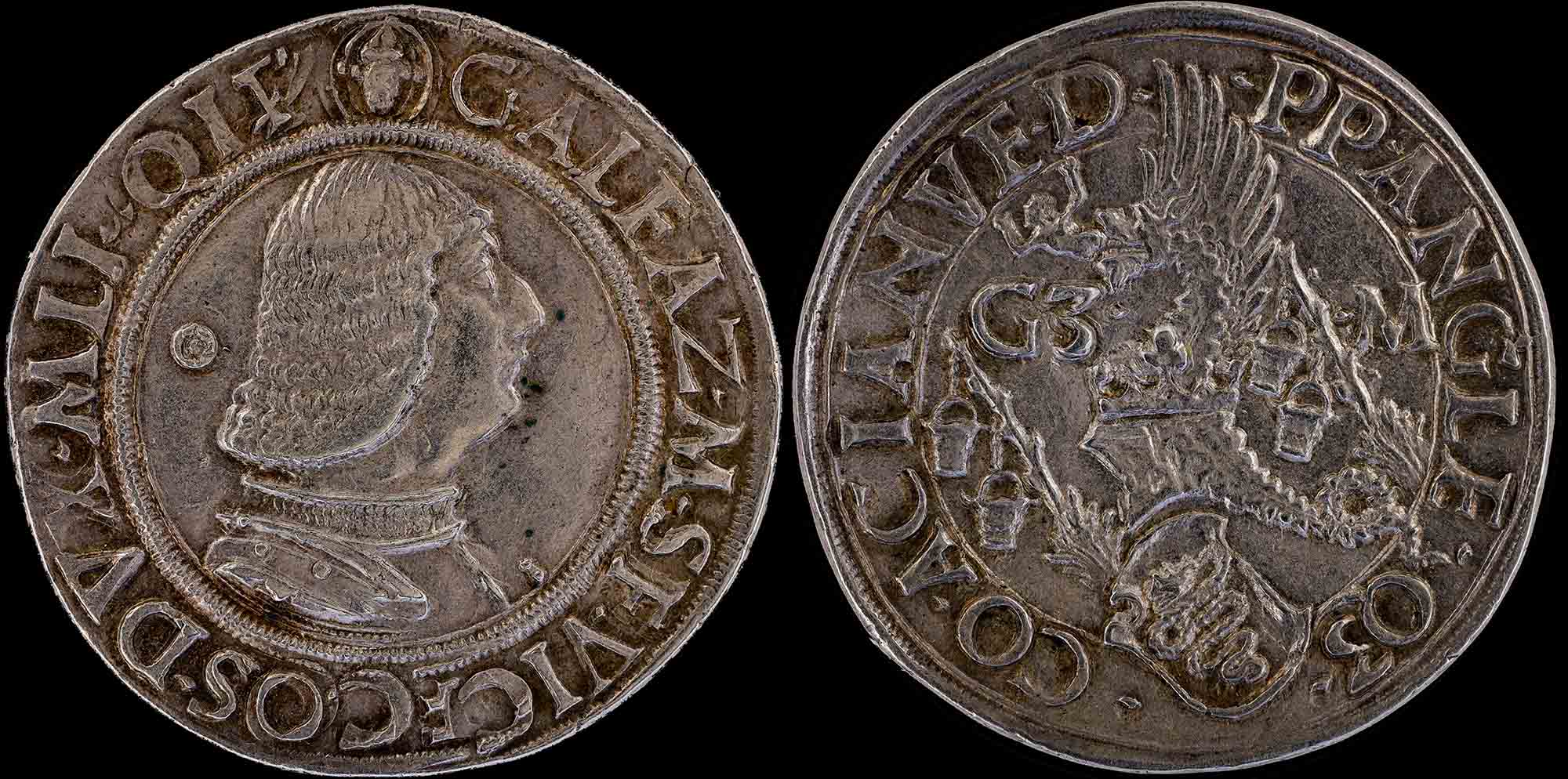 Edited by austrokiwi
12/03/2018 09:01 am
|
|
|
|
Moderator
 United States
34567 Posts |
Yes that is a beautiful coin--congrats on the addition to your collection!
"If you climb a good tree, you get a push."
-----Ghanaian proverb
"The danger we all now face is distinguishing between what is authentic and what is performed."
-----King Adz
|
|
Valued Member
United States
80 Posts |
A fine coin! I'll share a picture of mine later. I'm a big fan of all Milanese coins featuring that dragon whether it's on a helmet, or full-bodied.
|
|
Valued Member
United States
80 Posts |
Here's mine: 28mm, 9.39 grams Z 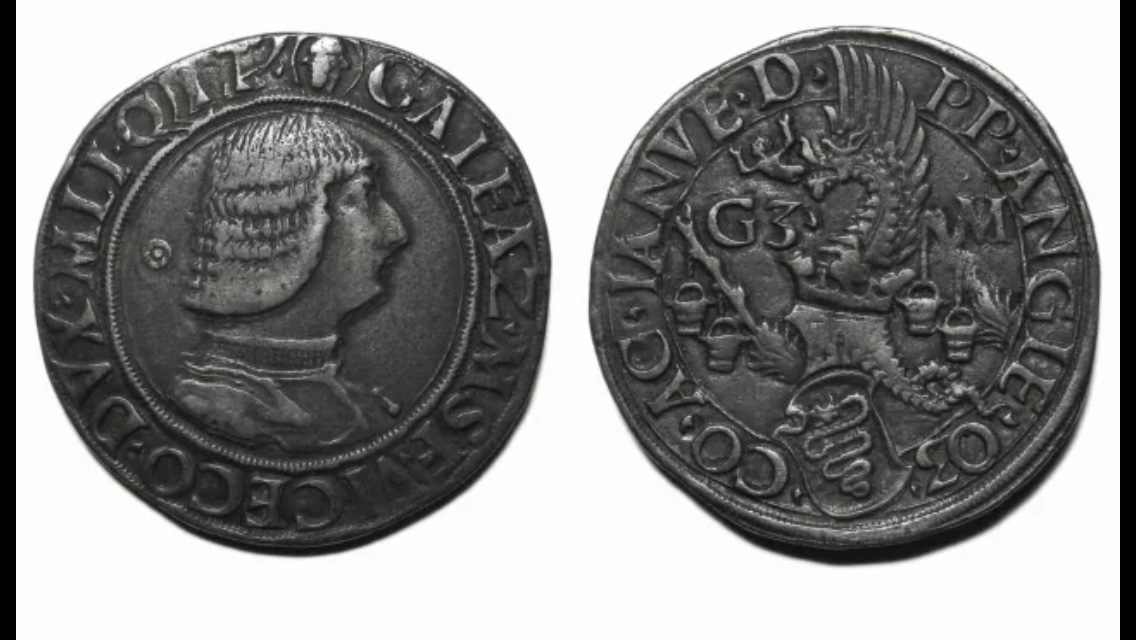 |
|
Pillar of the Community
 2087 Posts |
Quote:
I'm a big fan of all Milanese coins featuring that dragon whether it's on a helmet, or full-bodied. I also love that child eating dragon. |
|
Moderator
United States
23731 Posts |
That's a beauty. What does the G3-M mean on the reverse?
|
|
Pillar of the Community
2087 Posts |
I believe the "3" is a "Z" it means Galeazzo Maria
Some history on the coin: It was part of a currency update in 1474. It was the second coin ever produced to match the money of account ( Lira). The first Lira(20 Solidi) was produced 2 years earlier in Venice under the doge Nicolo Tron. The Venetian piece is much more primitive and really is medieval. After Nicolo Tron died the Council of 40 refused to allow other coins, with the bust of the Doge to be produced. The reason being is they felt such a bust elevated the Doge above the Serene Republic (Similar to the USA today). This Milan Lira, although not milled, is the first truly modern coin. The bust became the model for other mints around Europe. From this Milanese coin on, the velocity of the development/evolution of minting technology increased. In 1486 Tyrol produced the first Guldengroschen (think Dollar). If any single coin marks the Numismatic end of the medieval period it is this Testone from Milan!
Edited by austrokiwi
12/03/2018 2:44 pm
|
|
Pillar of the Community
 United States
8066 Posts |
Enjoying the discussion on this and other milestone coins you have mentioned, austrokiwi.
First, it's a lovely example of this coin, so as any Italian would say, BRAVO!
Next, on your question of silver in the teston vs. a lira, I tried to check the mass of the teston versus the Soldi denominations, and could not quite get a fix, but as far as I can tell, you are correct about a teston at 9.63 g. (piu o meno) equalling one lira (20 soldi) at the time.
Last, remembering your post on the Venetian grosso, and the gros tournois, I will show my naivete by asking about the dubbel groot of the Low Countries which I think was introduced in the mid-1300s in Brabant or Flanders. Maybe this was a smaller step, rather than a leap, but I am curious how this fits? And whether there was another place that made this evolution to a large silver coin before them?
|
|
Pillar of the Community
2087 Posts |
When I added the history I forgot to add that I had checked with the references I have. In Volume 12 ( northern Italy(I)) Medieval European Coinage, it is confirmed that this coin is a lira of 20 Solidi. We now call it testone, but originally testone applied to the gold ducat( 3.5 Grams) that was produced at the same time as this coin. That ducat had exactly the same design.
With regards the double Groot. That first Grosso of Enrico Dandolo marked the start of a whole range of Grosso, Groot, Grozl, Groschen Groat etc. At the same time as time progressed there were strong market forces for larger and larger coins. So that's where the double Groot comes in. I am just tracking the key milestones. With research, the hunt list will get longer. The next expected arrival actually goes back in time. It's the 12th century Ducale/Ducalis of Roger II( Palermo Sicily) reasonably rare its import to me isn't as great as the coin here. It is a typical Byzantine-influenced coin, its only uniqueness is that it was the first to be called Ducat
|
| |
Replies: 8 / Views: 2,948 |
|
To participate in the forum you must log in or register.
 
- Around The World With Coins - A Coin Geography Game
- How Far Back Can We Go? Ninth Edition!
- Are You Looking For A Steal?
- Real Stinker Of An ICCS Grade. Anyone Else Ever Experienced This?
- Seamonkey's Eisenhower Dollar - Dansco 8176
- Publishing Toned Copper Coin Here
- 1988 Mexico - 50 Pesos, 10-15% Off-Center Strike
- 1990-D Dime Minor Greaser
- 1944-D Lincoln Cent Altered To Be A 1914-D Lincoln Cent - 100% Authentic
- 1795 Liberty Cap Large Cent, PCGS AU-58+, S-76 Struck Over 1794 S-71, Jeff Garrett Discovery
- 1974 San Marino 20 Lire, PCGS MS-67, San Marino, Lobster
- 2026 P Nickel: Low Potential DDR
- All Members, Post Your Most Recent US Coin Purchases!
- Continuing List To Show Everyones Latest Acquisitions
- Post Your Coins With Coats Of Arms, Shields, Crests, Crowns, Etc.
- G L B 49's Random Silver Coins
- Post Your Bird Coins
- Yet Another Forum Game - Numismatic Go Fish!
- Post Your Coins With Stars
- Post Your Coin Or Medal With Flora
Disclaimer: While a tremendous amount of effort goes into ensuring the accuracy of the information contained in this site, Coin Community assumes no liability for errors. Copyright 2005 - 2026 Coin Community Family- all rights reserved worldwide. Use of any images or content on this website without prior written permission of Coin Community or the original lender is strictly prohibited.
Contact Us | Advertise Here | Privacy Policy / Terms of Use
|
| Coin Community Forum |
© 2005 - 2026 Coin Community Forums |
| It took 0.31 seconds to rattle this change. |
 |
|
| |
| |




 Posted 12/03/2018 08:16 am


