| Author |
 Replies: 12 / Views: 1,005 Replies: 12 / Views: 1,005 |
|
|
Pillar of the Community
United States
603 Posts |
Edited by cpfull
07/30/2008 10:00 am
|
|
|
|
Pillar of the Community
United States
1219 Posts |
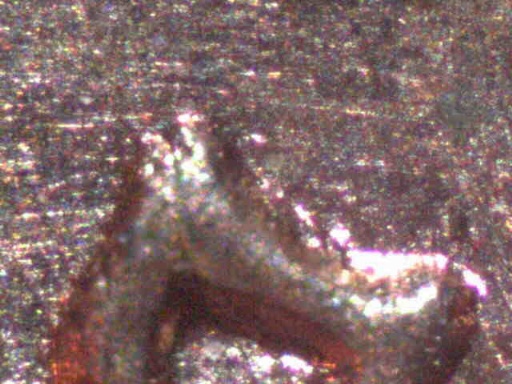
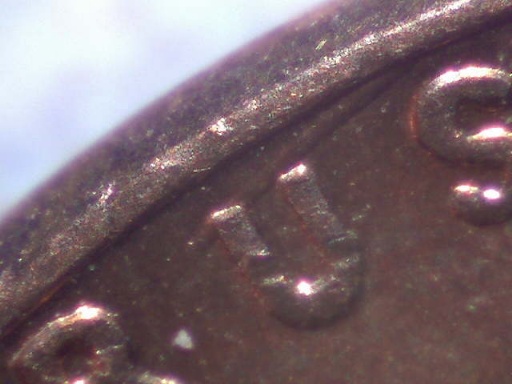
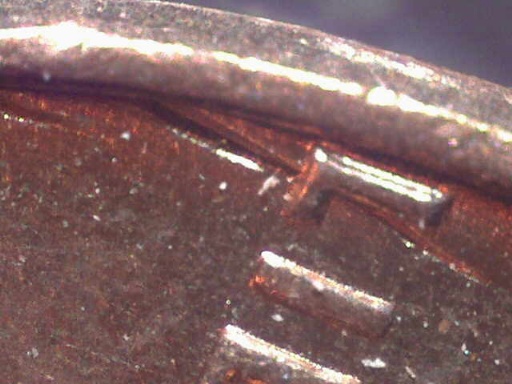
Looks good, this may be a LDS of one that's on CCs site. Die gouges should make easy markers on the coin. See if you can add a picture of the whole mintmark.
|
|
Pillar of the Community
United States
7629 Posts |
This is an RPM, but I am unsure whether this one is listed.
It is not LDS...this is an EDS coin.
|
|
Pillar of the Community
 United States
603 Posts |
What images would you need to confirm this Chuck?
|
|
Pillar of the Community
United States
7629 Posts |
A single image showing the relationship of the mintmark to the date. The distance from the mintmark to the two nearest date digits is one of the most important markers for die variety identification.
|
|
Pillar of the Community
United States
603 Posts |
Right, I will do that tonight when I get home from work.
|
|
Pillar of the Community
United States
603 Posts |
Here are the new pictures 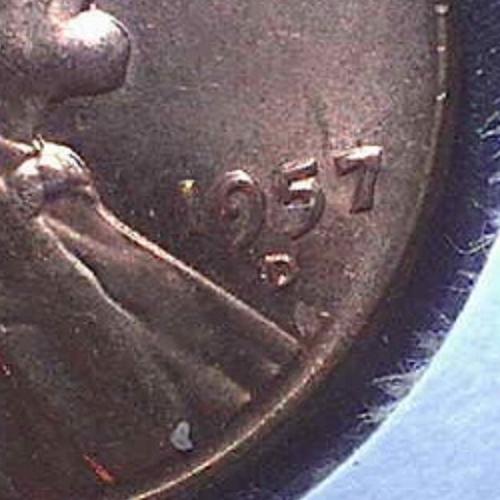 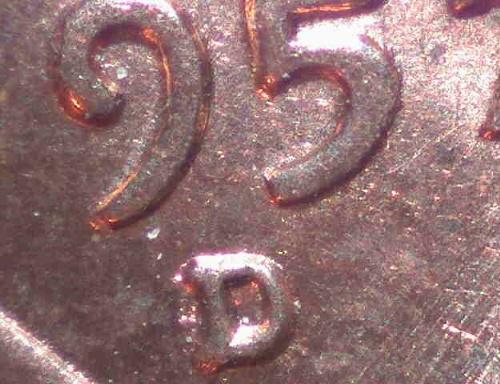 |
|
Pillar of the Community
United States
1219 Posts |
Charles, if you don't mind, do some more educating here. In my head an early die state would be a fairly new die reletively free of imperfections. A late die state would be a die that has had maintenence due to clashes or other problems.
|
|
Pillar of the Community
United States
7629 Posts |
This does not appear to be any one of the 36 different dies currently listed on my site. I would need to see it under a scope to confirm this, but it looks like a new one.
As to the question about die state - the die state of a coin (and the die that made the coin) is relevant ONLY to the wear on the die at the time it struck the coin. It has nothing to do with gouges, scratches, or other marks placed onto the die. A die could be hung on the press, brand new, and clash together with the other die before it ever strikes a coin. The operator could polish the die leaving die scratches, and then mint the first coin with that die. It's still a very early die state die.
Die wear is gauged by the amount of detail loss due to metal flow on the die. As dies mint coins, the steel of the die tends to flow outward toward the edge of the design. As that flow occurs, lines - grooves - form in the fields of the die. This is what causes luster on coins. Thousands upon thousands of tiny grooves in the die caused by steel molecules moving outward from the pressure that transfer to the coins minted by that die.
As these molecules of steel move outward, they begin to affect the outer edges of the design elements, usually affecting those near the edge of the design first. As a die moves through the die states the design becomes mushier and mushier until it reaches a point that only the major characteristics of what once was a design still show. This would be 'very late die state'.
|
|
Pillar of the Community
United States
7629 Posts |
To add, many dies never make it to very late die state. They chip or crack and are replaced when these flaws are noted. In a study released in 1989 by Delma K. Romines, he states that fewer than 2 percent of all coins minted fall under the descriptor of 'early die state'. Another 20 percent are 'mid die state', and all the rest are either 'late die state' or 'very late die state'.
In very brief, because I don't have much time here at this sitting, the following can be considered a basic guide:
Early die state: No flow lines impede the crispness of the edges of any devices, including those near the edge of the design.
Mid die state: Some flow lines are evident, but the outer edges of all devices remain well defined.
Late die state: The outer edges of most devices near the rim are weak and indistinct, often with raised areas toward the outside of the design where the edge of the device eroded away almost completely.
Very late die state: A coin showing only the major design details, even in higher uncirculated grades. The design is so 'worn out' that smaller details and lettering near the edge of the design are very indistinct, and in some cases, merging with the rim and illegible.
|
|
Pillar of the Community
United States
7629 Posts |
Some favor the use of VEDS (very early die state), EMDS (early mid-die state), and LMDS (late mid-die state) in their appropriate places to describe the design on coins where the actual die state of the coin is in-between other die states.
Another thing to note is that die state is somewhat subjective like grading coins. Although the description of what to look for and how to assign die state can be written very clearly, some dies just wear out differently from others, and it can be difficult for very experienced people (including myself) to tack a coin down to one single die state.
As a footnote, the obverse and reverse of any given coin can (and usually do) have differing die states. It's rather rare that the obverse and reverse dies are changed out at the same time and wear out evenly with each other. I have seen coins with EDS obverses and VLDS reverses...it's actually rather common.
|
|
Valued Member
United States
405 Posts |
I've always wondered how that was determined as well - thanks coppercoins :)
|
|
Pillar of the Community
United States
603 Posts |
Charles,
Would you like me to send it to you? If so just PM me your address and I will get it to you as soon as I can.
|
| |
Replies: 12 / Views: 1,005 |
|









 Posted 07/28/2008 1:41 pm





