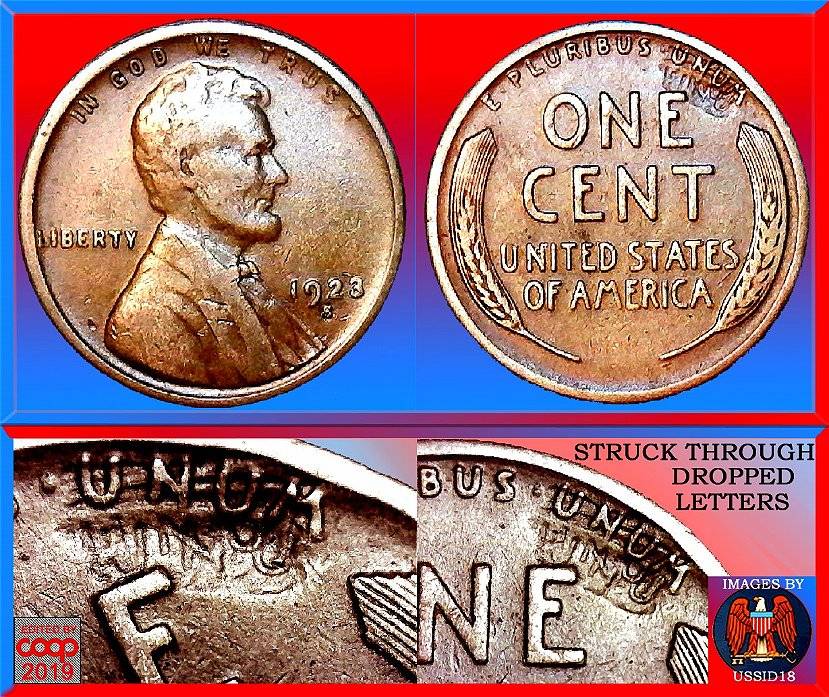
Too good to be true?
Have you ever seen a coin that looked so interesting, and you start to thinking: This is a doubled die? The more you look, the more you convince yourself, that it is a doubled die. So you submit the coin on the forum, and some or most feel it is a doubled die. When you submit it to an attributer, he lists it. So you submit it to a three party grader, and then, you find out it is counterfeit. Boy you didn't see that coming. So what happened? What was missed?
Sometimes we forget what the rules are and we over look them. This happened recently to a collector here, and if we are honest with ourselves, we probably have all done this many times. So don't feel alone. It is all a part of learning and training our eyes, what to see on a doubled die, and what isn't a doubled die. But the coin in question on this thread is a 1941
Lincoln Wheat cent. When you look at the coin you see extra devices on the left side of the motto devices:
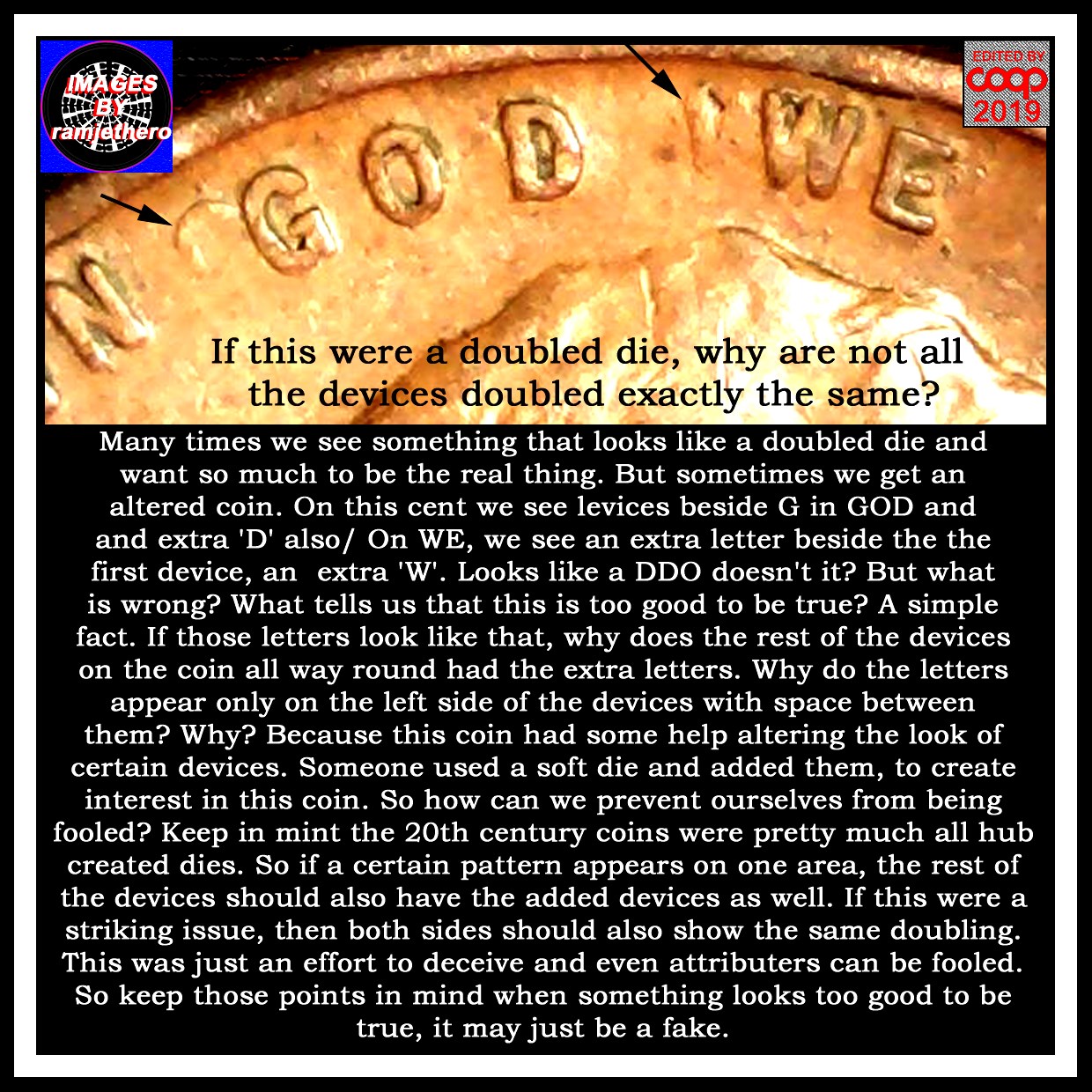
This looks very convincing. I even thought so when I saw it the first time. Perhaps many here did also. But we have to ask ourselves a question.
Is this really a doubled die? Think about it? What makes a doubled die to look the way they do? It is caused not by machine damage to the devices after the strike and seen on the edges of devices. It is a misalignment of the hub, or a warped hub. If a worn hub was used one time to hub a die and a newer hub was used on the same die, then that will create a doubled die because the placement of the devices on the new die will not match up. So it is the hubbing process that creates a doubled die. If a die is created by a working hub that that has doubling on it. It that a doubled die? Not if it is a doubled working hub, creating several dies with the same exact doubling. So instead of one millions coins with a die, it could have 25 or even more dies created making possible 25 million coins with the same working hub doubling. So the value for the coins made with a doubled working hub lowers the value a lot. So a true doubled die is created on one single die. Thus in 1972 there were half of the cents that had a doubled master die that made for all three mints. Lowering the value to nil on the master die doubled examples. These are not doubled dies in the true sense. A true doubled die will be a one of a kind. So on the 1972 cents, there were several different doubled dies, and they gave them numbers. Why? Because each of these dies coins struck were different hub doubling. But the same doubling can be traced back to
one dieSo back to the coin in question. What makes this not a doubled die? It is because the die that struck this coin was a normal die. Someone altered it so it looks like a doubled die, but it is not. Ask yourself; Have you ever seen a doubled die with just the doubling showing on the certain devices and the rest of the devices all being normal? If this were a doubled die, then why are the other devices, not also altered exactly the same?
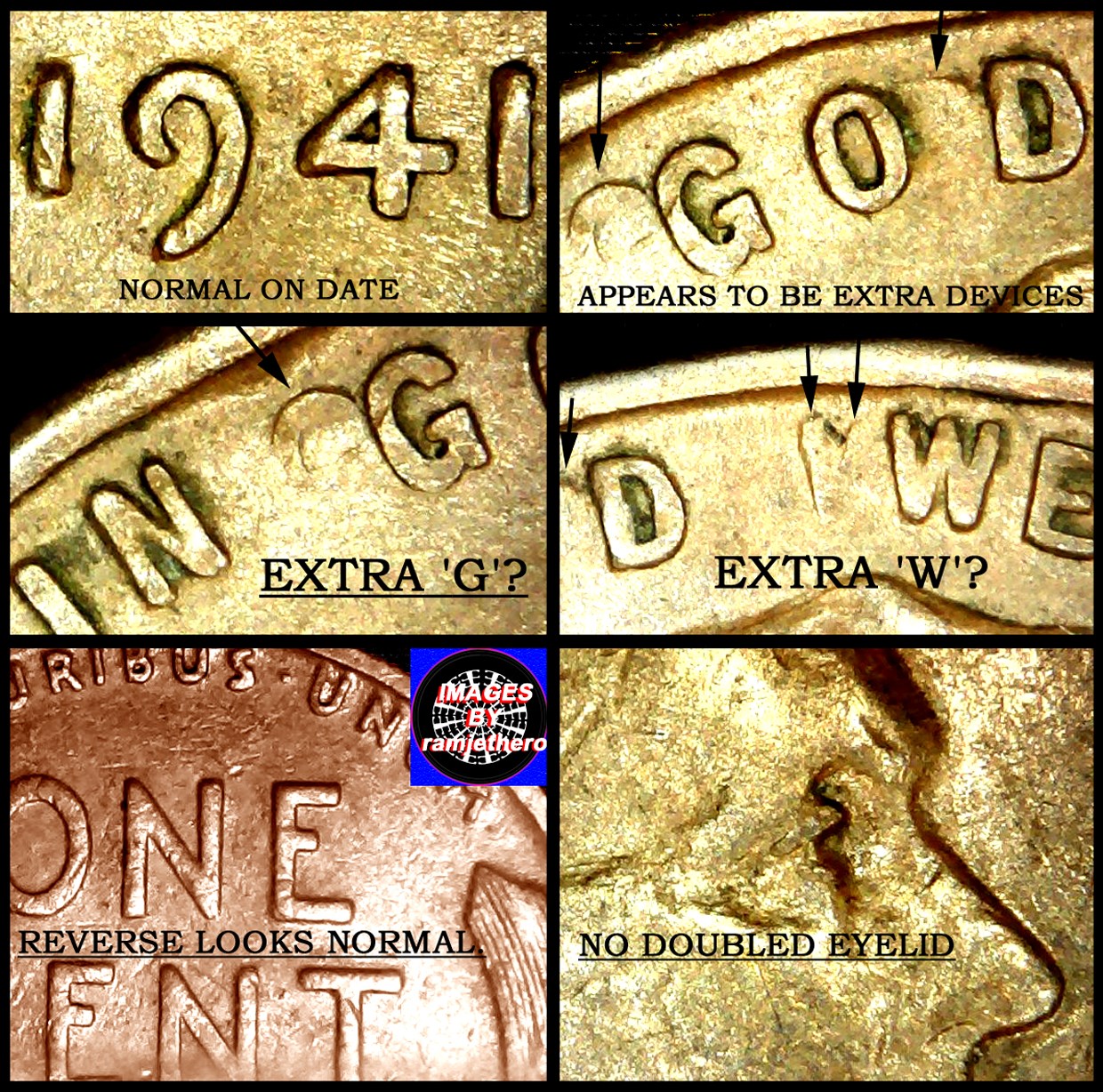
On this coin just a few devices are altered, and the rest are normal. How could this happen?
It can't. If the devices were hub doubled, then all the devices would be affected all around the coin, the bust should also be rotated if that were the case. So when we look at the other areas on this coin, all we see normal devices.
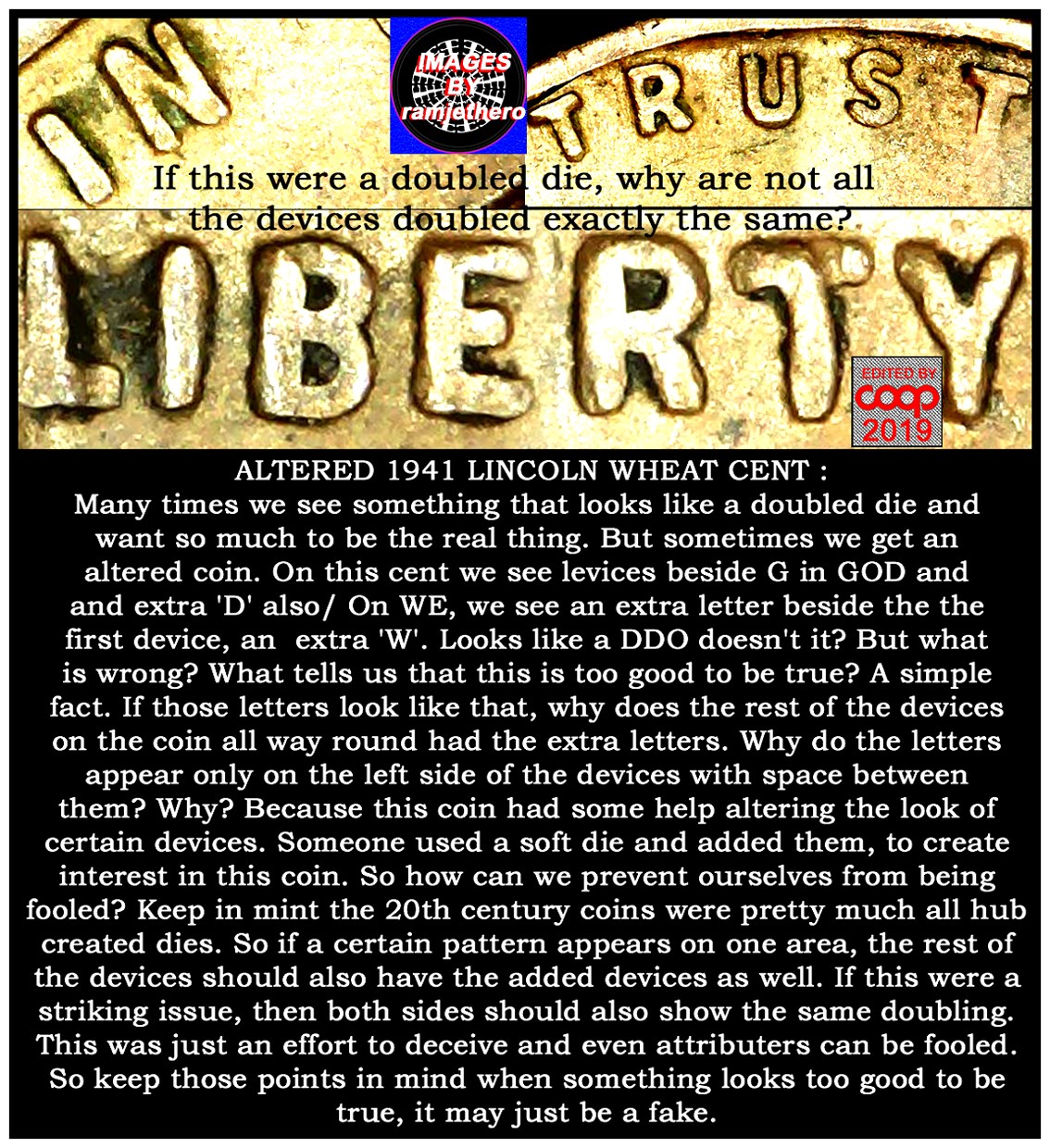
Okay, so did any one notice the reverse? Why is that image there? I wanted to show that his was not a striking error. The doubling was not caused during the strike. Why can I say that? Be the rest of the devices on the coin are normal on both sides of the coin. So what happened? Someone created a soft die, to alter the devices and to make it convincing that it looks like a doubled die. So when you think of hub doubling, it should be consistent on the die. Not just one device altered. Often several in an single area can be affected. But not the way this coin was altered to deceive.
So when you think you have found the holy grail of coins, ask someone else to take a look. Why? Because we often convince ourselves, we've found the holy grail! When we really haven't.







 Posted 01/16/2019 6:17 pm