| Author |
 Replies: 14 / Views: 1,906 Replies: 14 / Views: 1,906 |
|
|
Pillar of the Community
United States
597 Posts |
|
|
|
|
Valued Member
United States
320 Posts |
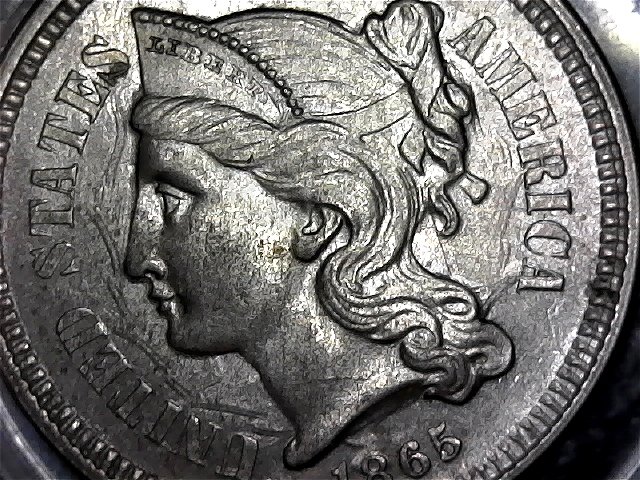
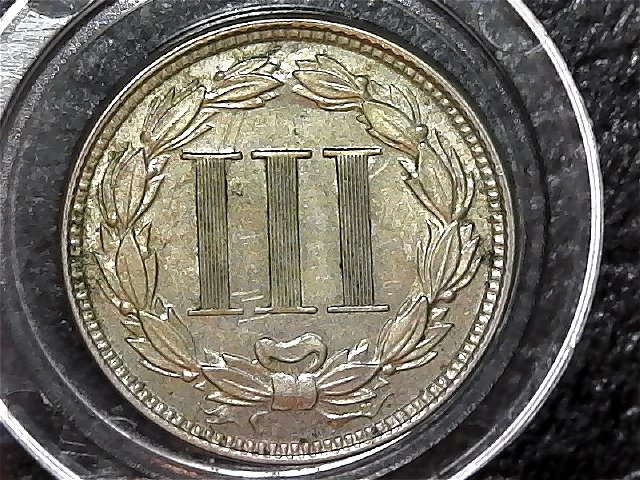
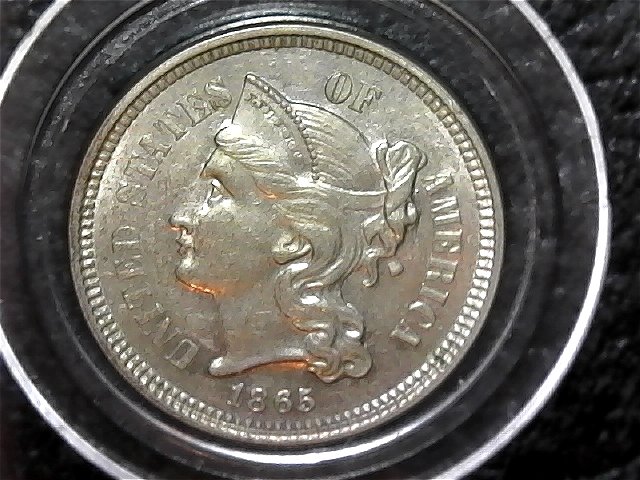
If I see what you are referring to in the fields both obverse and reverse it appears to be a clashed die. very nice
|
|
Pillar of the Community
United States
5825 Posts |
Die clash for sure.
They always grab my attention.
|
|
Pillar of the Community
 United States
597 Posts |
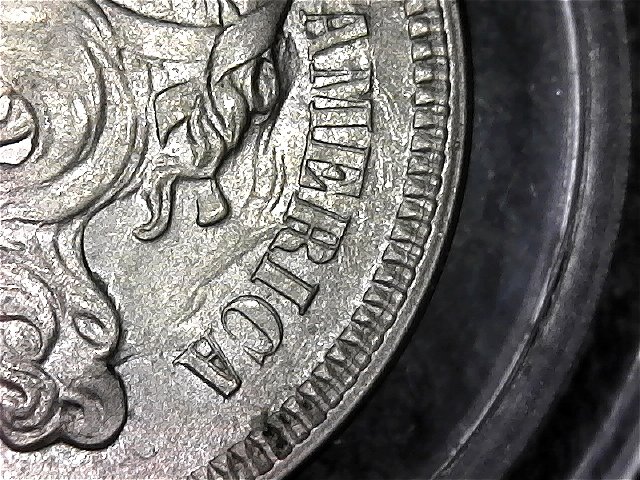
The die clash for sure, but what about the doubling in "AMERICA"?
|
|
Valued Member
United States
121 Posts |
The doubling on America looks like Strike Doubling to me. Not a doubled die. |
|
Bedrock of the Community
United States
17884 Posts |
I agree the doubling is Machine Doubling. AS for the die clash I see at least two possibly three sets of clashmarks.. |
|
Pillar of the Community
United States
3453 Posts |
I agree with Machine Doubling. I was looking for Longacre doubling but not in this case. |
|
Pillar of the Community
United States
2540 Posts |
heavy die clash, and nope, not a Doubled Die
|
|
Valued Member
United States
56 Posts |
|
|
Pillar of the Community
United States
597 Posts |
So what's the difference between the doubling evident on my example (above) and the doubling evident on this coin:  This one is pulled straight from the PCGS website where it's a recognized variety. H |
|
Bedrock of the Community
United States
17884 Posts |
Well the PCGS pictures aren't very good, but frankly that looks like Machine Doubling as well. And it also possible that PCGS has blown the variety attribution as well. Just because the TPG says it is some variety doesn't mean it is right. We have seen a lot of misattributions in slabs. |
|
Pillar of the Community
United States
9811 Posts |
I agree with Condor101 in these PCGS photos the coin doesn't look like a DDO, but on the coin on the PCGS site, directly with the magnifier turned on going over the obverse the coin does indeed appear to be a DDO, just a minor one though. You can see it best on the AMERICA lettering. https://www.PCGS.com/coinfacts/coin...-003-5/38300Wonderful multiple struck die clashes though. Look really carefully at the serif on the C in AMERICA you can see complete separation of the top of the C on the PCGS example, where HGK3's coin does appear to resemble Machine Doubling. Can't say conclusively from the photos, I would need to see coin in hand, as the the contrast of the B&W photos just isn't good enough to see the depth of the doubling. My .03 cents! "Buy the Book Before You Buy the Coin" - Aaron R. Feldman - "And read it" - Me 2013! ANA Life Member #3288 in good standing since 1981, ANS, Early American Coppers Member (EAC), Colonial Coin Collectors Club member (C4), Conder Token Collector Club member (CTCC), Civil War Token Society (CWTS) member, Liberty Seated Collectors Club (LSCC) & Numismatic Bibliomania Society member (NBS), USMex, Member in good standing, 2¢ variety collector. See my want page: http://goccf.com/t/140440Edited by westcoin
02/15/2019 6:11 pm
|
|
Pillar of the Community
United States
597 Posts |
I'm new to these coins, so I'm learning. Please bear with me. I agree that in general the doubling has that flat, shelf like appearance typically associated with Machine Doubling. However, I've read one of the hallmarks of MD is that it reduces the size of the device. If you look at the first A in America there doesn't appear to be any doubling and the vertical element on the left doesn't appear any larger than the same vertical element on the last A in America, which clearly is doubled. While the clashing is nice, I understand that it was so common it doesn't really add much premium. Somewhere I read that non clashed varieties are actually hard to find for some dates. |
|
Pillar of the Community
United States
3453 Posts |
Which variety did PCGS attribute that one too? My gut still says MD but I would like to compare it to other known instances of that variety.
|
|
Pillar of the Community
United States
4233 Posts |
|
| |
Replies: 14 / Views: 1,906 |
|






 Posted 02/01/2019 9:42 pm





