| Author |
 Replies: 23 / Views: 2,132 Replies: 23 / Views: 2,132 |
|
|
|
Bedrock of the Community
United States
62064 Posts |
Definite Retained Cud. You can see the displacement of the metal. Nice find. 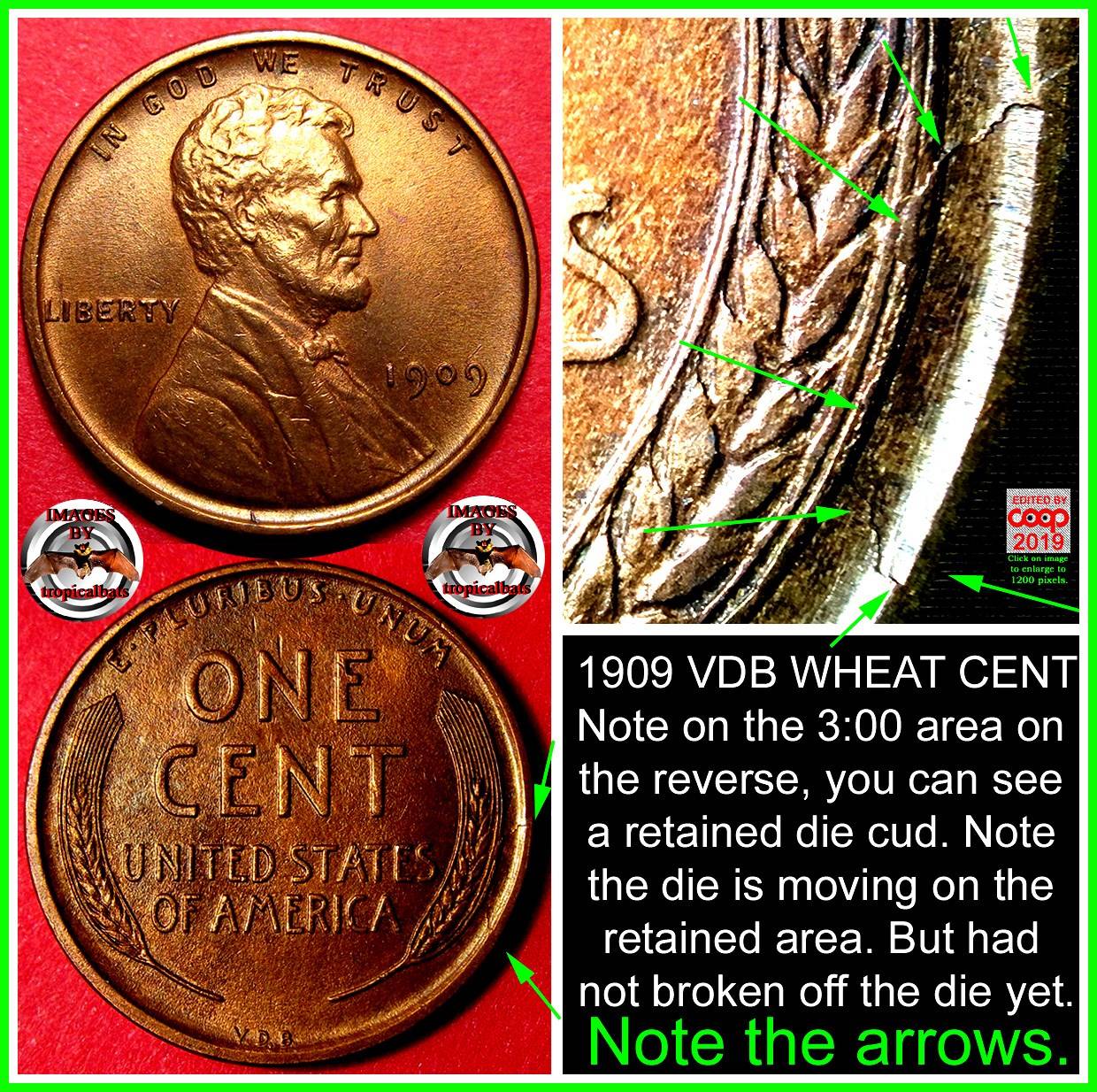 |
|
Pillar of the Community
United States
2775 Posts |
Tropicalbats,  new listing! Coop, "Note the die is moving on the retained area. But had not broken off the die yet" seems to describes a pre-cud. http://www.error-ref.com/die_crack_...__pre-cud__/I'm still on fence that it is or is not fully detached at this point. If not, I have no doubt (if die was left in production) the section showing some lateral spread would've fully detached itself. If not this strike, then soon there after. Thanks, Doug. 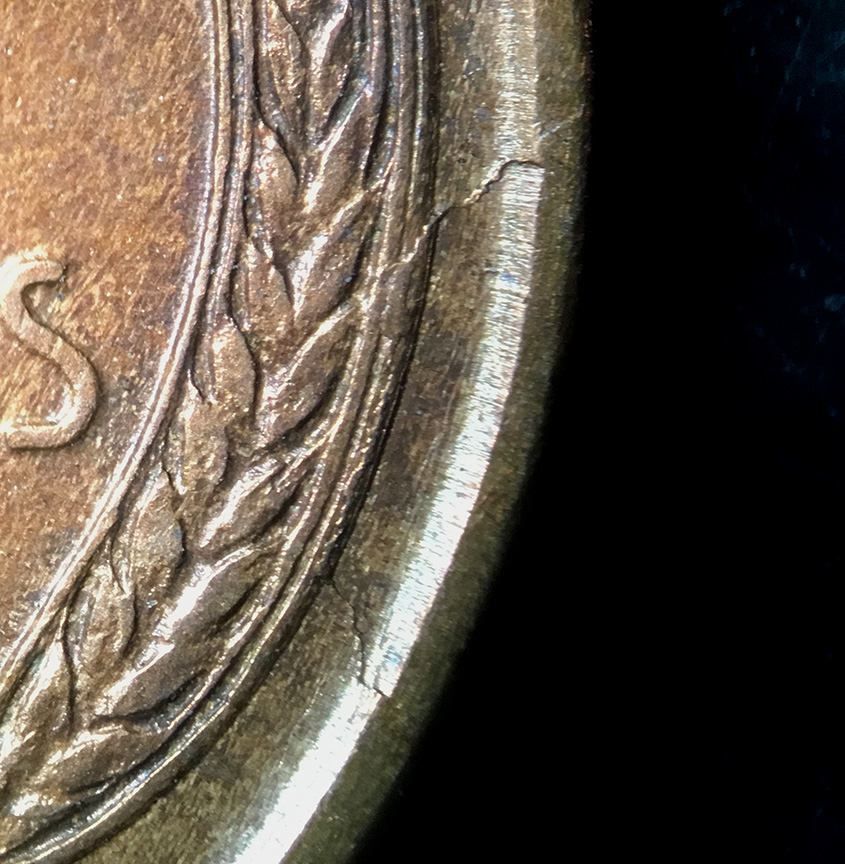 Edited by Halo1st
02/21/2019 1:33 pm
|
|
Pillar of the Community
United States
751 Posts |
Tropicalbats, WHAT are you using for your photography. It is absolutely PERFECT.
We would all benefit GREATLY with the same set up.
Dan
|
|
Pillar of the Community
 United States
6207 Posts |
Pretty straightforward on the photos, but I spent some time going through different bulbs and lighting angles before settling on that end. For the full coin shots I use a Canon S95 pocket point-and-shoot camera. It's an older somewhat high end thing that can now be bought for about $50. The light is an unfrosted 75W GE 1490 Lumen halogen placed about 12 inches above and slightly behind the stage. I take the photos with the camera tilted about 5 degrees off to get the light to cover the coin with minimal washout/shadow issues. The macros are with an AmScope trinocular stereoscope, although more often than not I just point an iPhone down the lens rather than use the onboard camera. The light on the scope is a halogen with a diffusion ring set in the original mount on the scope. The scope can be bought with this light installed. The scope I use is actually for my biology work and has a backlit stage and all the trimmings, but a much less expensive one works just fine. |
|
Bedrock of the Community
United States
62064 Posts |
Note the edge of the rim is showing movement and the lower outside wheat line is also showing movement. So the die is split, but not fallen away from the die yet. Beautiful coin to find it on. The VDB is usually worth about 10X the normal cent without the VDB. Same way on the matte Proofs. The VDB is 10X as much as the matte proof without the VDB. The die seems real fresh for this to happen so early in its life.
CD-15
|
|
Pillar of the Community
United States
6207 Posts |
Coop, I agree. Fist, there is pretty clear movement at both rim contacts and both spots on the wheat where it hits. With shifting at all four of those locations it is a pretty solid call as a Retained Cud. Second, yes it seems a very nice die to be breaking, but such has been my experience. That is, that the die age is not strongly correlated to Cud formation. A lot of Cuds are on pretty young dies and a lot of very old dies have no Cuds. |
|
Bedrock of the Community
United States
17884 Posts |
Quote:Conder , it is the anvil die and it meets error-ref's conditions for horizontal displacement of a Retained Cud. http://www.error-ref.com/?s=Retaine...ontal+offsetHow is it not a Retained Cud ? I don't accept horizontal displacement because the piece can have horizontal displacement and still be connected to the rest of the die body. There is no way to know if that piece is still attached or not and if it is still attached it is just a die crack. Quote:JC listed it as a Retained Cud Conder101. That's nice, but he has several pieces on his site identified a Retained Cuds, or even full Cuds that I believe are misidentified. |
|
Pillar of the Community
United States
2376 Posts |
Totally understandable to accept only those coins with a no question qualifier. The tough part for the attributor would be disqualifying another coin because there is no way to know if it is or isn't a listable die event.
Ultimately it is up to the individual collector as to what guidelines he or she personally follows
|
| |
Replies: 23 / Views: 2,132 |





 First Page


 Posted 02/21/2019 1:26 pm


