| Author |
 Replies: 13 / Views: 3,110 Replies: 13 / Views: 3,110 |
|
|
Valued Member
United States
65 Posts |
|
|
|
|
Pillar of the Community
United States
3552 Posts |
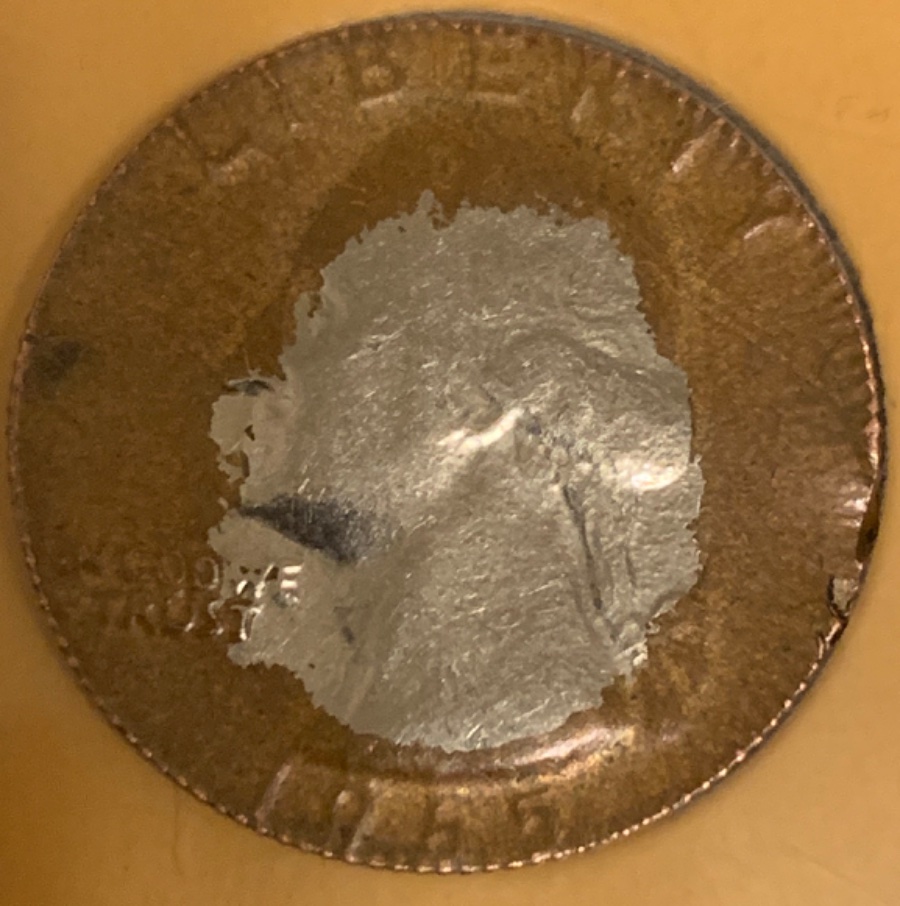
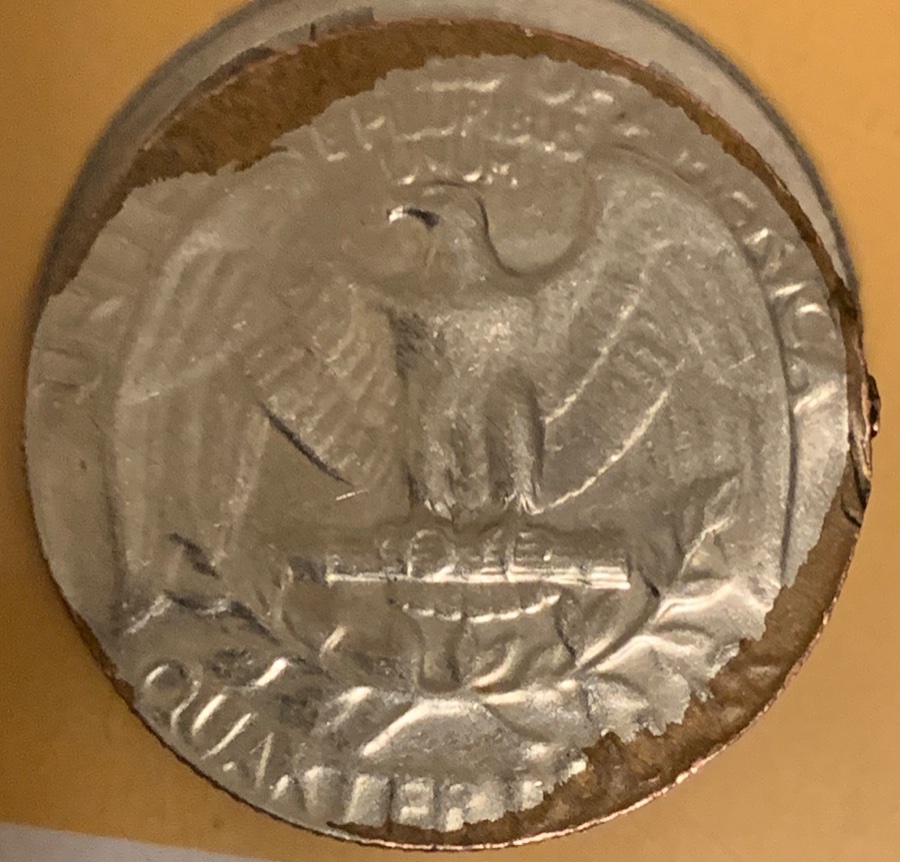
It is really nice.  If it was split, the diameters should have been the same. It could be a one of a kind error. In terms of valuation, it is going to be difficult to determine since nothing that I have run into compares to it. I'd personally put it on a 30 day $0 reserve auction on ebay and keep your fingers crossed. IMHO |
|
Valued Member
 United States
65 Posts |
Thanks, I thought it was an interesting one. Problem is I'm not positive I want to sell it just because of the rarity and eye catching properties it has. It's just kind of a cool piece to see. More wanted the valuation to make me feel like I didn't go bad with this one. Lol
|
|
Bedrock of the Community
United States
79381 Posts |
Looks like a damaged coin to me.
Errers and Varietys.
|
|
Bedrock of the Community
United States
62064 Posts |
It was dipped into acid. Not a mint error. A PSD coin. |
|
Valued Member
United States
65 Posts |
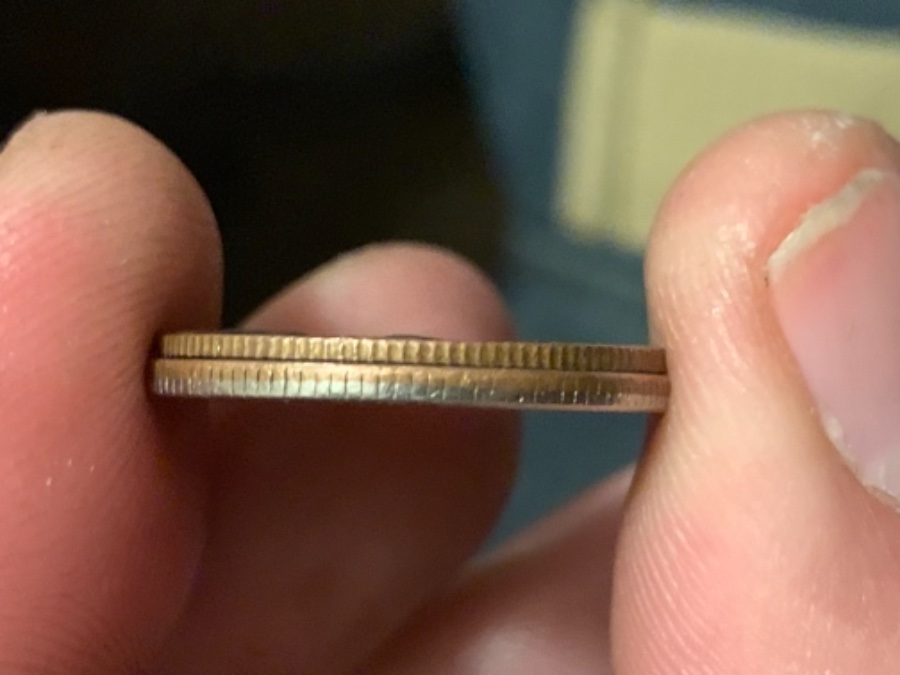
Only problem I have with that, is that the reeds are on the face of the coin as well. That would not happen from acid.
|
|
Bedrock of the Community
United States
79381 Posts |
It's Post Strike Damage ( PSD), not an error. A spender. Errers and Varietys.
|
|
Valued Member
United States
65 Posts |
So explain to me then, how the reeds got stamped on the obverse of the coin if this was PSD or PMD? I have seen acid treated coins and the reverse isn't pitted like you would see with acid. So I'm curious if someone can explain how those are both not mint error. I knew everyone was going to start throwing that out there, and new this would have to be said. So please.... |
|
Bedrock of the Community
United States
10065 Posts |
This was what I used to do in my chemistry class to show my students how nitric acid could eat metals. It made a lasting impression on them as to how powerful acids could be. I have seen/done this many times. They make interesting conversation pieces!
How much squash could a Sasquatch squash if a Sasquatch would squash squash? Download and read: Grading the graders Costly TPG ineptitude and No FG Kennedy halveshttps://ln5.sync.com/dl/7ca91bdd0/w...i3b-rbj9fir2 |
|
Valued Member
United States
65 Posts |
Really? So the acid only eat one side, and actually moves the reeds on the edge to the face. That's a trick I've got to see
|
|
Pillar of the Community
United States
571 Posts |
The reeding on a coin is placed on the coin by the collar, so even if this was struck on a split planchet, the reeding would not show up on the face of the coin. There is just no way in the striking process this could occur.
The acid theory makes sense to me. If the coin was face up in the acid, the bubbles caused by the acid could flow between the grooves in the reeding. The flow of the bubbles up and around the reeding could in theory cause enough of a flow pattern so that the acid would eat away less in those areas. Being face up in acid would also explain why the reverse is effected less, it was up against the bottom of the container, and thus exposed to less acid than the obverse.
|
|
Valued Member
United States
65 Posts |
Ok, I'll humor this. So what kind of acid and how long would it take to do this mister Earle42?
Cause I'm going to conduct this experiment and see if what happens. So let me know, and I'll post results. Because from seeing this in person, I'm calling HN.
|
|
Pillar of the Community
United States
2624 Posts |
I would think a coin that thin would be a weaker strike.
|
|
Bedrock of the Community
United States
62064 Posts |
Some acids work more on copper and others on the clad material. The acid removes the surface evenly. But the edge of the coin has three surfaces to be reduced from the acid. Thus the rims of the coin on the edge, is affected the most. thus it makes what is left of the reeds eaten away so much it shows on the obverse. 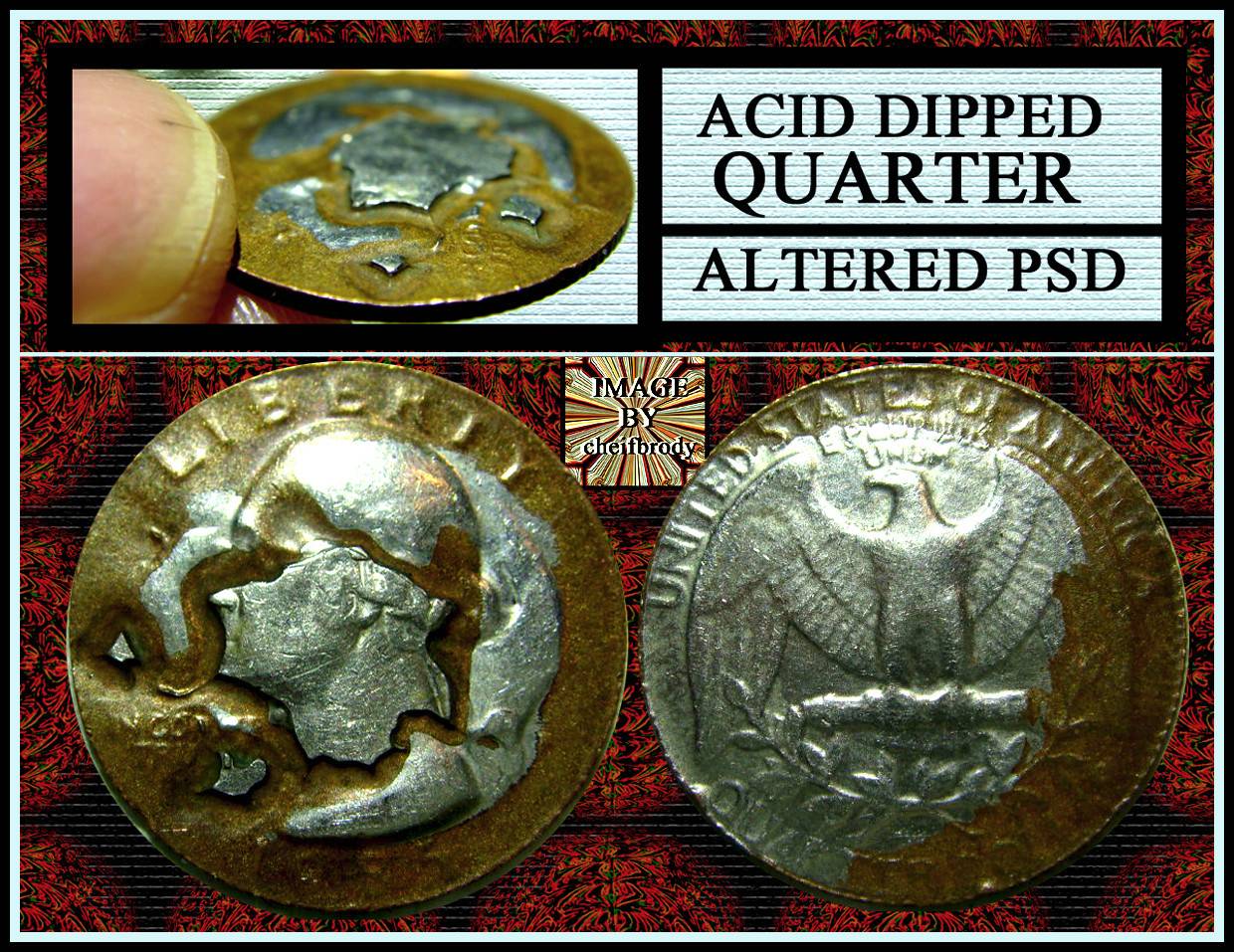 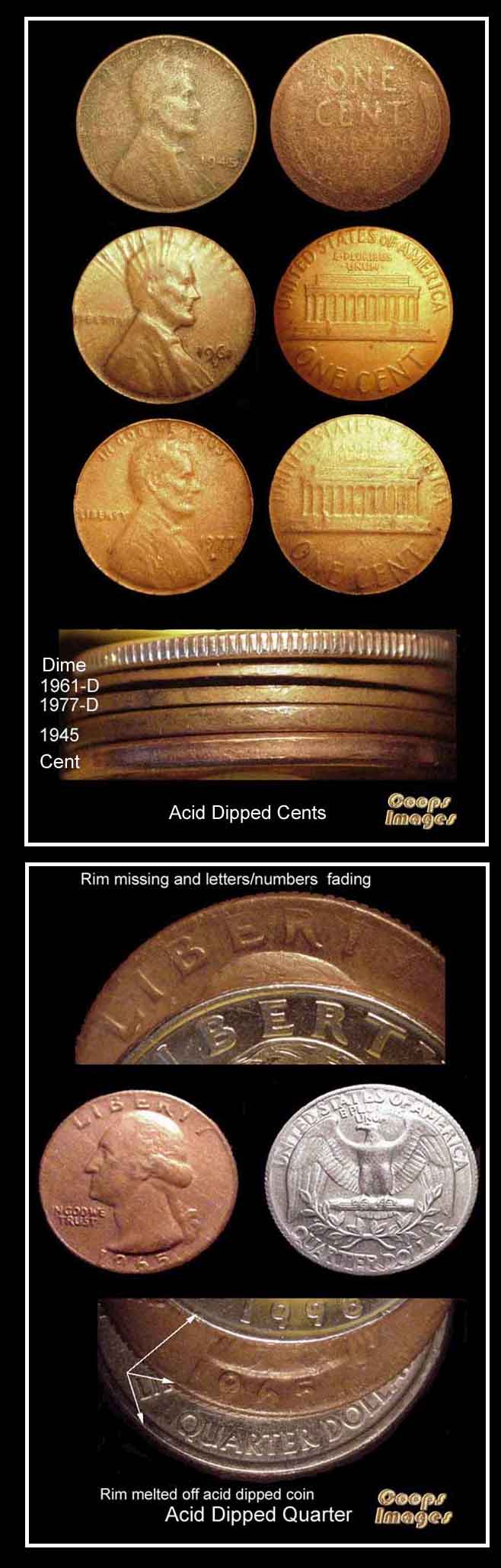 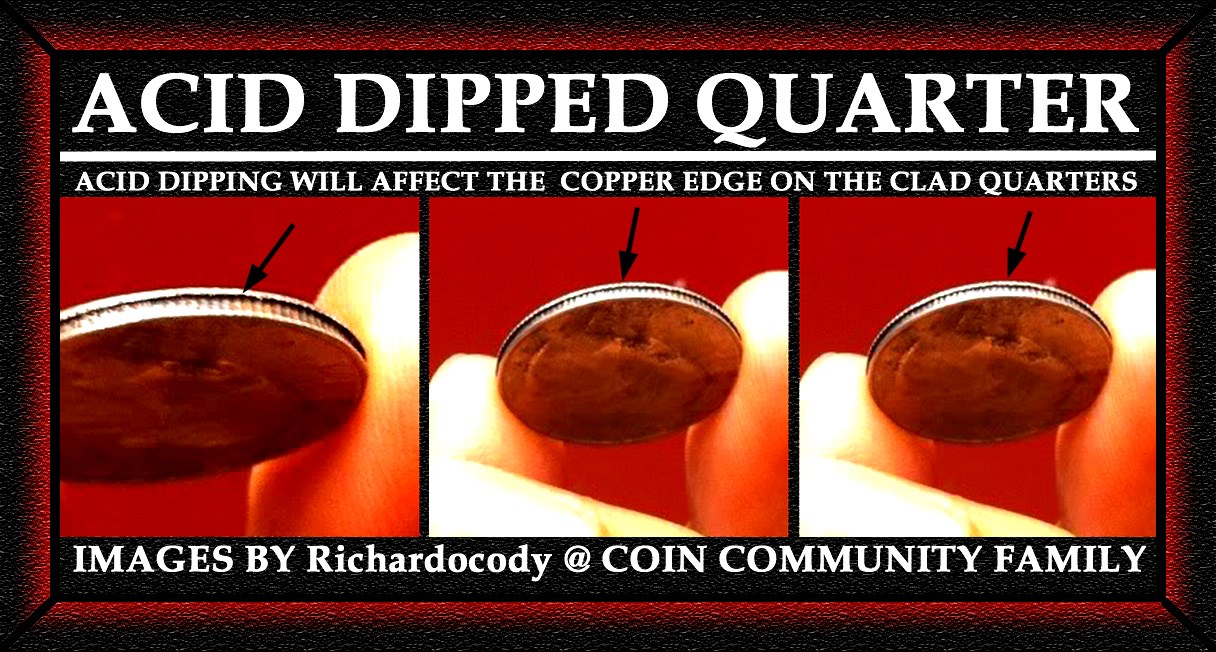 Why types of acid? I'm not sure. I don't destroy coins. I just know it can be as little in strength as vinegar, soda and then on to the stronger types. Even Ketchup and salsa can alter the color of coins. I just know what an acid dipped coin can look like. On the quarter on the second set of images, it looks like they removed the surface from placing some acid on a surface and laid the coin on the acid and it removed just one side of the cladding. When you look at the rims on the obverse, you can see where the copper also was eaten away a bit. |
| |
Replies: 13 / Views: 3,110 |
|









 Posted 03/31/2019 04:53 am


