| Author |
 Replies: 11 / Views: 4,767 Replies: 11 / Views: 4,767 |
|
|
New Member
United States
7 Posts |
I recently received this coin from my son as a gift so I didn't want to ask too many questions I just happily accepted and said thank you. Putting this into my album I couldn't help wondering about it's authenticity and decided to try doing a little research. I would conservatively grade this as a G6. I stumbled across someone selling fake coins that looked great but they were being sold as fakes. I messaged the seller and asked how they were fakes because they looked real. He messaged me back and said they were lighter in weight but everything else was the same as originals. That's when I decided to weigh my coin. My coin weighs 2.9 grams and I know an authentic 1909-s-vdb should weigh 3.11 grams. My perplexity begins when I saw a posting from someone explaining that coins lose weight from wear. Understandably this seems true but how much weight could a coin lose just from wear? Could a 1909-s-vdb lose 2/10 of a gram or 7% of its total weight? I am not sure of the accuracy of my scale but it is brand new, so I weighed several other coins when I found another curiosity. I weighed my 1943 steel cents knowing they should weigh 2.7 grams. My Philadelphia and Denver weigh exactly 2.7 grams but my San Francisco weighs 2.9 grams. I am not new to this hobby I've been collecting coins for over 50 years but I am baffled by this new information, any help with this would be greatly appreciated. Sorry I am not the greatest photographer I tried taking a picture holding a magnifying glass up to the lens in an attempt to get a closer shot. I know the best way is to just take this coin to a professional and have it looked at, just thought I would start here. Thanks for any help, mcp 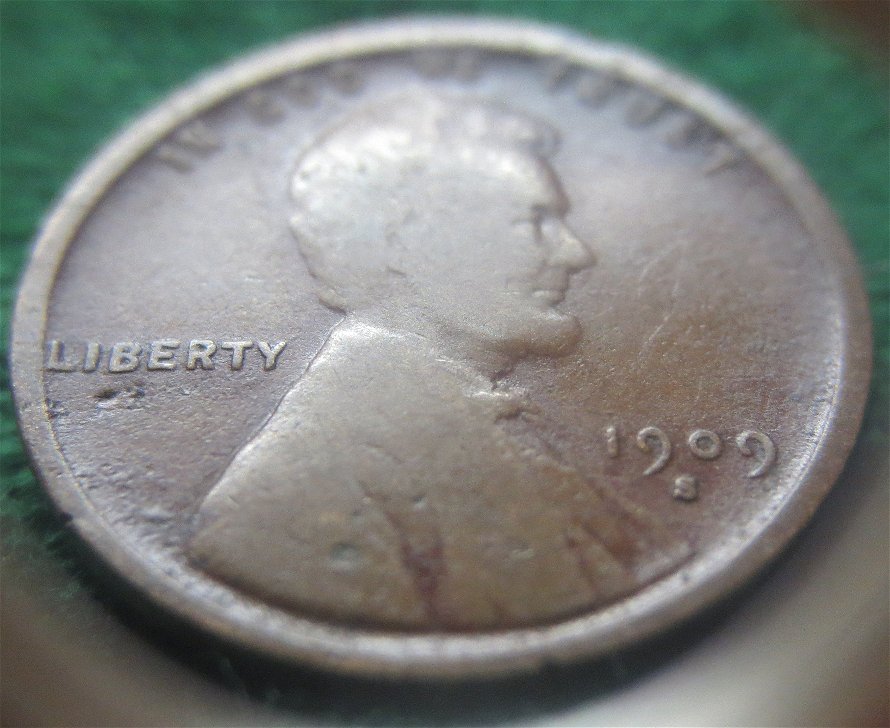 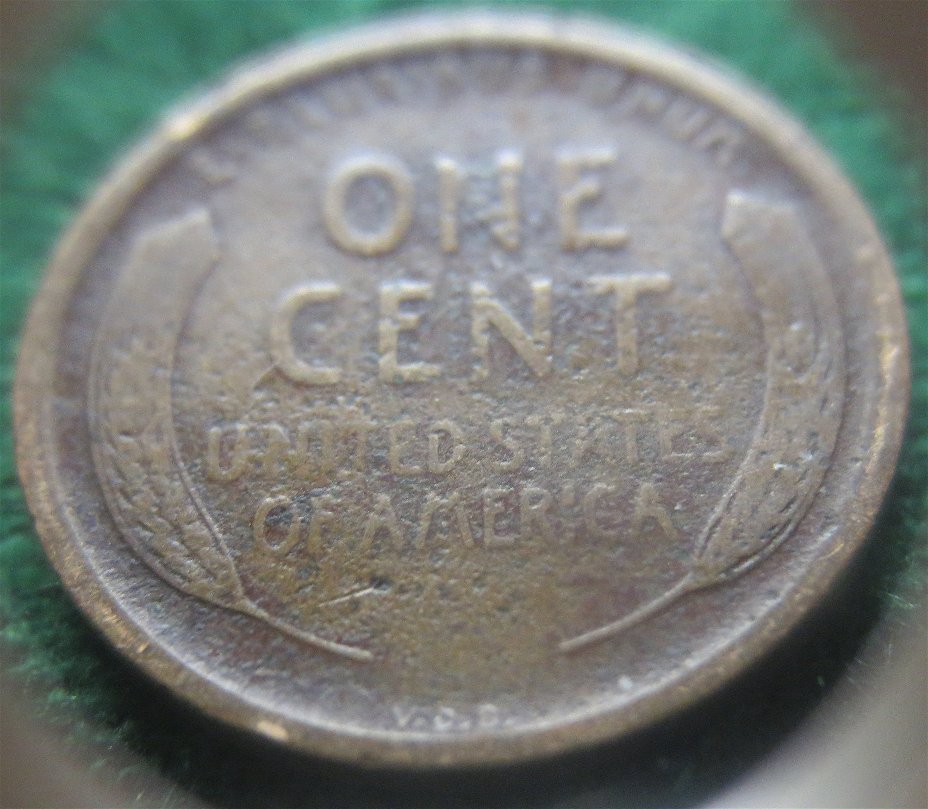 |
|
|
|
Pillar of the Community
United States
1390 Posts |
|
|
Bedrock of the Community
United States
94367 Posts |
Can you show us straight-on pics of both sides? Weight seems within tolerance given the wear. Clear evidence of environmental damage on the reverse.
|
|
Moderator
 United States
54302 Posts |
I see nothing, so far, that would make me think this was a counterfeit.
|
|
New Member
 United States
7 Posts |
Again sorry for the photography I tried without a magnifying glass and this is the best I can get hard to figure out how to get it below 300kb. I read through the link https://coinweek.com/counterfeits/c...in-09-s-vdb/ and from what I see my coin's mint mark is too blobbed to determine if the "S" was added or genuine, mint location in my opinion is position 2, Victor David Brenner's initials are in my opinion genuine with the "D" definitely slanted on the bottom and the "B" a little harder to see but seems slanted in the middle. I just wasn't sure if a true genuine 1909-s-vdb could weigh in at 2.9 grams. Thanks for all the help. 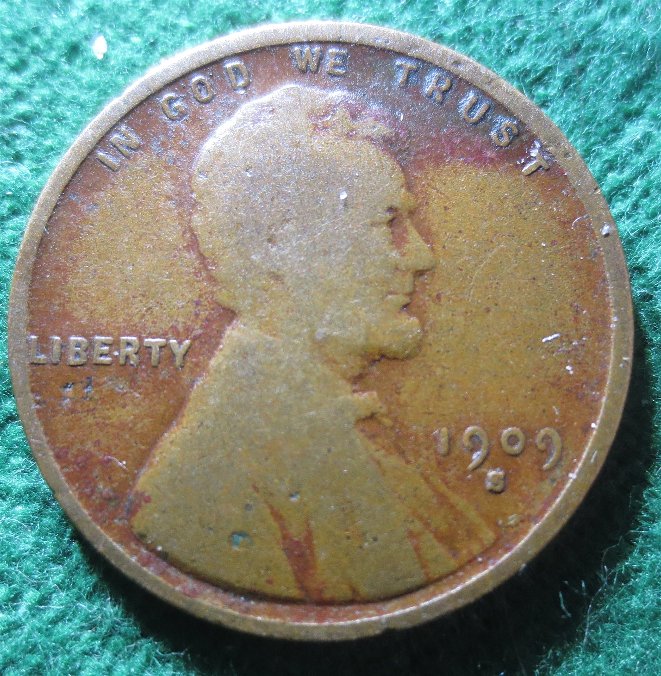 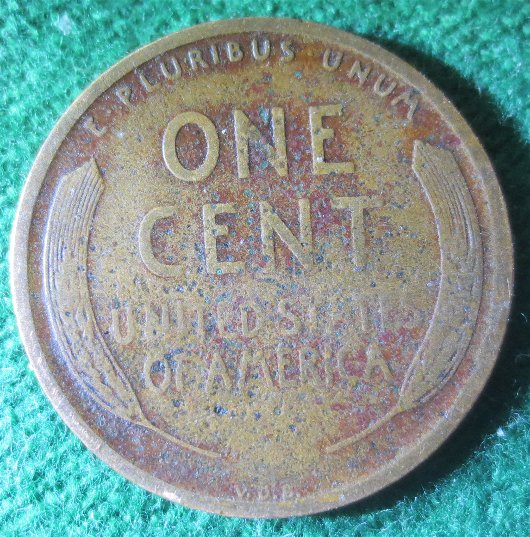 |
|
Pillar of the Community
United States
4085 Posts |
Your 1943-S might have been plated which could be causing it to weigh more. I would try weighing a couple of modern cents 1983 or newer as well as some 60s or 70s cents to check your scale. The 60s/70s should weigh 3.1g and the 1983+ should weigh 2.5g. It is a little hard from the pictures but the mint mark looks consistent with die #2. I've never weighed a Wheat penny that has been 2.9g though so that's a question if accurate. |
|
Bedrock of the Community
United States
94367 Posts |
I'd say genuine and light due to wear and corrosion.
|
|
Bedrock of the Community
United States
20069 Posts |
The die chip in the upper loop of the S is a key diagnostic. Coin was badly corroded and cleaned, probably explains the weight loss.
|
|
Bedrock of the Community
United States
20753 Posts |
|
|
Bedrock of the Community
United States
17884 Posts |
It looks real to me as well.
On the weight, you have to understand that not every coin is going to weigh right on the 3.11 gram specification even when it is new, The mint has a tolerance range for the weight of a coin and a 1909 S VDB cent could have weighed as little as 2.98 grams when it was new. There will also be some perfectly good coins that weighed a little higher or lower than the allowed tolerance. So your coin right now is about .08 grams out of tolerance. That is not enough to be concerned about. If it was 2.7 then I might be a little concerned. Same thing goes for you 1943 S cent. There were two different weight specs for the steel cents the higher one was 2.75 grams +/- .13 grams. So the high end weight was 2.88 grams. If yours is 2.9 then it is .02 grams heavy. Not something to worry about. When people ask about cents on thick or thin planchets I normally tell them if it isn't at least .4 gramsout of tolerance then it probably isn't of any great value. Seeing coins that are .1 or even .2 grams out of tolerance aren't that unusual.
|
|
New Member
United States
7 Posts |
Thank you very much for all the information. I was just a little concerned since technology has changed so much and forgeries are easily made now especially a coin such as this, if it were any other coin I wouldn't be so concerned such as my '43 San Francisco. I know my '09 has environmental damage and it isn't in the greatest condition but I'm glad everyone says it seems real that makes me feel better just to know that. Now the only other coin I need to complete my Lincoln's is the elusive '22 P.
|
|
Valued Member
United States
175 Posts |
It looks real to me as well. Can't really see the die chip inside the S due to wear.
|
| |
Replies: 11 / Views: 4,767 |
|




 Posted 04/28/2019 12:46 pm





