On any Buff, you want to isolate strike weakness and die state before grading, since these mimic wear too easily on the series. The 1937-D is known for good strikes compared to the usual branch mint coins. Like all Buffs, dies were overused and frequently mismatched.
That said, your coin is an average strike for the date and shows the
Die Deterioration consistent with middle or late middle die state. That makes it a decent coin for a grading set. Buffs in AG-G-VG are fairly easy to grade. Buffs in AU-UNC are fairly easy to grade. It's the middle grades that are killers, and that's where most Buffs are found.
To check strike quality, look at the key protected areas on the obverse: eye, nostril, lips, second feather, and right ribbon. On the reverse, look for EPU amd FIVE CENTS and the eye, nose, beard, central neck, sinews on rear legs, and the lower belly (yes, that's a euphemism). All show average detail on your coin.
Die Deterioration is most noticeable in the peripheral elements, LIBERTY, date, and lower left ribbon on the obverse, hair on the buffalo's head and hump, tail, and upper letter detail on US of A. All show a middle die state obverse and a late middle die state reverse on your coin.
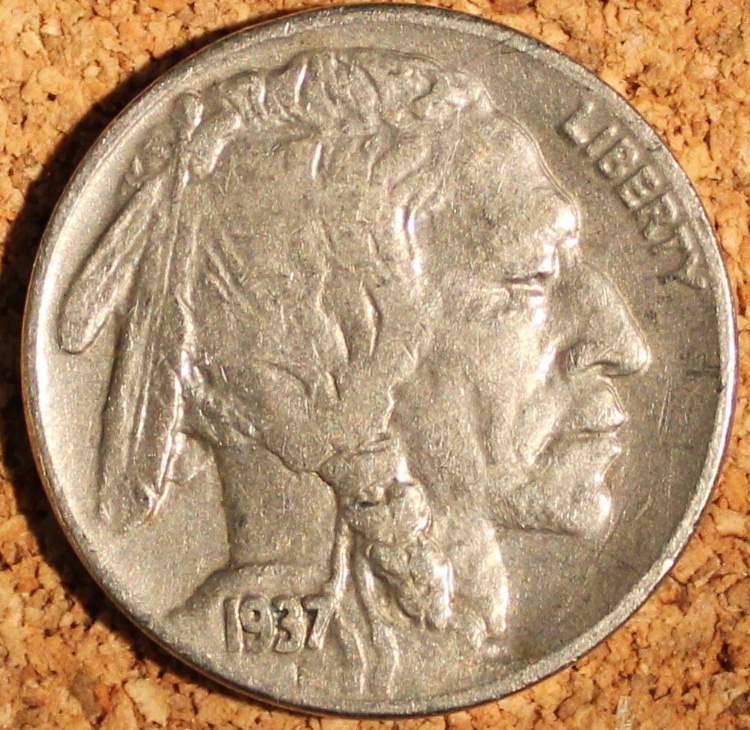
Your obverse has the hair distinct from the forehead and cheek. The second feather is complete, and has not blended into the hair. The hair above the part has some detail, There is some horizontal and vertical detail in the braid, though the braid is weak when it reaches the throat. The first ribbon is complete and separate from the date and rim.
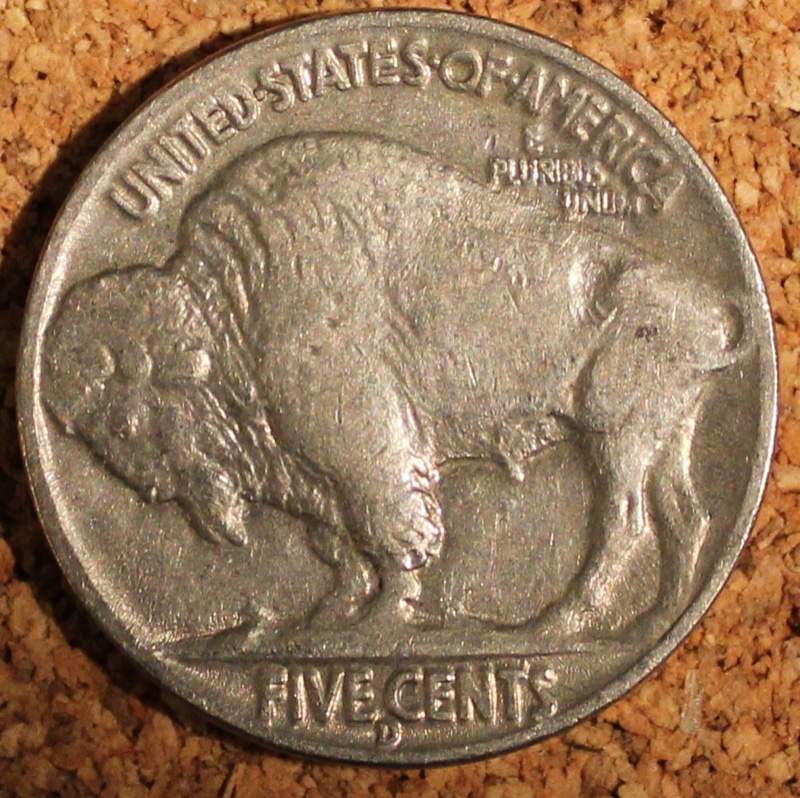
Your reverse needs a slight adjustment for die state. Note the loss of detail in the upper parts of US of A and the blurriness of FIVE CENTS. The head is distinct from the rim and the tail is just starting to merge with the rim. There is little hair on the head and hump. There is 3/4 of a weak horn and no detail on the end of the tail. The shoulder and flank are weak, but distinct. The front hoofs are merging with the ground, but there is about half of the detail on the lower front legs.
Overall by appearance, your coin has a VF-35 obverse, VF-25 reverse (adjust to VF-30 because of die state), for a VF-30 net. Just know that your reverse is a bit soft, and you should see more horn and hair on the hump on an earlier die state VF-30. Conversely, an average VF-30 obverse may show less detail on the upper second feather and lower left ribbon than your obverse.







 Posted 10/31/2019 11:11 pm





