| Author |
 Replies: 14 / Views: 2,836 Replies: 14 / Views: 2,836 |
|
|
Moderator
 Canada
10473 Posts |
"Discovery follows discovery, each both raising and answering questions, each ending a long search, and each providing the new instruments for a new search." -- J. Robert OppenheimerContent of this post is licensed under a Creative Commons Attribution-NonCommercial 3.0 Unported License. See: http://creativecommons.org/licenses...0/deed.en_USMy eBay store
|
|
|
|
Bedrock of the Community
United States
94367 Posts |
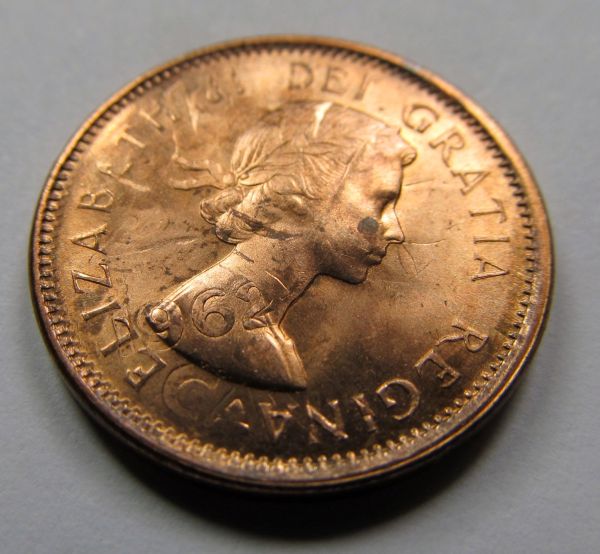
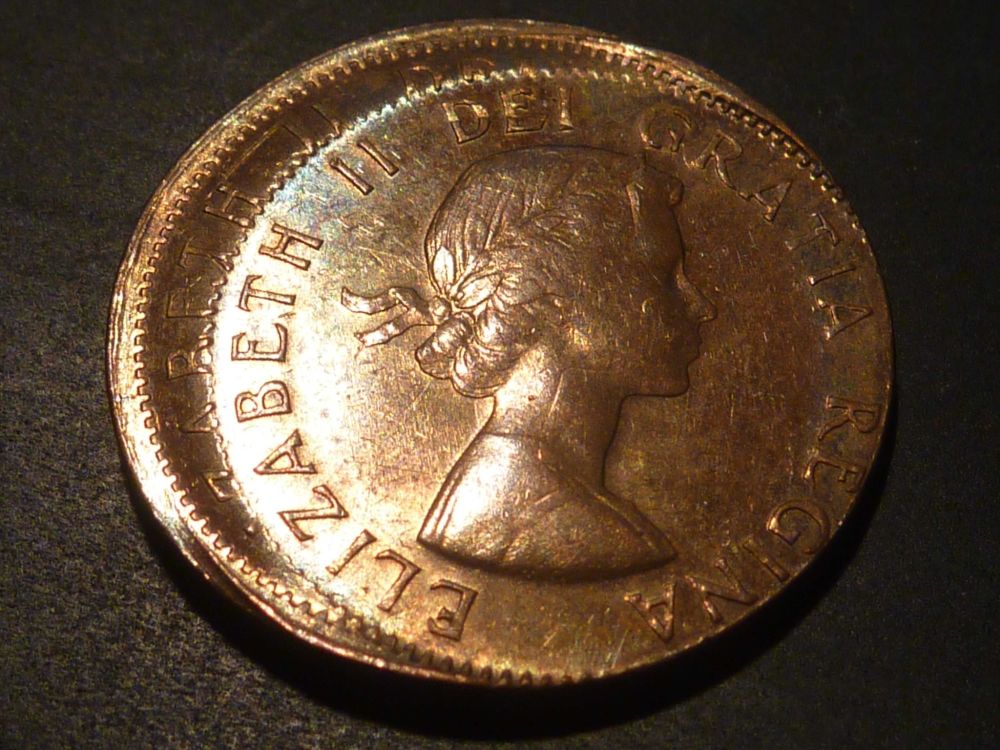
Sensational coin. You have an amazing error collection.  |
|
Pillar of the Community
Canada
857 Posts |
It's nice to know there are other collectors of this series, but I have yet to come across anything this amazing. Great piece as always |
|
Pillar of the Community
Canada
4911 Posts |
Congrats on another eye catching example..I like how clean it is for the grade.
Feel free to call me Will.
|
|
Pillar of the Community
Canada
9696 Posts |
Boy you do find the coolest stuff.
|
|
Pillar of the Community
United States
7306 Posts |
 ...thanks for sharing |
|
Pillar of the Community
Canada
891 Posts |
|
|
Valued Member
Canada
128 Posts |
Wow, even in circ state, you can realy see the nice double struck. Nice coin.
|
|
Pillar of the Community
United States
3729 Posts |
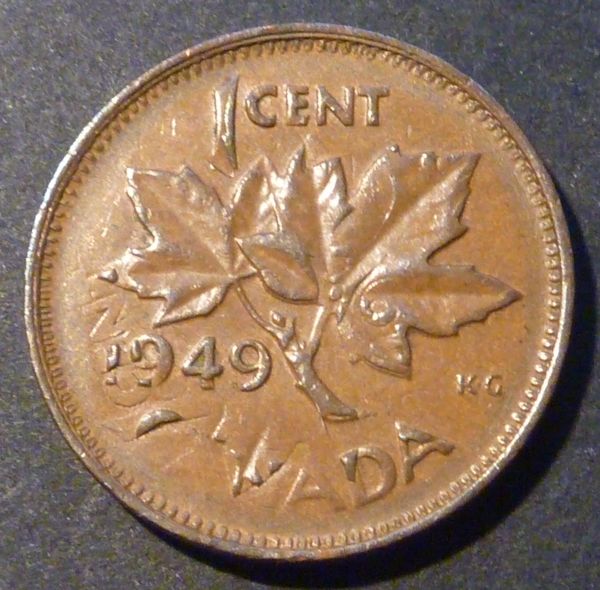
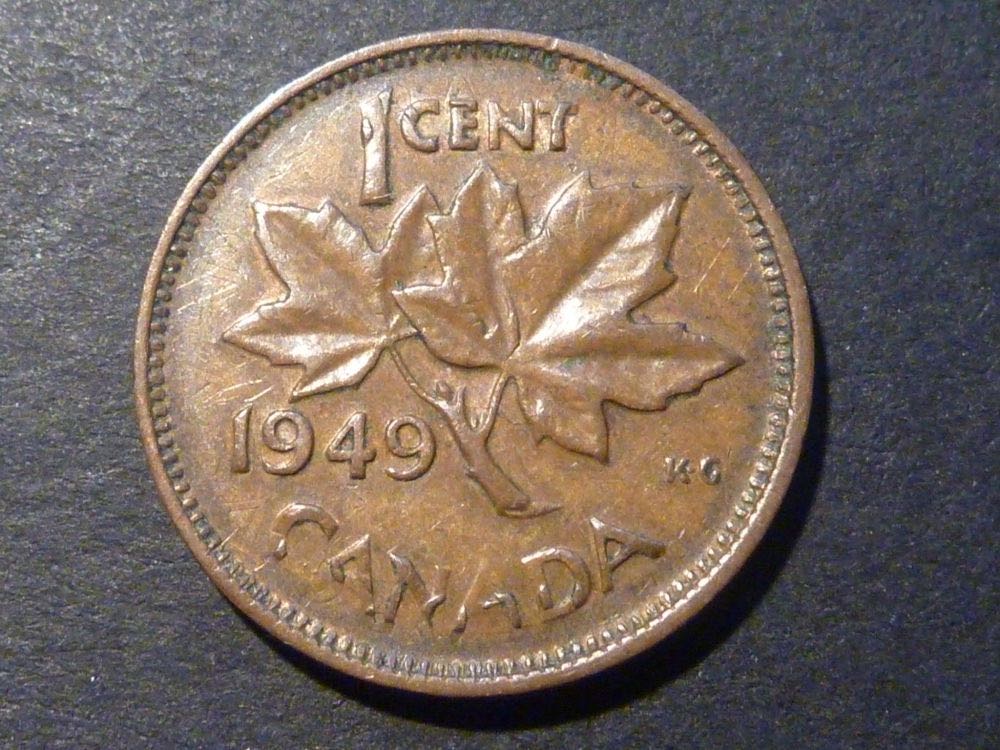
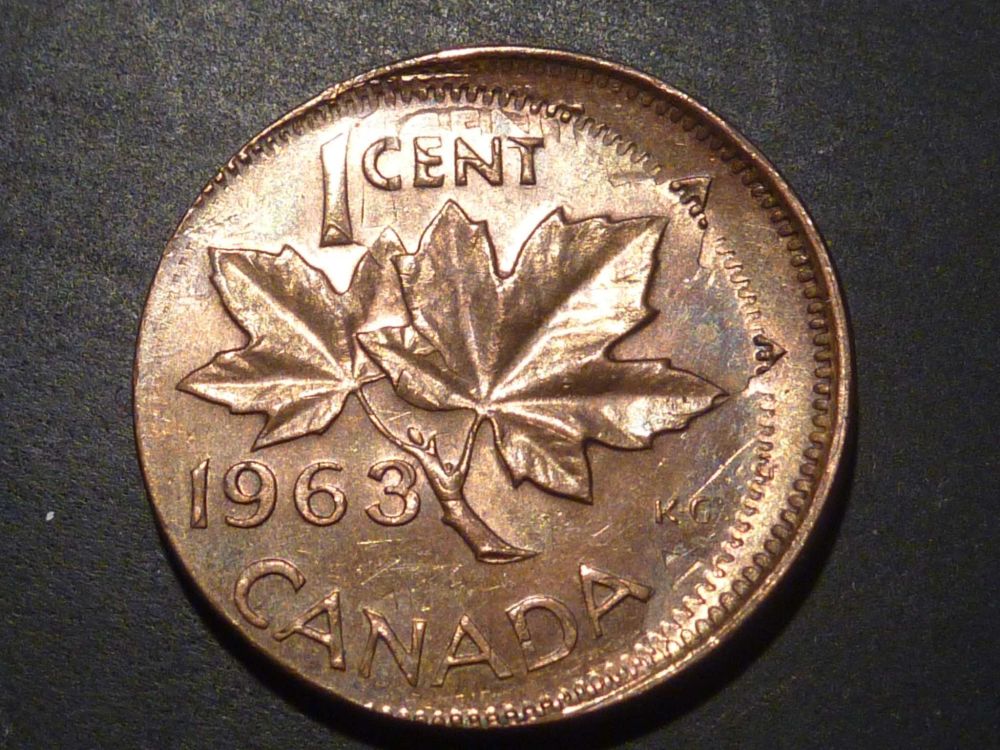
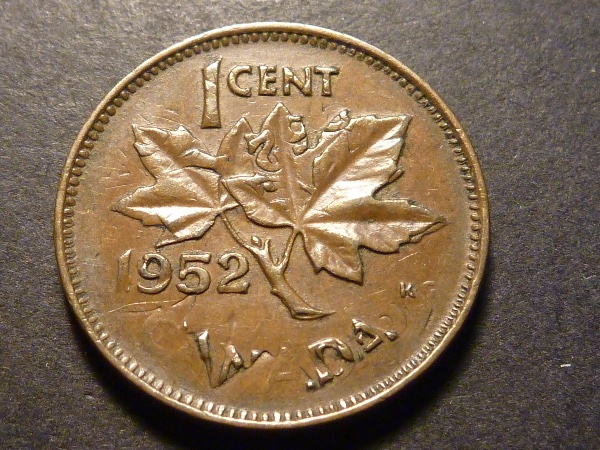
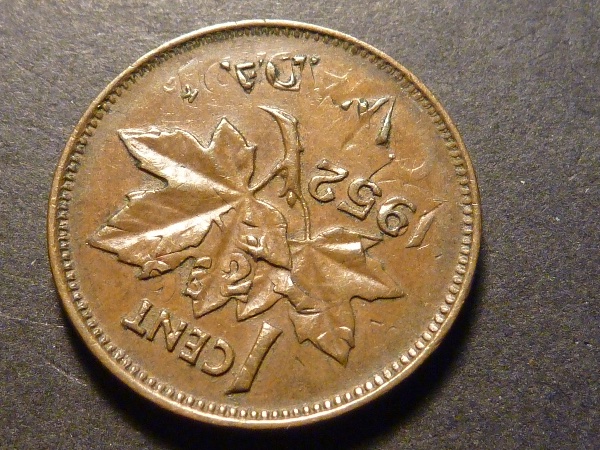
@SPP-Ottawa, May I raise a couple questions about this coin without giving offense? Some aspects of the reverse make me pause. The more I look at the details, the more questions I have.  On a rotated in-collar double strike, wouldn't the striking pressure be the same as the original strike? If so, wouldn't the second strike largely obliterate the first strike? If the strike with the full date was the second strike, wouldn't the strike with the partial date be beneath the maple leaf, rather than on top of the leaf? Conversely, if the strike with the partial date was the second strike, wouldn't the full date be impaired significantly by the raised field on the reverse die striking the area containing that date? The stem of the maple leaf is a high point of the design. It is clear on the strike with a full date, but appears to be missing on the strike with the partial date. It should run at about a 45 degree angle through the "1" in the denomination. Wouldn't at least some part of both stems be visible on a double strike? The number "2" in each date appears to be different. (See the pictures below.) The "2" on the full date has a circular loop, a short thin base, and a wide gap between the tail and the curl. This "2" matches the 1952 date design. The "2" on the maple leaf has an oval loop, longer and thicker base, and less gap between the tail and the curl. Shouldn't these be the same? What drives my caution is the counterfeit 1976-D multiple strike in collar Lincoln Cent that was submitted to NGC recently, and featured in NGC's Counterfeit Detection article on November 1. Again, please don't take offense at my concerns or questions here. I sure hope I'm wrong, but the similarities I see between your coin and the 1976-D Lincoln prompt me to ask the questions. Here are the detail photos showing differences in the "2" in the dates. 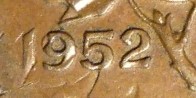 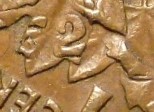 Edited by fortcollins
11/13/2019 01:08 am
|
|
Pillar of the Community
Canada
842 Posts |
The second strike wouldn't be as pronounced as the first strike. The planchet was already compressed by the first strike so the second strike would only show up clearly where there were raised details from the first strike, and only faintly where there had been flat fields. The raised part of the dies would crush the raised part of the first-strike details.
|
|
Pillar of the Community
United States
1101 Posts |
That is a nice error SPP. From what little I know about double struck in collar errors, it looks good to me.
The second strike wouldn't obliterate the parts of 952 in the leaf from the first strike because the leaf part of the die is recessed, but it could distort the 2 from the first strike to look different. That's just a guess on my part from an error novice. Anyway, it's a neat coin.
|
|
Moderator
 Canada
10473 Posts |
Fortcollins, to answer your questions: Quote:
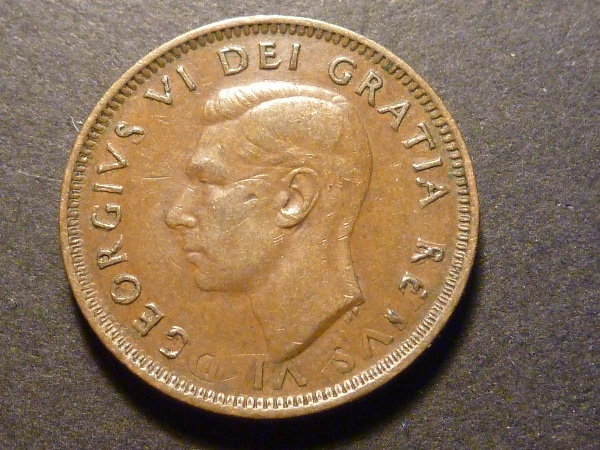
On a rotated in-collar double strike, wouldn't the striking pressure be the same as the original strike? If so, wouldn't the second strike largely obliterate the first strike? Yes, and in the areas of the dies that are the highest (the fields) a lot of details are somewhat obliterated. I say somewhat, because the same thing happens with die caps and brockage images. Secondly, the striking pressure is the same but the properties of the metal is not. Quote:
If the strike with the full date was the second strike, wouldn't the strike with the partial date be beneath the maple leaf, rather than on top of the leaf? It is not on top of the leaf, but rather partially preserved because the leaf is part of the recessive (incuse) region of the die. When it comes to double struck coins, I always look in the devices, because that is where older details will be preserved. Quote:
Conversely, if the strike with the partial date was the second strike, wouldn't the full date be impaired significantly by the raised field on the reverse die striking the area containing that date? Not applicable. The partial date is relict from the first strike. Quote:
The stem of the maple leaf is a high point of the design. It is clear on the strike with a full date, but appears to be missing on the strike with the partial date. It is there, preserved in the devices. Look closer. I have circled it on the original image. 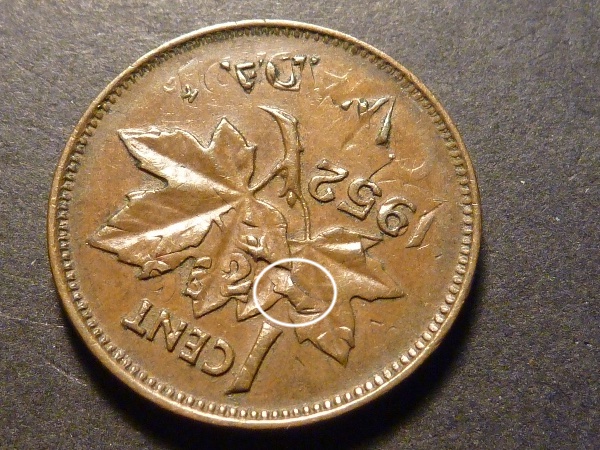 Quote:
The number "2" in each date appears to be different. You are correct, but any number of reasons could explain it. It could be anything from the deformation of the metal during the second strike to post-mint damage of the raised devices (happens all the time). The other devices that were flattened are also enlarged. TerryT's comment also applies. "Discovery follows discovery, each both raising and answering questions, each ending a long search, and each providing the new instruments for a new search." -- J. Robert OppenheimerContent of this post is licensed under a Creative Commons Attribution-NonCommercial 3.0 Unported License. See: http://creativecommons.org/licenses...0/deed.en_USMy eBay store
|
|
Moderator
Canada
10473 Posts |
Quote:What drives my caution is the counterfeit 1976-D multiple strike in collar Lincoln Cent that was submitted to NGC recently, and featured in NGC's Counterfeit Detection article on November 1. I checked out that 1976-D cent. That one is an obvious fabrication. When you understand how much pressure is involved in striking coins, and what the dies do to the metal, it because much easier to understand. Interestingly enough, the disclaimer at the bottom of that article says, Quote:
As is the case with any specialized area of numismatics, it is often better to leave authentication to the experts. For Canadian error coins, I am one of the experts. I have published papers in Errorscope and I validate and describe error coins for two different Canadian auction companies. I also validate, grade and price errors for three major coin stores in Canada. However, I digress, that does not mean I am always right; and I am actually happy that someone like yourself took the time to study the coin(s) that I post. This is a site about learning. Your questions were valid, I am happy to answer them, and this thread will serve to other novice collectors whom might want to learn about coin errors. "Discovery follows discovery, each both raising and answering questions, each ending a long search, and each providing the new instruments for a new search." -- J. Robert OppenheimerContent of this post is licensed under a Creative Commons Attribution-NonCommercial 3.0 Unported License. See: http://creativecommons.org/licenses...0/deed.en_USMy eBay store
|
|
Moderator
Canada
10473 Posts |
"Discovery follows discovery, each both raising and answering questions, each ending a long search, and each providing the new instruments for a new search." -- J. Robert OppenheimerContent of this post is licensed under a Creative Commons Attribution-NonCommercial 3.0 Unported License. See: http://creativecommons.org/licenses...0/deed.en_USMy eBay store
|
|
Pillar of the Community
United States
3729 Posts |
@SPP-Ottawa, Thank you for walking me through the answers to the questions. I appreciate the opportunity to see what you see with this coin, and to learn from you. Many varieties are in my wheelhouse, but some of the more stunning striking errors - such as this coin - are not. Thank you for taking my questions in the spirit in which they were posed, and not taking offense. US coins frequently have much shallower relief than Canadian coins, and react very differently during the minting process. Lincoln Cents and Roosevelt dimes, in particular, have shallow devices. It makes sense that they would have fewer places for residual strike details to hide. Thank you again for your detailed explanation. I appreciate you! |
| |
Replies: 14 / Views: 2,836 |
|









 Posted 11/10/2019 6:00 pm