Coin Community Family of Web Sites Join Thousands of Coin, Bullion, & Money Collectors
Specializing in Modern Numismatics Join Thousands of Coin, Bullion, & Money Collectors Royal Estate Auctions - $1 Coin AuctionsCoin, Banknote and Medal Collectors's Online Mall Royal Canadian Mint products, Canadian, Polish, American, and world coins and banknotes. 300,000 items to help build your collection! Vancouvers #1 Coin and Paper Money Dealer


Username:
Password:
Save Password
Forgot your Password?


This page may contain links that result in small commissions to keep this free site up and running.

Welcome Guest! Registering and/or logging in will remove the anchor (bottom) ads. It's Free!

Ae Kahavanu Of Raja Raja (Cholas Dynasty), But Need Help With The Date

To participate in the forum you must log in or register.
Author Previous TopicReplies: 5 / Views: 2,477Next Topic  
Moderator
Learn More...
Spence's Avatar
United States
34413 Posts
 Posted 12/25/2019  8:31 pm Show Profile   Bookmark this topic Add Spence to your friends list Get a Link to this Message Number of Subscribers
This early type of Octopus Man has shown up on CCF multiple times:

http://goccf.com/t/306789
http://goccf.com/t/31599
http://goccf.com/t/327683

and was used to push the original OFED thread back through the time period of 1000 to 1010 AD.
http://goccf.com/t/195985&whichpage=37

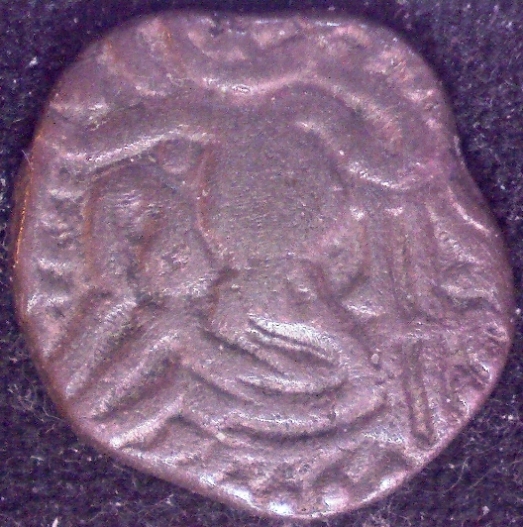
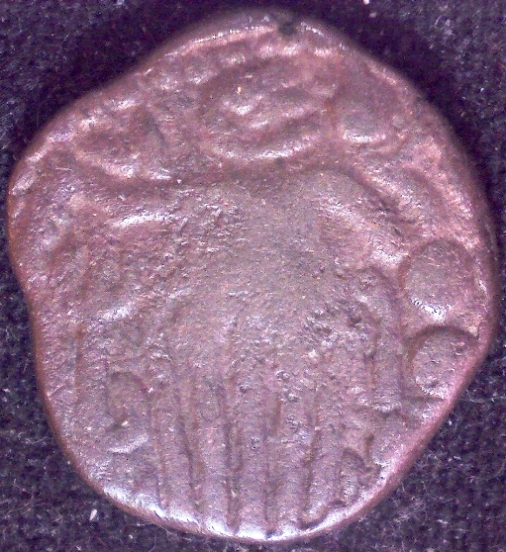
I recently picked up a Raja Raja Kahavanu of my own and am getting some mixed messages from the interwebs with regard to the date. Here is what I have discerned: The rule of Raja Raja was 985-1094 AD. For the gold Kahavanus, there seem to be two styles of reverse: a version with a fifth ball on top of the four to the right of the seated king and a second version with a crescent on the balls. Based on hoard findings, I believe that the version with the crescent was made following the Cholas invasion of Ceylon in 1007 AD. That is great for dating the gold issues; however, mine is a copper Kahavanu and from what I can tell all copper Kahavanus have the crescent on the rev.

I don't have access to the Mitchiner reference, but numista uses the broad date range of 985 to 1014 AD for these pieces:

https://en.numista.com/catalogue/pieces17657.html


My question therefore, is the likely date of the minting of this coin 1007 to 1014 AD or is it not possible to narrow it beyond Raja Raja's reign of 985 to 1014 AD? As always, thank you all for your willingness to share your knowledge and expertise.


Ae-Kahavanu-Of-Raja-Raja-Cholas-Dynasty,-But-Need-Help-With-The-Date
"If you climb a good tree, you get a push."
-----Ghanaian proverb

"The danger we all now face is distinguishing between what is authentic and what is performed."
-----King Adz
Pillar of the Community
Learn More...
Palouche's Avatar
Spain
2752 Posts
 Posted 12/26/2019  03:56 am  Show Profile   Bookmark this reply Add Palouche to your friends list Get a Link to this Reply
Hi Spence....
Here's a couple of links that you'll hopefully find useful..
http://coins.lakdiva.org/medievalin...ssa6_cu.html
http://www.worldofcoins.eu/forum/in...286.105.html

Note...The second link is very interesting...As you know the copper coins usually have 4 cyphers with a crescent above depicting mainland India yet there are types with no crescent but another full cypher, these seem to be attributed to the Sri Lankan island and are very very difficult to find!..
Our expert drnsreedhar actually shows one. Maybe he's a good person to reach out to...

Due to your coins small flan and the chunky depiction of the king I would say its of a later style...At least later than 990...

Good luck and please keep us informed of your findings..Paul
Moderator
Learn More...
Spence's Avatar
United States
34413 Posts
 Posted 12/26/2019  05:46 am  Show Profile   Bookmark this reply Add Spence to your friends list Get a Link to this Reply
@palouche, yes thanks for these links. I had read through that fascinating WOC thread previously, but hadn't seen the lakdiva.org page before. I will reach out to Dr. Sreedhar in a day or so (if he doesn't post to this thread first).
"If you climb a good tree, you get a push."
-----Ghanaian proverb

"The danger we all now face is distinguishing between what is authentic and what is performed."
-----King Adz
Pillar of the Community
drnsreedhar's Avatar
India
1995 Posts
 Posted 12/29/2019  1:43 pm  Show Profile   Bookmark this reply Add drnsreedhar to your friends list Get a Link to this Reply
Dear Spence,
Thanks for the mail. Your coin is definitely "Rajaraja" Chola copper issue. Rajaraja ruled from 985-1014.AD. So far so good.
Rajaraja has other variety coins to his credit in gold and in silver, but copper coins are almost of this very same type. Though the Sreelankan version of this is called Kahavanu, Indian issues are generally called as "Kasu". The peculiar figure on these coins are derived from the Ceylon issues a little before Rajaraja invaded the island. Actually that was an interregnum by Sreelankan monarchs between two Chola occupation periods. Rajaraja adopted that for his copper issues in India and adapted with slight modification of the design like the crescent above the dots. Though we generally see five dots to the right of the sitting "Ceylon man" (as they are called by the Indian numismatists) and a crescent above, there are couns with five dots and crescent.
A few of the varieties are known for this type.
Conventional type with standing figure of the King with a lamp colloquially called "Kuthuviakku" on his right hand, a conch held to the mouth with the left hand and four dots with a crescent above and a conch below. There are a multitude of varieties within this design and some with different devices shown below the dots like lotus, foot called Vishnupaada meaning the foot print of Vishnu and somethimes without any device. There can be a fish on his right hand side or a stylised "kalvilakku" that symbolises temples. Foot can be large foot variety or small foot type. There can be another "flag-mast" like mark on some coins with small foot. This is about the symbols. There can be lots more in store to come to light.

Weight also is slightly different based on two standards. To quote from my WoC post, "Prof.Neelakanta Sastri who has given us one of the most descriptive pictures of the Cholas opines in his book "TheCholas", Vol.II, Part-I, quoting Codrington that copper coins of similar type must have been issued by later Cholas using the same "rajaraja" legend and other devices the same way used by Rajaraja himself and the symbols deteriorated over the years.(P.453-454). He states a few more relevant things-# 1). Two weight standards, the Gadyana system of ~50-60 grain weight Kalanju and another ~68-80 grains Kalanju were used during the Chola period, the latter being used more than the former. The second one is otherwise stated as 20 manjadi = a Kalanju,(P.443). #2). Kasu was a 10 manjadi coins in copper.(P.454). #3.)The copper coins of around 3.8-4.2 grams might have been double cash.(P454). #4). Ratio between gold and silver was one unit of .395 pure gold (9.5 mattu) equal to 8.66 units of silver.(P.451). #5). Kahavanu was the name of the gold and silver coins, but "Kasu" seems to the right term to use. (Oesho has supported this view for copper coins).
Anyhow, "rajaraja" legend has been used on gold, silver and copper coins of the Cholas. Since the same legend persisted, the beginning may be attributed to Rajaraja. The two weight standards are also well established. The degenerated coins must have been issued by the later Cholas of different names. So the mystery of same legend, weight standard and figures seen on coins of three metals still continues!"

Here we have to see that 1.)the ruling period of Rajaraja was from 985-1014.AD, 2.) we have lots and lots of varieties of Ceylon man type coins that shown degeneration of design over years that seems to be more than those thirty years,3.)though Chola Empire remained until late thirteenth century with rulers named "Rajendra", "Rajadhiraja" and "Kulothunga", copper coins showing their names are still to be found and 4.)Kulothunga-I who was the Great-grandson of Rajaraja who became the first "Chola-Chalukya" Emperor, his known coins bear the legend "Rajaraja" with a boar replacing the standing man. These multiple points have led numismatists to believe that "Ceylon-man" coins have been issued over a long period beginning Rajaraja despite different names of the ruling Emperor. A few examples of the later varieties are there on pages seven, eight and nine of that WoC link. Hope I have not confused you!

I will highlight some of them here for ready reference.

A large foot variety can be seen here http://www.worldofcoins.eu/forum/in...=90625;image

A small foot variety is here http://www.worldofcoins.eu/forum/in...=95625;image

A small foot variety with fish and flag-mast is here http://www.worldofcoins.eu/forum/in...=95626;image

Finally, to put all these things in a nutshell, a "Rajaraja" copper coin could have been an issue of any date from nearly 1000.AD to 1275.AD!
Edited by drnsreedhar
12/29/2019 1:59 pm
Moderator
Learn More...
Spence's Avatar
United States
34413 Posts
 Posted 12/29/2019  6:03 pm  Show Profile   Bookmark this reply Add Spence to your friends list Get a Link to this Reply
Ok thank you very much for your thorough and informative post @drnsreedhar.

At 63 grains (4.1 g), my coin would seem to fit in between Prof. Sastri's two groups, but I'm guessing that extensive wear has brought this coin down from the higher weight standard. Or, as you note, perhaps it is a double-cash coin.

Reading between the lines of your reply, I'm planning to list the date of this coin as the relatively wide range of AD 1000-1275.

"If you climb a good tree, you get a push."
-----Ghanaian proverb

"The danger we all now face is distinguishing between what is authentic and what is performed."
-----King Adz
Pillar of the Community
drnsreedhar's Avatar
India
1995 Posts
 Posted 12/31/2019  03:24 am  Show Profile   Bookmark this reply Add drnsreedhar to your friends list Get a Link to this Reply
Dear Spence,
You can very well call that a "Rajaraja Chola" coin like what the Indian numismatists do. It is for a better understanding of the design and the history behind that I wrote that much! When it comes to fixing the date of such coins, your view is exact. Thanks
  Previous TopicReplies: 5 / Views: 2,477Next Topic  

To participate in the forum you must log in or register.


Disclaimer: While a tremendous amount of effort goes into ensuring the accuracy of the information contained in this site, Coin Community assumes no liability for errors. Copyright 2005 - 2026 Coin Community Family- all rights reserved worldwide. Use of any images or content on this website without prior written permission of Coin Community or the original lender is strictly prohibited.
Contact Us  |  Advertise Here  |  Privacy Policy / Terms of Use

Coin Community Forum © 2005 - 2026 Coin Community Forums
It took 0.36 seconds to rattle this change. Forums