| Author |
 Replies: 23 / Views: 2,278 Replies: 23 / Views: 2,278 |
|
Valued Member
United States
74 Posts |
I have a 1922 no D/weak D cent, but I'm not sure wether it's a no D or a weak D. I can't post pictures right now, so you'll have to use your imagination. It has a weak reverse and under my microscope, I can't see any trace of a D, nor under the magnifying glass. But if you turn it in the light, there is a little glare of a D, and I know it is not worn off, because the surrounding areas are sharp. I'm kind of thinking weak D because of this, but what do you think?
|
|
|
|
Bedrock of the Community
United States
20037 Posts |
How does the date look?
Edited by BadThad
10/13/2008 11:35 pm
|
|
Pillar of the Community
United States
860 Posts |
|
|
Valued Member
 United States
74 Posts |
I believe it is die pair #3, but I'm not sure about the D. The date is strong but the second 2 is weaker than the first. thanks so far guys.
|
|
Bedrock of the Community
United States
20037 Posts |
On the no-D and weak D the last digit in the date is sometimes barely readable. I have a die pair 4, weak reverse no-D and that last 2 is very hard to make out. The coppercoins site does a pretty good job of showing the variations. I know Chuck doesn't like this coin as it's not a true "error", but I find them interesting. I have what I call a weak D coin that is not listed anywhere that I can find. It has a strong reverse: 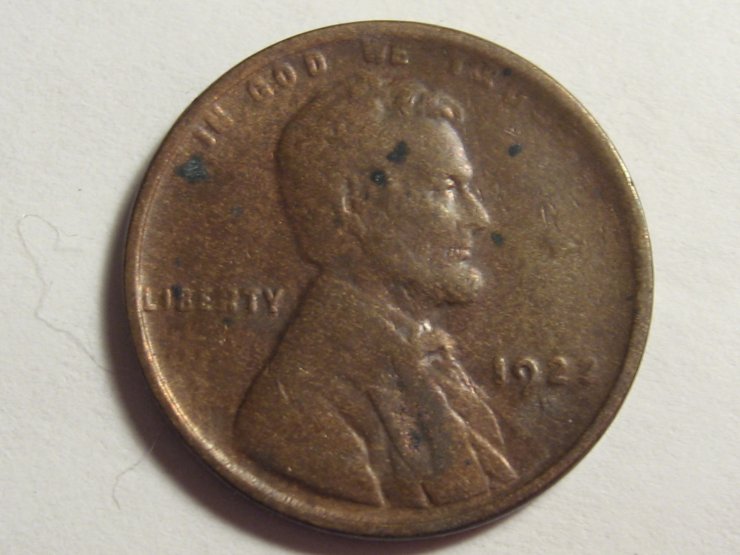 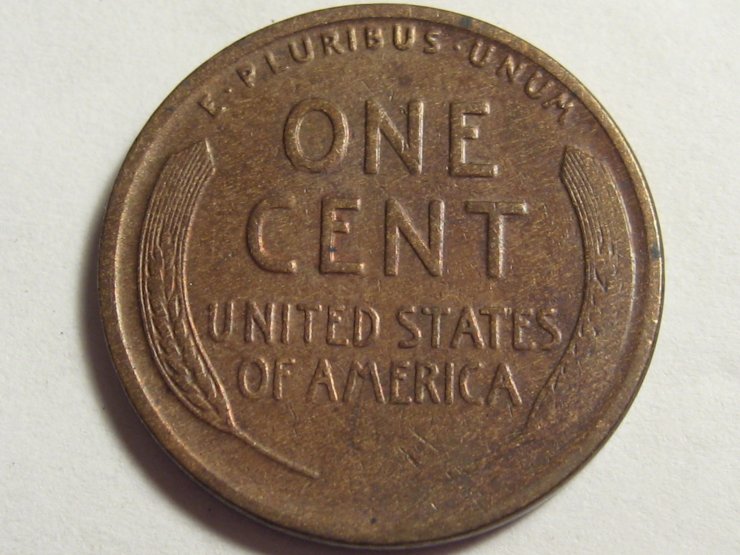 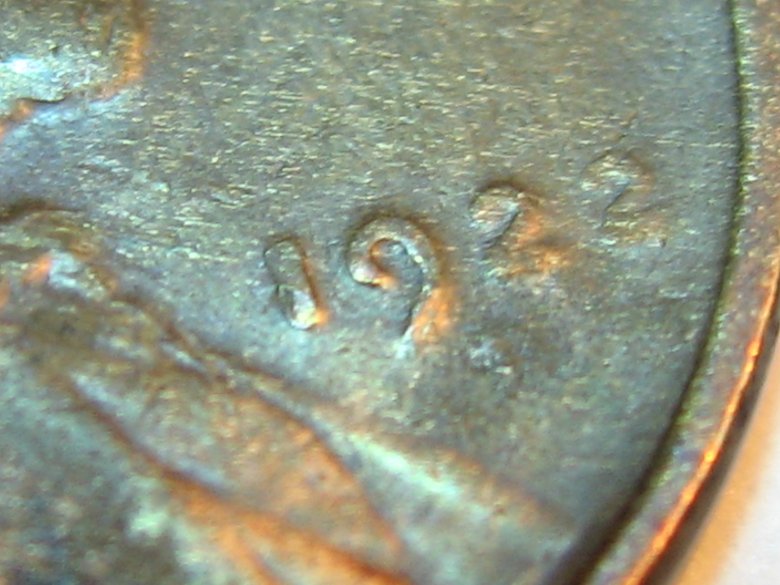 Lincoln Cent Lover!VERDI-CARE™ INVENTOR https://verdi.care/
Edited by BadThad
10/14/2008 8:33 pm
|
|
Valued Member
United States
74 Posts |
One question I still can't answer though: if the D is barely there and you can only see it in certain angles of the light, it would be classified as a weak D, right? I'll put up some photos if you guys will tell me how to take good close ups of the whole coin. I can take them through my microscope but then they're too close. (and you can't see the D under the 'scope)
|
|
Bedrock of the Community
United States
10284 Posts |
I believe I have the same one as BadThad pictured. I will get around to showing it here also. I think that I must have a weak D if that is what BadThad has shown.
Edited by TNG
10/14/2008 9:27 pm
|
|
Bedrock of the Community
United States
20037 Posts |
Quote:
One question I still can't answer though: if the D is barely there and you can only see it in certain angles of the light, it would be classified as a weak D, right? Well, that's how I classify it. It's definately not a plain if you can see the D at all. Some pictures would be nice.  Although the MM is well protected on a Lincoln, a heavily worn coin or post mint damage could have also contributed to the "missing" D. If you notice the info given in books and websites, classifying a weak D is tricky. From what I've learned, most TGP's will only classify the pair 2 with a strong reverse as "weak". |
|
Bedrock of the Community
United States
20037 Posts |
Quote:
I believe I have the same one as BadThad pictured. COOL!   Lincoln Cent Lover!VERDI-CARE™ INVENTOR https://verdi.care/
|
|
Bedrock of the Community
United States
10284 Posts |
|
|
Bedrock of the Community
United States
20037 Posts |
What's the reverse look like?
Lincoln Cent Lover!VERDI-CARE™ INVENTOR https://verdi.care/
|
|
Pillar of the Community
United States
7629 Posts |
Wheezydog's coin is a 1922-D with heavy wear struck by a very worn die - but the D is there.
It's not that I don't "like" these coins, I just think they are vastly misunderstood. The premium paid for 1922D cents with filled mintmarks is just ludicrous. Everyone knows by now that there is no such thing as a 1922 Philly mint cent, which is what got the whole thing going in the first place - the misunderstanding that these extremely low quality coins that appear to have no mintmark were a rare Philly issue...In actuality, they are just very poorly made coins.
How much would you like to give me for a 1923S Lincoln missing the S mintmark? Nothing? Uhh-huh....that's my point.
|
|
Bedrock of the Community
United States
20037 Posts |
Now that you chimed in Chuck....
What do you think classifies a cent as a "weak D"? I've seen a lot of these with both fairly strong reverses and weak reverses. On lincolncentresource website they only refer to the weak reverse as a legitimate weak D coin. That site has more info on the 22D than I've seen elsewhere.
I understand your stance on these and I apologise for incorrectly stating your position. All I recalled was you had some special feeling about the 22D's. Nonetheless, I personally find the 1922 series very interesting. I've many times pondered doing a lot more study into the series as I have yet to find someone that's throughly explored and documented it.
Lincoln Cent Lover!VERDI-CARE™ INVENTOR https://verdi.care/
|
|
Bedrock of the Community
United States
10284 Posts |
I took it out of the holder and took two images. I brightened up the image to show as much detail as possible. I think this is a DIE 4 by comparing those in the link that desertgem provided. How bout it? Am I right? I also do not think that filled dies are any big deal, but because there was no Philly cent in 1922 I do think this variety deserves a special place and considerable premium if absolutely no D is present. My coin is not the greatest example but I guess I have one of these "weak D" 1922 Lincoln Cents.   |
|
Pillar of the Community
United States
3507 Posts |
Hi,
This is a normal 1922 D cent with normal wear.
On Die pair #1 there is almost NO D visible.
On Die pair # 4 Lincoln's coat blends in to the rim on the lower right of his coat.
Your coin has a very visible D and a distinct separation between the lower right portion of Lincoln's coat and the rim.
In short. It is not a Plain, and it is not a weak D.
Thanks,
Bill
|
|
Bedrock of the Community
United States
10284 Posts |
Okee Doke, thanks! I suppose that settles that.  Edited by TNG
10/20/2008 09:49 am
|
| |
Replies: 23 / Views: 2,278 |







 Posted 10/14/2008 12:00 am





