Quote:
why were they made in this metal?
There's good information on CCF and the Internet but I'll take a whack at this question.
Platinum was regarded as something of a nuisance in the early 1800s. Because of its high melting point it could not be melted and cast into ingots with the technology of the time. Various chemists in England, Spain, and France were able to process raw platinum into fairly pure fine powder ("sponge") and consolidate it by compressing and heating. It was perceived as having some value because it was rare, heavy, brilliant, and would not tarnish. The process was inconsistent but in Spain especially the metal was worked to form utensils, buttons, and decorative items.
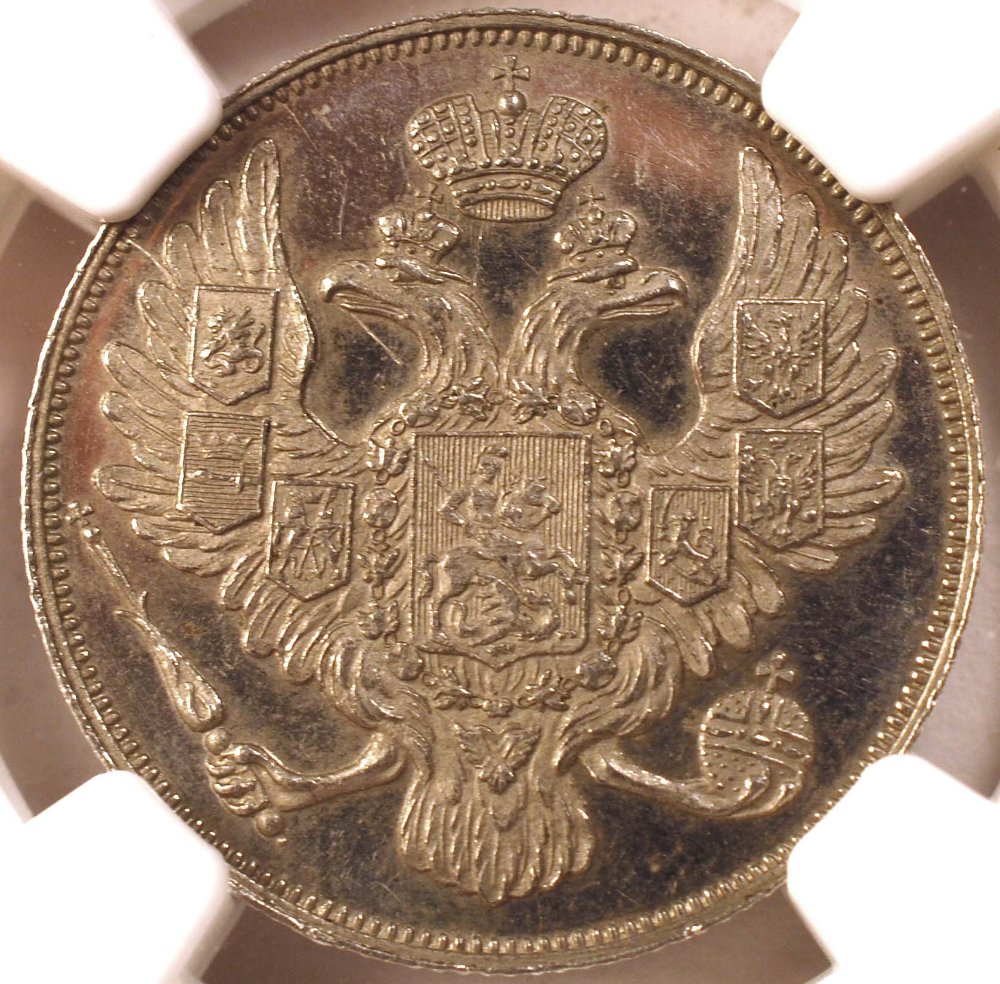
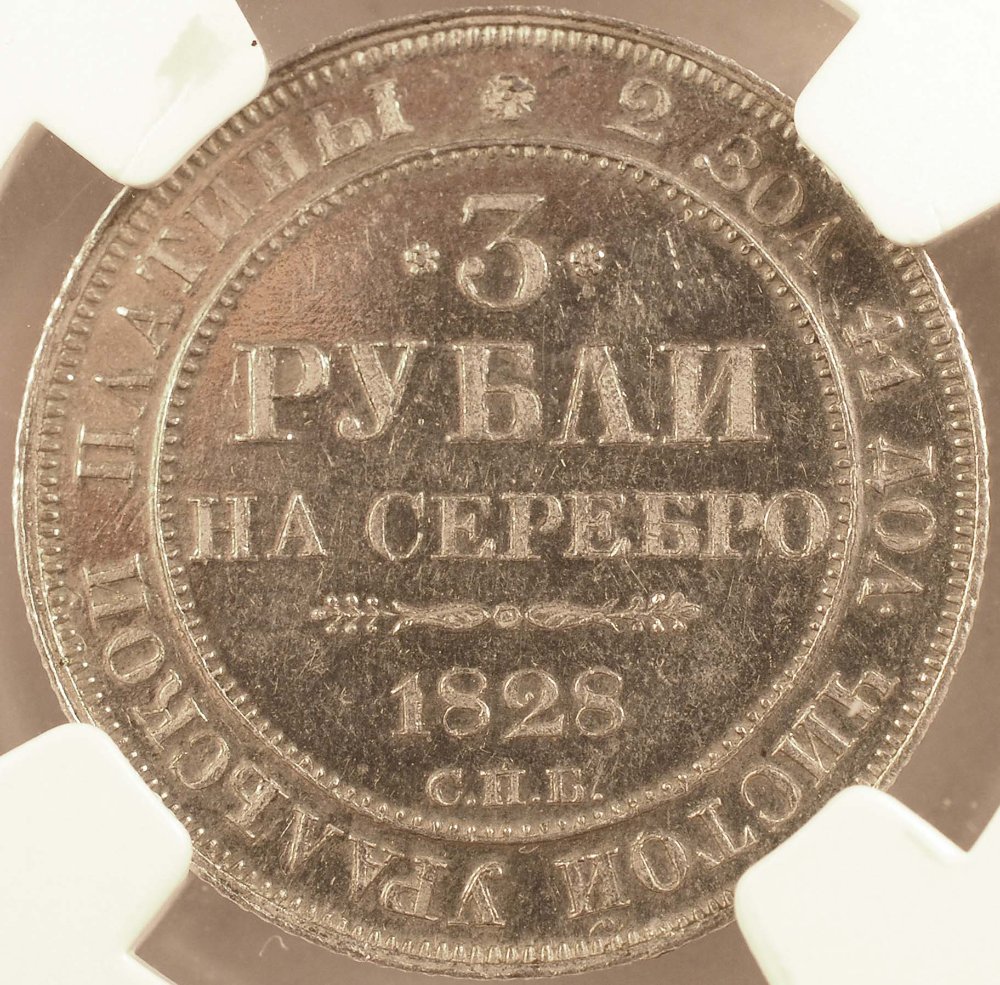
In the 1820s deposits of platinum were found in the Ural Mountains. Czar Nicholas I decided Russia should try to profit from this discovery so he authorized the creation of platinum coinage. Russian scientists came up with a powder metallurgy process to make malleable platinum which was rolled into strip and punched to form planchets. The coins were made in denominations of 3, 6, and 12 roubles. Based on the relative weights of platinum and gold rouble coins it looks like platinum was valued at about 40% of the price of gold. These platinum rouble coins were made from 1828 through 1845. Production costs were very high compared to costs for making gold and silver coins and there were some concerns about the "destabilizing" effect of platinum coins circulating in an economy largely based on gold, silver, and bronze coinage. The Russian government ordered the platinum coins recalled and many were subsequently destroyed. That's one reason these coins are scarce and very expensive today.
Long answer but it was fun to research!
By the way, this 3-rouble piece is graded NGC MS-63 Prooflike.









 Posted 01/28/2020 12:02 pm




 with GrapeCollects.


