Appearance of a Buff depends on:

Die state
Die polishing (to eliminate evidence of clashing)
Strike quality
Circulation
Alloy and environmental issues
The series has quirks that vary by design and year and mint.
There are nine different obverse designs and the two different 1913 reverse designs. All of the design changes occurred to address strike and wear pattern problems. Only the reverse design change actually succeeded. Philadelphia coins are generally decently struck. Branch mint coins range from horribly struck dates (1926-S, 1924-D, 1925-D) to merely average struck dates (1934-35-36-37-38 Denver coins). Keep in mind that San Francisco and Denver only had one year's experience striking nickel coinage before this coin, and had to wrestle with a complicated new design and unknown die wear and clashing issues.
Here's what I see with your coin:
Die state: The obverse die is LMDS, as is the reverse die. Matching die states are pleasant surprises in the series, since dies generally were changed individually, rather than as a pair.
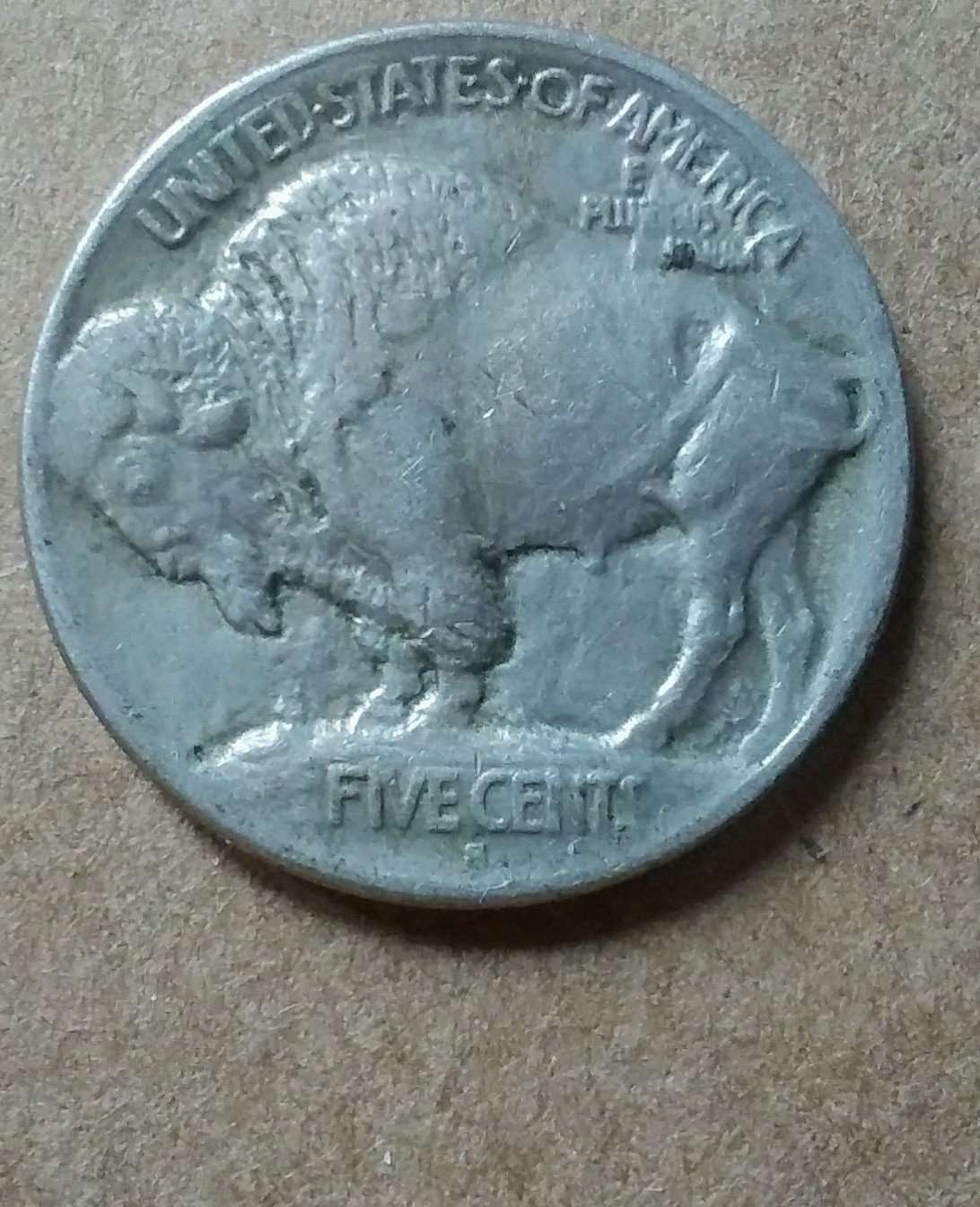
Die polishing is an issue on your coin. The common clash areas are Indian's chin/EPU (very obvious and not polished on your coin's obverse, and lightly polished on the reverse), second feather/buffalo's head (both heavily polished on your coin), "BER" of LIBERTY/buffalo's right rear leg (reverse heavily polished on your coin), "ED*ST" of UNITED (dot) STATES (polished on your coin), and Indian's neck/buffalo's back (possibly polished on your coin).
Strike quality is average for the date, mint, and type of your coin, which is to say a bit mushy, but not awful. This is most evident in the peripheral weakness, such as rims and lettering that is close to the rims.
Circulation looks even and natural for your coin.
I don't see any alloy issues, such as laminations. The crud on the obverse and spots on the reverse could be serious issues, if they have caused pitting. Especially on the obverse, this could detail the coin (97 code, environmental). I can't tell from the pictures whether there is damage to the surface. You should be able to determine this with the coin in hand.
Design issues: FIVE CENTS is weak, which isn't unusual, even on a lightly circulated type 1. LIBERTY is weak. This was a design issue, and not strike or circulation weakness, on 1913-1915 Buffs, and LIBERTY should be disregarded for these dates in grading.
Putting this all together:
Obverse. The hairline is complete, though weak. The eyebrow, nostril, cheekbone, dimple, and jaw are decent. There is full detail on the second feather, including a complete rachis, calamus, and feather tie. The date and both ribbons are complete, but weak from die polishing. The tip of the second feather is weak from die polishing. The hair at the forehead is weak from die polishing.
Reverse. Peripheral lettering is weak, but complete. Ditto for the tail and horn. The tail just misses being split. There is well over half the hair on the buffalo's back, and about 1/3 of the hair on the head. The neck hair, beard, and upper front legs are decent. There is notable die polishing weakness on the right rear leg, the horn, the buffalo's head, "ED*ST" of UNITED STATES, and EPU.
Factoring in LMDS die state, heavy die polishing, and the typically mushy strike, your coin is EF-40 obverse, right on the VF-35/EF-40 bubble reverse, net EF-40
unless the possible environmental damage on the obverse details the coin.




 Buffalo connoisseurs help.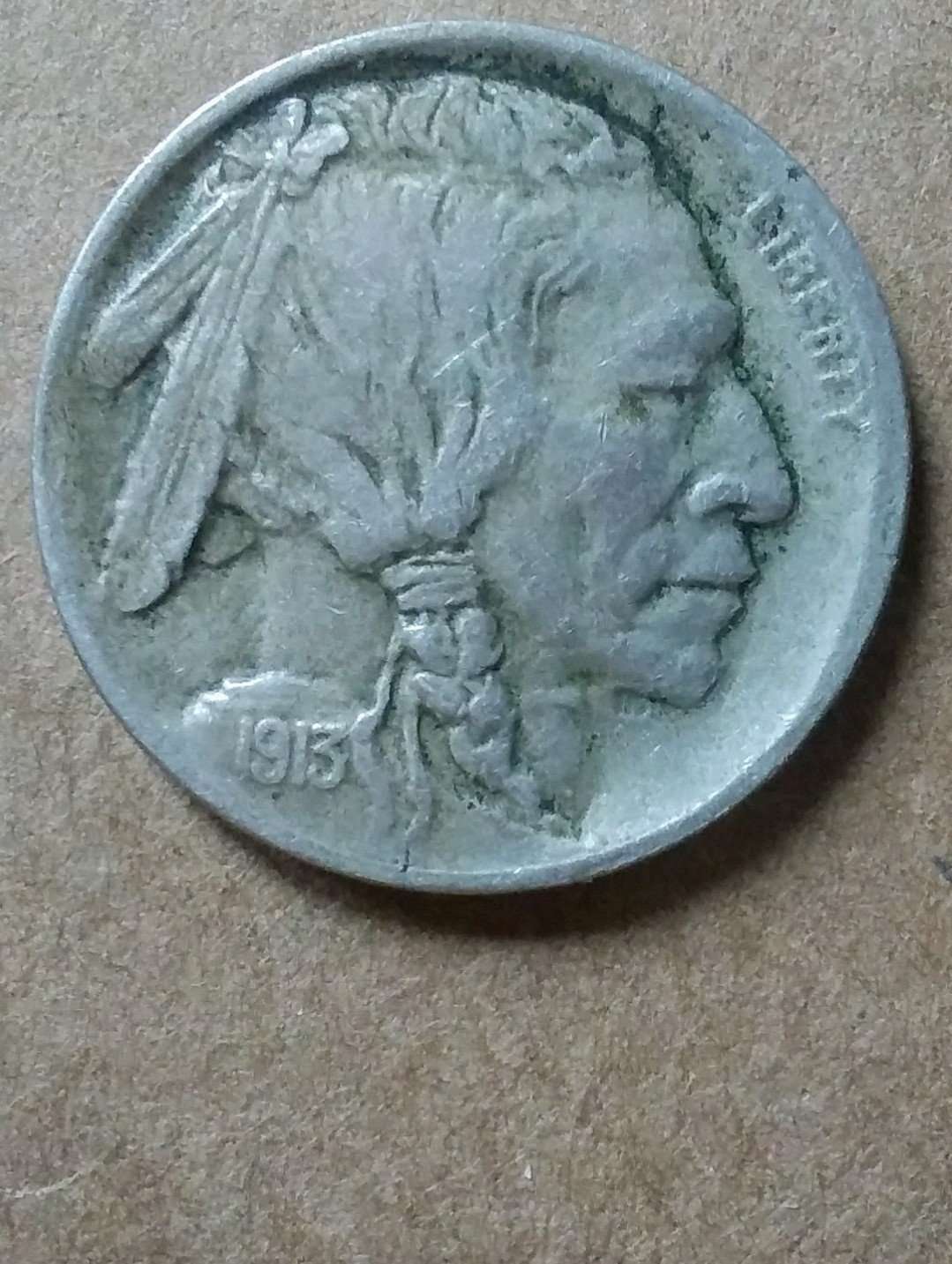


 Posted 02/12/2020 7:51 pm





