| Author |
 Replies: 11 / Views: 2,099 Replies: 11 / Views: 2,099 |
|
|
Valued Member
United States
487 Posts |
|
|
|
|
Pillar of the Community
United States
5318 Posts |
Hi,I've seen quite a few of these myself as I search for the small date variety (yours is a LD). From the photos, I'd guess that is machine doubling--created by the coining process and not from the actual die. Others may describe the process better than I.  A tipoff here is the "doubling" is present on the mint mark in the same offset. Since mintmarks for 1970 LMC were added after the die was hubbed, real doubled dies shouldn't show similar doubling on the mint mark--that much I've learned from experts here. I see a lot of these sold in ebay as "doubled dies"  Edited by KurtS
10/19/2008 5:24 pm
|
|
Pillar of the Community
United States
1571 Posts |
 Dick |
|
Pillar of the Community
United States
3507 Posts |
|
|
Valued Member
 United States
487 Posts |
|
|
Valued Member
United States
499 Posts |
I think that question is answered by the word "damage"...no extra value unless you want to scam someone on e-bay
Edited by ziggy9
10/19/2008 9:24 pm
|
|
Pillar of the Community
United States
3507 Posts |
Hi, Machine Doubling damage is something that happens during a strike that has no value to collectors. It can be due to a twist of the die or a slight hop of the die during a strike. It can also happen as a coin is ejected from a die after a strike. It is extremely common, and is technically damage as the metal is simply scraped by the die. It is true, as suggested, that a lot of these damaged coins end up on ebay labeled as doubled dies by those who haven't got a clue or by those who are out and out trying to part people from there money. There are those who might even be trying to create a market for these and that is just not right. If I could get 5 cents for every cent I've seen that had Machine Doubling damage visible on it, I'd be a millionaire:-) Thanks, Bill |
|
Pillar of the Community
United States
869 Posts |
scmoore61 Yep I have the same coin. Sorry not a DDO just MD. One day they may make a listing for these. If a die crack can bring more money to a coin so should these. Yea 5-10cents each would be nice. But not $200 like e-bay Image Insert: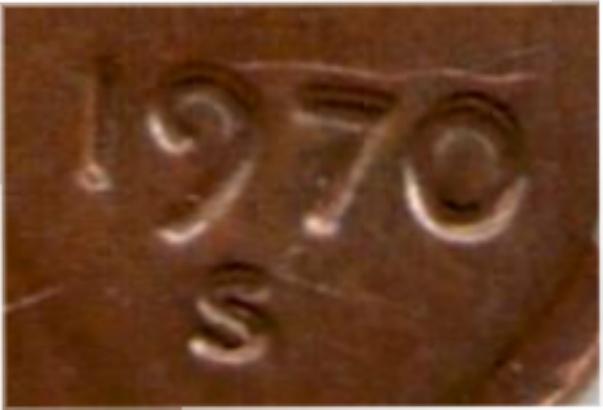 Edited by coindexter
10/20/2008 09:53 am
|
|
Valued Member
United States
487 Posts |
How about a little clarification on what is a double die? as apposed to Machine Doubling. |
|
Bedrock of the Community
United States
20069 Posts |
From the CCF glossary: Quote:A die that has been struck more than once by a hub in misaligned positions, resulting in doubling of design elements. Before the introduction of hubbing, the individual elements of a coin's design were either engraved or punched into the die, so any doubling was limited to a specific element. With hubbed dies, multiple impressions are needed from the hub to make a single die with adequate detail. When shifting occurs in the alignment between the hub and the die, the die ends up with some of its features doubled - then imparts this doubling to every coin it strikes. The coins struck from such dies are called doubled-die errors - the most famous being the 1955 Doubled Die Lincoln Cent. PCGS uses doubled die as the designation. |
|
Pillar of the Community
United States
3507 Posts |
Hi,
That's an older definition. Doubled dies can also be the result of "single squeeze" technology where a die is created with one impression of a hub into a die. So there are not necessarily mutiple impressions needed as suggested by that definition.
To make it simple, a die blank is shaped like a cone. It sometimes happens that there is a either a slight tilt to the hub or to the die when the initial contact is made between the two during the die making process.
An impression is started and the pressure of the hubbing causes the die or the hub, (whichever one is tilted) to seat properly but slightly shifted as to position. The one impression now continues and a doubled detail is the result.
A 1986 Fiscal Year report done by the Department of the Treasury indicates that "Single Squeeze hubbing" was being worked on as early as October of 1985.
In any case, this should be noted since the other definition in the other post is not entirely accurate.
Bill
Edited by foundinrolls
10/20/2008 9:27 pm
|
|
Bedrock of the Community
United States
17884 Posts |
Coindexter, yous isn't quite the same since it is doubled in a different direction. Your is doubled towards 12:00 and his is more toward 1:00 or 1:30. Could sill be from e same die though, and that is one of the problems with trying to catalog an create a value for MDD coins. Two successive coins from the same die could how differing amounts of doubling and in different directions. Or it could be producing MDD coins, then the operator tightens the equipment so it stops and then later it works loose again and starts making MDD coins again but doubled in a different area.
|
| |
Replies: 11 / Views: 2,099 |
|




 Posted 10/19/2008 6:45 pm





