| Author |
 Replies: 10 / Views: 3,850 Replies: 10 / Views: 3,850 |
|
|
Pillar of the Community
United States
6196 Posts |
Best I can figure is that a straight line of lamination peeled away from the rim, folded over, was struck through, and then disappeared. Other opinions more than welcome as always! 1920 Lincoln Wheat cent mint error - struck through lamination peel   |
|
|
|
Pillar of the Community
United States
5887 Posts |
Very cool! Certainly fun to try and figure out what happened during the process to create coins like this.
-CH27
Collector of U.S. Coins, Varieties, and Colonial Coinage
|
|
Pillar of the Community
United States
7326 Posts |
You've seen more than me, but does it seem odd how the peeled border is straight,smooth and uniformed? Question just for learning (more)...Thanks....nice coin
|
|
Pillar of the Community
 United States
6196 Posts |
Random lam peels take all kinds of shapes with a few sorta guidelines, but when a lamination goes across the coin and pulls the whole rim like this one it is quite common for the interior break line to be pretty darn straight.
|
|
Bedrock of the Community
United States
10635 Posts |
I wish I could find one like this, it's simply amazing!  |
|
Moderator
 United States
56855 Posts |
I have trouble with laminations, is it a lamination or a de-lamination and why what are the differences? Are there other types of laminations? John1  |
|
Pillar of the Community
United States
2260 Posts |
Quote:
Other opinions more than welcome as always! I think the planchet was laminated when it was struct. The loose metal came off after the coin was in circulation. Just my guess. Not sure how one would tell for sure exactly when the lamination occurred.One of the experts on here might have that answer. EDIT: The slight ridge on the east side running thru LIBERTY may be an indication that it occurred after the strike. Edited by 11997755
02/19/2020 06:06 am
|
|
Pillar of the Community
United States
5884 Posts |
Quote:
I think the planchet was laminated when it was struct. The loose metal came off after the coin was in circulation. Just my guess. Not sure how one would tell for sure exactly when the lamination occurred.One of the experts on here might have that answer.
EDIT: The slight ridge on the east side running thru LIBERTY may be an indication that it occurred after the strike. No expert here but I believe that is what TB is saying. The coin had a retained lamination which folded over (by the feeder finger possibly?) before the strike and then the dies struck the coin. The lamination came off after the strike (based on the underlying design elements still visible). Judging by the slight color variation between the exposed area under the lamination and the surrounding surfaces the coin circulated for quite a while before the lamination came off. I wonder if there any examples of wheat cents with a "struck through a foldover lamination" on the reverse? If not, might this be an indication they are caused by the feeder finger striking the planchet edge and folding it back as the hammer die comes down? Words of encouragement are one of the major food groups.
We need to consume them regularly to thrive and grow.
Edited by Petespockets55
02/19/2020 08:19 am
|
|
Bedrock of the Community
United States
94367 Posts |
|
|
Pillar of the Community
 United States
8946 Posts |
|
|
Bedrock of the Community
United States
62064 Posts |
Seen stuff like this before: 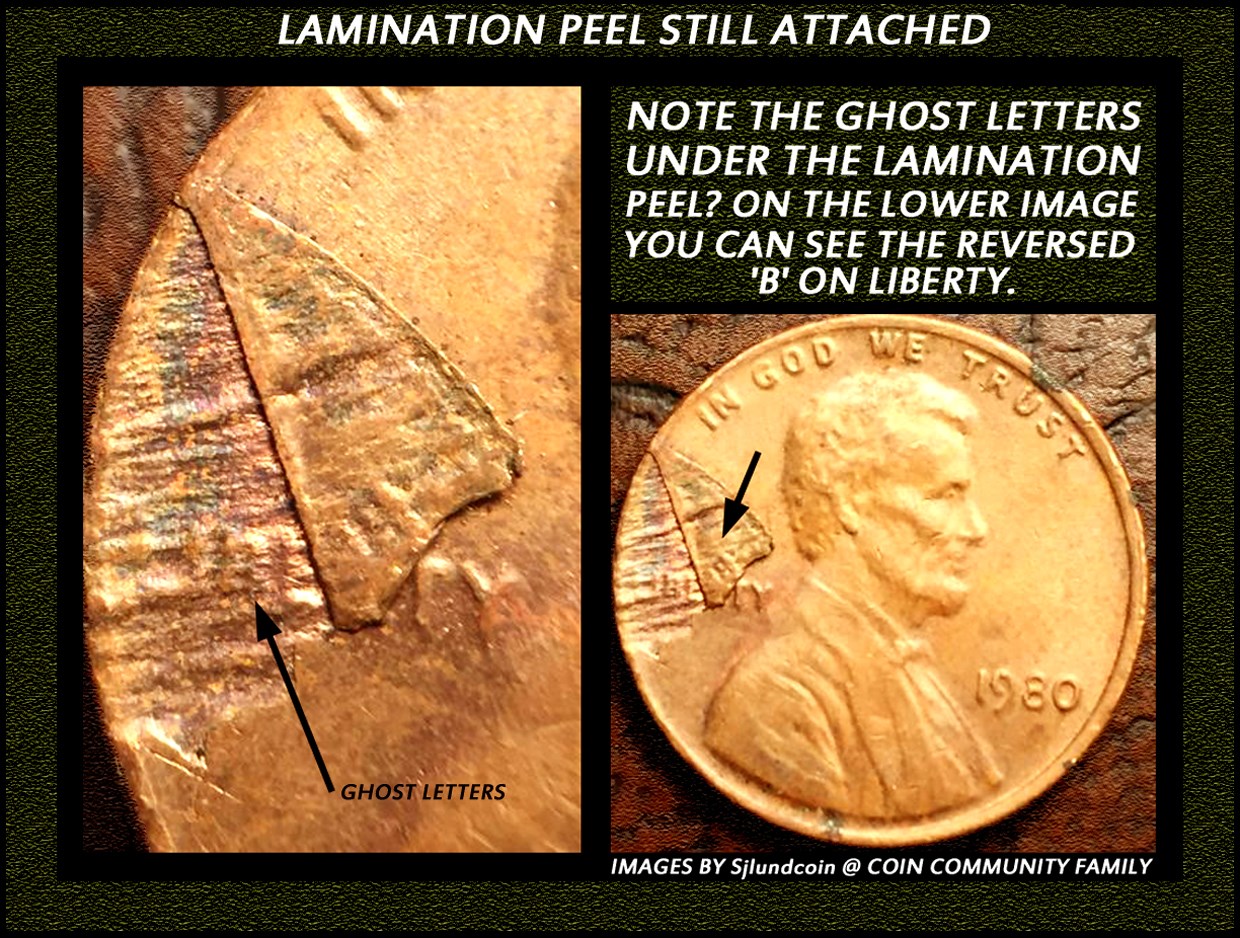 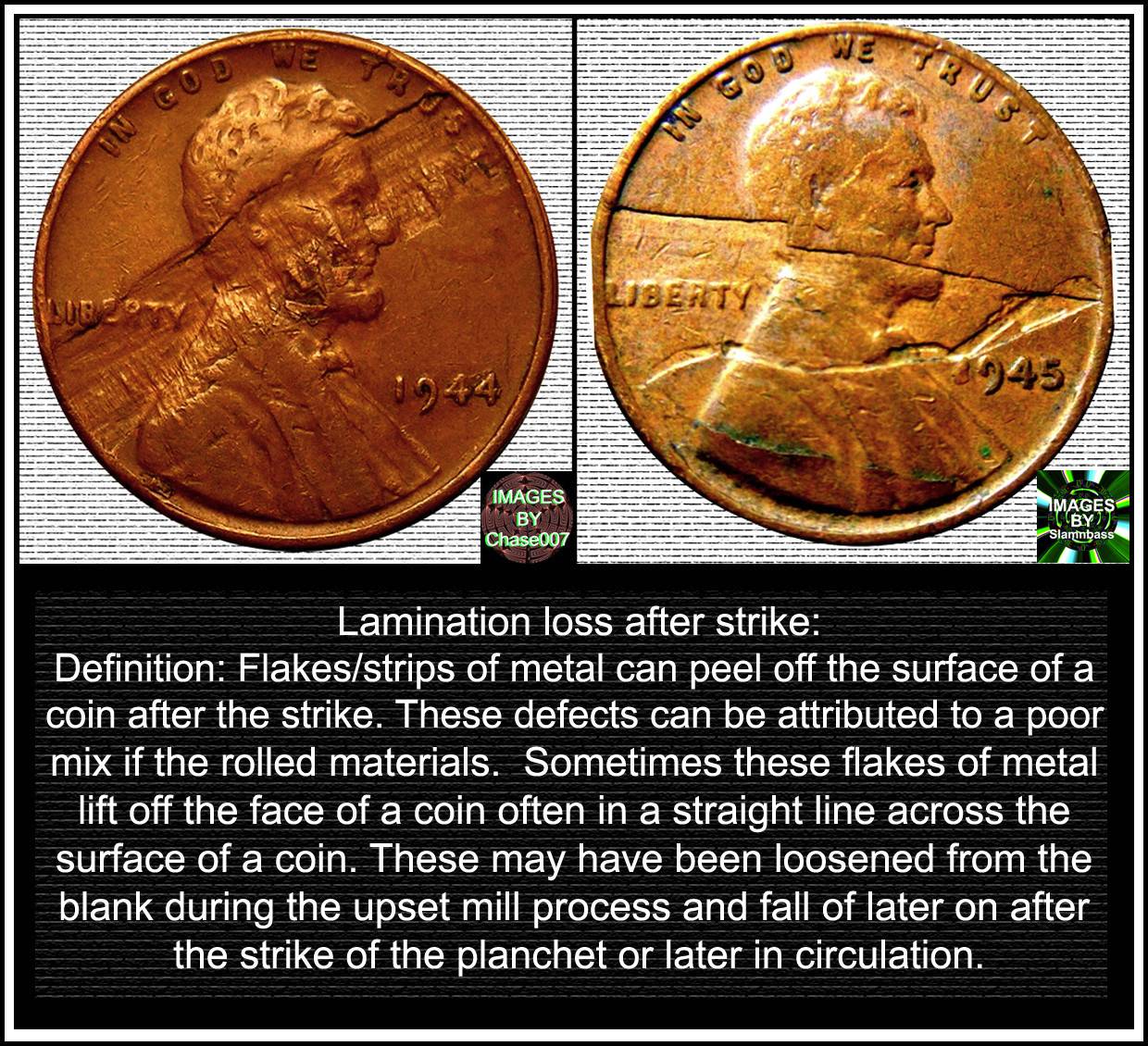 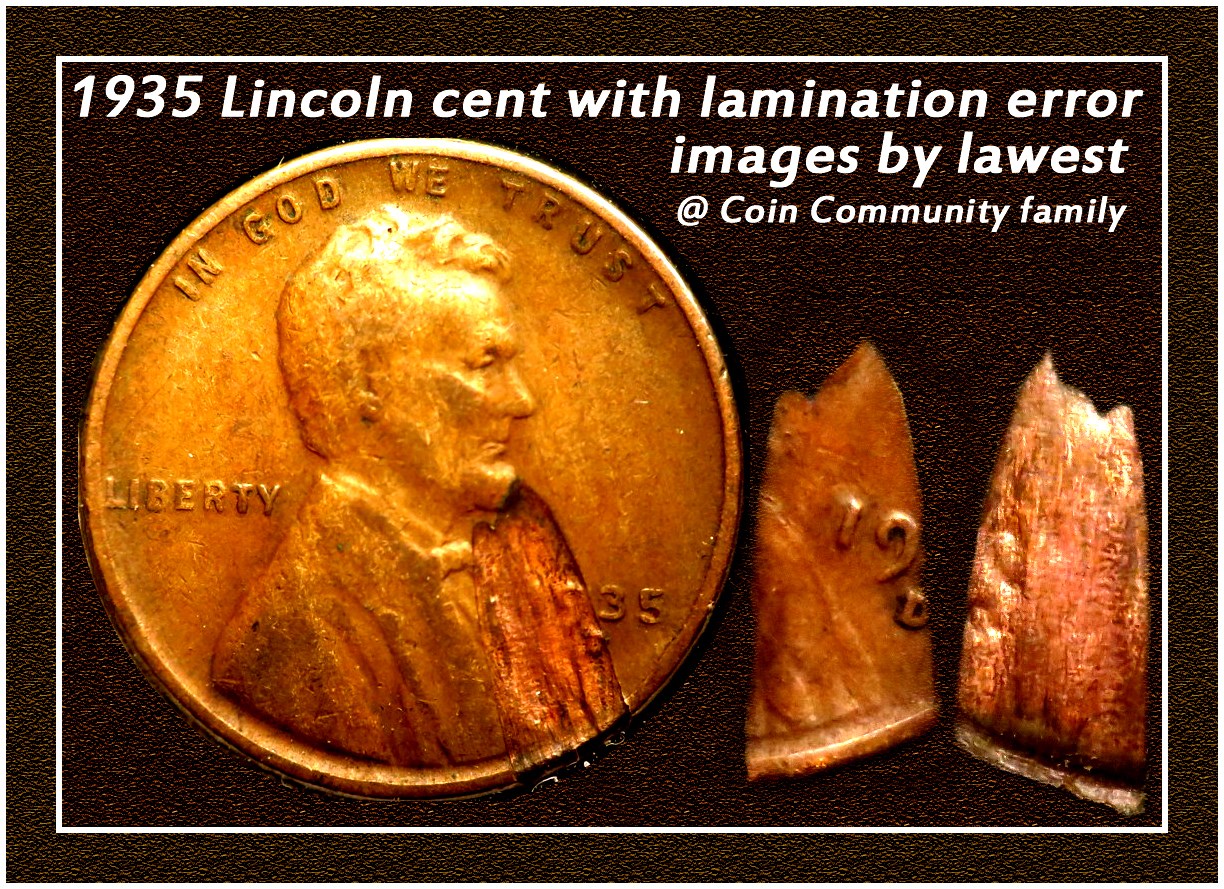 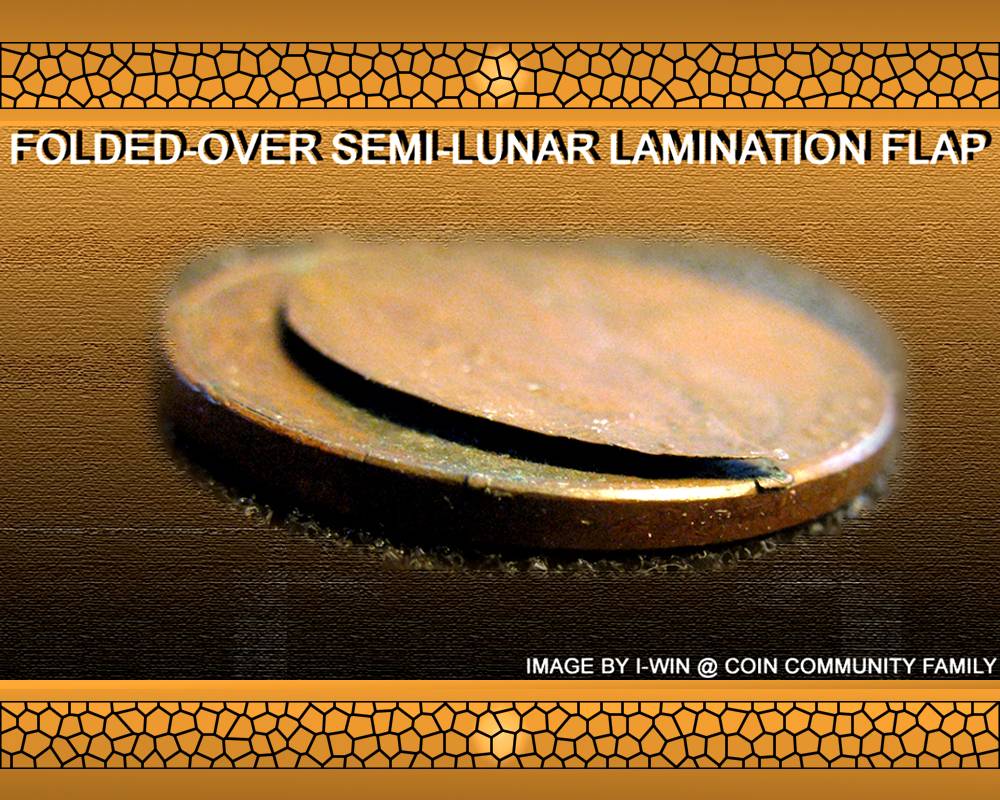 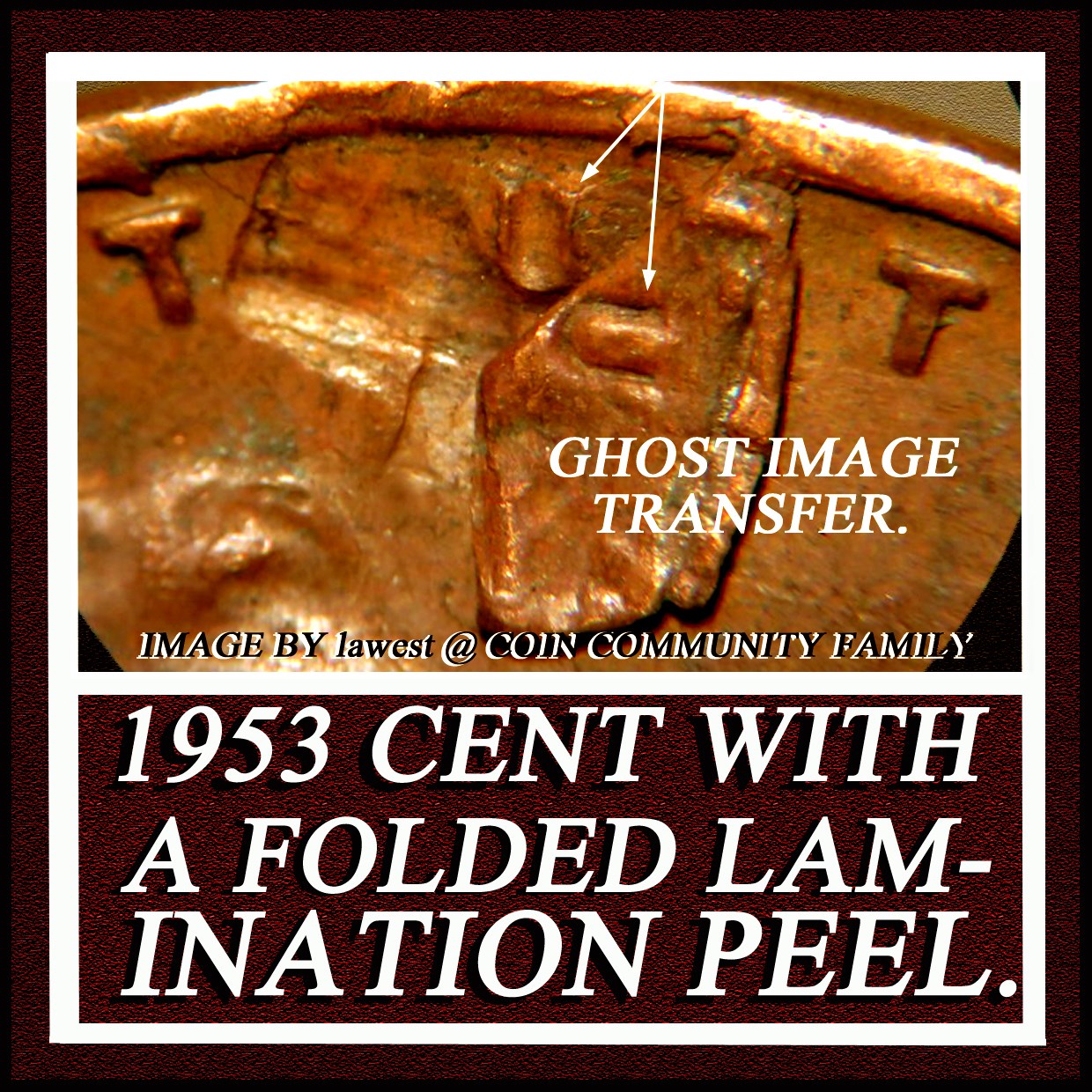 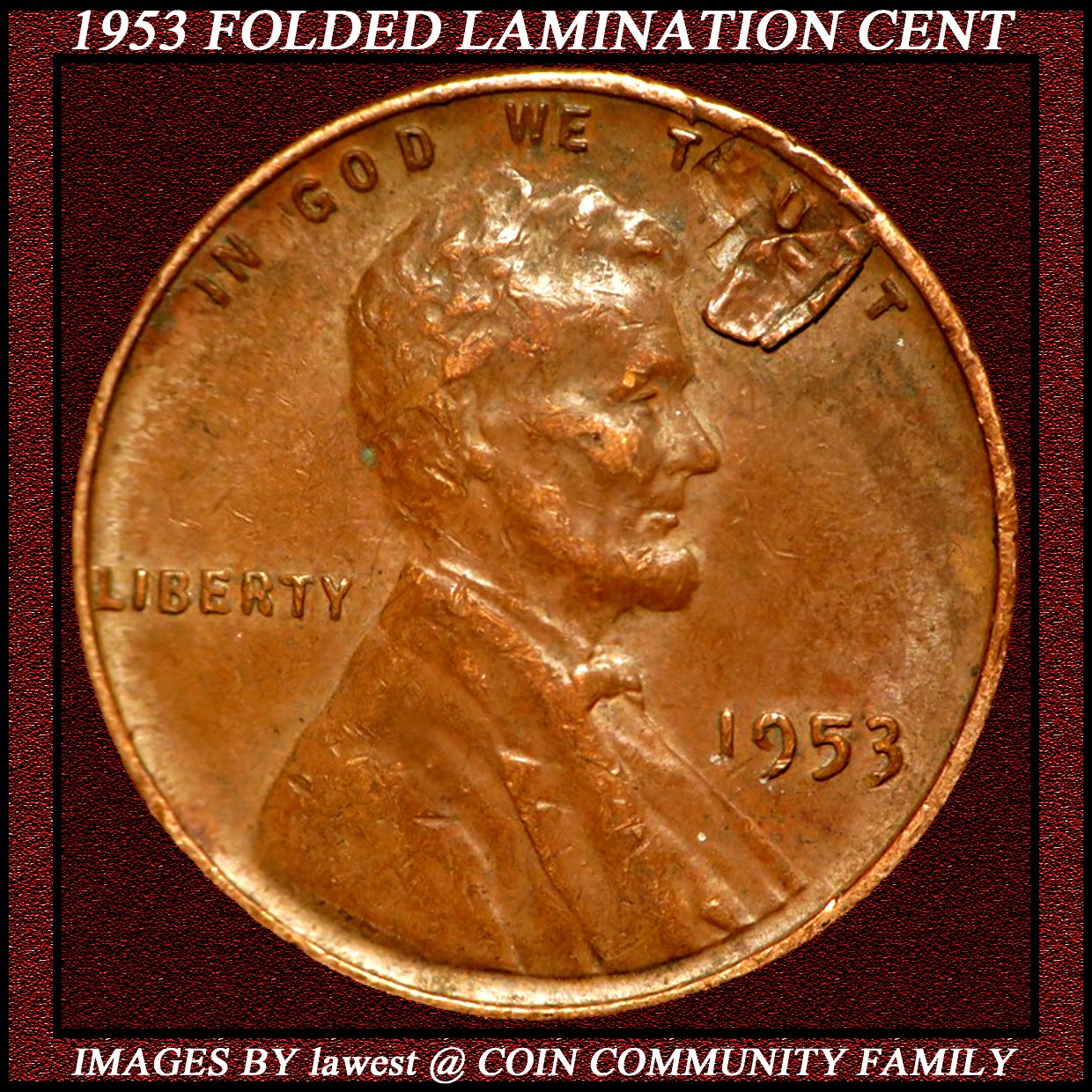 What causes these lamination to come loose What causes these lamination to come loose I feel the imperfection on the rolled metal stock, when it was rolled out, had some imperfections rolled into the metal. After the blanks were created, it is run though the upset mill to create to proto rim (turning it into a planchet) this loosens the impefection rolled into the stock material. Sometimes they fall of before the strike. Sometimes are loosened and folded over. Other times after the strike it loosens the rolled in metal and later falls off the coins. While interesting, the Memorial ones are not worth a lot, unless they are extreme. Wheat ones are usually worth several times more in value. Indian Head cents would also be worth more than the wheat examples. Sometimes when the lamination is minor, it reduces the value of the coin. (Making it undesirable to a seasoned collector as they want a problem free coin) A variety coin with a lamination doesn't add value to the coin. Why? Because a variety collector doesn't want a problem coin. And an error does care it the coin is a variety and just wants it for an error coin. So it doesn't increase the value of the coin. |
| |
Replies: 10 / Views: 3,850 |
|







 Posted 02/19/2020 12:00 am





