| Author |
 Replies: 9 / Views: 6,017 Replies: 9 / Views: 6,017 |
|
|
Valued Member
Australia
143 Posts |
Hi, I am here again with an other question about the coins weight. Every body knows that from 1965 to 1970 the weight of the US Kennedy half dollar with %40 silver should be 11.5g and copper- nickel coins after 1970 should be 11.34g. But, I have a 1968-D Kennedy half dollar with 11.28g!? even less than copper-nickel coins. What do you think about this coin? I am waiting to hear from you. Thanking you. With regards, Habib. |
|
|
|
Moderator
 United States
56855 Posts |
|
|
Bedrock of the Community
United States
62064 Posts |
I added the new information to my weight chart to put both figures on one source: 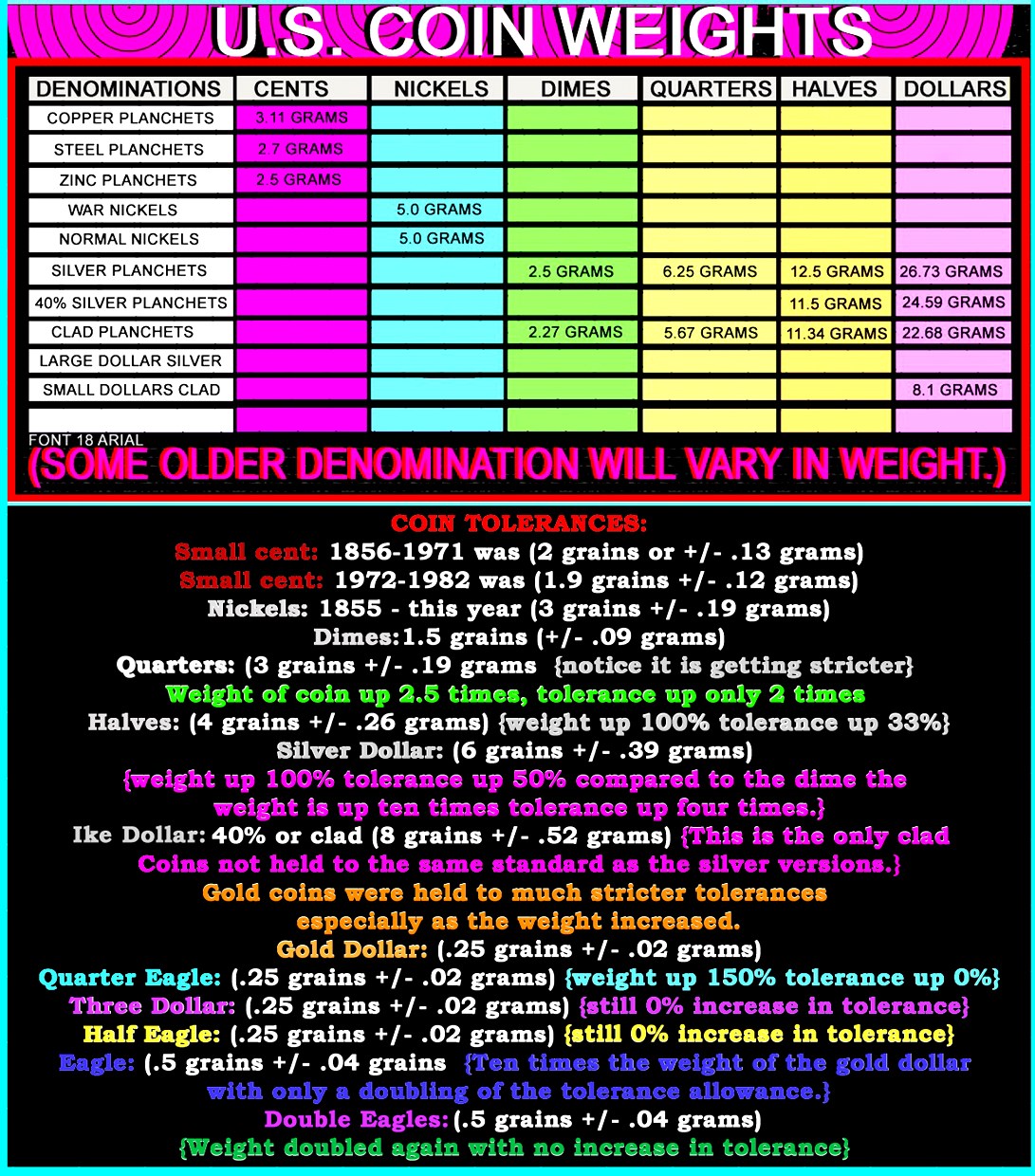 |
|
Valued Member
 Australia
143 Posts |
Hi,
Thank you for your kind suggestions. But if we consider all these options, then how we should be sure about the weight of our coins? For example, the difference between weight of copper-nickel half dollar and %40 silver half dollar is only 0.16g, so if we consider this weight tolerance(0.26g) and apply it to our coins, then we will have copper-nickel coin with a weight ranging from 11.08g -11.6g, and its weight may cross %40 silver coin. And similarly, the %40 silver half dollar coin will have a weight ranging from 11.24g- 11.76g!? and I know this is not not acceptable. Because, We see lots news from PCGS about the error coins which have only 1/10 of gram or so differences with normal coin, so under this circumstances what criteria do they take in account?
with regards,
Habib.
|
|
Moderator
United States
56855 Posts |
You can also try the tissue test to see if it is silver or clad. John1  |
|
Bedrock of the Community
United States
62064 Posts |
But they weren't using anything but the 40% silver coins during that time. They didn't start using the clad in 1971. What does the edge look like? Is there any double lines on the rim of the coin. (Some coins are altered to make them into magician coins) If you see a double line like this on the rim, it maybe an altered coin: 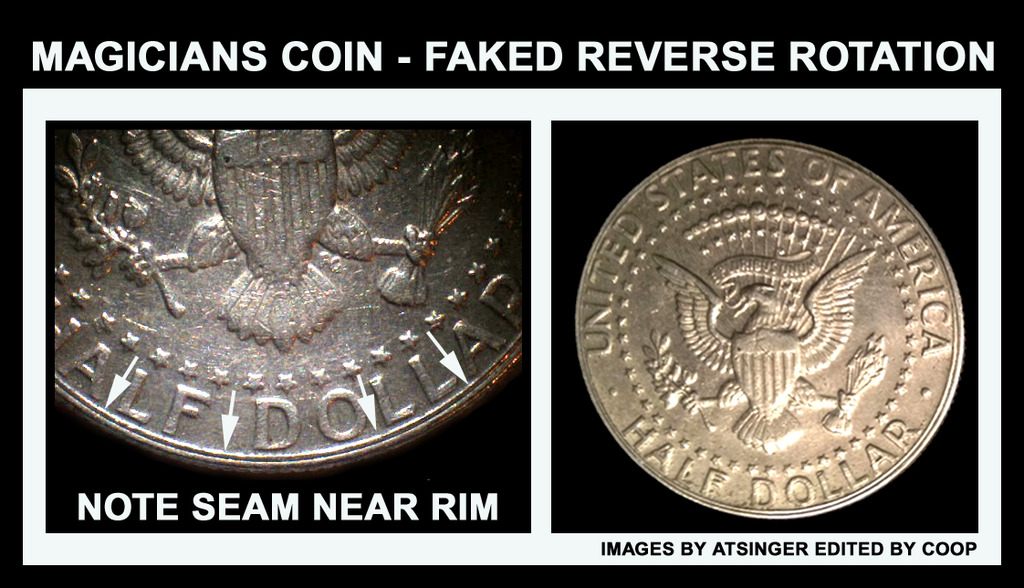 |
|
Pillar of the Community
United States
6879 Posts |
|
|
Valued Member
Australia
143 Posts |
Hi every body, Thank you for all your kind suggestions. As I mentioned previously, this Kennedy half dollar is dated 1968-D, so apparently it should be %40 silver coin with 11.5g weight, but as you will see in attached images, its weight is 11.28g and this weight is for copper-nickel coins not %40 silver coin! The edge of coin is silvery not reddish, which means it should be a coin with silver content. An other thing, the copper-nickel Kennedy half dollar is introduced from 1971, but the date of this is 1968, it can not be copper-nickel. Please let me know your kind suggestions. With best regards, Habib.      |
|
Pillar of the Community
United States
2775 Posts |
Half Dollars
Date: 1794 to 1795
Weight: 13.478 grams
Tolerence: ?
Diameter: 32.50* (mm)
Composition: 900 Ag, 100 Cu
Date: 1796 to 1836
Weight: 13.478 grams
Tolerence: ?
Diameter: 32.50* (mm)
Composition: 892.427 Ag, 107.572 Cu
Date: 1836 to 1853
Weight: 13.365 grams
Tolerence: 0.097 grams
Diameter: 30.61* (mm)
Composition: 900 Ag, 100 Cu
Date: 1853 to 1873
Weight: 12.441 grams
Tolerence: 0.097 grams
Diameter: 30.61* (mm)
Composition: 900 Ag, 100 Cu
Date: 1873 to 1947
Weight: 12.500 grams
Tolerence: 0.097 grams
Diameter: 30.61 (mm)
Composition: 900 Ag, 100 Cu
Date: 1947 to 1964
Weight: 12.500 grams
Tolerence: 0.259 grams
Diameter: 30.61 (mm)
Composition: 900 Ag, 100 Cu
Date: 1965 to 1970
Weight: 11.500 grams
Tolerence: 0.400 grams
Diameter: 30.61 (mm)
Composition: 40% silver clad**
Date: 1971 to date (excluding the Bicentennial 40% silver clad)
Weight: 11.340 grams
Tolerance: 0.454 grams
Diameter: 30.61 (mm)
Composition: 75 Cu, 25 Ni on pure CU
Date: 1976 (silver clad)
Weight: 11.500 grams
Tolerance: 0.400 grams
Diameter: 30.61 (mm)
Composition: 40% silver clad**
Thanks, Doug.
|
|
Moderator
United States
54297 Posts |
The weight of your coin is within tolerance.
|
| |
Replies: 9 / Views: 6,017 |
|







 Posted 07/13/2020 2:39 pm





