PCGS - There are few annual United States Mint products as popular as the proof set. These coins, each carefully struck by specially prepared dies and made with polished planchets, have been a mainstay of United States coin collectors for generations. The earliest-known United States proof coins were made in 1817. However, these early proofs were most often produced in very small numbers for the purposes of checking dies and for historical archiving of particular issues - less so with the intent of creating collectible coins for numismatists.
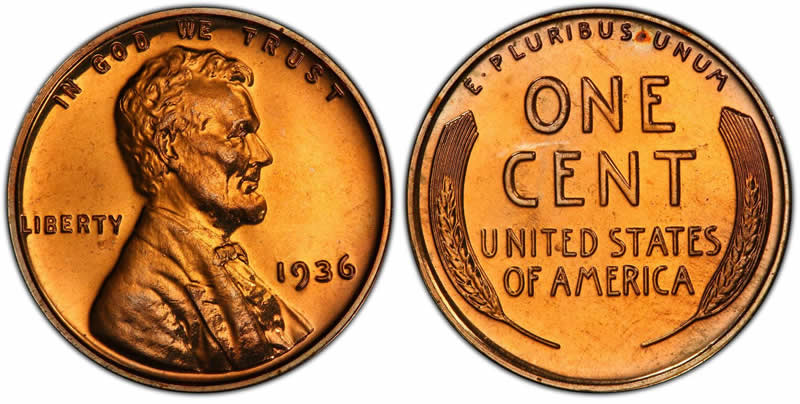
1936 Brilliant Proof Lincoln Cent The United States Mint began striking proofs on a more consistent basis by the end of the 1830s and had finally begun issuing regular proof sets for coin collectors in 1858. Over the next 58 years, the U.S. Mint sold proof coins both individually and as sets representing every regular-issue denomination ranging from the one-cent coin through $20 gold double eagle. While some branch mints very sporadically struck small numbers of proof coinage for presentation purposes or other special reasons, proof coins made from the 19th century through mid 20th century were almost exclusively struck at the Philadelphia Mint.
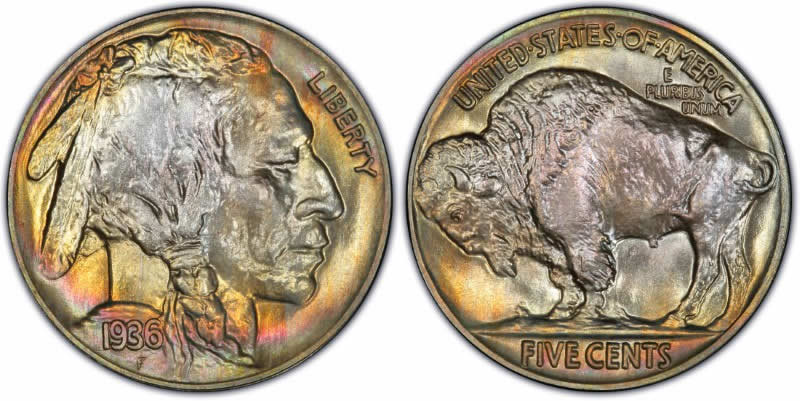
1936 Satin Proof Buffalo nickel These vintage proof coins were struck twice to help bring up the minutest of details. Therefore, these pieces typically exhibit outstanding strike quality, with squared rims and excellent presentation of even minor design features, such as hairlines and eagle feathers. For most of the period spanning from 1858 through 1916, the United States Mint produced proofs with brilliantly mirrored devices and fields, and some rare early proof strikes from this era exhibit varying degrees of cameo contrast.
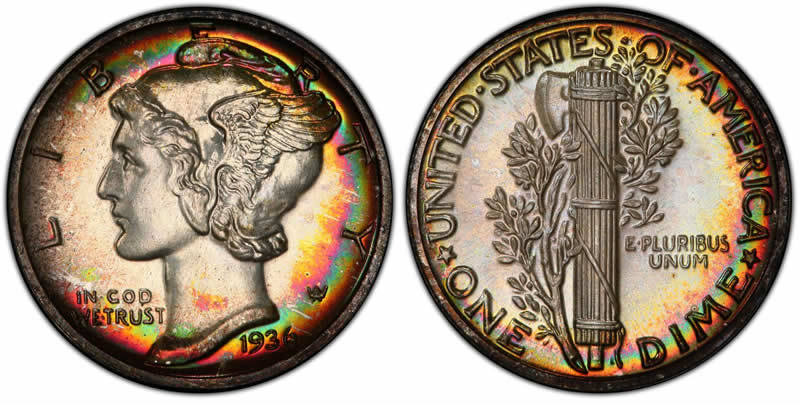
1936 Proof Mercury dime In 1908, the United States Mint adopted a matte proof finish that was popularized at the Paris Mint and incorporates a sandblasted, granular finish. While these matte proofs may have represented the very latest in technological and artistic advances in minting coins, collectors preferred brilliant proofs. Lincoln Cents, Liberty Head and
Buffalo nickels, Liberty Head ("Barber") coinage, and the various gold denominations were all struck with matte finishes, which proved none too popular with the United States collector of the time. Sales of proofs steadily declined.
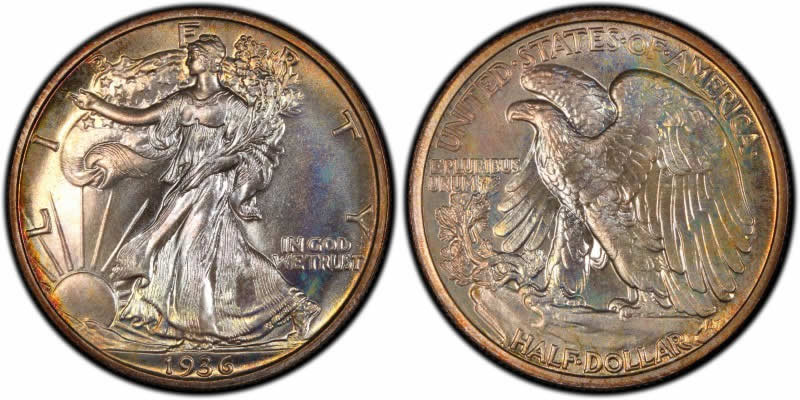
1936 Proof Walking Liberty half dollar Ostensibly, the United States Mint discontinued the proof coin program in 1916 due to concerns that the United States would engage in World War I and therefore needed to focus minting efforts on the production of essential business-strike coinage and military medals. However, the United States did not officially become involved in World War I until the following year, in 1917.
Read the Entire Article 






 Posted 08/19/2020 6:05 pm


 , They were even AT'ing back in 1936 .





