| Author |
 Replies: 7 / Views: 1,956 Replies: 7 / Views: 1,956 |
|
|
Pillar of the Community
United States
4431 Posts |
|
|
|
|
Bedrock of the Community
United States
94367 Posts |
|
|
Bedrock of the Community
United States
17884 Posts |
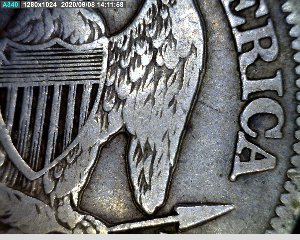
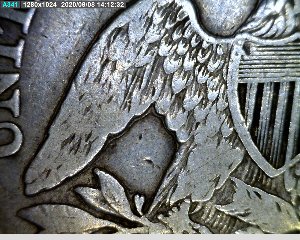
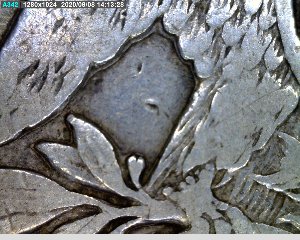
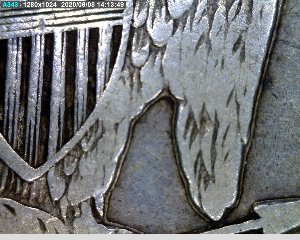
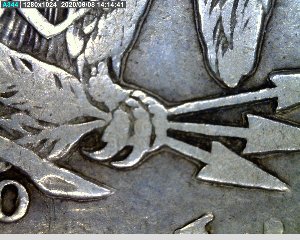
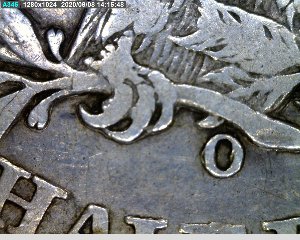
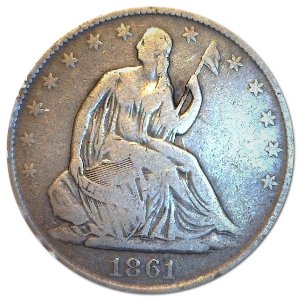
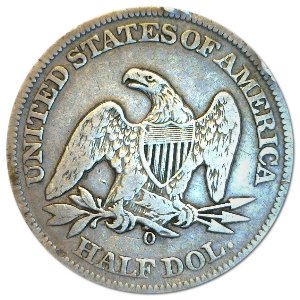
Longacre doubling and if I remember correctly it is a characteristic of one of the reverse dies used by the Confederacy when they were striking half dollars using Union dies. Yep rev E used on W-10, 11, 13. Probaby W-10 as the doubling is strong, and the dentil below the date are weak to non existent. (This was the third use of the obv and it was getting pretty worn out.)
So you have a Confederate half dollar. (or at least a half dollar struck by the Confederacy.)
Edited by Conder101
09/09/2020 01:19 am
|
|
Pillar of the Community
 United States
4431 Posts |
@Conder101 .... Thanks for your typically informative reply! I was hoping you'd chime in on this piece. While I've long hunted down the better known Confederate die issues, WB-102, 103 & 104, I'd not seen the like of this one. I'm enthused to hear your assessment. I found the following description of the W-10, Wexler variety. I see that the "doubling effect" I mentioned is described therein as a halo .... This auction is for an 1861-O silver half dollar, that was among those recovered by the Odyssey Marine Exploration, from the SS Republic vessel which sank in October 1865. The coin being offered here has been certified by NGC as a Confederate States issue, with die marriage W-10. As such, it is the scarcest of all the Confederate issues, which span the die marriages of W-09 thru W-15, as described in detail in the Nov 2006 Gobrecht Journal article, by Randall Wiley, and also in the 2013 book by Bill Bugert, "A Register of Liberty Seated half dollar Varieties, Vol IV". Page 37 from that Gobrecht Journal article is among the attachments included here, which shows the relative rarity of all the die marriages. The W-10 variety, being offered here, is characterized mainly by these features: on the obverse, there is a level date, partial drapery at Liberty's elbow, and a die crack connecting stars 9-13. The reverse is characterized by a bold halo around the eagle (see arrows on reverse close-up photo, and also the page from the Gobrecht Journal, with a fuller explanation of the W-10 variety .... https://www.worthpoint.com/worthope...e-1801102104The level date, as you noted, Conder, fits the description, what with the disappearing dentils .... 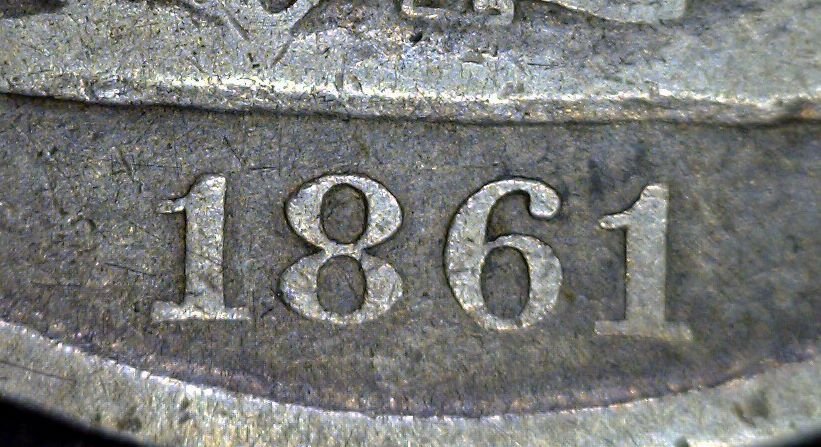 Another pup, the partial drapery at the elbow is also evident .... 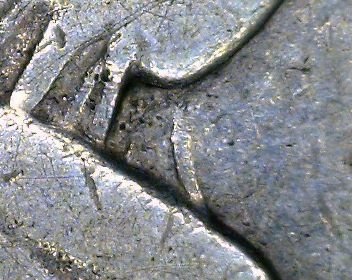 I'm not seeing the diagnostic reverse die crack, running from stars 9-13 though. As my coin has but VG-8 details, perhaps the crack's apparent absence can be attributed to circulation wear? 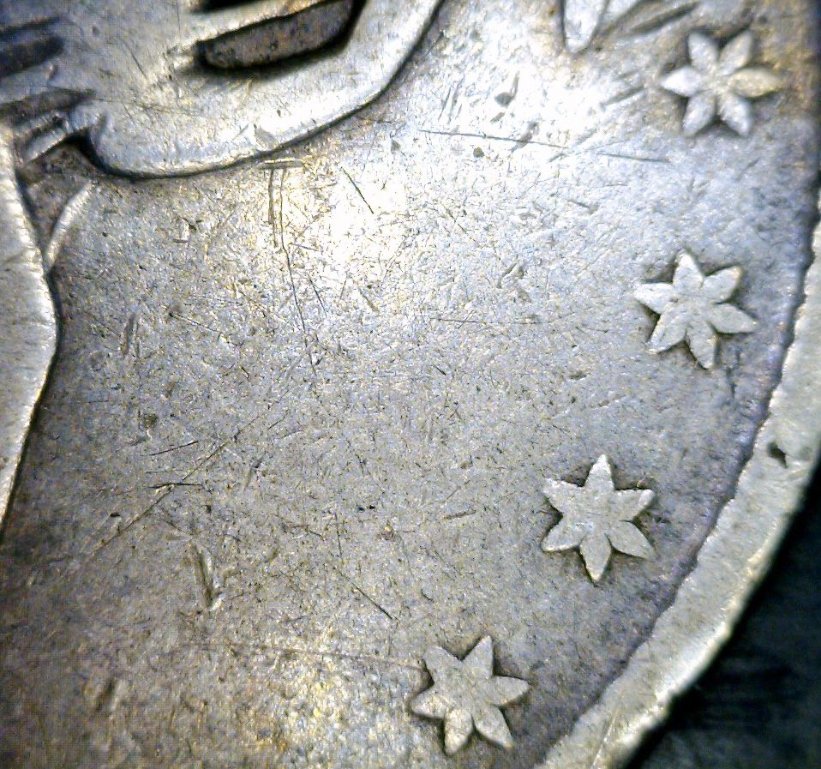 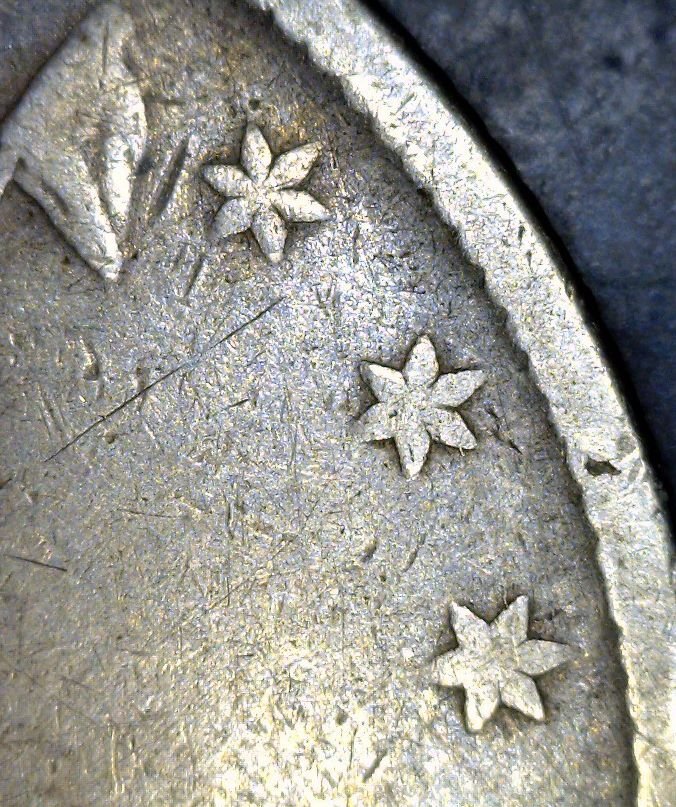 I bought this piece on instnct, thinking it "looked" different from most I'd seen. If, as we suspect, it is the W-10, Wexler says it's the rarest of the Confederate varieties. I've cherried some of the WB-102's over the years, the nasal die crack, and those tend to fetch strong prices. I don't envision this W-10 piece being nearly as popular, price-wise, that is. Still, if it'll slab as a Confederate die pairing, I'm happy!  Edited by ExoGuy
09/09/2020 05:59 am
|
|
Bedrock of the Community
United States
20753 Posts |
Really nice closeup photos.
|
|
Pillar of the Community
United States
4431 Posts |
Quote:
Really nice closeup photos. Thanks, Carl. I've been trying to improve ....  |
|
Pillar of the Community
United States
835 Posts |
I would agree with condor101, this is a WB-10 and has a rarity of 4. I do see the die crack between star 10 and 11 that matches the obverse 3, which is found on WB-6, WB-9 and WB-10. It is not actually the rarest of the CSA, WB-12 is by far the rarest CSA and all 1861-O half dollars but has only 4 known examples. So I guess you could say that it is the rarest collectible CSA.
|
|
Pillar of the Community
United States
4431 Posts |
@Heymikep .... Thanks for the confirmation & clarification!
|
| |
Replies: 7 / Views: 1,956 |
|












 Posted 09/09/2020 01:02 am


