| Author |
 Replies: 11 / Views: 2,312 Replies: 11 / Views: 2,312 |
|
|
Valued Member
United States
184 Posts |
This coin is slabbed and graded as NGC AU-53. But it looks like there is some corrosion that was most likely not there when it was encapsulated. If this is indeed corrosion, I assume it should be preserved professionally from further corrosion. Which means it should be sent to NGC and take a chance that it comes back as "detail" AU grade. What is your take? 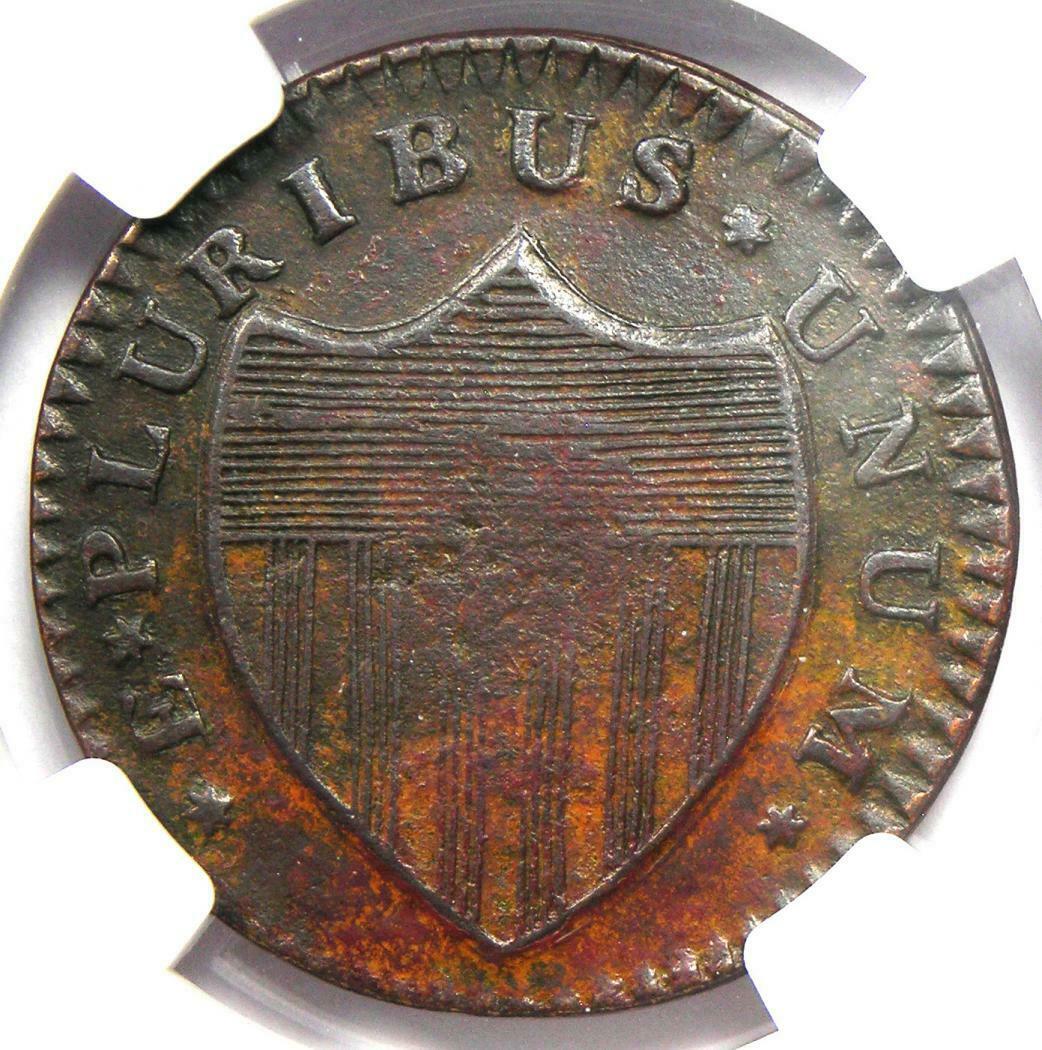 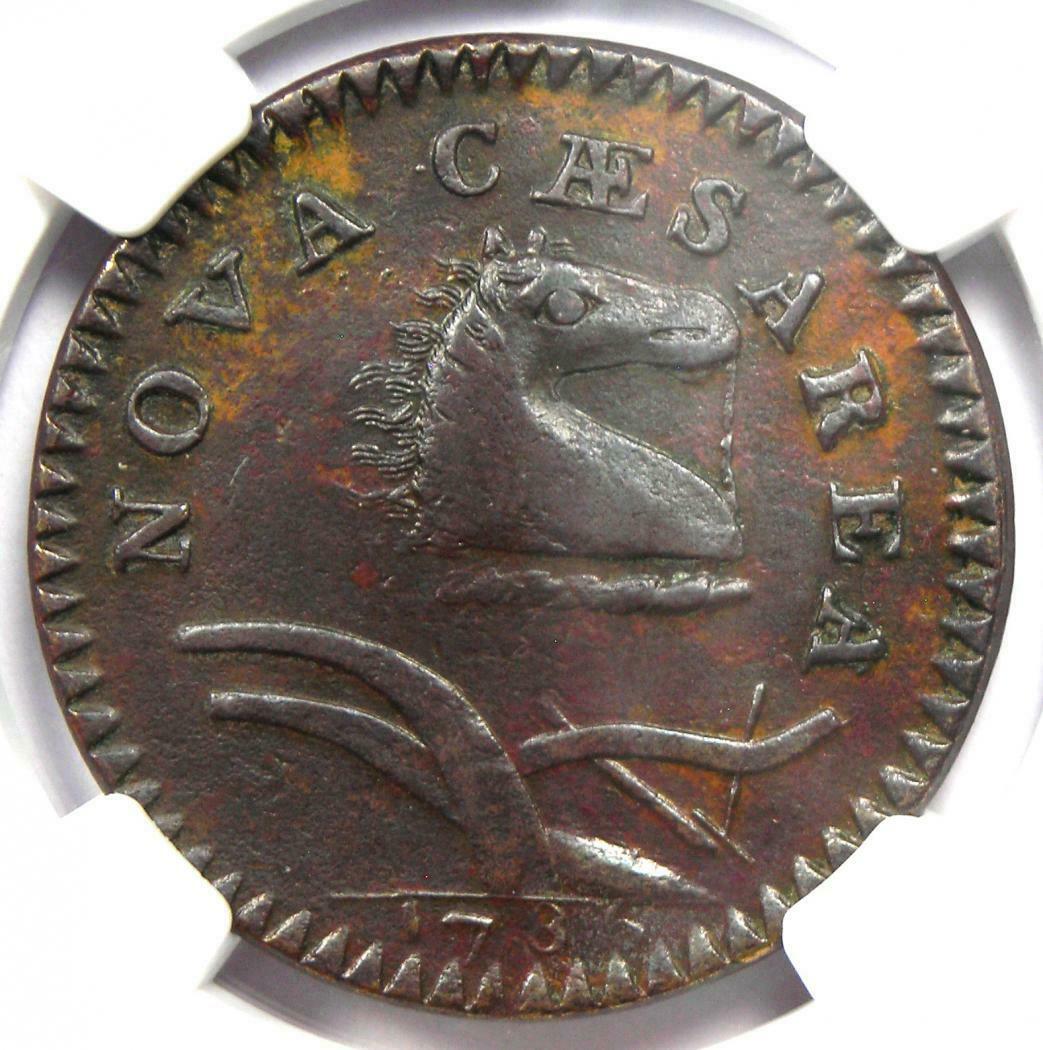 |
|
|
|
Valued Member
 United States
184 Posts |
Thank you for the input and suggestion. Yes, it is a Bridle-type, Wide Shield, Maris 18-M, W-4890, R.2
|
|
Pillar of the Community
United States
9811 Posts |
I'd get ahold of someone from the C4 group first, just to ask the opinion of a Colonial coin expert, I'd hate to lose a lot of value, though, most colonial collectors abhor slabs anyways from what I'm learning. Every one I know breaks them out. But they do sell better in a non-colonial marketplace in a slab. Wish I could answer it better, but I feel I'm too much of a novice in the colonial area, even though that's all I've been studying the past year or two. Hopefully another colonial nut will be along shortly to expound on my ramblings.
Since I'm new to colonials I tried to ID this one, it looks like I may have picked an easier one to ID, is it the Marris 18-M?
"Buy the Book Before You Buy the Coin" - Aaron R. Feldman - "And read it" - Me 2013! ANA Life Member #3288 in good standing since 1981, ANS, Early American Coppers Member (EAC), Colonial Coin Collectors Club member (C4), Conder Token Collector Club member (CTCC), Civil War Token Society (CWTS) member, Liberty Seated Collectors Club (LSCC) & Numismatic Bibliomania Society member (NBS), USMex, Member in good standing, 2¢ variety collector. See my want page: http://goccf.com/t/140440 |
|
Bedrock of the Community
 United States
18932 Posts |
i wouldnt send it in. just my opinion
|
|
Pillar of the Community
United States
1761 Posts |
I don't agree at all that the coin experienced corrosion after its encapsulation. Copper oxides form different compounds with a myriad of colors depending on which copper compound you are talking about present on a colonial coin's surface. Copper (II) oxide is normally a black or darkish color and not the typical green or red we hate or love to see respectively which are different copper compounds (copper peroxide & copper (I) oxide). I consider you lucky to get an AU grade with this coin so do nothing as I do not see how it can be improved - its simply a copper oxide as with copper peroxide (i.e., green) few wish to see on their coins - LOL. John Lorenzo Previous Expert on NJ Coppers (Now Spanish-American Specialist) <VVBG> Moving forward we see alot of slabs with the word "CLEANED." This may be environmental exposure or even from the manufacturing process in some cases IMO. See this paper I posted to the Eric P. Newman portal: https://nnp.wustl.edu/library/book/579875These PCGS/NGC graders when viewing a non-homogenous surface inadvertantly use or have been TAUGHT to use the word "CLEAN." IMO its creating a REAL problem! Here is my references on NJ Copper knowledge: https://archive.stacksbowers.com/?q...c46c66103186Edited by colonialjohn
11/15/2020 2:12 pm
|
|
Valued Member
United States
184 Posts |
Thank you colonialjohn. I looked up copper oxidization and it seems that "red" oxide is not harmful vs green which is linked to acid. Copper oxide (red) could come from soil or other elements in the environment, but not caused by air, if I understood it correctly. Wondering, what would be a reasonable value range for this specimen with the partial red copper-oxide tones? How much would the value increase without any of the red oxide? PS: I also came across your book on Amazon "The Forgotten Coins of the North American Colonies - 25th Anniversary Edition". |
|
Pillar of the Community
United States
1761 Posts |
Best way IMO to determine approximate value is to go to Stacks/Bowers or Heritage Auction Archives plug in the NJ Variety & grade and then get your ballpark figure. There is no harm here for the variety or type collector as the slab has no "Environmental Damage" tag - so its ALL good. This is why sometimes Condition Census rankings are difficult to tie down as everybody has their own likes/dislikes in terms of the TOP 6 or TOP 12 as in Siboni's book on NJ's. BTW I know you will hear many C4 people say crack that Colonial out of the slab - in today's collecting marketplace if the slab does NOT say CLEAN or ENVIRONMENTAL DAMAGE this is a big mistake. The only problem I have seen with slabs is that more often than not it DESTROYS the pedigree line of ownership as in most cases unless its a major collection there is no pedigree chain which is not good particularly for example if say this particular NJ came from a Chapman Sale of the early 20thC. I know this has happened to many of my NJ's when sold by Stacks/Bowers in the Americana sale of 2008 as most entered into PCGS/NGC slabs. JPL
P.S. For completeness there is also sulfur and chlorine type compounds the two other compounds found on coin surfaces also in this mix but for simplicity we are only discussing the fact that copper oxides do come in different color variations such as copper (I) sulfide which is black. Hundreds of copper XRF and SEM/EDS analyses performed by myself have shown copper sulfides and chlorides to be present as well as copper oxides. It was this fact that led me to produce this paper on the Uncirculated Eight Reale piece which has not been cleaned in my opinion based on scientific analyses. It can be argued that its environmental damage but then how much of a non-homogenous surface does it take for PCGS/NGC to call something environmentally damaged? There is also a possibility that these surfaces appear immediately after production in my opinion if not properly produced correctly or if missing some key ingredients as mentioned in my paper. Remember that fiasco with milk spots and an improper rinsate used creating problems after the coins were slabbed 69/70 recently at the U.S. Mint.
Edited by colonialjohn
11/16/2020 11:37 am
|
|
Valued Member
United States
184 Posts |
Belated thank you for the further advice and information. You mentioned the Chapman sale of 1904....there is a coin from that sale that had a pedigree that was broken for a half a century: "The provenance chain for this piece requires additional research. It was sold for $16 at the 1904 sale of the John G. Mills collection, but was bought there by the Chapman brothers themselves and presumably sold privately thereafter. Its whereabouts for most of the first half of the twentieth century remain to be discovered. This astonishing example of a New Jersey copper is clearly deserving of further research. The present auction is only the second time in a century that this coin has been offered publicly. Listed on page 73 of the 2021 Guide Book.
Ex: John G. Mills (S.H. & H. Chapman, 4/1904), lot 397; later, Richard Picker (1958); Norweb Family (Bowers & Merena, 10/1987), lot 1327; Donald G. Partrick."It's the highest graded NJ colonial known at MS-66 Red/Brown and it's coming up for auction in Orlando in January 2021. I wonder how much the start price will be? https://coins.ha.com/itm/colonials/...dLots-101116  Edited by NJcoppers
11/26/2020 01:20 am
|
|
Pillar of the Community
United States
9811 Posts |
Wow now that's a NJ Copper! I just got the attribution guide on the NJ Coppers by Michael A, Demling, and still don't have one myself. There is so much to learn with colonial coinage, this example is amazing. It sold in 1987 at the Norweb sale for $24,000 so I've got to guess it will sell for around 10 times that much around a quarter of a million perhaps? I may be way off base as colonials are really new to my wheelhouse especially pricing them. But as a fairly common variety yet the finest known NJ copper it is at least a six figure coin today I'd guess. As to a start price I'd guess it to be $40-50K which is double the last sold price, maybe higher?
The closet coin like it I can find at a previous Heritage sale was a 1788 MS65BN NJ Copper R2 variety that sold for $106K in Newman sale in 2014, Sale #1199 Lot #30233.
"Buy the Book Before You Buy the Coin" - Aaron R. Feldman - "And read it" - Me 2013! ANA Life Member #3288 in good standing since 1981, ANS, Early American Coppers Member (EAC), Colonial Coin Collectors Club member (C4), Conder Token Collector Club member (CTCC), Civil War Token Society (CWTS) member, Liberty Seated Collectors Club (LSCC) & Numismatic Bibliomania Society member (NBS), USMex, Member in good standing, 2¢ variety collector. See my want page: http://goccf.com/t/140440 |
|
Pillar of the Community
United States
1959 Posts |
Late reply. I too don't believe corrosion took place on the slab. I would leave it alone.
|
|
Pillar of the Community
United States
1694 Posts |
looks like a nice example to me.
|
|
Valued Member
United States
184 Posts |
@westcoin It is certainly an amazing coin!
I find it intriguing to see the mostly red original mint color along with the crisp details as if it just was minted this year! With most NJ colonials it is hard to appreciate the artistic (albeit crude) aspect of the coins because of their condition. This coin is so "perfect" as far as condition that it's at par with the recent NJ copy/souvenir coins selling for $40.
As far as pricing. your estimates are as good as mine, but I think you are probably right there in the ballpark with the starting and final prices. What goes against this coin is its low Rarity 2. While at the same time this seems to be the only publicly available MS-66 RB NJ copper, thus THE top condition coin. However, may not necessarily bring the highest price vs a significantly rarer NJ copper (R-6/R-7) in a lower grade.
Edited by NJcoppers
11/29/2020 12:34 am
|
| |
Replies: 11 / Views: 2,312 |
|










 Posted 11/01/2020 01:58 am


