| Author |
 Replies: 24 / Views: 2,837 Replies: 24 / Views: 2,837 |
|
New Member
Canada
36 Posts |
A proof coin is usually defined as a coin with reflective fields and a satin (acid-etched) relief...that has been struck as least three times. But what if the fields are satin textured with reflective relief...not necessarily acid-etched and struck only once. Can a coin dealer still legally call it a proof coin? A reverse proof? 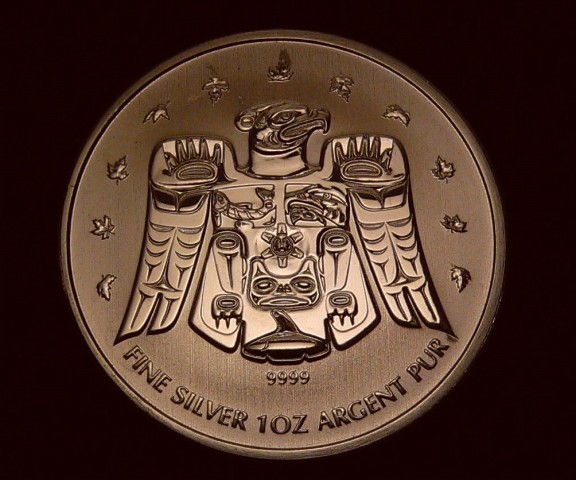 Note: When I say 'legal' I'm referring to the rules set out by ANA or any of the major grading services. Edited by Telfer
12/07/2008 12:53 am
|
|
|
|
Valued Member
67 Posts |
I do not believe there is a legal definition of proof. Does the Mint call this a proof?
|
|
New Member
 Canada
36 Posts |
The Royal Canadian Mint?......hahaha! They dont even list this coin on their website...nevermind publishing any info on it. |
|
Pillar of the Community
Canada
598 Posts |
The Charlton guide says basically that a proof is a coin struck 2 or more times from specially prepared dies and planchettes, and handled specifically to preserve the surfaces. The RCM has changed the style of proofs several times eg. mirror/frosted, background/relief combinations. Edited by IBGolden
12/07/2008 02:08 am
|
|
Pillar of the Community
United States
869 Posts |
That is bullion not a coin. Do they have a date on them? Proof or not it will look the same when melted. LOL
Edited by coindexter
12/07/2008 12:57 am
|
|
Moderator
 United States
6563 Posts |
Quote:
That is bullion not a coin. Some bullion coins are proofs |
|
Pillar of the Community
United States
3098 Posts |
Quote:
But what if the fields are satin textured with reflective relief...not necessarily acid-etched and struck only once. Haha! My 82 Gold Maple looks just like that! The queen was shiny but the background was the "satin finish." I took it to a coin shop and try to fob it off as a Proof, but then he said it was just a regular strike. I asked "really?" so the store boss came and told me that most Canadian bullion coins have this effect, but to have a maple from the 80s that still keeps its effect is not that common. So... in the end I learned it wasn't proof, but "had a cool effect" |
|
New Member
Canada
36 Posts |
Coindexter, The silver maple leaf has a date and a $5 dollar value.
It is legal tender, so yes it is a coin...as well as being .9999 bullion.
|
|
New Member
Canada
36 Posts |
|
|
Moderator
United States
6563 Posts |
The CCF Glossary has a wealth of knowledgeQuote:
Proof
A coin usually struck from a specially prepared coin die on a specially prepared planchet. Proofs are usually given more than one blow from the dies and are usually struck with presses operating at slower speeds and higher striking pressure. Because of this extra care, Proofs usually exhibit much sharper detail than regular, or business, strikes. PCGS recognizes Proofs (PR) as those struck in 1817 and later. Those coins struck prior to 1817 are recognized as Specimen strikes (SP). Quote:
Proof dies
Specially prepared dies, often sandblasted or acid-picked, that are used to strike Proof coins. Often, the fields are highly polished to a mirrorlike finish, while the recessed areas are left "rough"; on coins struck with such dies, the devices are frosted and contrast with highly reflective fields. Matte, Roman, and Satin Proof dies are not polished to a mirror-like finish. Quote:ProoflikeTerm to designate a coin that has mirror-like surfaces, the term especially applicable to Morgan dollars. Those Morgan dollars that meet PCGS prooflike standards are designated PL.
|
|
Pillar of the Community
United States
869 Posts |
I always thought they we called bullion rounds. Not coins.  Eather way it looks cool Telfer. How hard is it to buy silver near spot in canada? |
|
Moderator
United States
6563 Posts |
I suppose that a simple determination between a round and a coin of bullion would be whether or not it has a value associated with it such as the ASE. |
|
Bedrock of the Community
United States
12437 Posts |
Exactly, a coin will have a denomination backed by a legitimate government. A round would only display weight and purity with no denomination.
|
|
Valued Member
67 Posts |
If the coin has a denomination it is generally called a coin.
|
|
New Member
Canada
36 Posts |
Coindexter, How hard is it to buy silver near spot in Canada?
Almost impossible in any large quantity.
A Canadian citizen cant just walk into his own national mint and buy a hundred coins.
They will sell you five coins a day at $30.00 an ounce.
Thats $10.00 for the silver, $1.00 for the strike, and $19.00 for the velvet case.
Plus tax!
|
|
Pillar of the Community
United States
869 Posts |
What is on the other side of that coin, Does it say $5 the date and a picture of the Queen on it?
|
| |
Replies: 24 / Views: 2,837 |










 Posted 12/07/2008 12:15 am


