| Author |
 Replies: 31 / Views: 2,638 Replies: 31 / Views: 2,638 |
|
Pillar of the Community
United States
1807 Posts |
|
|
|
|
Pillar of the Community
United States
1219 Posts |
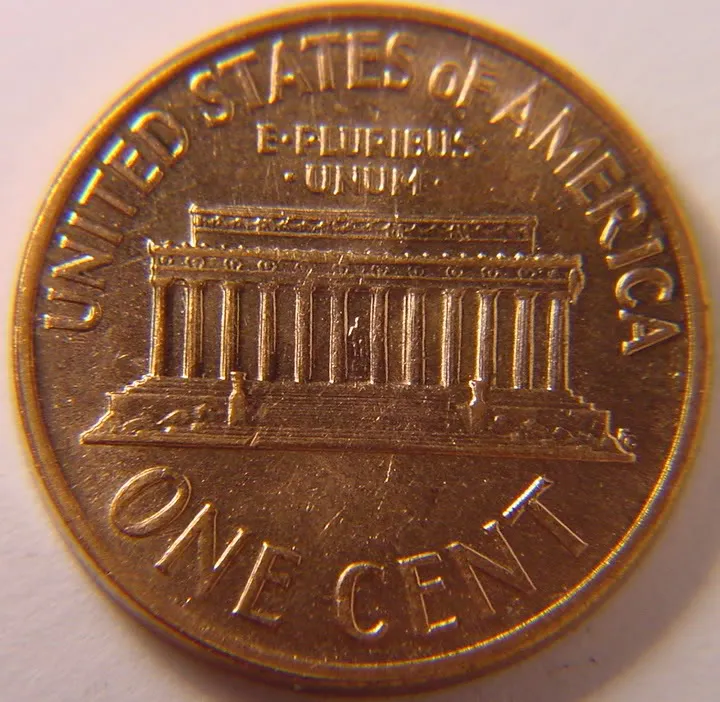
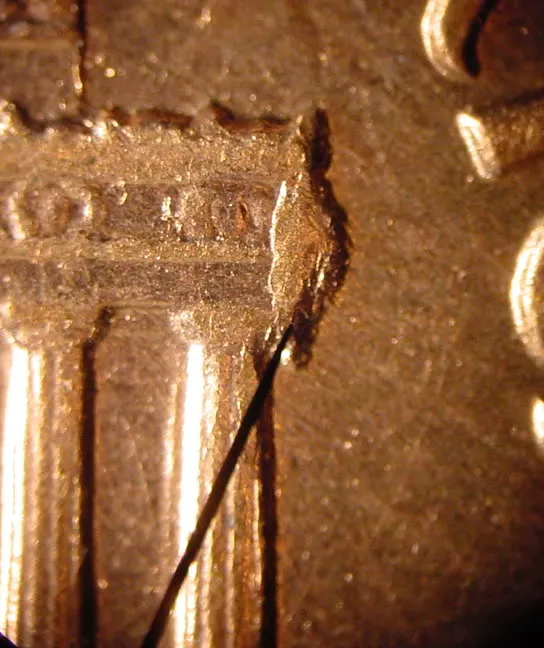
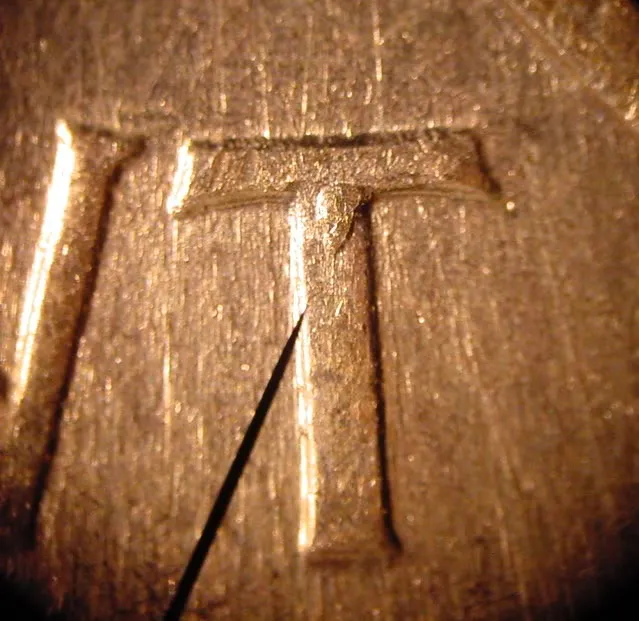
Not unusual, once the chips occur on the die, thousands of the same coin could be produced.
|
|
Pillar of the Community
United States
1126 Posts |
I agree with Morgansrmine. I decided to search a roll of 1960 Lincolns in a plastic tube I had purchased at a local B&M. Only the top one was a 1960 the rest were beautiful Red 1957 Wheats with the same error, a die crack on Lincolns forehead.
|
|
Pillar of the Community
United States
1126 Posts |
Oops Forgot the Pictures of the 1957, Sorry 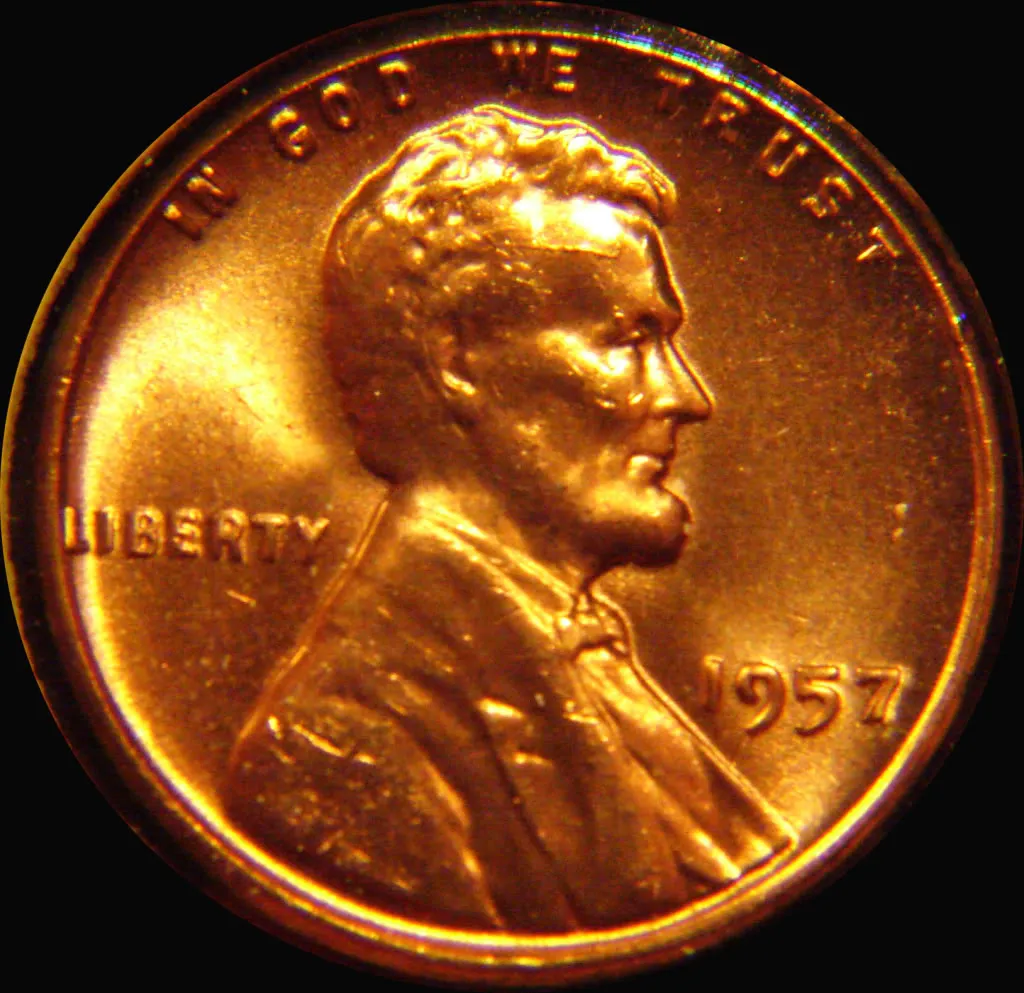 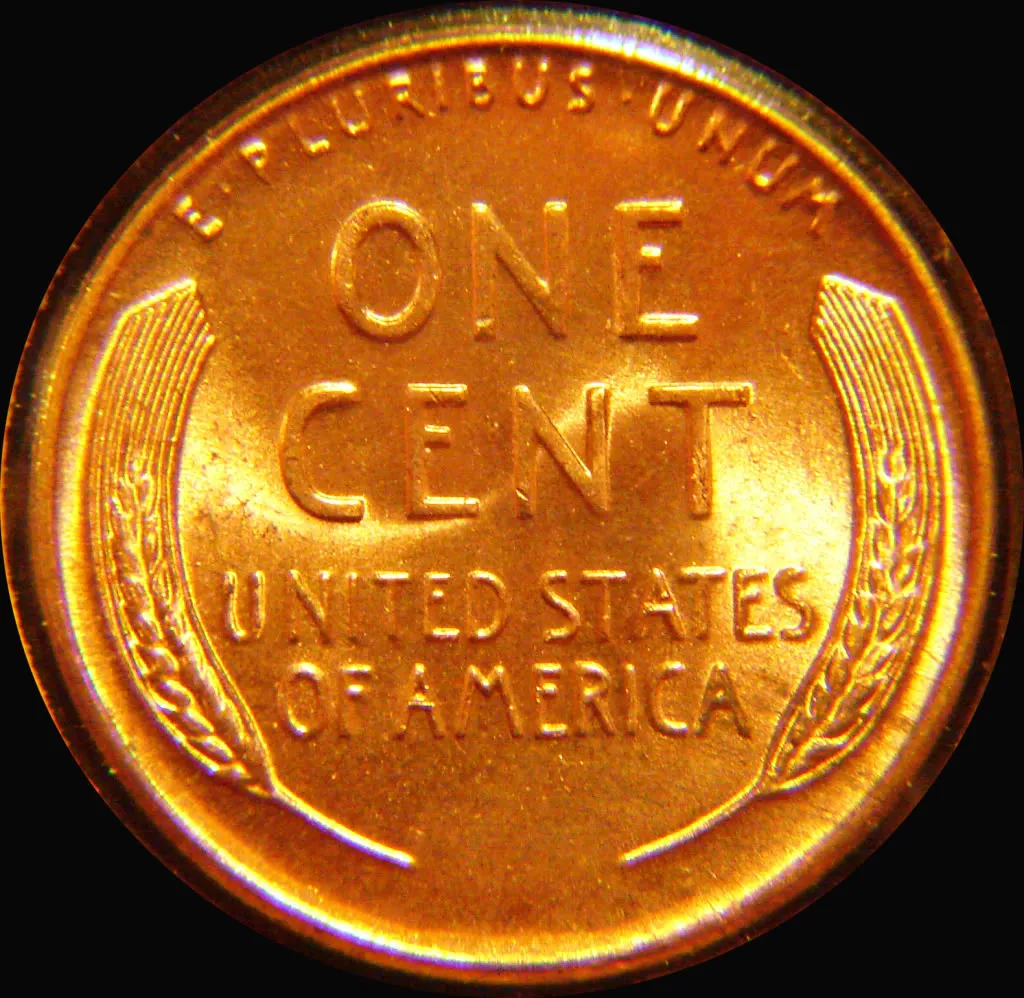 |
|
Pillar of the Community
United States
7629 Posts |
It is LIKELY that you will get multiple coins with the same die chips if they are in an original roll. Having seven die chips isn't too far out of the norm for 1960.
And die chips, die cracks, and the such are not errors. They are a normal part of die wear.
|
|
Pillar of the Community
United States
5700 Posts |
CHUCK, why would die breaks and die cracks not be considered errors, if the mint wanted to have coins look that way(with a db or dc ) why dont they let the die being used,go till it totally falls apart.I know this seems messed up however these things were not intended to be seen on the original design, I see your opinion, and I do not see why these are not the VAMS of the LMC's or errors. I just feel that they are errors and anything the mint did not intend on being freely released, or not the "norm"is in my opinion, a form of an error, unless there is another word for this I do not think all concerned wanted things like this to be released to the public, JUST MY OPINION, HOPE YOU ARE WELL, MIKE |
|
Pillar of the Community
United States
4113 Posts |
 I have 26 1999P Lincoln Cents from the same BU Roll with the identical die crack from the top of Lincoln's head down his forehead, same indentical start and end on all 26 coins. Same thing with 14 Arizona State Quarters BU Roll, on the reverse, same die chips by the initials and going up into the banner, same chips in the same place on all 14 coins- Indentical! Edited by chuckster 125
12/08/2008 7:02 pm
|
|
Pillar of the Community
United States
5700 Posts |
chuck, this is an interesting paragraph from the "antique web" site regarding "starting a coin collection"
This of course is just their opinion:Error varieties are any condition, which may have existed resulting in a coin being struck and getting into circulation in a condition of appearance to be other than what was intended by the U.S. Mint. Simply said if it looks different than all the other s as a result of a mint mistake and not tampering or defacing by an individual, than it is an error, and they tend to be worth more.
BE WELL, MIKE
|
|
Bedrock of the Community
United States
12437 Posts |
Quote:
why would die breaks and die cracks not be considered errors They are not considered errors because they are a normal part of the die aging/wearing process. They are also exceedingly common so that kills any "potential value" they may have. Morgan/Peace VAMS were never designated for minor die chips or cracks, there had to be a design difference or a die break or clashed letters- major things like that. There will never be a die classification system like VAMs for Lincolns because of the fact that tens of thousands(if not hundreds of thousands) of dies are involved. They mint more Lincolns each year than the entire mintage run of Morgan and Peace dollars combined. The Mint actually does tend to mint coins until the die practically falls apart- that is how a Cud occurs. That is a true error and one that is relatively rare and does bring a premium. |
|
Pillar of the Community
United States
5700 Posts |
If I read this right you say that this is a "normal" part of die aging/wearing process? 1st the die aging process in the "MORGAN"dollars have thousands of die breaks, die cracks, chips, doubling, gouges, etc, and these are all considered errors, and some people collect them and some do not.
|
|
Valued Member
United States
301 Posts |
I would thing a large interior die break would be an error
Jazzcoins Joe
|
|
Pillar of the Community
United States
5700 Posts |
If I read this right you say that this is a "normal" part of die aging/wearing process? 1st the die aging process in the "MORGAN"dollars have thousands of die breaks, die cracks, chips, doubling, gouges, etc, and these are all considered errors, and some people collect them and some do not. I did not want to create a frenzy, just state my opinion, obviously, not only my own opinion, but others as well.I do not see how things , in your mind, like a Cud is an error, and like in the photos above of die chips are not an error, when a chip is just an earlier die state, of what could be a Cud and "you" are calling only one an error. This could not be further than what I feel to be true, as the article I have quoted above states," Error varieties are any condition, which may have existed resulting in a coin being struck and getting into circulation in a condition of appearance to be other than what was intended by the U.S. Mint. Simply said if it looks different than all the other s as a result of a mint mistake and not tampering or defacing by an individual, than it is an error, and they tend to be worth more." BE WELL, MIKE - PS: THIS IS AN OPEN FORUM TO SPEAK YOUR OPINION AND I MEAN NO-DIS RESPECT TO ANYONE AT ANYTIME!!  please see the Red Book, 2008 edition, pages 390-394, MISSTRIKES AND ERROR COINS. |
|
Pillar of the Community
United States
3507 Posts |
Hi, I am sorry to say that some assessments are a "little rough around the edges". It has been said, "1st the die aging process in the "MORGAN"dollars have thousands of die breaks, die cracks, chips, doubling, gouges, etc, and these are all considered errors, and some people collect them and some do not." That is not accurate. VAMS are die varieties identified by die cracks and chips and the like, used as die markers. Die markers are things that occur as a die is used. Things like cracks, chips, scratches, polishing lines and the like are factors of die use and die wear and they are not errors. They are visible things on a coin that are related to die wear. A VAM is not an error, never has been and never will be. VAMs are die varieties. An ERROR is an unintended mishap involved with the minting of a coin or coins that is outside the accepted specs set by the US Mint. To put it simply, die cracks and chips are considered normal by the Mint and therefore cannot be an error. A die break is a more catastrophic failure of a die that is not within the expected or accepted norms at the Mint. A large die break can be considered an error. Also, that is what they are talking about in the Red Book when they say under the heading DEFECTIVE DIE: "A Coin showing raised metal from a large die crack, or small rim break" These are considered as a defective die. They also say: "Prices shown here are for coins with very noticeable, raised die-crack lines or those for which the die broke away, producing an unstruck area known as a Cud." The reason they say this is that these are considered errors as they are outside the specs of what is normal and accepted by the Mint. They exclude coins such as ones "that show evidence of light die cracks, polishing, or very minor die damage" as having no value. That is because they are not errors and fall within the normal specs established by the Mint. It is important to mention that the definition of "Error" as seen on the antique website is a poor definition and was more likely written by someone with very little numismatic experience where errors are concerned. Thanks, Bill |
|
Pillar of the Community
United States
5700 Posts |
Bill, 1st let me say I am grateful for your reply.I have much to learn, also I have always looked at VAMS as an error"obvious the mint did not intend any of these outcomes to be released and along those lines also figured this and other distorted forms of coins to be errors." I would ask you to please direct me to any printed information about errors, to learn just what you speak of as" outside the specs of what is normal and excepted by the mint" ( this I always thought was an error).I also would like to know what is the difference between a DEFECTIVE DIE AND AN ERROR, they both produce an "outside the specs of what is normal at the mint product"! thanks again for the information, MIKE ps:I know you state that VAMS are not errors, however I always thought that this form of "die markers or defective dies, were always not what was intended, large or small, errors! " Edited by Morgans Dad
12/09/2008 5:36 pm
|
|
Pillar of the Community
United States
3507 Posts |
Howdy, You say: "Bill, 1st let me say I am grateful for your reply. I have much to learn, also I have always looked at VAMS as an error ,"obvious the mint did not intend any of these outcomes to be released and along those lines also figured this and other distorted forms of coins to be errors." That's where the difficulty comes in. You are assuming that they did not want them to be released. The fact is that if they intended every die to be perfect, they would have discarded most of them. They actually did intend that imperfect coins be released as the dies were still in use long after tiny hairline cracks and chips developed. If the die didn't crumble, they used it:-) It was normal to do so. That is evidenced by all the coins found with these minor imperfections. Look , for example at Shield nickels. It's difficult to find one without die cracks. It was very normal to use a die until it shattered. On coins struck with high pressure such as Morgan dollars and coins struck on hard metals like Shield nickels, the Mint didn't really concern themselves with tiny die cracks or chips. It was a part of the game, so to speak and coins were produced with less than perfect dies all the time. Since tiny cracks and chips were accepted, once they occurred, any coin struck after evidence of a minor crack or chip was indeed intended to be released. Therefore, not an error. If you take out your RedBook and go to the error section I might be able to make your question with respect to DEFECTIVE DIES and ERRORS a relatively easy one for me to answer. A Coin Struck by a defective die is one category of error. The die has to be defective enough to have coins struck by that die considered as an error. A Huge Break or a huge rim to rim crack, or a Cud would be examples of what the Mint would not want to escape. Those would be examples of this one type of error (Defective Die) that would be outside what the Mint would consider normal. Errors are mishaps in the minting process that relate to the planchet or the striking of the coin itself. As far as a publication, It is not because I am a columnist for them that I recommend their book, but there is a pretty good section on "Error and Variety" coins in the CoinWorld Guide to U.S. Coins. In the 2007 edition, the section begins on page 399. They talk about die chips, cracks, breaks and Cuds in a subsection starting on page 402. The subsection is called "Die varieties, states and stages". In this section they include abraded dies, BIE (die chips), clashed dies,design mules, die breaks,chips, cracks,gouges,scratches, Doubled dies,Engraving varieties, misplaced dates, missing mintmarks, mint mark varieties, rotated dies and worn dies. The material pertinent to this discussion is on page 404 where there is a sub,sub section called "Die breaks, chips,cracks, gouges, scratches. The reason they are discussed under that heading is that they are a function of die wear and as such constitute die varieties. They have separate and distinct sections for what are "Planchet Errors", listing alloy errors, plating errors, damaged planchets (before striking),struck fragments or scrap, Incomplete planchets, laminations, split planchets, thick and thin planchets, and wrong metal planchets). Then a section for "Striking Errors", broadstrikes, brockage and capped die strikes, double and multiple strikes, filled dies, Indented errors, off-center struck coins, coins struck partially in the collar, struck through errors and weak strikes. The reason that they place die breaks, Cuds, cracks, gouges and scratches under the Die varieties section is because these things are markers that give us an indication of the stages and states of the dies. They are not errors. They are an indication of the wear of a die. Logically, VAMS are die varieties using cracks, chips, gouges, etc. to identify particular dies and die pairs that were in use. VAMs are all about die stages and states, not errors. There is much confusion as to what people want to call errors but in the error and die variety world we have to go beyond some of the common misconceptions when we categorize which is which. I hope this helps. Thanks, Bill Edited by foundinrolls
12/09/2008 7:46 pm
|
|
Pillar of the Community
United States
5700 Posts |
BILL, AGAIN THANKS GO OUT TO YOU.I HAVE BEEN READING UP ON VAMS, (I FORGET ALOT), I see that there is a use of words that I seem to have a difficult time with, for instance, VAMS, are a study about the "die varieties and their differences", I see the book uses the term "significant varieties", in which the authors go on to discuss things under this heading, planchet errors, hub and die breaks and cracks, dbl'd dies, dual hub dies, dbl'd dates, dbl'd m/m's, clashed dies, die scratches and gouges, overpolished dies, m/m variations, dots, master hub and die doubling and striking errors also Machine Doubling, rotated dies and"other errors". This is where in lies the problem with me I take this to mean all the above I have stated, according to this 1991 edition, as the last line states, AND OTHER ERRORS.Bill you say you are a columnist, so I hope you can see that words are taken differently to those who read, and this is the area I have always been of the thoughts that these (significant die varieties) are in my eyes, whether large, as to make it into this VAM edition, or even smaller, these things exist and I collect them and consider them ERRORS. I am still of the belief that all the coins that were released from the mint were not done so to their willingness, in the earlier days coins were released from the mint in large "sacks" and there were no one checking for anomilies or other than the norm when the coins left the mints.I know things have changed for a while now, however I do not believe that the mint knowingly let all the coinage that is out there today, from days long past, be released , knowing that these things were in the "sacks', this is for sure one of the reasons that the quality control for coins has honed their skills and this does not take place, to the same degree , anymore. I want to assure you that I have learned a great deal from this post and again thank-you for your expertise and experience in your words and the manner in which you have presented such, BE WELL... |
| |
Replies: 31 / Views: 2,638 |
To participate in the forum you must log in or register.
Disclaimer: While a tremendous amount of effort goes into ensuring the accuracy of the information contained in this site, Coin Community assumes no liability for errors. Copyright 2005 - 2026 Coin Community Family- all rights reserved worldwide. Use of any images or content on this website without prior written permission of Coin Community or the original lender is strictly prohibited.
Contact Us | Advertise Here | Privacy Policy / Terms of Use
|
| Coin Community Forum |
© 2005 - 2026 Coin Community Forums |
| It took 0.52 seconds to rattle this change. |
 |
|












 Posted 12/08/2008 2:42 pm


