This is another tiny and very unusual bronze coin, having the pelekus, the well-known badge of Tenedos, on both obverse and reverse. It's significance was much disputed in antiquity. Aristotle's explanation, that the axe represented what a royal law-giver of Tenedos would have punished adulterers, has not been supported by evidence. Professor Ridgeway's view was that the axe on the coins is the representation of a primitive barter-currency of axes, conjectured by him to have existed at Tenedos. On the coins, from circa BC 420, the double-axe is accompanied by a bunch of grapes as a constant symbol, suggesting that from the fifth century BC the double-axe at Tenedos was regarded as an attribute or cultus-object of Dionysos, who may have been worshipped as Dionysos Peleko
According to Plutarch, the Lydian word for the double-bitted axe was the labrys, and the Romans knew the double-headed axe as the bipennis. In Iran a similar shafted weapon, the sagaris, was used by the horse-riding ancient Saka and Scythian peoples.
Located off the coast of Troas, Tenedos is a small island with two ports, important despite its small size due to its strategic location at the entrance of the Dardanelles. It's position in the straits and it's two harbours made it important to the Mediterranean powers over the centuries. For nine months of the year, the currents and the prevailing wind, the Etesian, came, and still comes from the Black Sea, hampering sailing vessels headed for Constantinople. Ships had to wait at Tenedos for a week or more, to catch the favourable southerly wind. Tenedos served as a shelter and way station for ships bound for the Hellespont, Propontis, Bosphorus, and places farther on. Several of the regional powers captured or attacked the island, including the Athenians, the Persians, the Macedonians under Alexander the Great, the Seleucids, and the Attalids.

Tenedos is mentioned in both the Iliad and the Aeneid, in the latter as the site where the Greeks hid their fleet near the end of the Trojan War in order to trick the Trojans into believing the war was over and into taking the Trojan Horse within their city walls.
It was at Tenedos, along with Lesbos, that the first coins with Greek writing on them were minted.

Troas, Tenedos Island. 4th century BC.
Obverse: T-E above double axe, caps of the Dioskouri on either side of the shaft. Reverse: T-E above double axe, unidentified symbol to left of shaft, bunch of grapes to right. Bronze. Diameter: 8 mm. Weight: 0.8 gr.
Auction reference for a similar coin sold: Gerhard Nachfolger Auct. 275. 22/9/11'. Lot 3745. The coin appears to be rare and unpublished.
Initially I thought that the unidentified symbol was a cornucopia, but it may be a monogram?
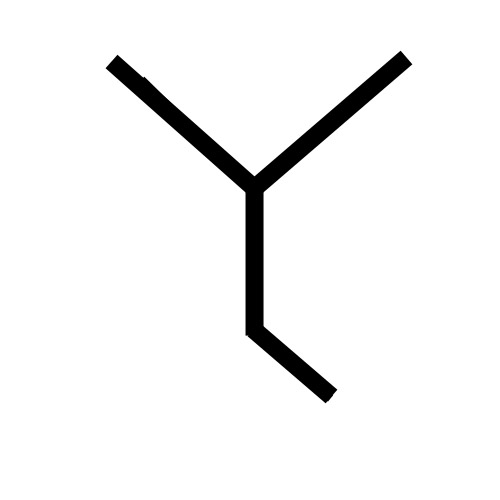
Does anyone know what this represents?




 Posted 12/14/2020 7:56 pm





