| Author |
 Replies: 13 / Views: 3,910 Replies: 13 / Views: 3,910 |
|
|
Pillar of the Community
United States
1415 Posts |
Just to mix it up a little. I just didn't know where to put this. Would like the 'World'ly people to see, but have evaluated as well. Coin is much darker in person. Lighten up to see detail. I HOPE? So for now: 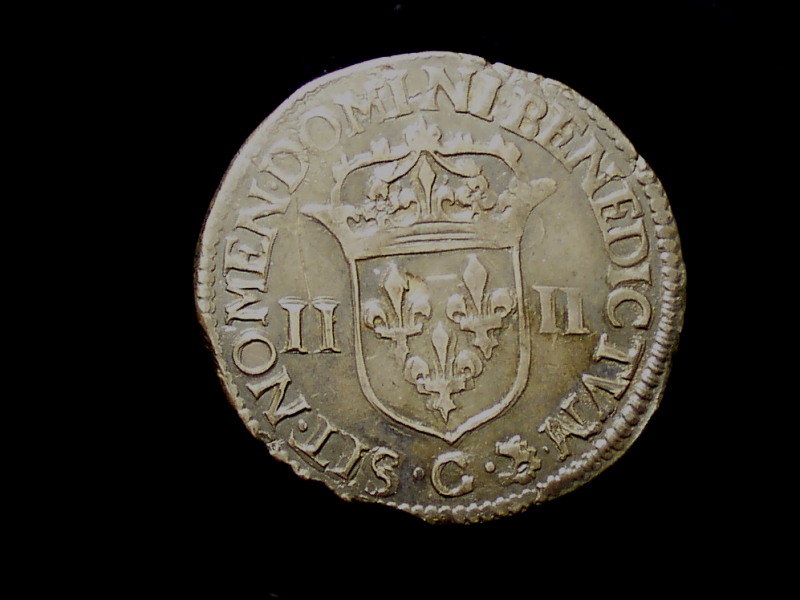 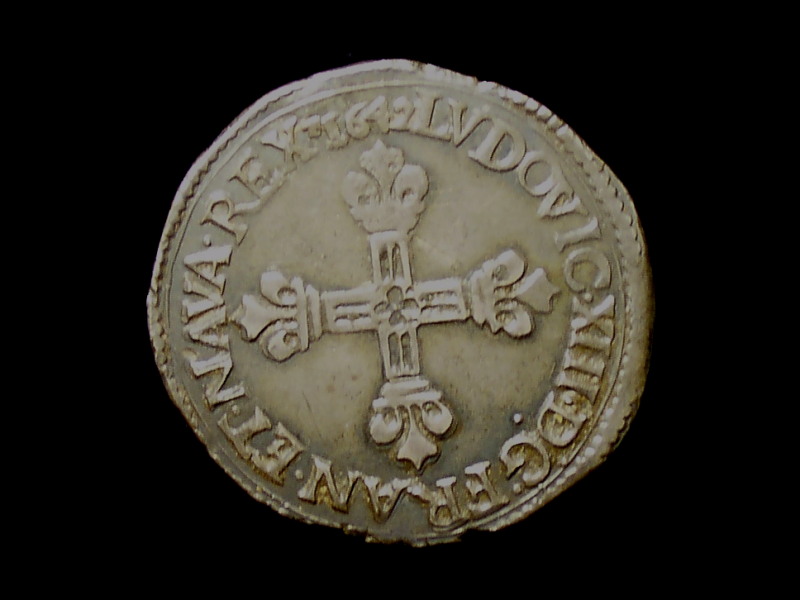 |
|
|
|
Moderator
 United States
23731 Posts |
Very nice coin. Is that some doubling I see? I really have no idea as how to grade this.
|
|
Pillar of the Community
 United States
1415 Posts |
Yup, to the doubling. I don't know if that means anything. I was kinda assuming it meant nothing in the long run. But any help on that would be appreciated. -  |
|
Pillar of the Community
United States
5318 Posts |
Fascinating coin!  |
|
Valued Member
United States
365 Posts |
Great looking coin! I don't know enough (yet!) about these older era coins to tell you about grading, but I can tell you it's Louis the 14th, and coins from his long reign seem to be among the more popular and sought-after in the genre...
|
|
Pillar of the Community
United States
1415 Posts |
 to CCF SeriousCERES, I think this is a Louis XIII. If you check the reverse at around 3 o'clock you will see 'XIII'. I think this denotes Louis XIII. Louis XIV didn't rule until the next year. Also I think it is from the Poitiers mint. Check obverse at 6 o'clock. I am not sure what the mark next to it is. Any ideas? |
|
Valued Member
United States
365 Posts |
Oops, definitely 13 and not 14, sorry about that! The "C" mint mark at 6 o'clock looks like it might be next to a lion's head privy mark (a gaping maw?...). I'm hoping to pick up some sort of guide to these earlier coins in a couple weeks while on vacation in France. After some good old fashioned book lernin' (sic) I should be able to figure these guys out a little better!  |
|
Pillar of the Community
United States
1415 Posts |
Mint mark to me looks like a 'G'.
Checked in Krause and coin does not match the 'Saint Lo' mint coins. There is no pic of the Poitiers.
|
|
Pillar of the Community
United States
2669 Posts |
Not sure if it will help, but there are 2 places I've noticed have the "II II" separated by something. First one is Mauritius (Isle of France), where the reverse is noted as having "An anchor crowned, between II-II, COLONIAR : BRITAN : MONET : 1820". The same coins were created with IV-IV, VIII-VIII, and XVI-XVI at the sides of the anchor.
The second is West Indies, Trinidad, 1822, where it has the same reverse design with the II-II.
This is from a super-old book so could be outdated, but just thought I'd mention it in case it was helpful in the hunt.
|
|
Pillar of the Community
United States
671 Posts |
That's an amazing French coin! Alas, I have no idea how to grade these...
|
|
Pillar of the Community
United States
6447 Posts |
I don't mind making a guess on grade. I'd call this coin "good VF". All design elements are clear and the edge beads are strong (except where they are weakly struck or run off the edge of the planchet). The patina looks original and I don't see hairline scratches or other obvious signs of abuse. I presume the irregular edges are typical for minor coins from this period.
Since I know nothing about these coins, I wonder if anyone can answer a couple questions. What is this coin made of, and how large is it? Also, how many quarter-ecu coins do you need to equal one franc?
|
|
Valued Member
United States
365 Posts |
Hey Jaobler!
Thanks for your question, it prompted me to do a little bit of checking to make sure I had it straight myself! The term 'franc' is mostly considered to refer to coinage after the French Revolution, from 1792 on, even though there were coins dubbed 'francs à cheval' made in the 14th century to pay the English a ransom to free one of the early French kings. After this first occurrence of the term 'franc' you'll find an assortment of francs minted at the behest of different kings, all more or less close in value to the more dominant term, the 'livre tournois'. The 'livre tournois,' the 'ecu,' and francs were all replaced (in an era when currency reform was not as easily done as it is nowadays!) when Louis XIII came along and reformed coinage to spawn the Louis d'Or (gold) and the Louis d'Argent (silver). During the Revolution, the new leadership decided to scrap the louis (for obvious reasons) and the livres tournois--also reminded 'em to much of the old world--and brought back the term 'franc', which has a pleasant etymological link to the notion of 'liberty' (remember the first francs were to set someone free...).
So to make some sense of the Ancien Regime coins, keep this in mind:
* 1 livre tournois = 20 sols tournois
* 1 sol = 12 deniers tournois
Thus: 1 livre tournois = 240 deniers.
One caveat, there are a few regional use coin systems (like the Parisis) that circulated for centuries along with the 'official' stuff, so you might encounter other names. Hope this longish post helps ya out!
-SeriousCS!
|
|
Valued Member
United States
365 Posts |
Let me just clarify a couple points:
After Henri III (16th century) an ecu was taken as worth 3 livres tournois (or 60 sols). Ecus were made of gold. The ransom francs from the 13th century were in fact gold ecus (3.87 grams). Later, there are francs made of silver and worth less than an ecu. (So in your Star Trek Holodeck you could travel to the 17th century and, putting 4 quarter-ecus together, you could trade them in for a gold ecu, and in term exchange that for a franc-à-cheval (if you can find one easily) or 3 francs d'argent (probably not too hard) or a Louis d'or).
But to compare the value of an 'ecu' to the modern franc gets pretty well nigh impossible. The big 5 franc silver coins of the 19th century were referred to with the term 'ecu' in the common parlance, but not due to any official/mint decree aligning values between the Old Regime coins and the Germinal francs. Besides, if you were holding lots of precious metals during the crises of the Revolution and Napoleonic Empire you'd probably have done better to melt those metals down and sell rather than take some bank exchange on them...
|
|
Pillar of the Community
United States
1984 Posts |
Ordinarily before I grade something I would like to know everything about what it is, but I'll make an exception here and call it XF-40 in US grade terms.
|
| |
Replies: 13 / Views: 3,910 |
|










 Posted 12/15/2008 7:39 pm


