NGC -
The set comprises ten coins issued at a turning point in the history of American numismatics.Numismatic Guaranty Corporation® (NGC®) has certified a fascinating 1883 US Proof Set that was submitted for grading with a vintage presentation box designed to showcase the coins. The ten coins are in similar condition, earning grades of NGC PF 63, NGC PF 64 and NGC PF 64 BN.
The 1883 Proof Set is notable for several reasons. Three types of nickels were issued that year, and 1883 was the final year that the
Shield nickel design and
Trade dollar were available to collectors. Other coins in the set include an
Indian Head cent, a Three-Cent Piece, a
Seated Liberty dime, a
Seated Liberty quarter, a
Seated Liberty half dollar and a
Morgan dollar.
Three nickel designs in one year is certainly unusual. The final issue of
Shield nickels was circulated in the beginning of the year, alongside a new Liberty Head design. However, there was a major design issue in the new nickel: While it was printed with a "V" on the reverse, it lacked the word "Cents." A design change corrected the issue and was circulated later that year.
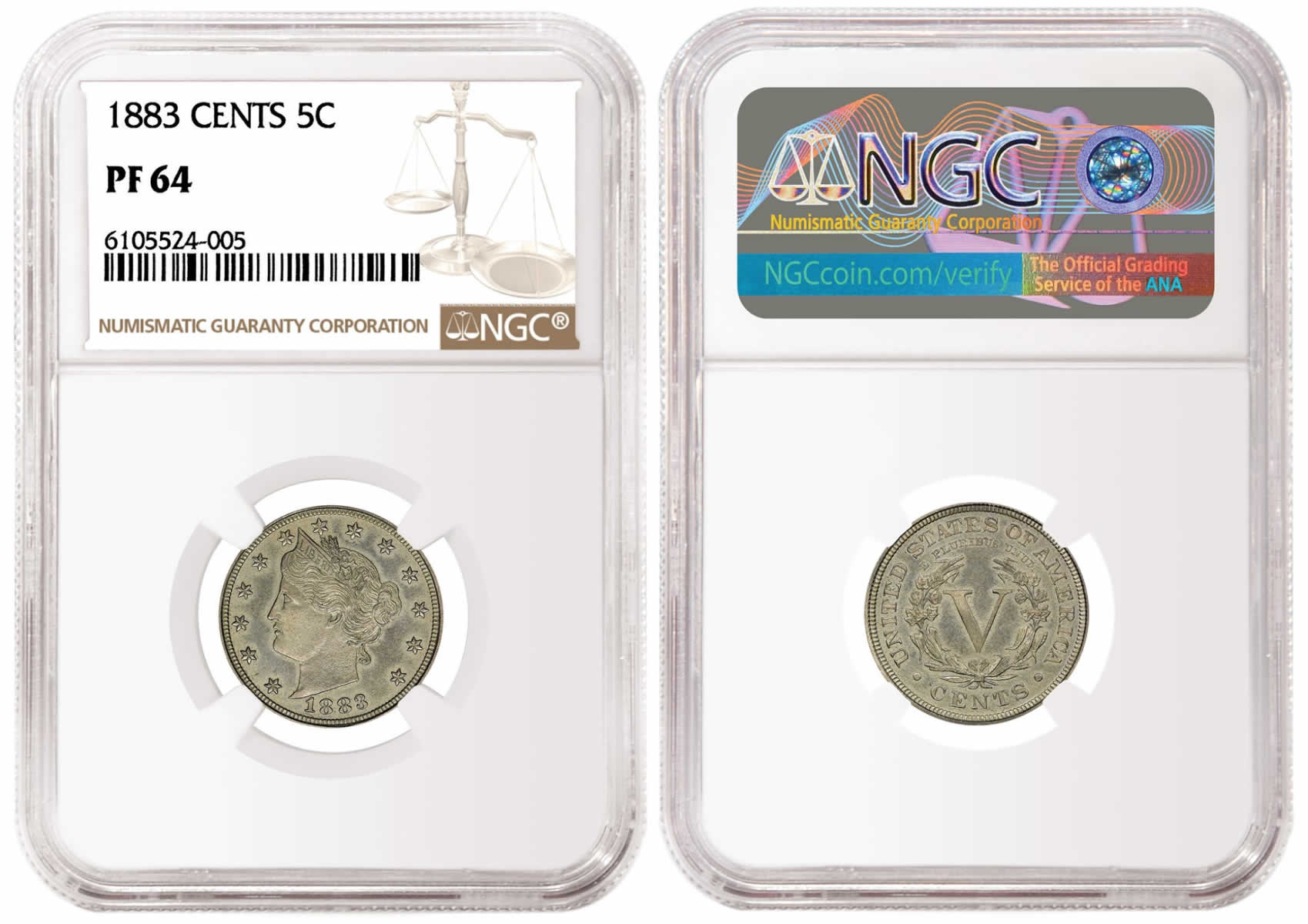 1883 Liberty Head 5 Cent with corrected reverse graded NGC PF 64
The
Trade dollar was first struck in 1873 in a bid to compete with other nations' large silver trade coins, primarily in East Asia. While the
US Trade dollar was quickly demonetized in 1876, the Mint continued to strike Proofs for public sale until 1883.
At the time this set was produced, the US Mint did not offer display options for coins. However, decorative boxes like the one submitted with this set could be purchased from outside vendors, some of whom likely sold the coins not far from where they were struck at the Philadelphia Mint.
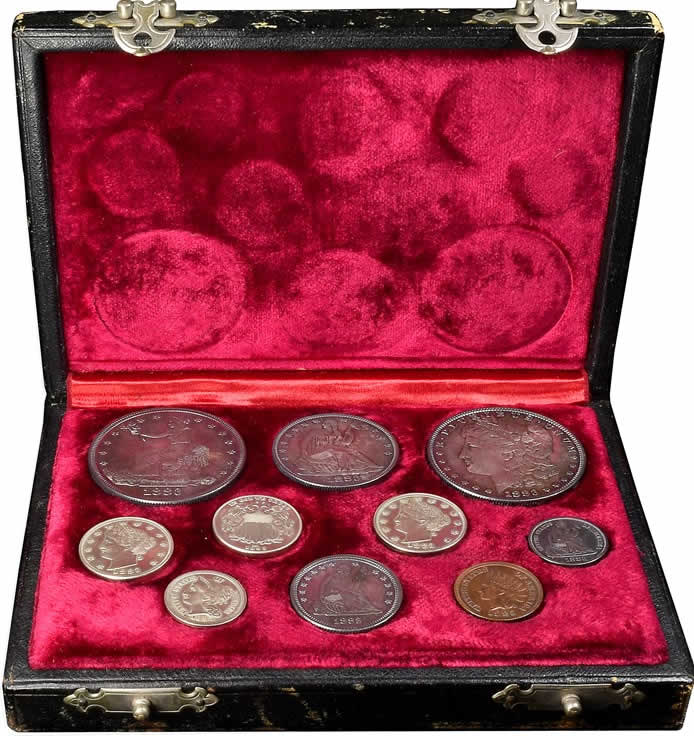 The 1883 Proof Set arrived at NGC in this decorative presentation box.
The
Indian Head cent was produced from 1859 to 1909. Through much of the 1880s, the cent was issued in large amounts. Comparatively, the previous two decades saw a significant decrease in production for a variety of reasons. With the conclusion of the Civil War in 1865, people stopped hoarding their coins. Additionally, a new law passed in 1871 allowed cents to be redeemed in quantity and reissued by the Treasury, which caused low mintages from 1872 to 1878. When the surplus from the new law was worked off in 1879, cent mintage rose rapidly.
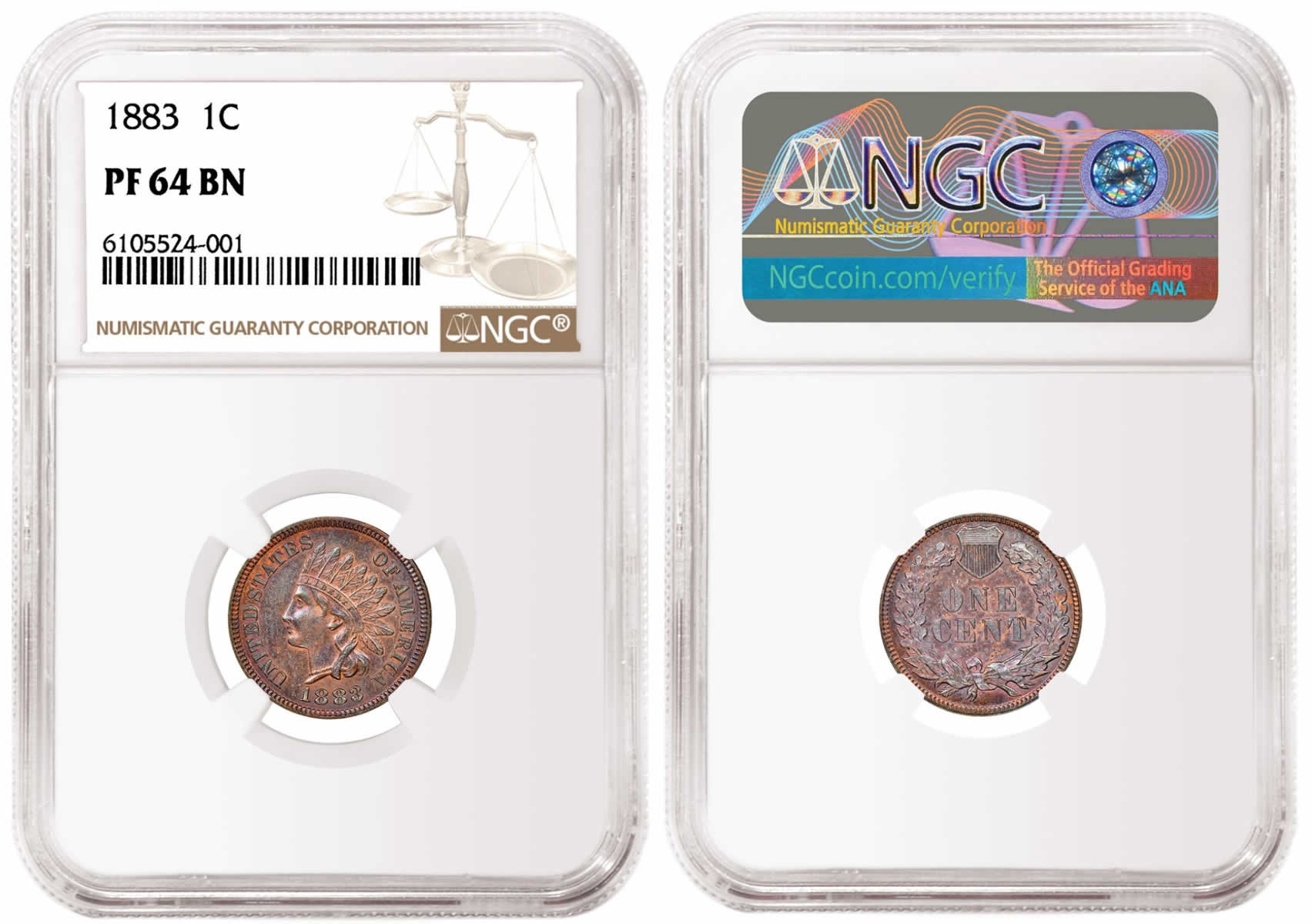 1883 Indian Head cent graded NGC PF 64 BN
Three-Cent Pieces were similarly affected by the 1871 redemption law. The demand for the coins had dropped considerably after 1871, but the Mint continued to issue the pieces. In 1881, over one million Three-Cent Pieces were minted. However, production drastically fell in the following years, and by 1890, the coin was discontinued.
The Seated Liberty design appeared on a large majority of US silver coins from the 1830s up until 1891. The half-dime (discontinued in 1873), dime, quarter, half dollar and silver dollar all featured Lady Liberty on the obverse, sitting on a chair and holding a shield. The reverse design depended on denomination. Half-dimes and dimes showcased a wreath, and the quarter, half dollar and dollar depicted an eagle with a shield.
The
Morgan dollar was issued from 1878 to 1904 and again in 1921. The
Morgan dollar was the first standard silver dollar minted after the passage of the Coinage Act of 1873 and unseated the previous
Seated Liberty dollar design.
Though the coins in the set have a face value of only $3.04, the numismatic value is much higher. An NGC certified 1883 10-piece Proof Set with comparable grades (ranging from NGC PF 61 to NGC PF 65) realized $13,225 in a Heritage Auctions sale in January 2012.







 Posted 04/21/2021 10:16 pm





