| Author |
 Replies: 15 / Views: 2,329 Replies: 15 / Views: 2,329 |
|
|
New Member
United States
23 Posts |
Hello all!  I am new here, and this is my second post ever. A part of the reason I joined here is that I've been struggling with identifying PVC and not able to find the info out there on the webs. So, I bought two slabbed coins recently that had little green flakes or flecks on them, one NGC, one PGCS. I assumed it was PVC, and scratched my head at how this keeps happening with slabbed coins! I have also wondered whether it really is PVC and whether I'm being paranoid. I returned one of the slabs to the seller, but I am still deciding what to do about this eBay-bought Weimar Germany coin in an NGC slab. It seemed perfect and exactly what I was looking for—until I noticed green flakes INSIDE the edge lettering, and seemingly nowhere else? It's possible there may be tiny traces on the coin's faces, but not like what you see in the lettering. I'm confused how the PVC—if that's what it is—made it into the lettering, versus just on faces, and unclear what to do. It's a 1926 coin, .50 silver fineness. NGC said I could send it in for an "appearance review," determine if it was going to keep the grade (which is MS-64) and if it would benefit from conservation. I would love to keep the coin, but I am a bit nervous about NGC messing with it. I'm also not a member there. I'd really appreciate folks' assessment based on photos as to whether it's PVC or something else, and if you've had experience with NGC appearance reviews and conservation. Thanks & happy Friday to all! Nathaniel 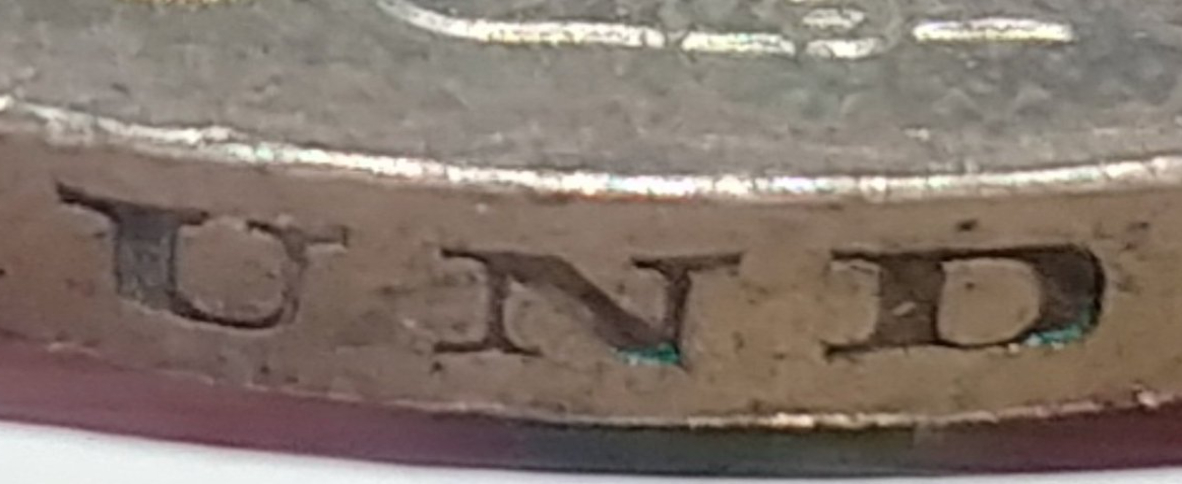 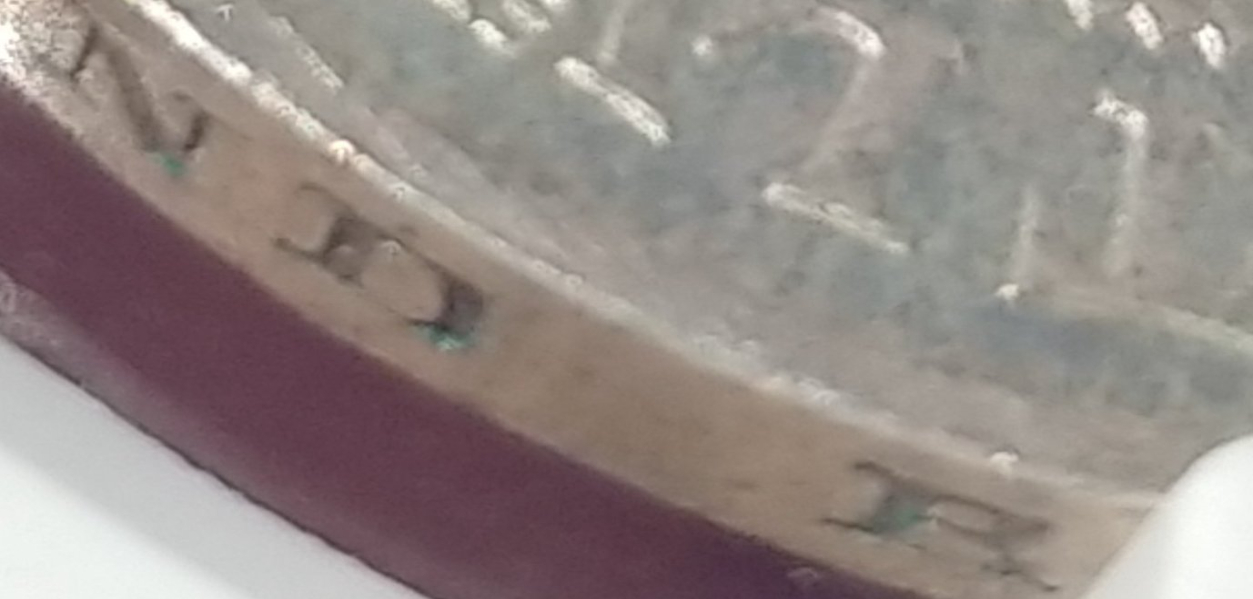 |
|
|
|
Pillar of the Community
 United States
6666 Posts |
Can you post pics of the whole coin please. Front and Back
|
|
Moderator
United States
34467 Posts |
@san, first welcome to CCF. Second, are these images from the same coin you posted here? http://goccf.com/t/398061If so, then I'm going to combine both of these threads into a single one as that is best practice. Thx. "If you climb a good tree, you get a push."
-----Ghanaian proverb
"The danger we all now face is distinguishing between what is authentic and what is performed."
-----King Adz
|
|
New Member
 United States
23 Posts |
|
|
New Member
United States
23 Posts |
Quote:
first welcome to CCF. Second, are these images from the same coin you posted here? Thanks! Actually, no, but I should have probably been more clear about what each coin was. That one is a raw 1931 5 Reichsmark, this is a 1926A "Lubeck" 3 Reichsmark. |
|
Pillar of the Community
Canada
5406 Posts |
Not even sure how that straight graded. Obvious green stuff in the lettering .
The reverse has enviro damage based on NGC photos .
Based on extensive experience in coin restoration , that coin
has been played with in the past!
An appearance review is in order .
Edited by Pacificoin
04/23/2021 4:21 pm
|
|
Moderator
United States
34467 Posts |
Ok perfect. I just fixed the titles so that it is more clear.  "If you climb a good tree, you get a push."
-----Ghanaian proverb
"The danger we all now face is distinguishing between what is authentic and what is performed."
-----King Adz
|
|
Pillar of the Community
United States
9797 Posts |
I believe it is PVC, it looks like it's still gooey, that is what it looks like before it breaks down entirely and becomes the acid that etches the coin. A swish of acetone would eat it up safely, but not in a slab. I also agree it had other issues based on the reverse, it should not have ended up in a slab that way. I've seen plain old corrosion that is also the same look of green, but it's always harder and doesn't eve have a shine like what I'm seeing in OPs photos. If it was out of the slab a touch with a rounded toothpick would tell you pretty quick what it was, sticky? Then PVC Hard and crusty? then old corrosion.
"Buy the Book Before You Buy the Coin" - Aaron R. Feldman - "And read it" - Me 2013! ANA Life Member #3288 in good standing since 1981, ANS, Early American Coppers Member (EAC), Colonial Coin Collectors Club member (C4), Conder Token Collector Club member (CTCC), Civil War Token Society (CWTS) member, Liberty Seated Collectors Club (LSCC) & Numismatic Bibliomania Society member (NBS), USMex, Member in good standing, 2¢ variety collector. See my want page: http://goccf.com/t/140440 |
|
New Member
United States
23 Posts |
Quote:
I believe it is PVC, it looks like it's still gooey, that is what it looks like before it breaks down entirely and becomes the acid that etches the coin. A swish of acetone would eat it up safely, but not in a slab. I also agree it had other issues based on the reverse, it should not have ended up in a slab that way. I've seen plain old corrosion that is also the same look of green, but it's always harder and doesn't eve have a shine like what I'm seeing in OPs photos. If it was out of the slab a touch with a rounded toothpick would tell you pretty quick what it was, sticky? Then PVC Hard and crusty? then old corrosion.
@westcoin You know, I've had a couple of coins with hard little green to greenish spots that just won't come off in acetone, and wondered what that could be. What's the deal with corrosion in that form? Is there any light-touch way to remove? Does it spread? |
|
New Member
United States
23 Posts |
@pacificoin Thanks for your reply! Quote:
Not even sure how that straight graded. Obvious green stuff in the lettering .
The reverse has enviro damage based on NGC photos .
Based on extensive experience in coin restoration , that coin
has been played with in the past!
I am not really familiar with what constitutes enviro damage in the TPG book. As an ebay buyer, I was prepared to look past what you see on the reverse because the coin otherwise looked all original—almost no hairlines, nice, light toning, strong luster, etc. I'm curious what you're seeing when you say it looks like it's been played with? Quote:
An appearance review is in order . You mean from NGC? Do you have any experience with this? I guess it could bring a lower grade, which wouldn't be the biggest deal to me. I just wouldn't want them to do anything more intensive than an acetone bath! |
|
New Member
United States
23 Posts |
|
|
Bedrock of the Community
Australia
21789 Posts |
Definitely not PVC. This coin has mostly been handled between the fingers just like it should be, by those who appreciate why a silver coin should be handled in such a manner. The acidic skin oils from the fingers over the years have reacted with the silver alloy in the edge lettering. In these areas, the black silver oxide/sulfide cannot be freshly rubbed off, and so has been allowed to accumulate. The chemistry of fingerprints on a coin's surface is much the same. An acetone bath will not remove the black staining within the incuse edge lettering Because this coin, for the most part has been handled correctly, it has received a straight grade. Nice example, by the way. |
|
Pillar of the Community
United States
9797 Posts |
I was only referring to the green on the inside of the edge lettering. I had not looked at the other photos and NGC link. I agree that doesn't appear to PVC in those photos only in the incuse lettering possibly. As to what is the harder green stuff? Who knows, I just call it verdigris and move on. I'm sure it's either a byproduct or direct cause of corrosion from some material that has been in contact in the past with the metal surface. I've had some good luck in removing it sometimes with Verdi-Care (about impossible to find anymore) I bought one of the last bottles as a spare from BadThad here a couple of months ago. See what I mean: http://goccf.com/t/378882"Buy the Book Before You Buy the Coin" - Aaron R. Feldman - "And read it" - Me 2013! ANA Life Member #3288 in good standing since 1981, ANS, Early American Coppers Member (EAC), Colonial Coin Collectors Club member (C4), Conder Token Collector Club member (CTCC), Civil War Token Society (CWTS) member, Liberty Seated Collectors Club (LSCC) & Numismatic Bibliomania Society member (NBS), USMex, Member in good standing, 2¢ variety collector. See my want page: http://goccf.com/t/140440 |
|
New Member
United States
23 Posts |
@sel_69l Thanks for that interesting take! I'm curious about the following: Quote:
The acidic skin oils from the fingers over the years have reacted with the silver alloy in the edge lettering. In these areas, the black silver oxide/sulfide cannot be freshly rubbed off, and so has been allowed to accumulate.
Given that some of the "clumps" visible in the lettering are a dark green rather than black, do you think the same still applies and that it's likely a reaction to accumulated finger/body oils? I'm less concerned about the black staining than what appears to be sort of gloopy green stuff. |
|
New Member
United States
23 Posts |
@westcoin
Not having dealt with too much copper — is verdigris a concern in a similar way as PVC residue, in that it spreads, causes permanent damage, or less so?
|
|
New Member
United States
23 Posts |
I appreciate the input from everyone but I am as confused as before I asked I reckon — not sure how to @ people properly to request a reply.
|
| |
Replies: 15 / Views: 2,329 |
|










 Posted 04/23/2021 2:16 pm


