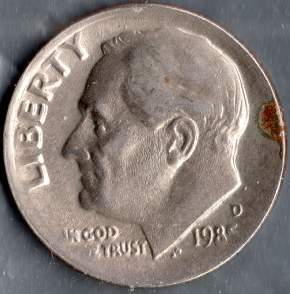
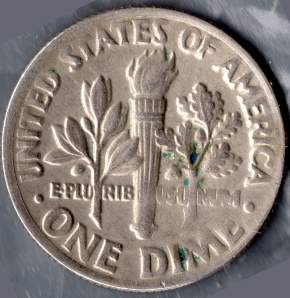
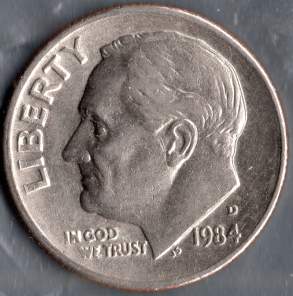
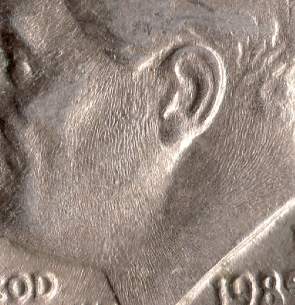
I have some interesting views on this orange peel effect.
I discovered this web site called NGC and there were a couple of good in sights to this problem.I hope I don't have copy write infringement involved .
But the two guys I will give credit for these blogs Jame Old Town E and Conder 101 thank you.
While there may be more than one way to achieve "orange peel" effect, I suspect that it is in fact due to die erosion with respect to minting of coins. This is because one may observe development of the effect through study of die states of various coins.
A classic example is the 1926-S
Buffalo nickel. Some coins entirely lack O.P.E. and are nicely struck with full details and relatively smooth fields. These are, of course, the rare examples that are worth a large premium since the fresh dies imparted good details, including peripheral details that include the bison's horn. This same pair of dies was left in use much too long, and as they wore down, they stressed and developed the metal distortions in the die that were imparted to subsequent coins.
As the die wore down, coins became less and less well struck, eventually leading to a point that the bison's horn was poorly defined, and other details distorted, particularly in the peripheral areas where the die wears down most rapidly - the orange peel effect.
We know the same die was used as the production quality progressed from "fresh" to "distorted" because study of die state progression involves looking at die cracks and positional characteristics of the mint mark that mark a specific obverse or reverse die. In addition, one may find multiple coins that show the exact same orange peel effect, since they were struck from the same dies.
This is the way I've always understood it, anyhow...
By the way, for what it's worth, the series on which I have most frequently seen O.P.E. is silver three-cent coins, and second most often on
Buffalo nickels. In my experience, it actually occurs seldom on proof gold, but that is where it is most dramatic, since it is not expected, and also the proof striking best reveals the extent of O.P.E. And of course, the effect is prized for proof gold, but collectors shy away from IIIcs and buffs that show it, knowing that it means an erosion of detail quality.
Still, I'd be interesting in further developments with your annealment hypothesis!
Conder101
Conder101
Member: Seasoned Veteran
9,427 posts
Joined: February 2, 2002
Location: East central Indiana
Posted December 10, 2008
I think James has touched on part of the problem. There is more than one type of "orange peel" surface. The one seen on the proof coins is probably from the planchet annealing, but the one seen on business strikes is typically the result of worn dies that are starting to develop heavy flowlining









 Posted 05/21/2021 1:30 pm