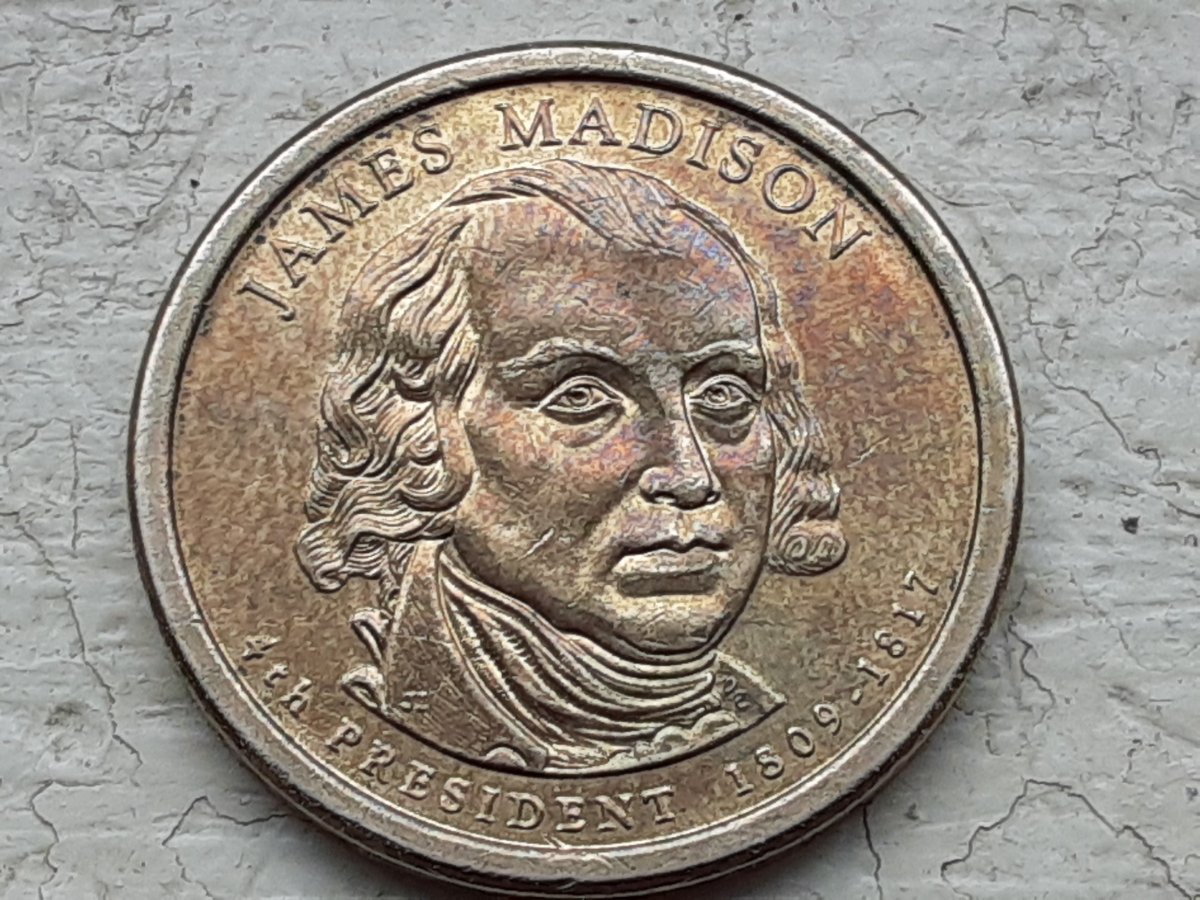
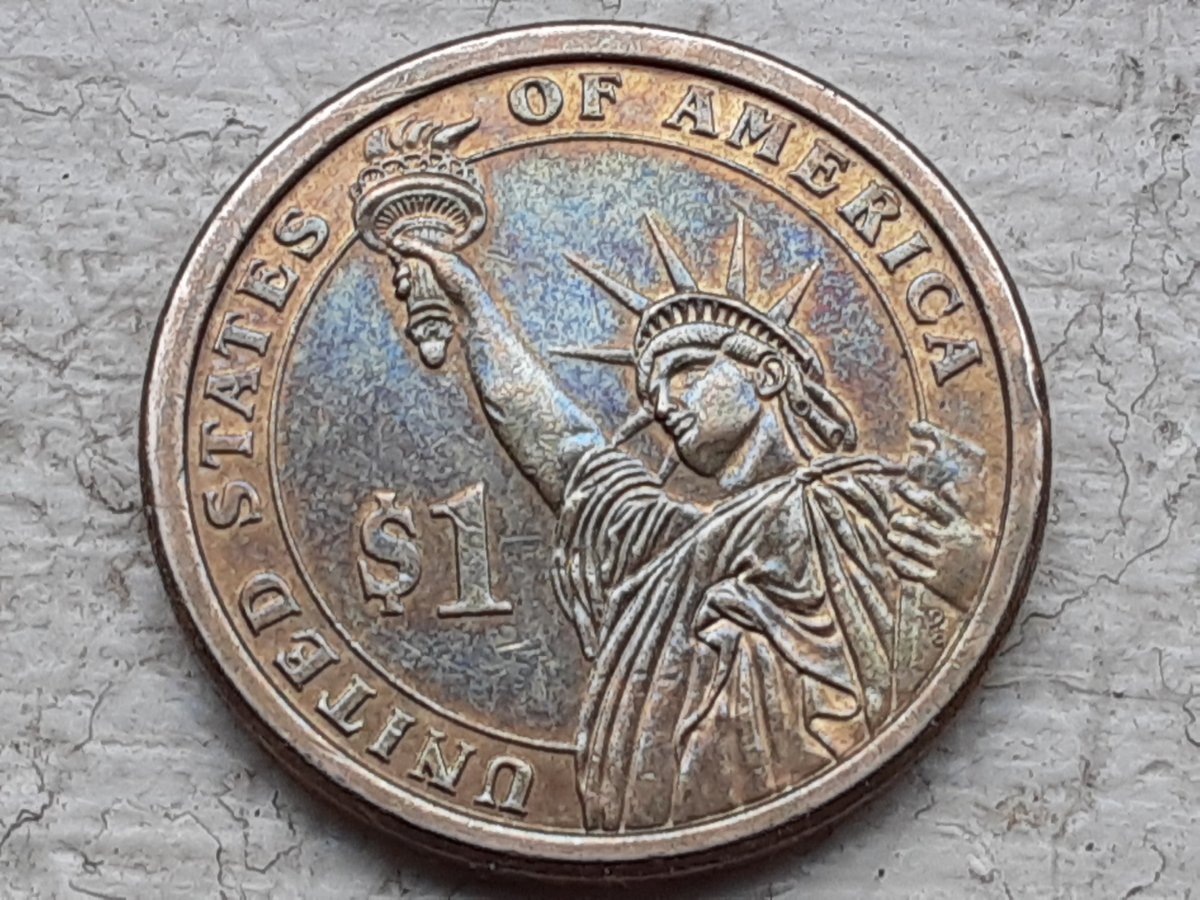
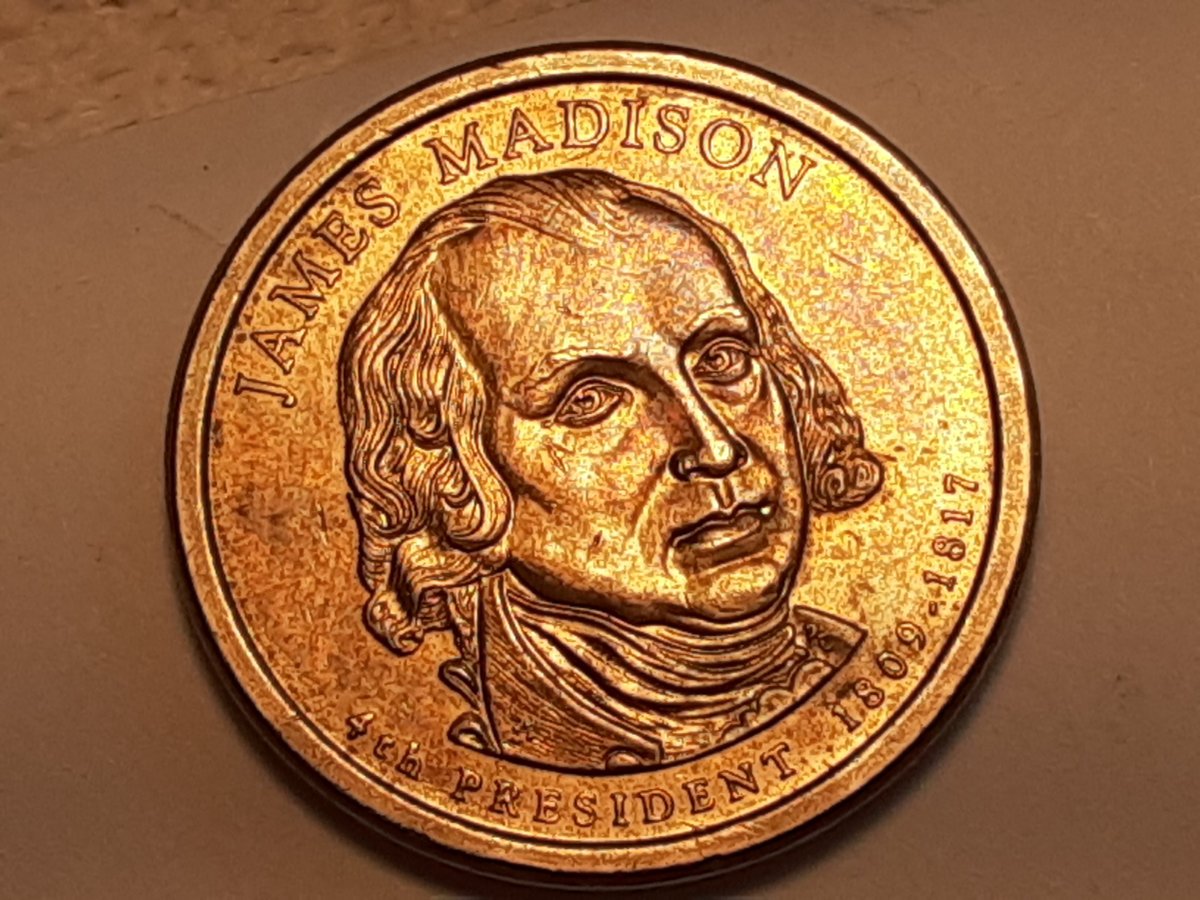
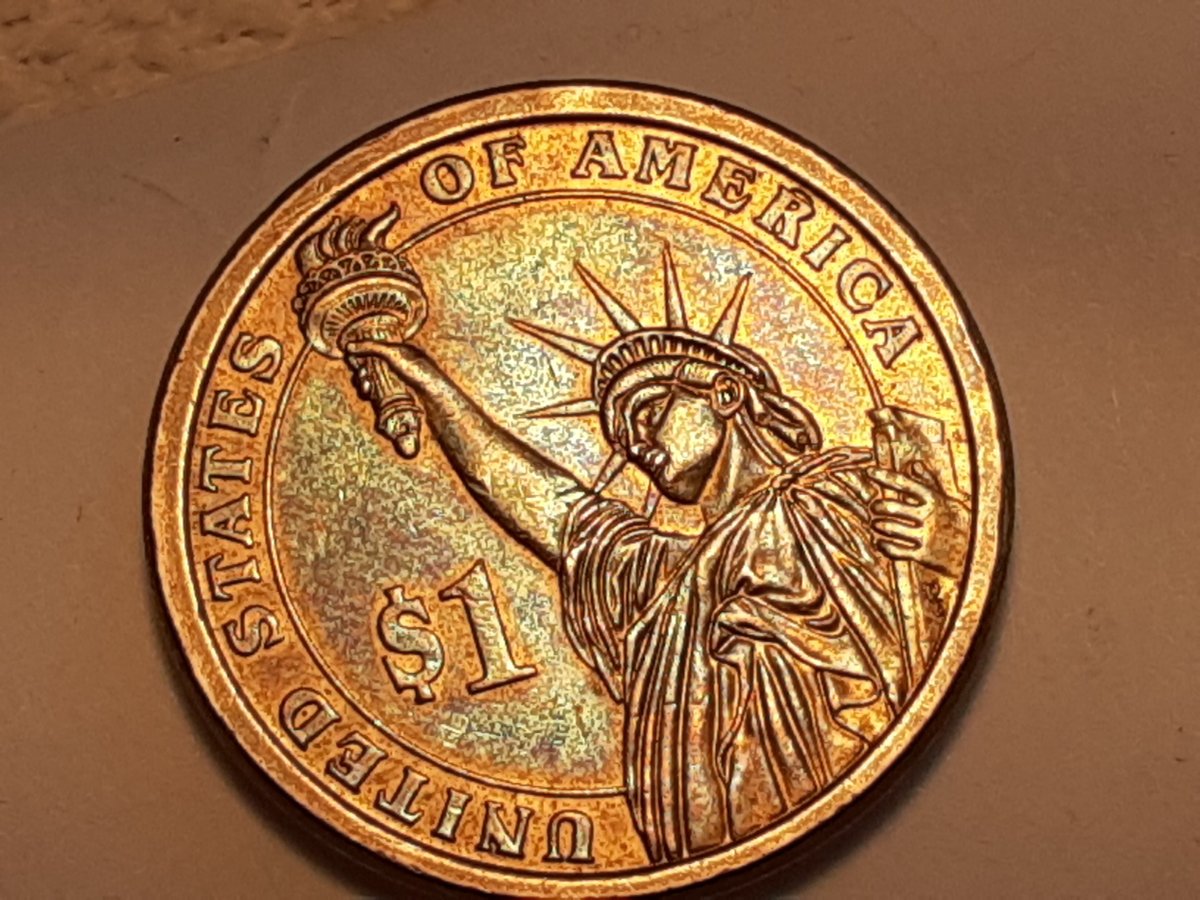
Thank you all for your thoughts. Silviosi, it is hard to get good pictures because like carnival glass it appears to change colors when the light shifts. I did some research on how they make carnival glass and it is quite interesting. Apparently, they spray the base glass with compounded mineral salts. Each mineral when oxidized produces a different color. The minerals in the coin are in layers but they seem to all exposed to the surface and have become 'oxidized' thus showing the colors. (At least that is how I read it). Perhaps someone else could explain it better...
https://www.thoughtco.com/the-chemi...glass-602252 Here is the color chart below.
Glass Pigments
Compounds Colors
iron oxides greens, browns
manganese oxides deep amber, amethyst, decolorizer
cobalt oxide deep blue
gold chloride ruby red
selenium compounds reds
carbon oxides amber/brown
a mix of manganese, cobalt, iron black
antimony oxides white
uranium oxides yellow-green (glows!)
sulfur compounds amber/brown
copper compounds light blue, red
tin compounds white
lead with antimony yellow
Many special effects can be applied to glass to affect its color and overall appearance. Iridescent glass, sometimes called iris glass, is made by adding metallic compounds to the glass or by spraying the surface with stannous chloride or lead chloride and reheating it in a reducing atmosphere. Ancient glasses appear iridescent from the reflection of light off of many layers of weathering.
Dichroic glass is an iridescent effect in which the glass appears to be different colors, depending on the angle from which it is viewed. This effect is caused by applying very thin layers of colloidal metals (e.g., gold or silver) to the glass. The thin layers are usually coated with clear glass to protect them from wear or oxidation.









 Posted 06/18/2021 1:24 pm





