Color looks off but no real reason for it not to be genuine from my observation. It is an interesting CWT but not terribly difficult to obtain.
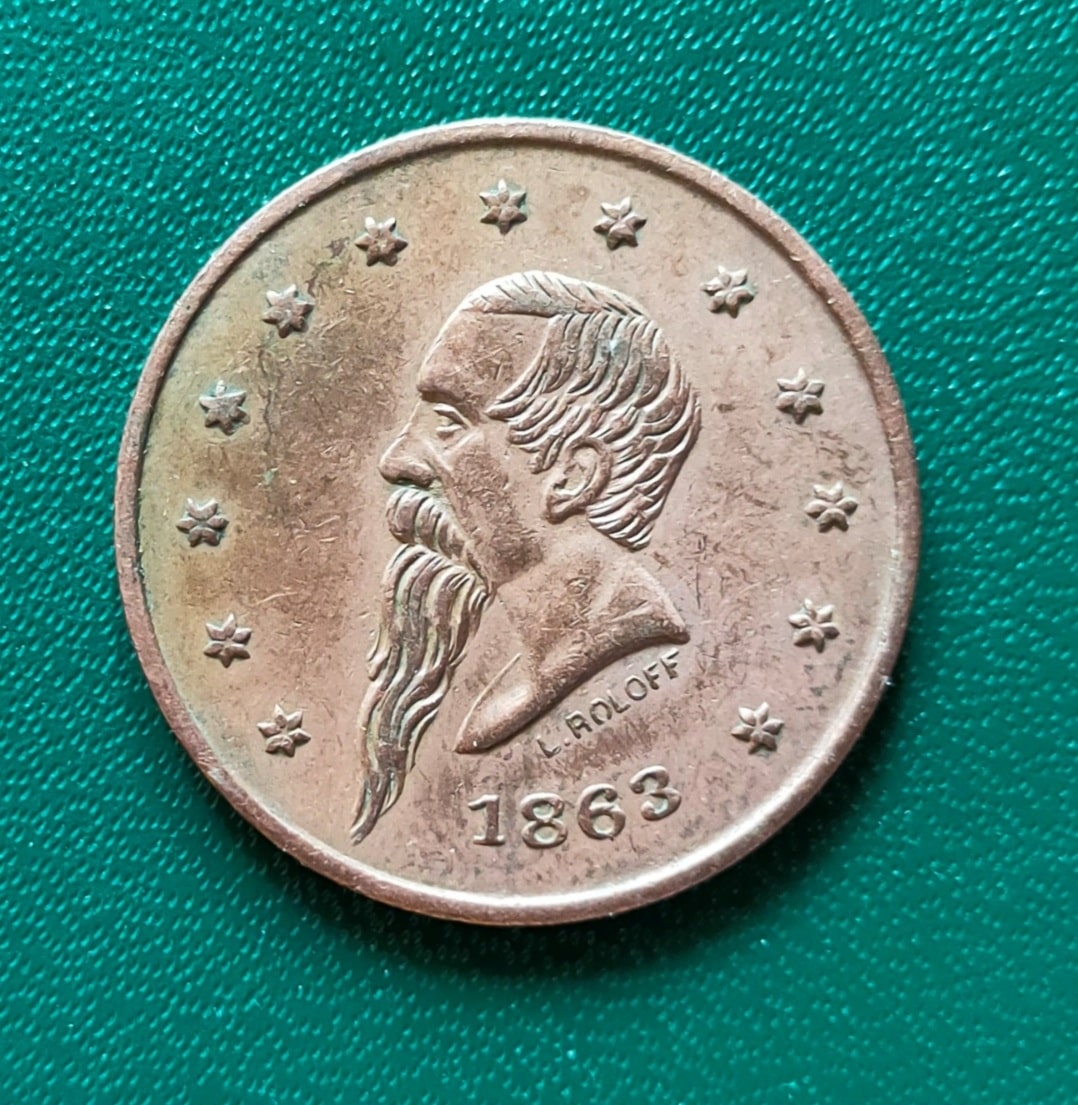
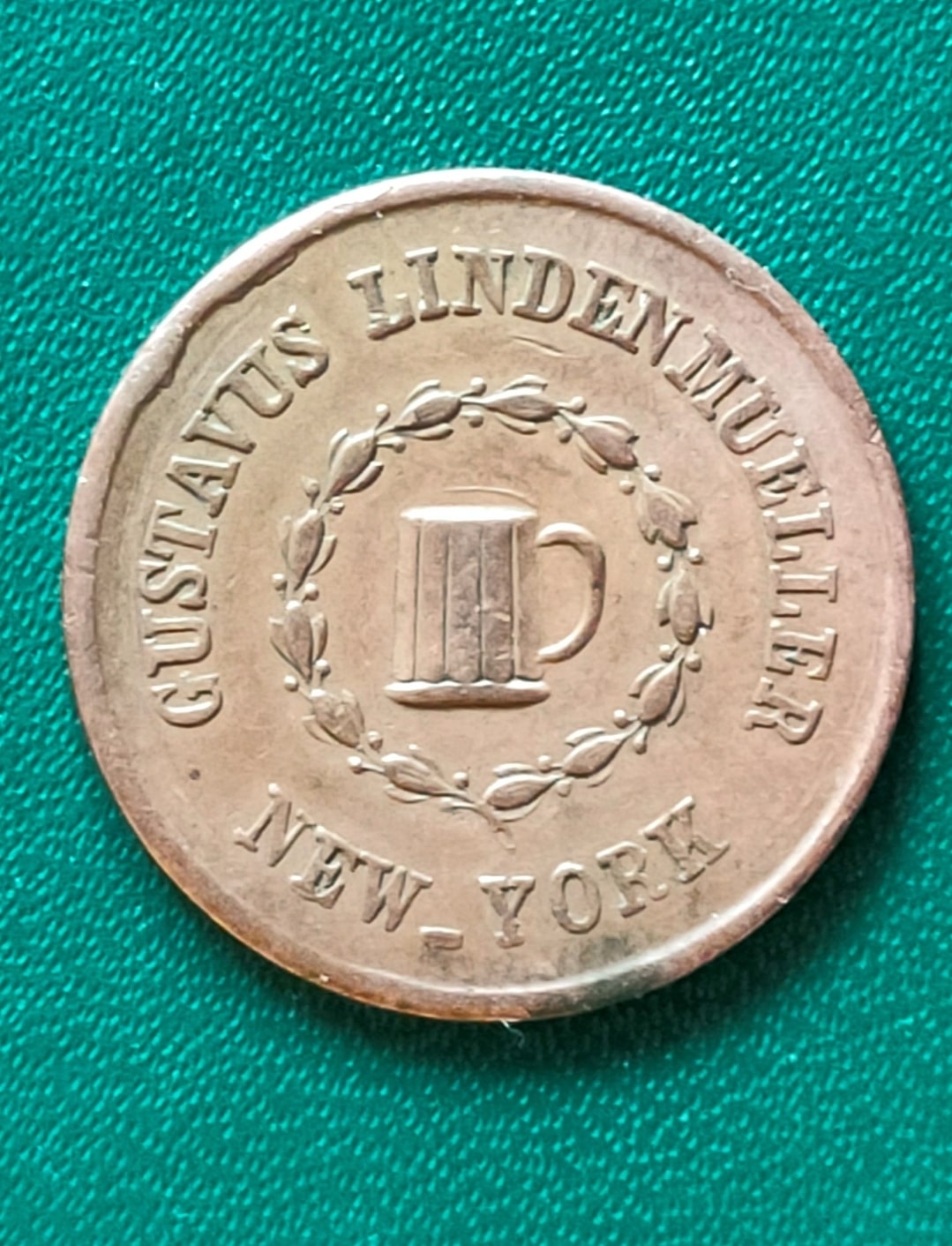
Here's mine and some history below.
1863 Gustavus Lindenmueller Store Card Civil War Token

Lindenmueller currency, or "Lindenmueller tokens," are one of the best-known and commonly struck types were store cards. Lindenmueller reportedly had more than one million of his one-cent tokens struck and placed into circulation in 1863. These tokens were larger than typical Civil war Tokens or
Indian Head cents of the time. They may have had a value of up to 5 cents in trade.
( one modern source has suggested an alternate production quantity of 350,000 tokens )
One of the common uses for the token was for streetcar fare. The Third Avenue Railroad company of New York, which had willingly accepted a large quantity of the Lindenmueller tokens in lieu of actual currency, asked Lindenmueller to redeem them. He refused, and the railroad had no legal recourse. Incidents such as these eventually forced the government to intervene.
On April 22, 1864, Congress enacted the Coinage Act of 1864. While the act is most remembered for the introduction of the phrase "In God We Trust" on the newly created two-cent piece, it also effectively ended the usage of Civil War tokens. In addition to authorizing the minting of the two-cent piece, the act changed the composition of the one-cent piece from a copper-nickel alloy 4.67 grams to a lighter, less thick piece composed of 95% copper weighing 3.11 grams.
The new one-cent piece was much closer in weight to the Civil War tokens, and found greater acceptance among the public.
While the Coinage Act made Civil War tokens impractical, the issue of their legality was decided on June 8, 1864, when Congress made the minting and usage of non-government issued coins punishable by a fine of up to $2,000, a prison term of up to five years, or both.
It did not make it illegal to own Civil War tokens, however, and evidence exists that the tokens were collected as early as 1863, when the first known listings of Civil War tokens were published.
Gustavus Lindenmueller a German immigrant "The Lager Bier King" was established as a seller of lager beer in New York City by early 1851. He had a saloon at 118 Chatham Street in New York City, said to have been converted from a bowling alley, and was providing free dinners to hundreds of the poor on a daily basis. In 1858 Lindenmueller was arrested for violating the Sunday laws, and five to eight hundred customers were "cleaned" out of his "disorderly" establishment, which was called by the New York Times "a notorious gambling and dance-house."
Later in the year to 49 Bowery, where he was the proprietor of the Odeon Theater, a lager-bier, concert, and theatrical saloon. On 18 December 1858 his theater building was destroyed by a fire. He had other establishments and a theater. The token with the mug on the reverse was good for a beer, while the other known reverse with ODEON was good for his theater admission.
I can only think of the "Gangs of New York" movie and what those places must have been like in those days.
In 1861 Lindenmueller served in the Civil War. Eventually he was commissioned as a first lieutenant.
Went AWOL for months at a time on a couple occasions and was dismissed from The Army.
He went back to the beer and liquor business but died of tuberculosis at age 46.






 Posted 07/09/2021 09:39 am





 to the Community, TheKingZito!


