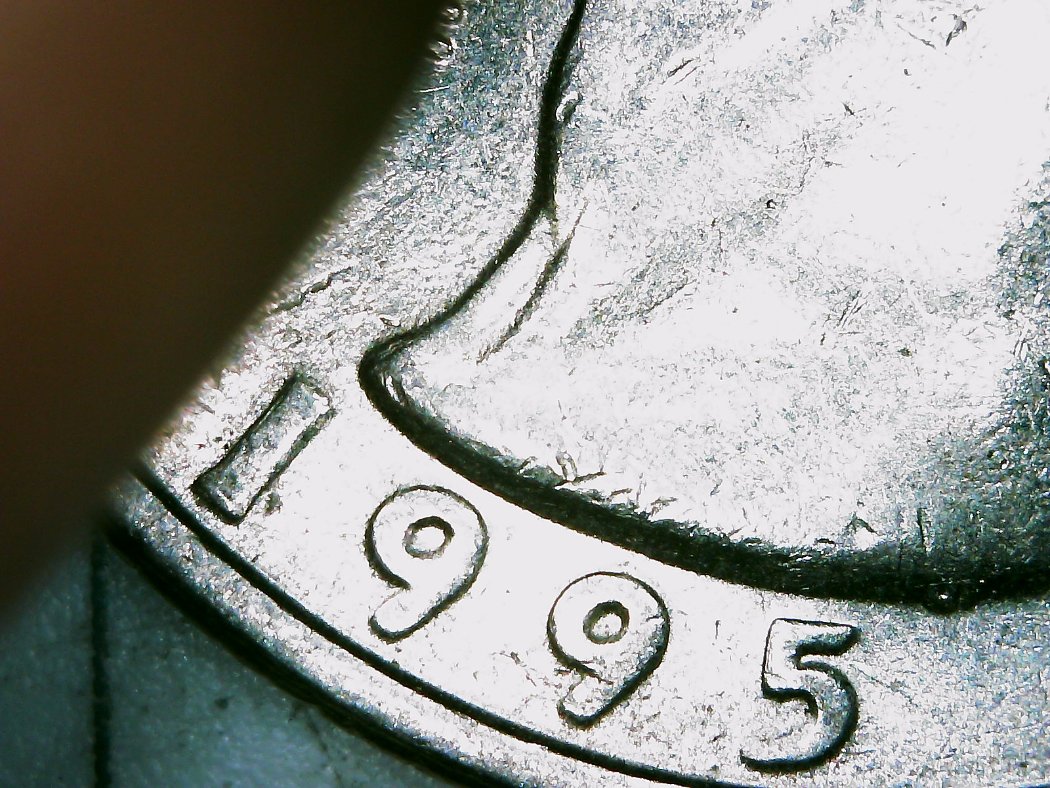
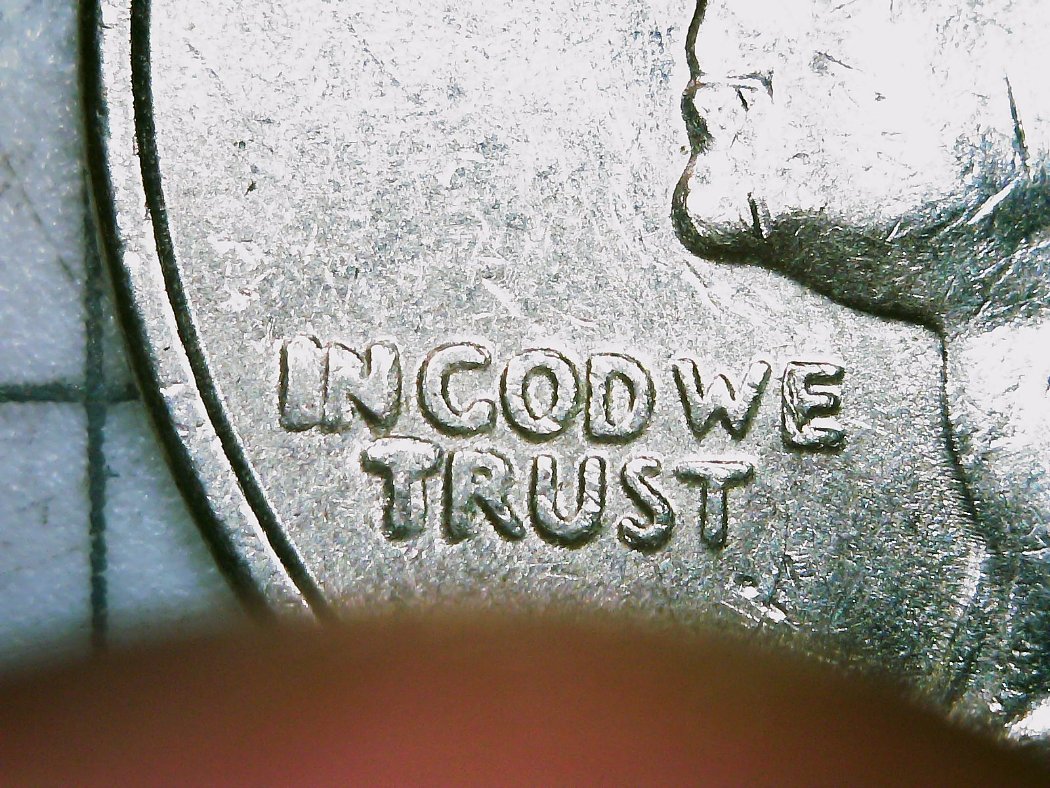
The best way to tell is to look at normal coins. See how they are. Find the earliest die states. That way you have an idea what the normal design looks like. Also check the proof coins. The dies have the same design and are often in a lot earlier die states as these dies are only used for 6K strikes, to produce 3K coins but as the dies age, the devices closest to the rim will show the most die wear.
Why? Because the metal movement happens that way. So not on your coin. Note the "IN" compared with the "WE". Now you start to see that if die wear happens, the way the die is altered.
Wexler doesn't list a 1995
DDO:
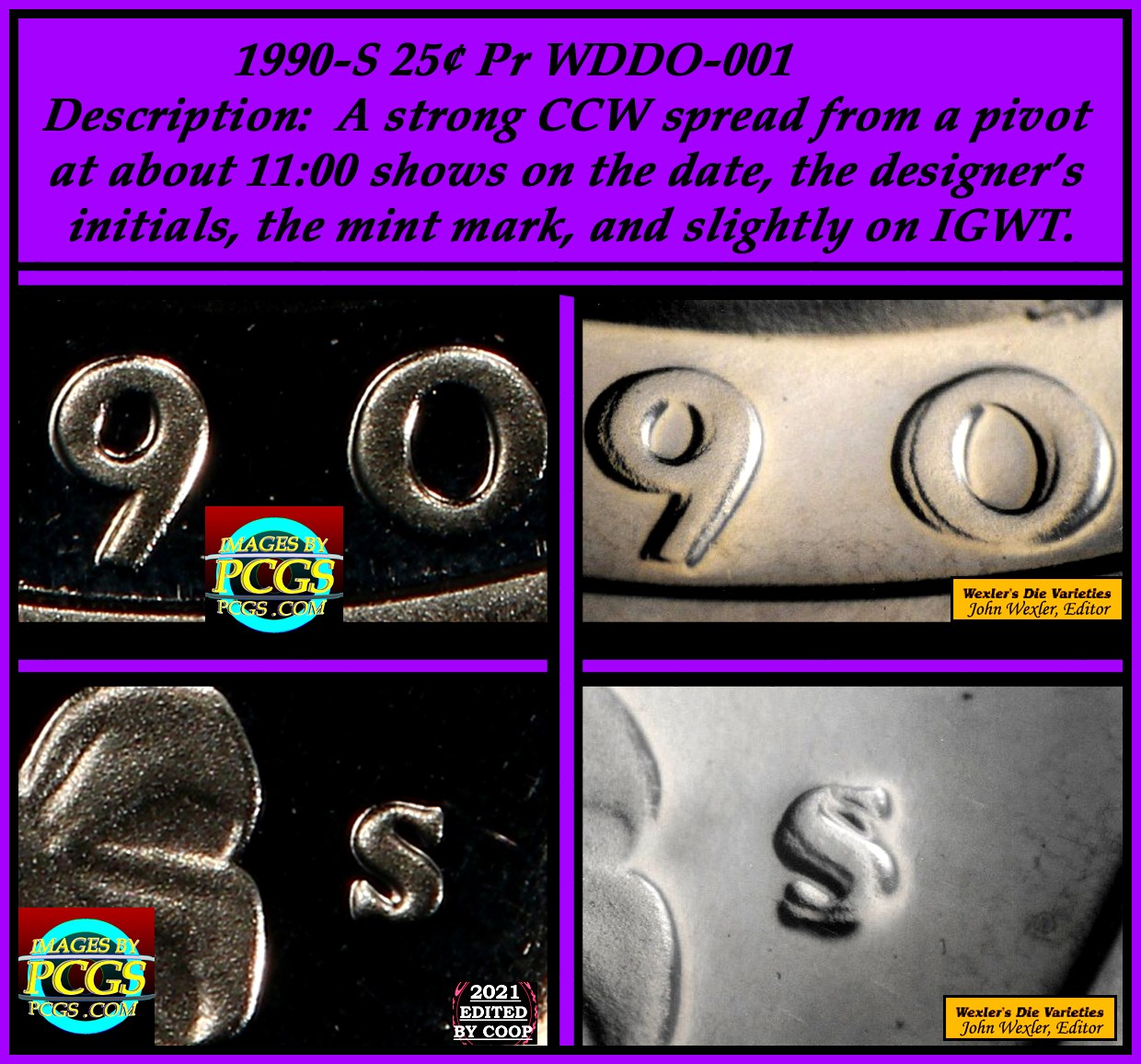
But there is a 1990-S Proof listed
http://doubleddie.com/1827609.htmlNote that the date was altered on this
DDO. Note how the devices were affected evenly?
1983-S
DDR:
http://doubleddie.com/1827588.htmlNote how the devices are affected on these:
Quote:
1983-S 25¢ Pr WDDR-001 "Best Of" Variety
Description: A spread towards the center shows on USA, QUARTER DOLLAR, the outer edge of both wings, and the lower leaves in the wreath.
But note the 1997 quarter:
http://doubleddie.com/2337937.htmlThat is the first listing of the single squeeze dies. So quarters started in 1997. How do I know this? Well the single squeeze dies are on the earlobes. So that tells me an aprox. date for the class 9 obverse doubled dies.
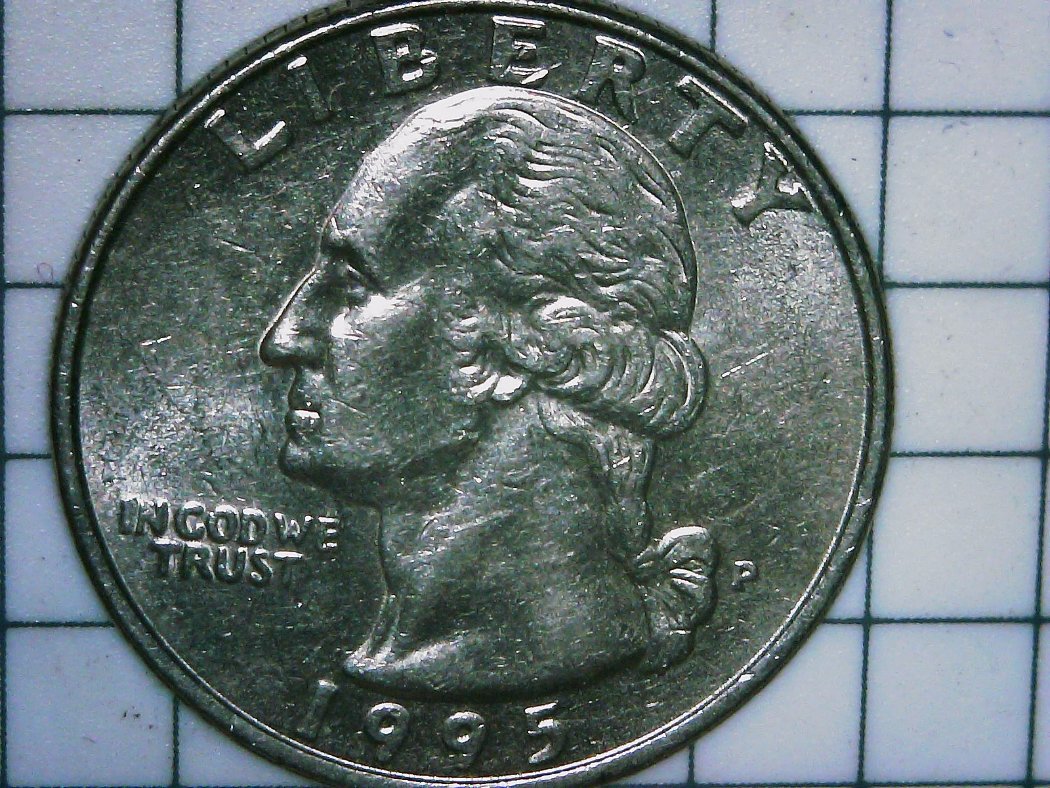
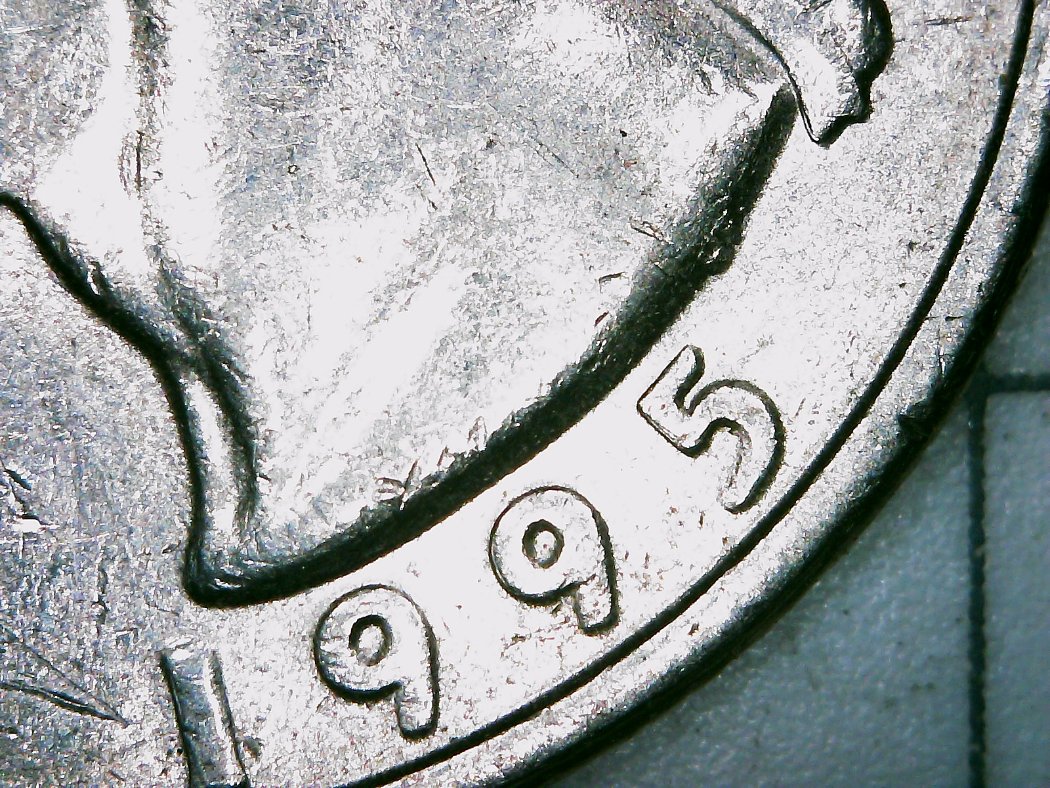
So on your coin, I'm just seeing die wear. So what to look for on these, not the size of the "IN" and "WE" on these designs for excessive die wear. Sometimes all of the quarter can look like that if the master hub is aging. So when it doubt, check it out. See if it is a year issue/die issue of just coin wear. Looking deeper into something will eather give you answers, or more question to ask here to see what is really going on.












 Posted 08/24/2021 7:38 pm