
 Posted 11/04/2021 11:01 am


Now for a bit of history:
As far as I can tell, currency in the Caribbean was first gold/silver imported from US, Spain, England & other Imperial colonizers throughout depending on each countries economic-political ties. I'm sure a lot of cheques & local species were used at the time. Later, chartered banks stepped in for more consistent/conventionalized paper currencies. For example, I do know that there was a Colonial bank (1920's) which was later succeeded by Barclay's & finally Canada's Royal bank produced notes for the island of St. Lucia. the introduction of the British West Indies dollar (or "BeeWee") was another attempt to standardized currency in the region.
Eventually, the British West Indies Currency Board (1949-1965) was established for British Guyana & the Caribbean Territories. They printed several colourful denominations which were issued out of Guyana & select islands (Barbados & Trinidad).
See:
https://en.wikipedia.org/wiki/Briti...ndies_dollar
and to see examples which featured King George VI & QEII:
http://www.banknote.ws/COLLECTION/c.../BCT/BCT.htm
The denominations were $1, $2, $5, $10, $20 & $100 & served the West Indies Federation for about 15 years. https://en.wikipedia.org/wiki/West_...s_Federation
Of the nations which used this common currency, Jamaica (which felt left-out as they did not issue the notes) often felt short-changed by the system (& the population missed their pre-decimal pounds/shillings). They broke away in favour of their own currency along with Trinidad & Tobago & Grenada. These & other factors helped initiate the need for a new revised currency, & in 1965, the East Caribbean Dollar was formed.
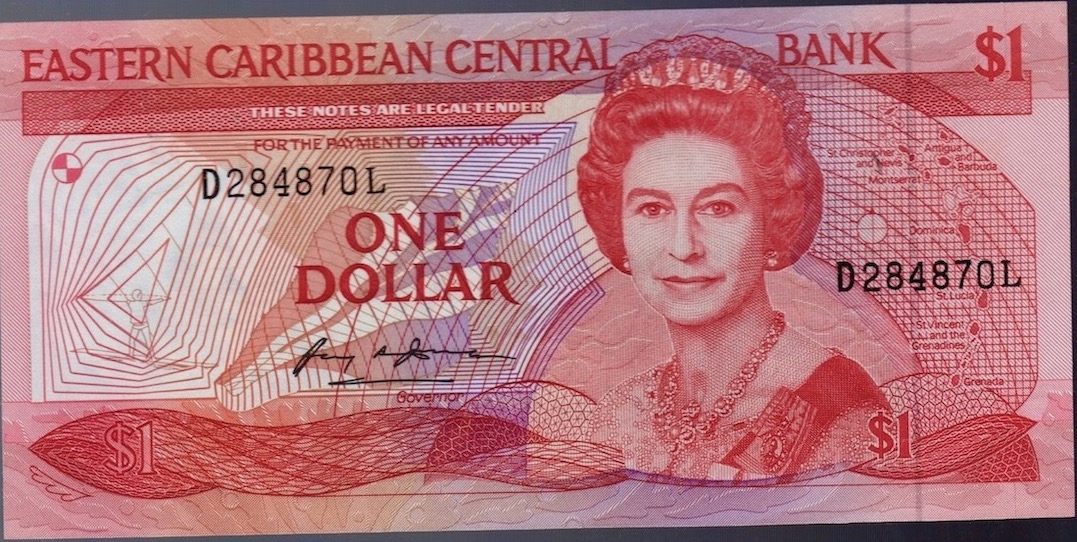
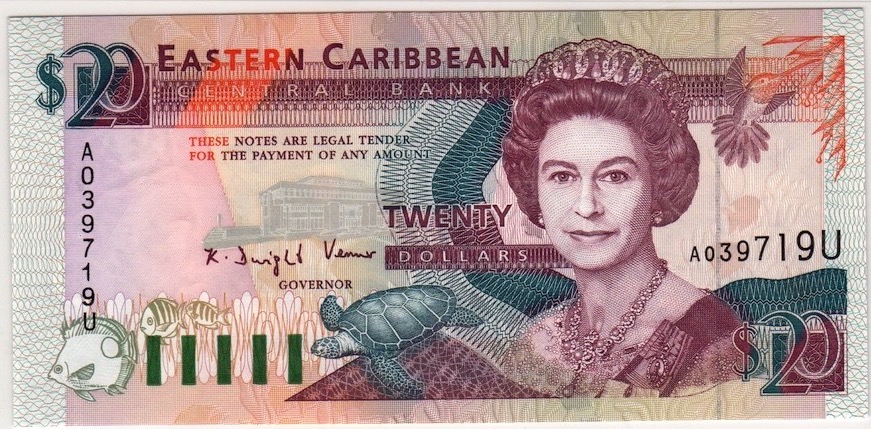
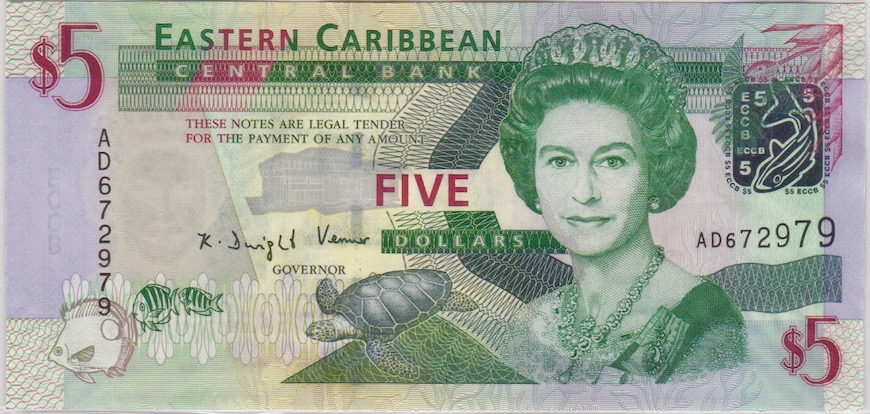
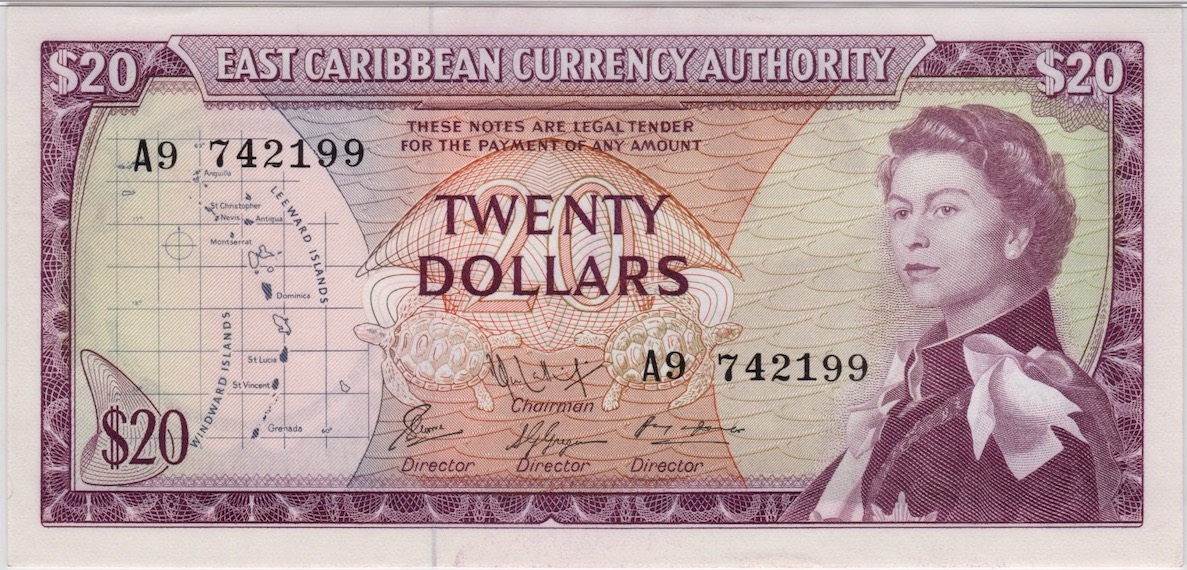
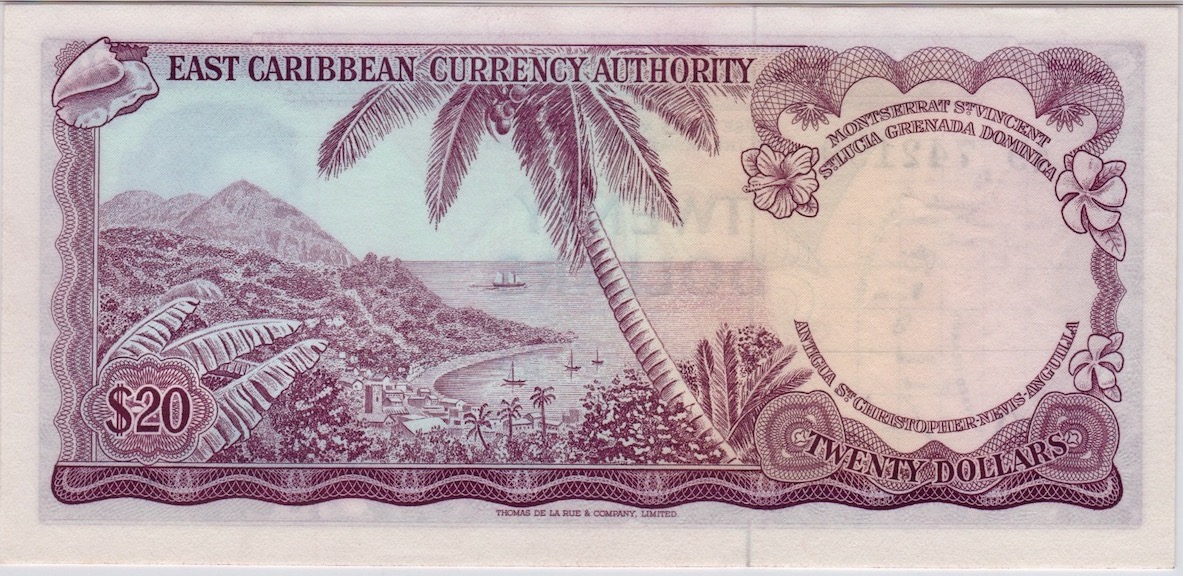
These came in $1, $5 $20 & $100 (No $2, $10, nor $50 were printed) & were issued by the East Caribbean Currency Authority.
See the Ones here:
http://www.banknote.ws/COLLECTION/c.../XCD0013.htm
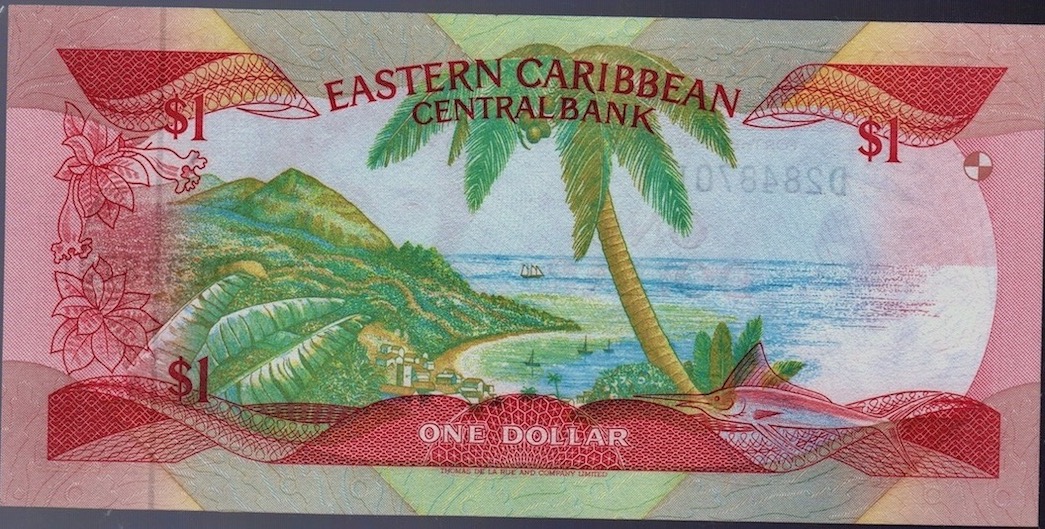
Note their back design which lists the nations involved in a circular pattern around the watermark window (watermark is a profile of QEII):
P-13a and P-13b: Reverse listing of islands includes Barbados but not Grenada
P-13c to P-13f: Reverse listing of islands includes Barbados and Grenada
P-13g to P-13p: Reverse listing of islands does not include Barbados but includes Grenada
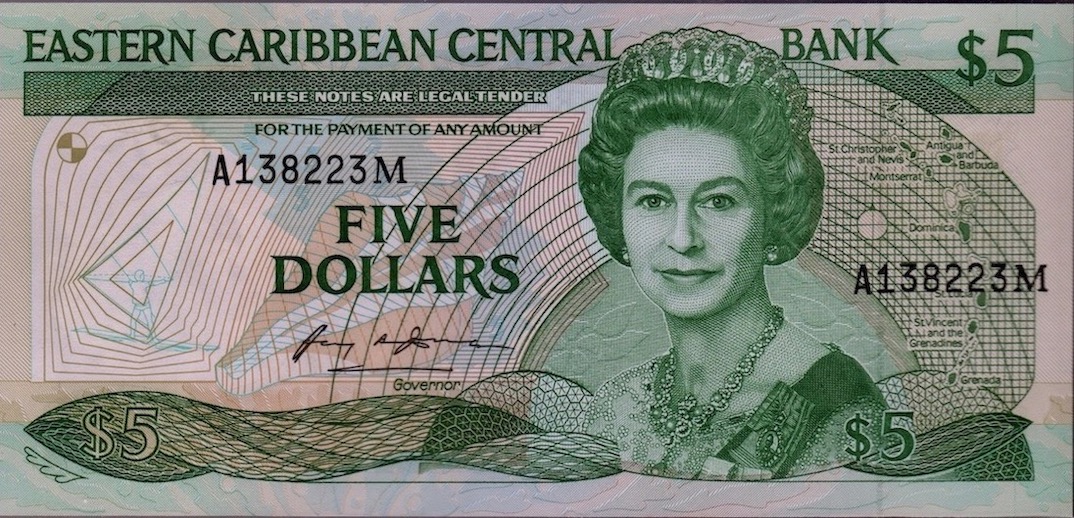
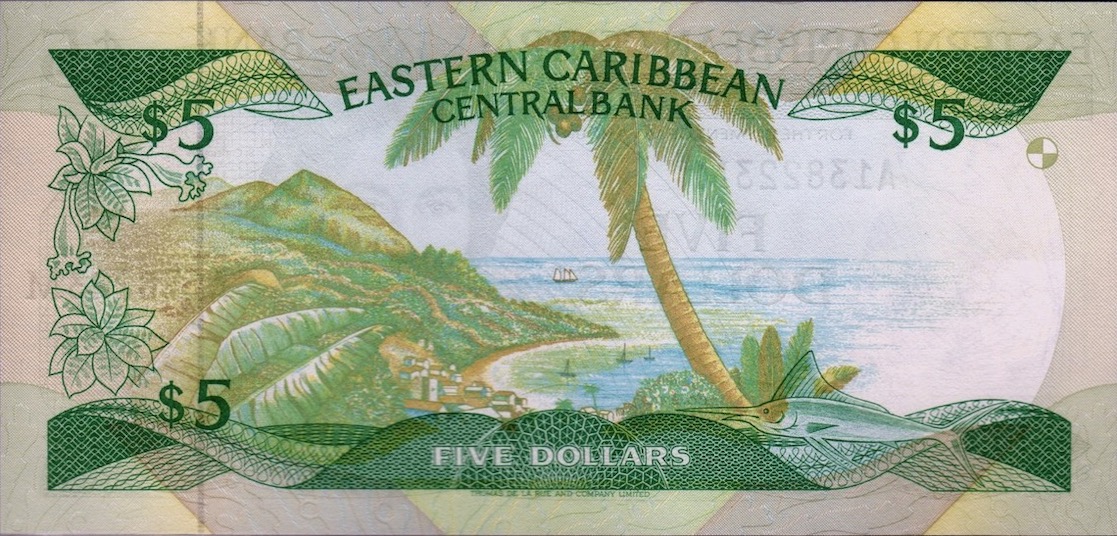
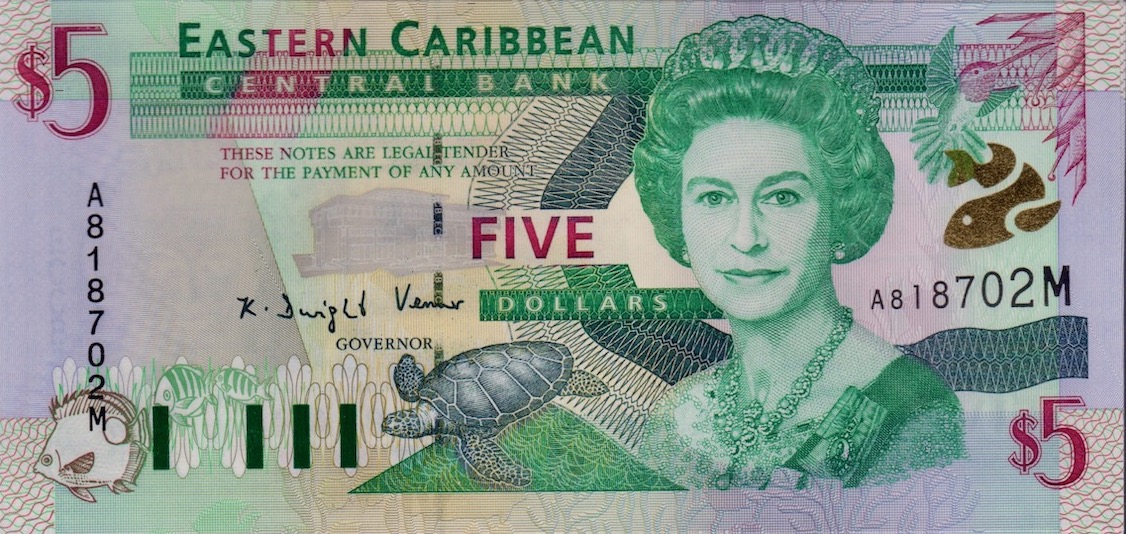
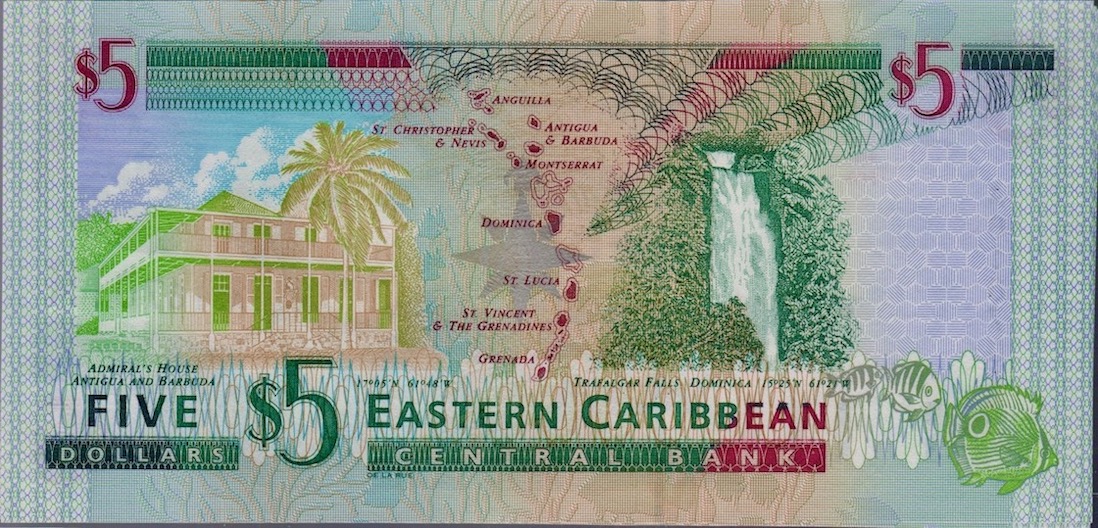
Here is P-14g the Five (unfortunately the watermark is not very visible):


As far as I can tell, currency in the Caribbean was first gold/silver imported from US, Spain, England & other Imperial colonizers throughout depending on each countries economic-political ties. I'm sure a lot of cheques & local species were used at the time. Later, chartered banks stepped in for more consistent/conventionalized paper currencies. For example, I do know that there was a Colonial bank (1920's) which was later succeeded by Barclay's & finally Canada's Royal bank produced notes for the island of St. Lucia. the introduction of the British West Indies dollar (or "BeeWee") was another attempt to standardized currency in the region.
Eventually, the British West Indies Currency Board (1949-1965) was established for British Guyana & the Caribbean Territories. They printed several colourful denominations which were issued out of Guyana & select islands (Barbados & Trinidad).
See:
https://en.wikipedia.org/wiki/Briti...ndies_dollar
and to see examples which featured King George VI & QEII:
http://www.banknote.ws/COLLECTION/c.../BCT/BCT.htm
The denominations were $1, $2, $5, $10, $20 & $100 & served the West Indies Federation for about 15 years. https://en.wikipedia.org/wiki/West_...s_Federation
Of the nations which used this common currency, Jamaica (which felt left-out as they did not issue the notes) often felt short-changed by the system (& the population missed their pre-decimal pounds/shillings). They broke away in favour of their own currency along with Trinidad & Tobago & Grenada. These & other factors helped initiate the need for a new revised currency, & in 1965, the East Caribbean Dollar was formed.
These came in $1, $5 $20 & $100 (No $2, $10, nor $50 were printed) & were issued by the East Caribbean Currency Authority.
See the Ones here:
http://www.banknote.ws/COLLECTION/c.../XCD0013.htm
Note their back design which lists the nations involved in a circular pattern around the watermark window (watermark is a profile of QEII):
P-13a and P-13b: Reverse listing of islands includes Barbados but not Grenada
P-13c to P-13f: Reverse listing of islands includes Barbados and Grenada
P-13g to P-13p: Reverse listing of islands does not include Barbados but includes Grenada
Here is P-14g the Five (unfortunately the watermark is not very visible):
Edited by walk2dwater
11/04/2021 11:07 am
11/04/2021 11:07 am