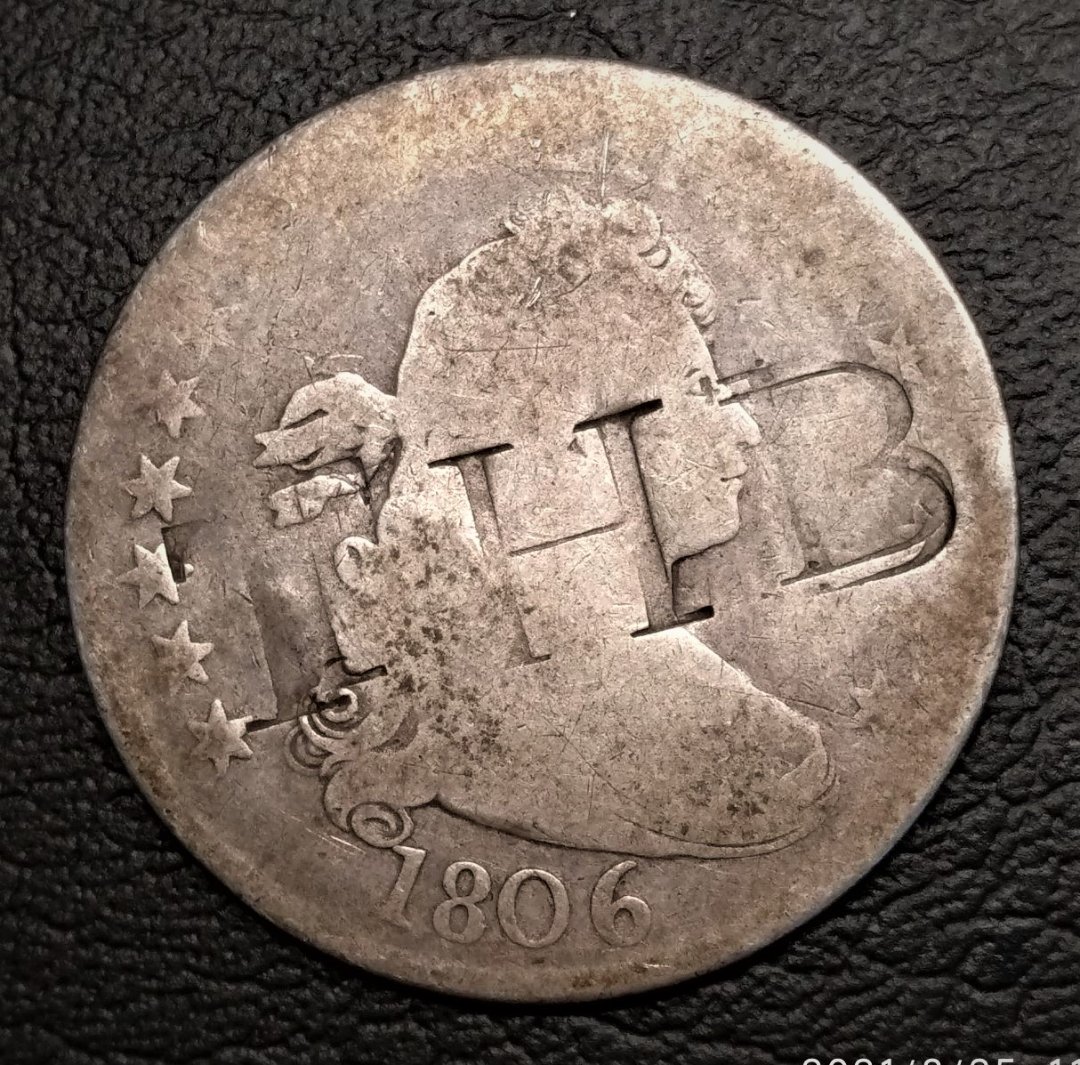
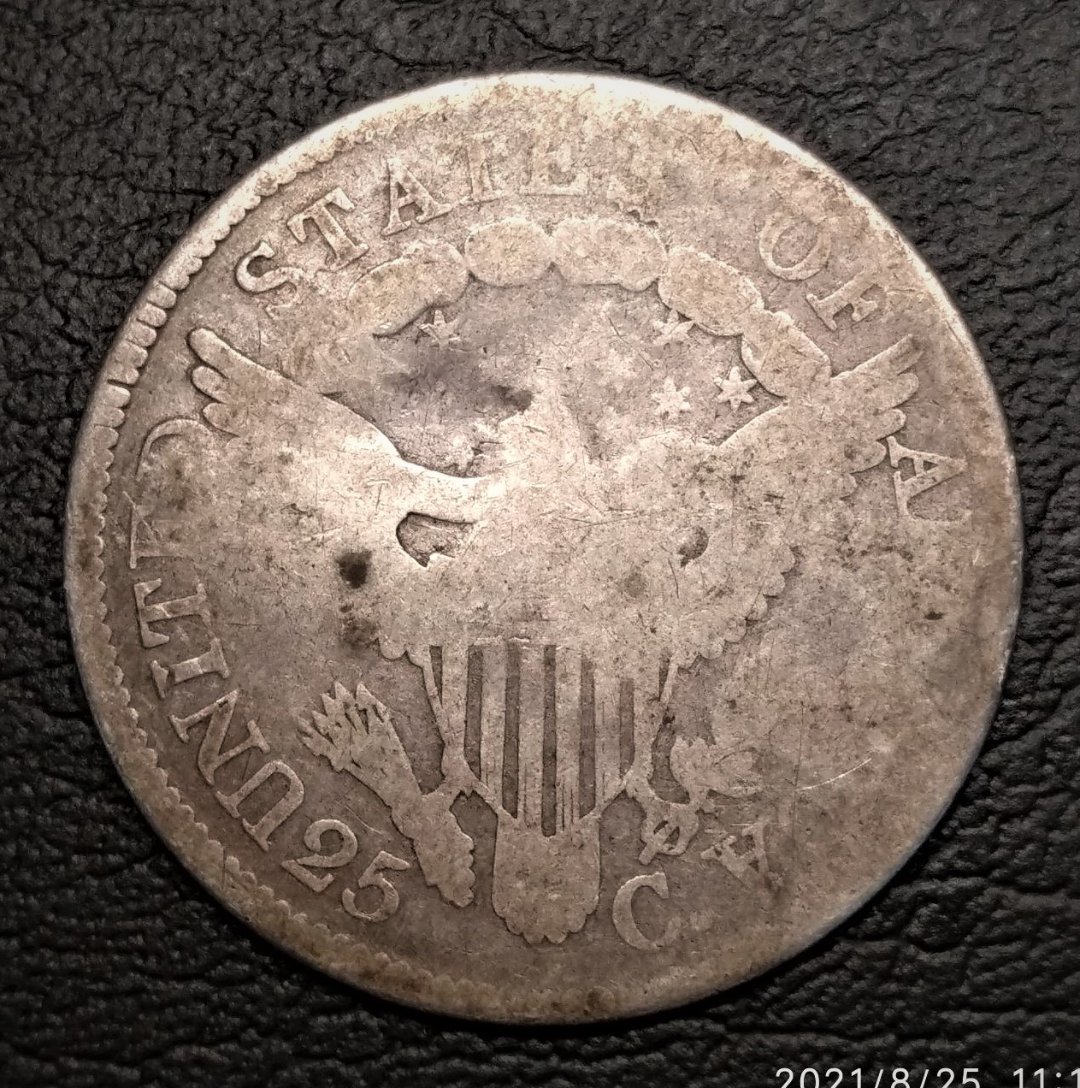
@ Anzelmas .... Having seriously collected counterstamped coins for forty years, I'd estimate the auction value of your piece to fall in the $100 to $150 range. It looks to be a maverick as stated. IF the issuer can be identified, the value could realize double or more.
The large THB stamping reminds me of early gunsmith inspector marks. BUT that's simply one of many possibilities. The large size of the letters is such that a blacksmith might employ; this, as opposed to the small sized letters that a watchmaker or silversmith would typically use.
Quote:It is generally true that counterstamps will diminish the value of early
US coins.
I beg to differ with this often uttered statement. It is
SOMETIMES true and
SOMETIMES not. My own collection contains a good many hundreds of coins of which their value is much enhanced by the stamping thereon. The most extreme example in my collection is a "damaged" 1822 Bust half that I purchased on
ebay for under a hundred bucks. The known counterstamp on it has auction prices realized between $3,500 to $8,000. My discovery piece appears to be the second finest of the now five known.
Many coin collectors and dealers look disparagingly down on c/s's. This attitude has long worked to my advantage, when buying. Fully 95% of my collection has come from auctions and dealers. Experience tells me that the "generally" held attitude that c/s's diminish a coin's value just ain't so. Each piece needs to be evaluated on it's merits or lack thereof.
One more thought on our OP's c/s'd coin. There are collectors who endeavor to assemble type setts of c/s'd coins; this, as well as holed coins. These collectors are willing to pay stronger prices on an early date lrgge size Bust quarter for their unique collection. Over the years, I've owned over a dozen key date 1916-D dimes. I've owned less than six c/s'd early Bust quarters!












 Posted 11/15/2021 7:11 pm


 .
. with Spence that this is a maverick cstp which I said above is most likely someone's name initials.


