| Author |
 Replies: 9 / Views: 1,505 Replies: 9 / Views: 1,505 |
|
|
Valued Member
Sweden
174 Posts |
Hi, m8s! This coin looks like Byzantine Follis, but the weight is very little and design is very strange: XX instead of mint mark, IINO instead of ANNO, etc. What do you think about it? Weight: 3.14 g Diameter: 22 mm Bronze ? 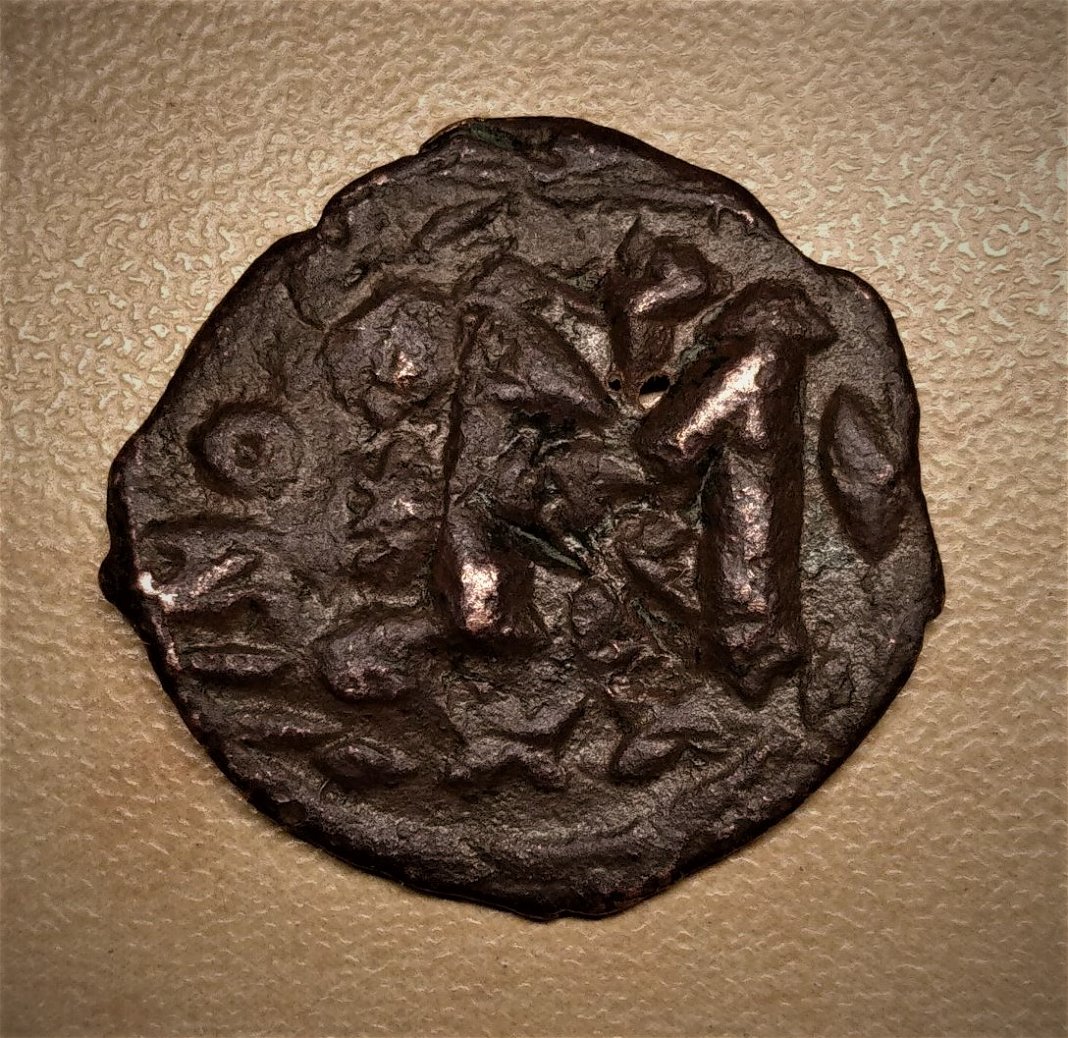 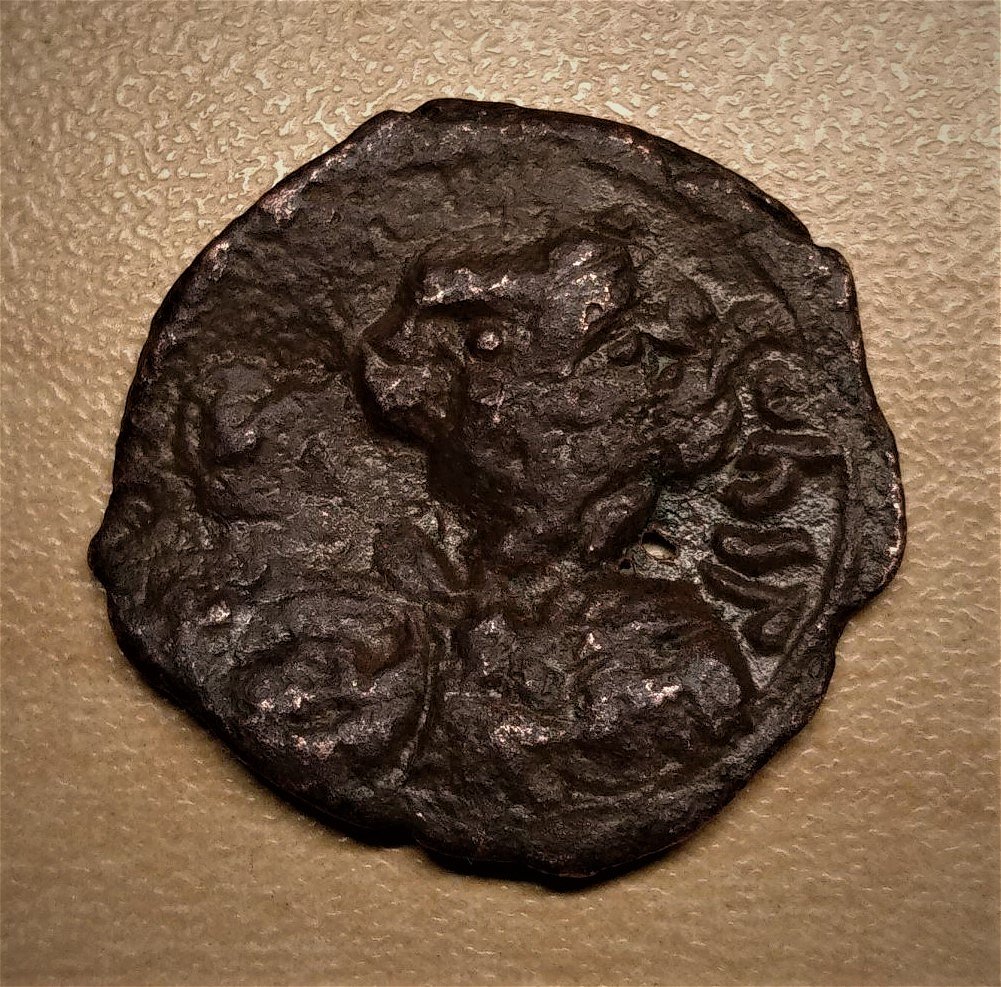 |
|
|
|
Valued Member
United States
278 Posts |
This appears to be a pseudo-Byzantine Arab Follis. When the Caliphate took over Syria in the 630s-640s they started minting imitations of Byzantine coins from new and former Byzantine mints, they usually incorporated Arab script into the imitations to at least denote where the coin was minted. Unfortunately I cant make out the mint.
This is an imitation of the Constans II Follis type
|
|
Pillar of the Community
Russian Federation
5186 Posts |
I respectfully disagree: this is an overstrike.
Specifically, this follis, probably of Constans II (SB 1004 or similar; I can't quite read the mintmark), was struck over an earlier coin (probably also a follis, less likely but possibly a 30 nummi, hard to tell), Constantinople mint, probably regnal year 24 (X/X/II/II), in which case almost certainly of Heraclius.
What you read IINO is actually CON II, the mintmark and part of the regnal year of the understrike. XX is also part of the regnal year; as I already mentioned, I can't quite read the true mintmark. The place where ANNO would have been is lost in the details of the understrike.
|
|
Moderator
 United States
34539 Posts |
This isn't my area of expertise, but I was thinking Arab Byzantine initially also. With that said, it seems like the Arab-Byzantine Folles all have a lower-case M (rounded tops) rather than the upper-case M (sharp tops) on the OP's coin. I'm interested to see where we net out on this one.
"If you climb a good tree, you get a push."
-----Ghanaian proverb
"The danger we all now face is distinguishing between what is authentic and what is performed."
-----King Adz
|
|
Pillar of the Community
Russian Federation
5186 Posts |
Quote:
With that said, it seems like the Arab-Byzantine Folles all have a lower-case M (rounded tops) rather than the upper-case M (sharp tops) on the OP's coin. I have some Arab-Byzantines with a sharp-top M, and if it looked like an Arab-Byzantine I would have said so. It does not. It looks like an overstrike. EDIT: the obverse legend ends COhST. If this is Tiberius Constantine it should have had a bunch more letters in it; if it's Constans II (or later) it's too late to be Arab-Byzantine. EDIT 2: some Arab-Byzantine issues put the mint name in this place, but offhand I can't think of any plausible Arab-occupied mint that would match the lettering. Edited by january1may
11/19/2021 10:13 am
|
|
Moderator
United States
34539 Posts |
Ok yep I'm not speaking from much experience here @j1m--thx for helping me learn @j1m!
"If you climb a good tree, you get a push."
-----Ghanaian proverb
"The danger we all now face is distinguishing between what is authentic and what is performed."
-----King Adz
|
|
Pillar of the Community
Russian Federation
5186 Posts |
Quote:
I'm not speaking from much experience here @j1m I mean it's not like I have all that much more experience than you do! Even in this area, I suspect. (Maybe if it was something like wire kopeks...) In this case I basically immediately saw some relevant legend (mintmark and regnal year) turned 90 degrees and realized it had to be an overstrike. Some further possibly-relevant clarification: it is not in any way uncommon for 7th century Byzantine coins to be overstruck on (slightly) earlier issues. In fact to the best of my knowledge most of them are. So when you see what looks like a 7th century Byzantine coin but some details seem out of place, there's a good chance they're actually part of the undertype. (Though sometimes they're part of the overtype and the strike was just that weak!) |
|
Valued Member
 Sweden
174 Posts |
Great! It's very interesting.
Thanks, january1may, for detailed answer.
|
|
Pillar of the Community
United States
1554 Posts |
In my opinion, it's a coin of Constans II (SB1004) struck over an earlier issue, perhaps of Heraclius (SB 810?). Some attribute SB 1004 to Heraclonas. I don't think it's an Arab imitation although imitations of both types are known. 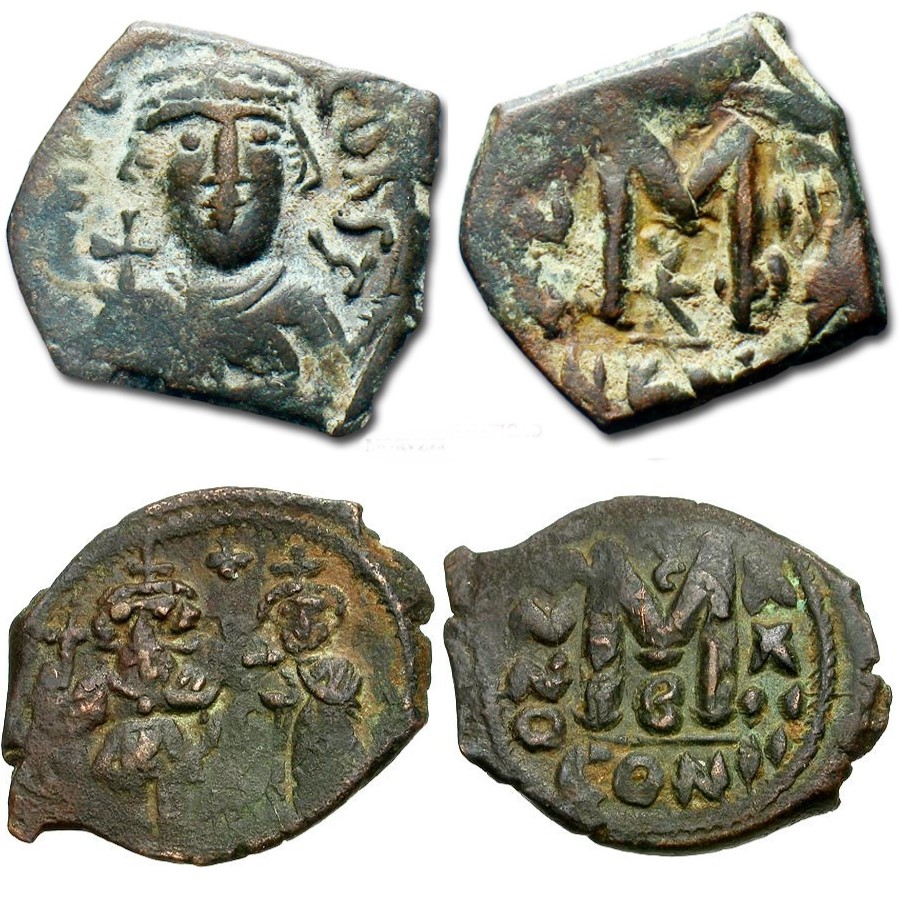 Edited by Kushanshah
11/19/2021 5:43 pm
|
|
Valued Member
Sweden
174 Posts |
Thanks, Kushanshah!
I think you are 100% right.
|
| |
Replies: 9 / Views: 1,505 |
|









 Posted 11/19/2021 09:07 am


