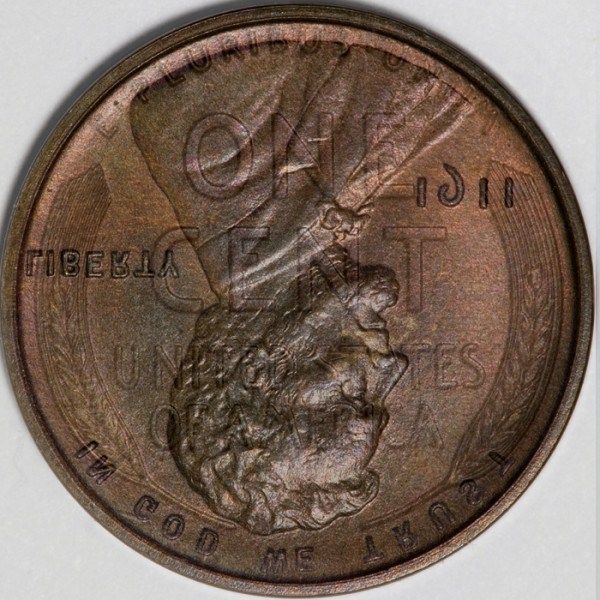
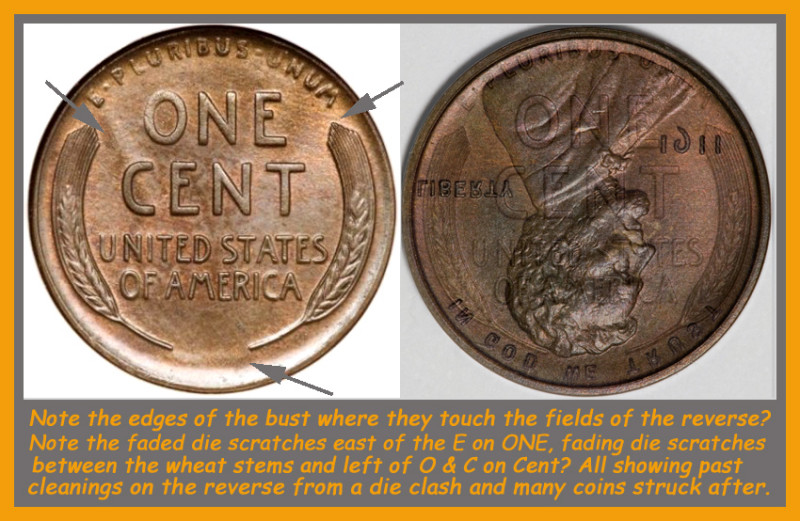
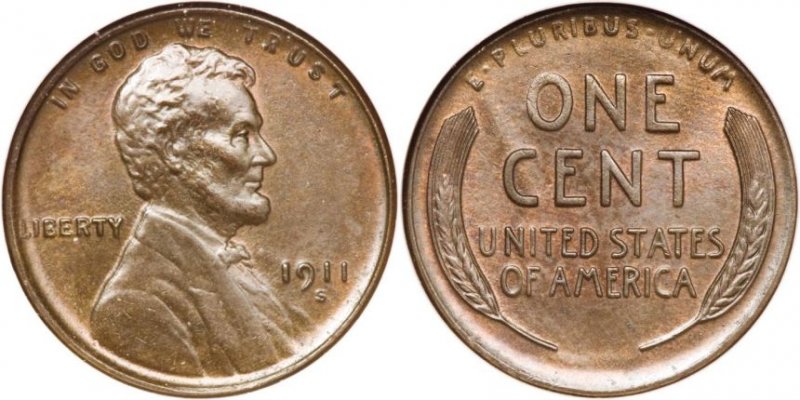
Coop, your information is not exactly correct. Although clashes do leave similar marks, that was not the cause on the 1911S cent posted in this thread. What caused the marks on the 1911S cent has to do with die wear and pressure. Over the length of a die's life, the parts of the design that have the most relief change over a small amount of space (like the edge of the bust around the shoulders and head) tend to impart uneven pressure against the opposite die. More pressure where there is field and less pressure where there is relief. Over time, this affects the molecules on the die's surface and tend to wear the die unevenly. This causes a ghost impression of the design onto the opposite die.
The reason why this shows on the reverse and not on the obverse is rather simple...the design on the obverse has larger areas and larger changes in relief height.
I have seen this effect a large number of coins in two distinct eras, although it is possible on any coin. The eras affected most by this are mintmarked cents of the 1920s and 1966-1967 cents.












 Posted 01/27/2009 7:45 pm