| Author |
 Replies: 17 / Views: 2,470 Replies: 17 / Views: 2,470 |
|
Moderator
 United States
105202 Posts |
I another topic on another coin, Mike Diamond had interjected his opinion on what classifies as a mint error: Quote:I was asked to contribute to this discussion. I've written about other quarters with this effect. My analysis indicated that this is a form of ejection impact doubling. This form of doubling occurs when a newly-struck coin is thrust or propelled into the face of the retreating hammer die, which in this case was the reverse die. Here, the protruding letters on the die face carved channels into the design rim. Other cases of EID on ATB Quarters leave behind faint, drastically offset incuse letters that overlap or are entirely separate from the corresponding normal incuse letters. As to whether you want to consider this a mint error, well that's a personal choice. For me, any contact between coin and die after the strike still qualifies as a mint error. In fact, in my opinion, any mishap that occurs within the striking chamber in the immediate aftermath of a strike, and that can be distinguished from damage that can occur outside the press, should be considered a mint error. Whether you consider this an error or simply "damage", I think examples of EID are eminently collectable. Now, I have heard (read) Coop say (type) that Machine Doubling occurs when there is a bounce 'INSIDE the striking chamber' and there is some movement during this bounce- creating this MD. So, could this bounce be instead a mint error? According to Mr. Diamond and the post I quoted above, it should be. Now of course, this causes a huge issue with all the MD coins we have seen over the years. |
|
|
|
Bedrock of the Community
United States
19511 Posts |
We could always flip the motivation for 'error hunting'. One could argue that Machine Doubling can be detected in most all coins--especially if we routinely use more and more powerful means of image magnification. Given the rate of production--all those millions++ of high-speed coin strikes--there's bound to be bouncing/rebound strikes--however small. Perhaps the challenge becomes finding coins with zero Machine Doubling (free of MD 'error'). |
|
Bedrock of the Community
United States
20753 Posts |
People are getting a bit over killed on what is and what isn't an error. As far as I'm concerned, anything on a coin not part of originality is just an error.
|
|
Moderator
 United States
105202 Posts |
Quote:
People are getting a bit over killed on what is and what isn't an error. As far as I'm concerned, anything on a coin not part of originality is just an error. Well that just opens a HUGE bag of worms - so Road rash is an error in your opinion? |
|
Pillar of the Community
United States
4417 Posts |
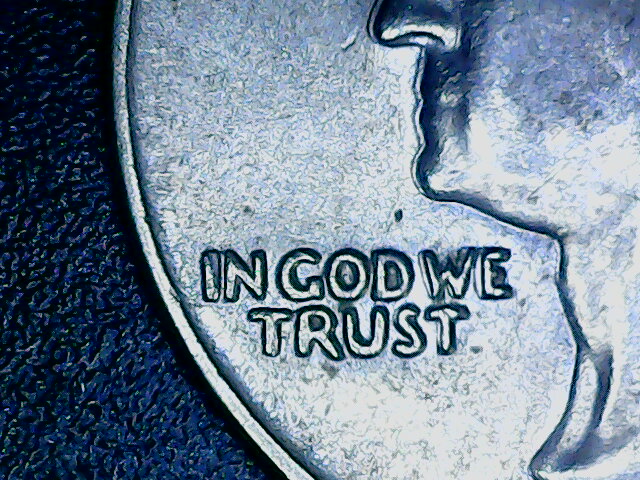
I believe Machine Doubling is an error. I've always felt that, and I don't think it causes a "huge issue". Machine Doubling is much, much more common than ejection impact doubling. The rarity of EID is what gives it potential for collectibility. There are a lot of minor errors that most collectors will spend without a second thought; minor grease strikes, slightly misaligned dies, small laminations, etc. Machine Doubling is just in that category. Small, common, and I like doubled dies more.  |
|
Moderator
United States
194504 Posts |
Quote:Perhaps the challenge becomes finding coins with zero Machine Doubling (free of MD 'error'). Intriguing.  |
|
Pillar of the Community
United States
3848 Posts |
 I believe Machine Doubling is considered a mint error. It is not a variety, and also unique to each coin. Suffering from bust half fever. Want to learn how to attribute early half dollars by die variety? Click Here: http://goccf.com/t/434955Shoot me a PM if you are looking to sell bust halves. |
|
Pillar of the Community
Canada
3328 Posts |
I think they are technically errors they are just common errors. Die Deterioration would also be considered an error? Or would it be a variety as they continue to change but are minted that way on purpose. I still get confused with technicalities. |
|
Pillar of the Community
United States
3848 Posts |
Quote:
Die deterioration would also be considered an error? I believe Die Deterioration is a variety, that gives you die cracks and die events that are found on many coins that you can compare with. Suffering from bust half fever. Want to learn how to attribute early half dollars by die variety? Click Here: http://goccf.com/t/434955Shoot me a PM if you are looking to sell bust halves. Edited by jacrispies
02/11/2022 12:39 pm
|
|
Pillar of the Community
United States
5886 Posts |
I'd consider MD is a Mint product defect error.
|
|
Pillar of the Community
Canada
3328 Posts |
Quote:
I'd consider MD is a Mint product defect error. I think there can be many classifications for errors but in the end they are all mint errors if they were produced that way by the mint. Human error or machienes error it's still an error. Common? Yes, collectable? To some. Rare or valuable? No. I saw the thread about ejection impact doubling and it's not the same as your every day MD an would be much more rare and collectable. Collectable is the key word for collectors as everyone has there own preference. There are some errors much more uncommon then others that are not that collectable and some errors that are semi common but highly collectable. As for what is or isn't an error I still think if it happened before being taken out of the striking chamber then it's an error(unless a mint employee decided to hit it with a pick ax while it was still the the chamber... That is still PMD lol) Edited by Wrekkdd
02/11/2022 1:34 pm
|
|
Pillar of the Community
United States
4680 Posts |
with Mike Diamonds statement on this one. Wrekkdd and I share the same logic. If it happened during the minting process, it's an error, no matter how common. Not all errors carry a premium and/or are collectible. As for Die Deterioration, I don't feel it can be classified as either error or variety. It's a matter of die state. That said, us as collectors and numismatists have attributed some of the effects of Die Deterioration as varieties, but not all Die Deterioration is a variety. One could also argue overuse of a die was human error and created an "error" , but that's pushing it IMO. |
|
Moderator
United States
105202 Posts |
Thanks for the discussion. I have to agree with Ty and wrekkdd, especially on the value of the common MD strikes..
|
|
Bedrock of the Community
Canada
24885 Posts |
Edited by Dorado
02/12/2022 07:48 am
|
|
Pillar of the Community
United States
4417 Posts |
Quote:
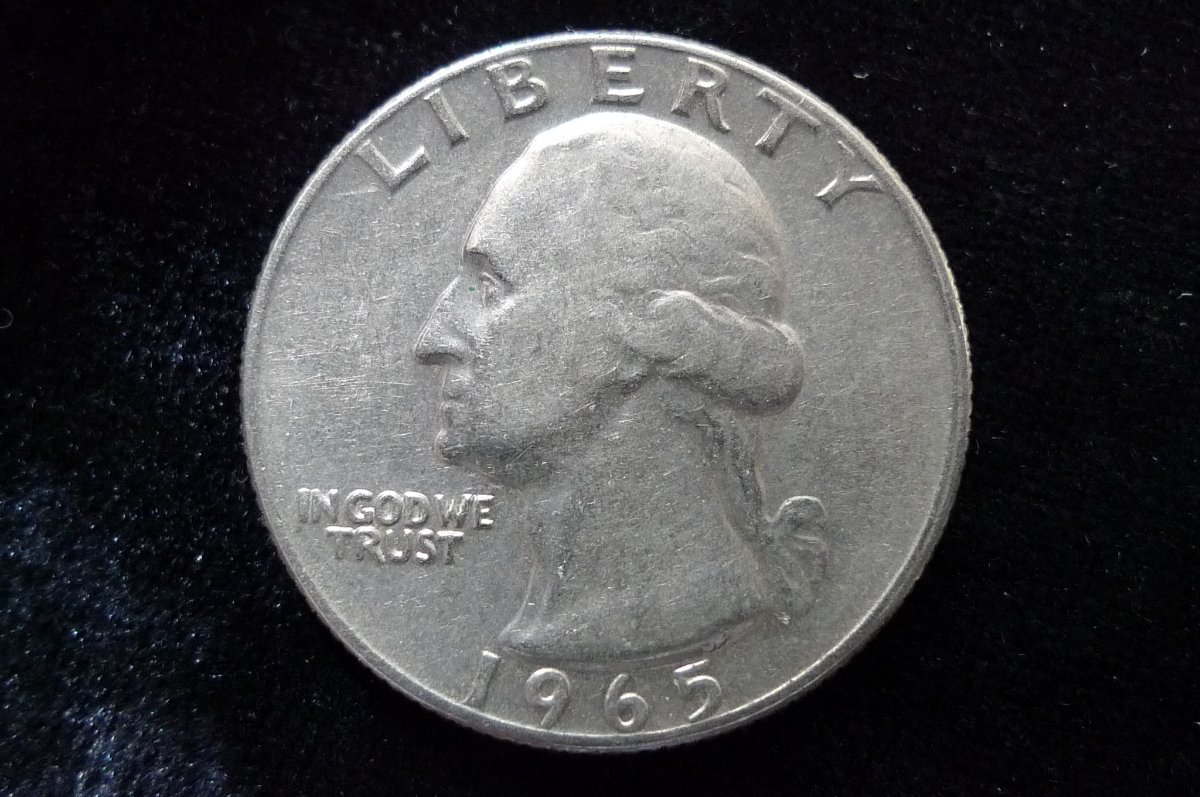
1965 Silver (1965 isn't silver) Nice example of MD tho! |
|
Pillar of the Community
Russian Federation
5186 Posts |
Quote:
I think they are technically errors they are just common errors There are some series where die clashes (undoubtedly a mint error - or perhaps technically variety, because they are die events) are so common that they aren't particularly collectable. Machine Doubling is similar. |
| |
Replies: 17 / Views: 2,470 |







 Posted 02/11/2022 08:41 am