| Author |
 Replies: 13 / Views: 1,242 Replies: 13 / Views: 1,242 |
|
|
Pillar of the Community
United States
2810 Posts |
|
|
|
|
New Member
United States
45 Posts |
Great photos and awesome coin! Thanks for sharing.
|
|
Bedrock of the Community
United States
62064 Posts |
Edited by coop
03/22/2022 1:22 pm
|
|
Pillar of the Community
United States
7592 Posts |
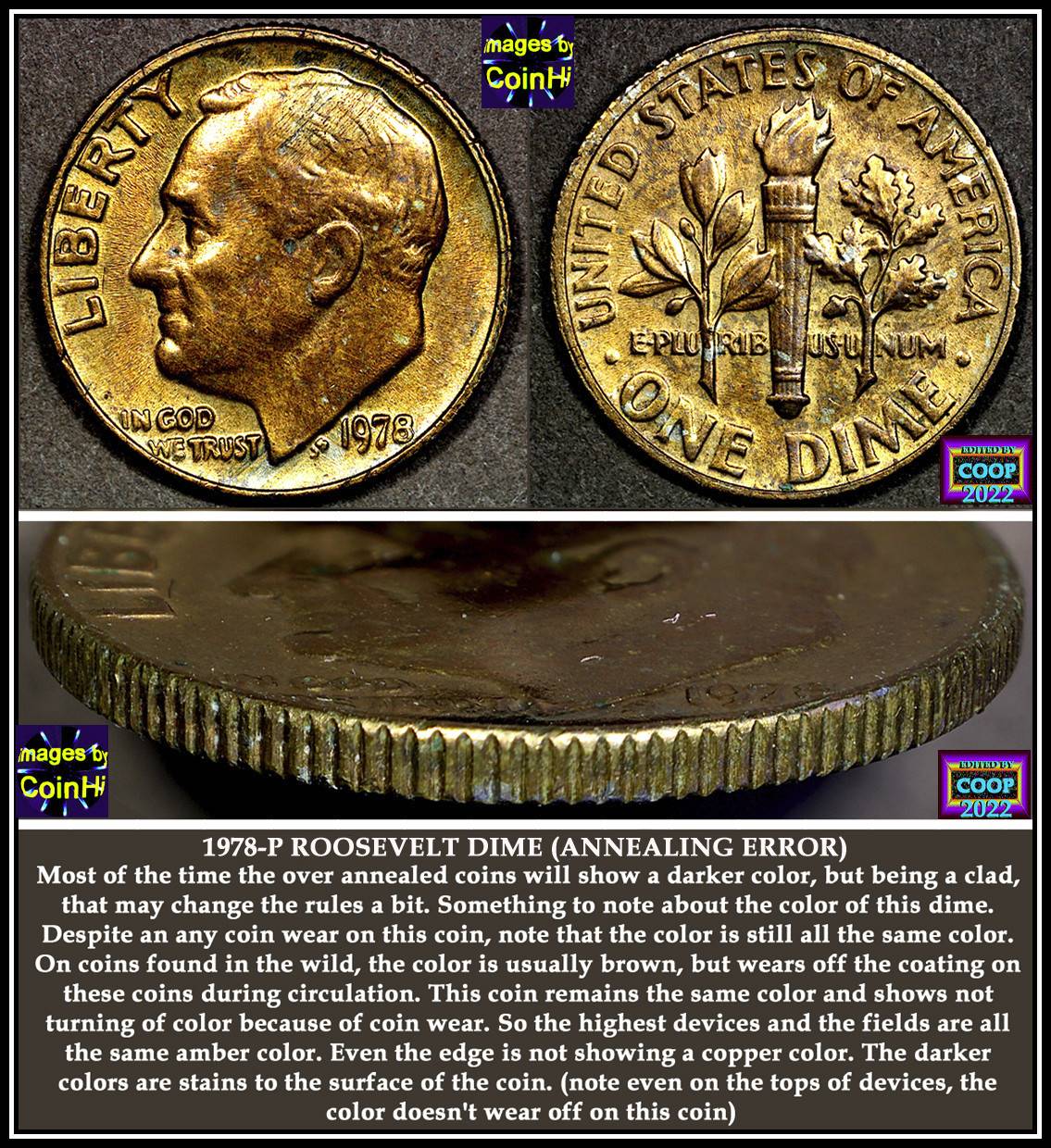
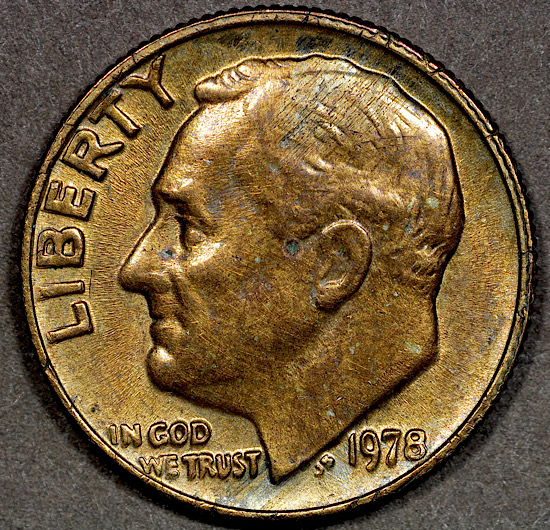
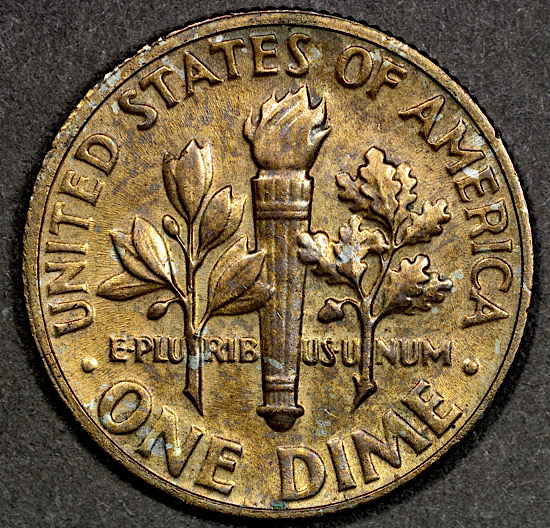
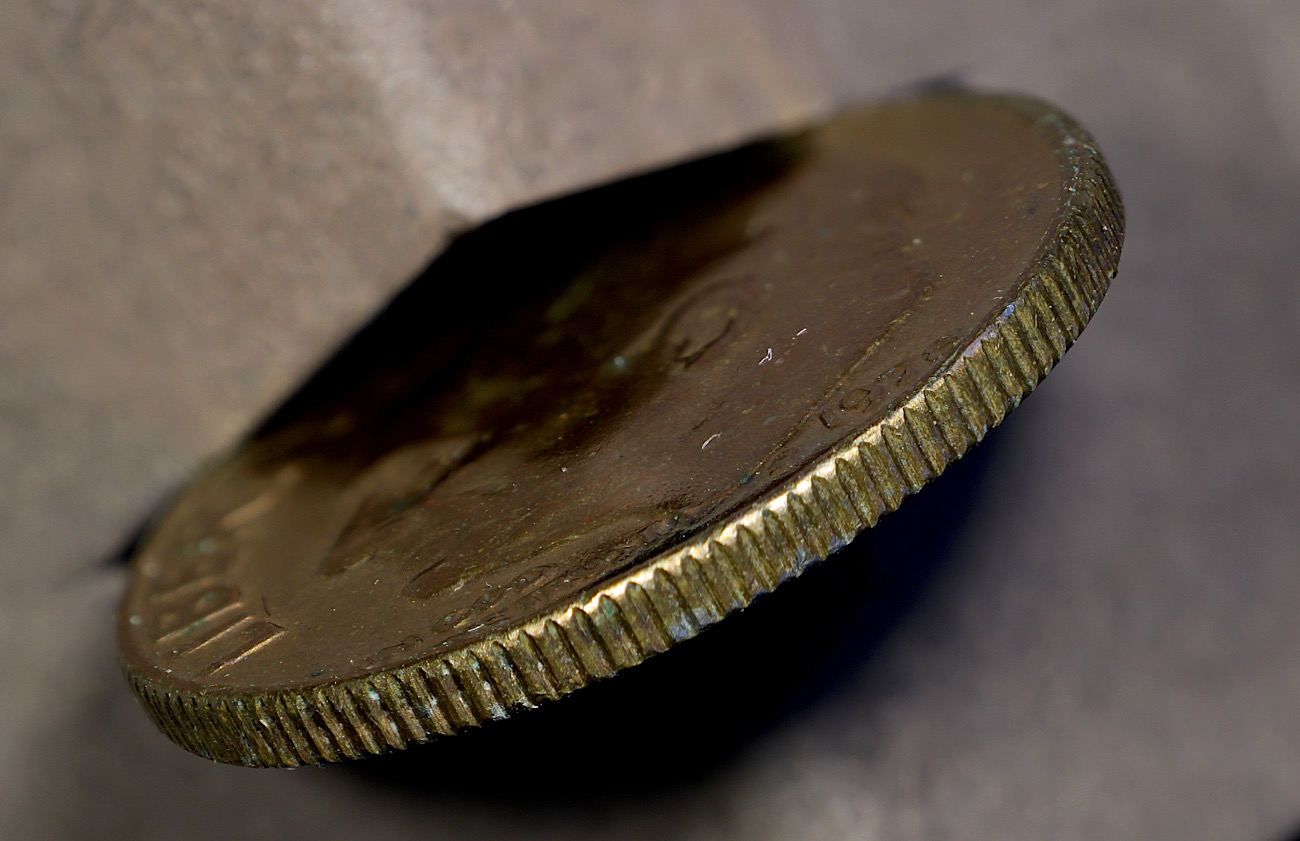
In my opinion after 44 years of circulation,this coin shows toning and Oxidation on both obverse and reverse which is considered an environmental damage, it does not look like an " improperly mixed Alloy "issue.
Edited by Chase007
03/22/2022 12:18 pm
|
|
Bedrock of the Community
United States
62064 Posts |
Not a bad mixture, but an annealing error. (Over heated too long in an furnace) It may have been one that came out of the container and got a double treatment, or left in too long, altering the color of the planchet that doesn't come off during the burnishing process: 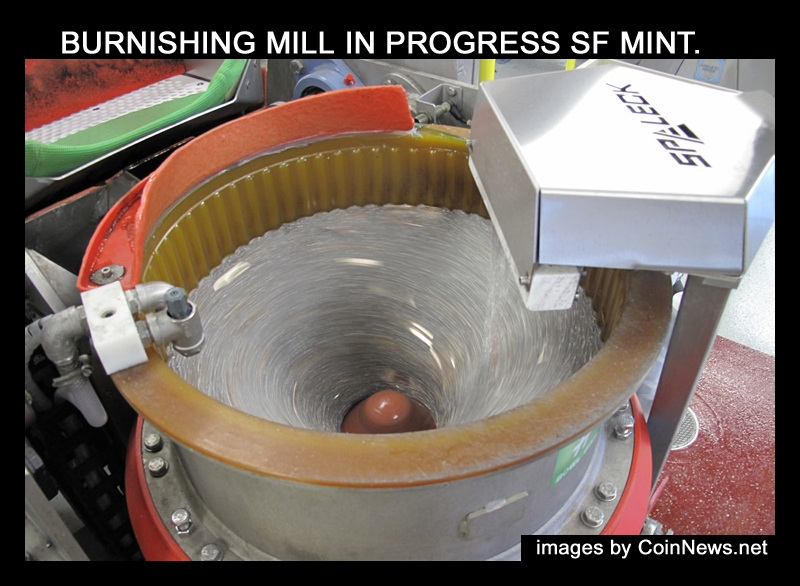 Because the metal has turned a new color, the process could not remove the color of the planchet. |
|
Pillar of the Community
United States
7592 Posts |
https://www.error-ref.com/?s=Anneal...er+Annealing: Quote:
Improper Annealing
PART V. Planchet Errors:
Annealing Errors:
Improper Annealing:
Definition: For decades error collectors have puzzled over copper-nickel and Cu-Ni clad coins struck on planchets with a layer of copper on the surface. In times past, these errors were called "copper wash" and "sintered plating" errors. The 1962 nickel shown below is a typical example. It has a thick layer of peeling copper on the right side of the obverse face. The rest of the obverse face and all of the reverse face is black. Copper, red, black, brown, and gray are colors typically found in these errors. Coverage can be complete or incomplete. The copper can range from a slight tinge to a thick coating.
In recent years, eyewitness testimony has convincingly pointed to annealing as the specific step in the planchet preparation responsible for the surface copper. In light of this testimony, these errors are now generally labeled "improper annealing" errors by the major grading services.
In 2010 Mike Diamond contacted US Mint officials with convincing evidence which in the end supported his hypothesis that copper and nickel atoms in the 75% Cu / 25% Ni alloy were migrating and segregating themselves into layers of relative purity. In response to an inquiry first made to Tom Jurkowsky, the Mint's Director of Public Affairs, an answer came henceforth. Michael White, a spokesman for the Office of Public Affairs, consulted with the Mint's technical staff who reported a mechanism very similar to the first scenario Mike Diamond laid out. The atoms are migrating to the surface and rearranging themselves into uniform layers. The proximate cause, according to Mr. White, is prolonged exposure to heat, a failure to maintain an oxygen-depleted atmosphere in the annealing oven, or a combination of both. Here is Mr. White's verbatim explanation:
Dear Mr. Diamond:
"I've consulted with our technical experts regarding the cause of the appearance of the coins in the photographs attached with your e-mail.
The samples shown in the photos were the result of a loss of protective atmosphere or being stuck in the annealing furnace for a prolonged period of time, or both.
This would result in migration of the copper and nickel to the surface of the blank. Since there is three times as much copper then nickel in the outer layer of these coins, the diffusion of copper to the surface will be significantly greater than the diffusion of the nickel, resulting in the reddish appearance noted.
Depending on the time the blank sits in the annealer, and whether it is exposed to oxidizing conditions, various reactions can occur. This will result in the type of phenomenon shown in the photos, where a distinct layer of material forms on the blank surface (primarily copper, with a high degree of oxidation), which is quite brittle, and will break off in pieces. This will expose the original blank surface, which would also be oxidized, but closer in color to the original alloy. We have seen these types of blanks but only infrequently. BTW: OP's coin is a Dime not a Nickel 
Edited by Chase007
03/22/2022 1:10 pm
|
|
Bedrock of the Community
United States
62064 Posts |
|
|
Pillar of the Community
 United States
5888 Posts |
Very informative thread and great coin.
(if I can remember the info. LOL)
Words of encouragement are one of the major food groups.
We need to consume them regularly to thrive and grow.
Edited by Petespockets55
03/22/2022 9:11 pm
|
|
Bedrock of the Community
United States
19583 Posts |
Excellent, in-depth breakdown.
|
|
Moderator
United States
107175 Posts |
Thanks chase! great information there.
|
|
Pillar of the Community
 United States
2810 Posts |
Thanks for the comments! I want to note a couple things: 1. There are some fine scratches on the obverse bust that I am unsure about the origins of. Around the cheek as well as top of head. Possibly PMD? 2. The silvery spots on obverse and reverse are areas that didn't get gobbled up by the migrating copper core. I like these errors alot even though they are hard to authenticate. I imagine a timelapse movie of an annealing error happening to a planchet would be very cool! "Pride is yoked with callous behavior, as humility is with compassion." St. Gregory Palamas Top Finds - 1969-S 1c FS-101 http://goccf.com/t/477681 1976 D WQ FS-101 http://goccf.com/t/382777 - 1968 D 1c FS-801 http://goccf.com/t/422254Cool clashed dies - 1972 D 1c http://goccf.com/t/429855&SearchTerms=CCLStruck-In Rim Burr - 1969 S 1c http://goccf.com/t/425587&SearchTerms=burrFloating (Type II) Counterclash - 1978 D 1c http://goccf.com/t/434991&SearchTerms=1978 |
|
Pillar of the Community
United States
5888 Posts |
Quote:
... 2. The silvery spots on obverse and reverse are areas that didn't get gobbled up by the migrating copper core... I'm really glad you shared the info in this thread. I know I've been baffled by similar white specs on dark coins before that seemed odd and now I have a clue what it might be and to keep an eye out for more. (If I can only dredge up that info from the recesses of my mind when the time comes. LOL) Words of encouragement are one of the major food groups.
We need to consume them regularly to thrive and grow.
|
|
Bedrock of the Community
United States
62064 Posts |
Quote:1. There are some fine scratches on the obverse bust that I am unsure about the origins of. Around the cheek as well as top of head. Possibly PMD? They can be planchet issues before the strike or after if it is damage. If a coin is cleaned, sometimes these find scratches can be see it an abrasive polish is used. But I'm not seeing deep scratches like coin contact. But on the top and low areas we see this and the area by the motto, seems to not be able to be reached by contact, so they maybe part of a planchet issue. Maybe the over-annealing opened these areas up a bit? |
|
Bedrock of the Community
United States
62064 Posts |
Quote:
(If I can only dredge up that info from the recesses of my mind when the time comes. LOL) To save information, just high light and save it to a word page to save trying to find the information again. I was doing this for a time and before I knew it I had 100 pages + of information accumulated. Edited by coop
03/24/2022 8:07 pm
|
| |
Replies: 13 / Views: 1,242 |
|








 Posted 03/22/2022 11:54 am