Coin Community Family of Web Sites Join Thousands of Coin, Bullion, & Money Collectors
Royal Canadian Mint products, Canadian, Polish, American, and world coins and banknotes. Join Thousands of Coin, Bullion, & Money Collectors 300,000 items to help build your collection! Vancouvers #1 Coin and Paper Money Dealer Specializing in Modern Numismatics Coin, Banknote and Medal Collectors's Online Mall Shop for APMEX Bullion on eBay!


Username:
Password:
Save Password
Forgot your Password?


This page may contain links that result in small commissions to keep this free site up and running.

Welcome Guest! Registering and/or logging in will remove the anchor (bottom) ads. It's Free!

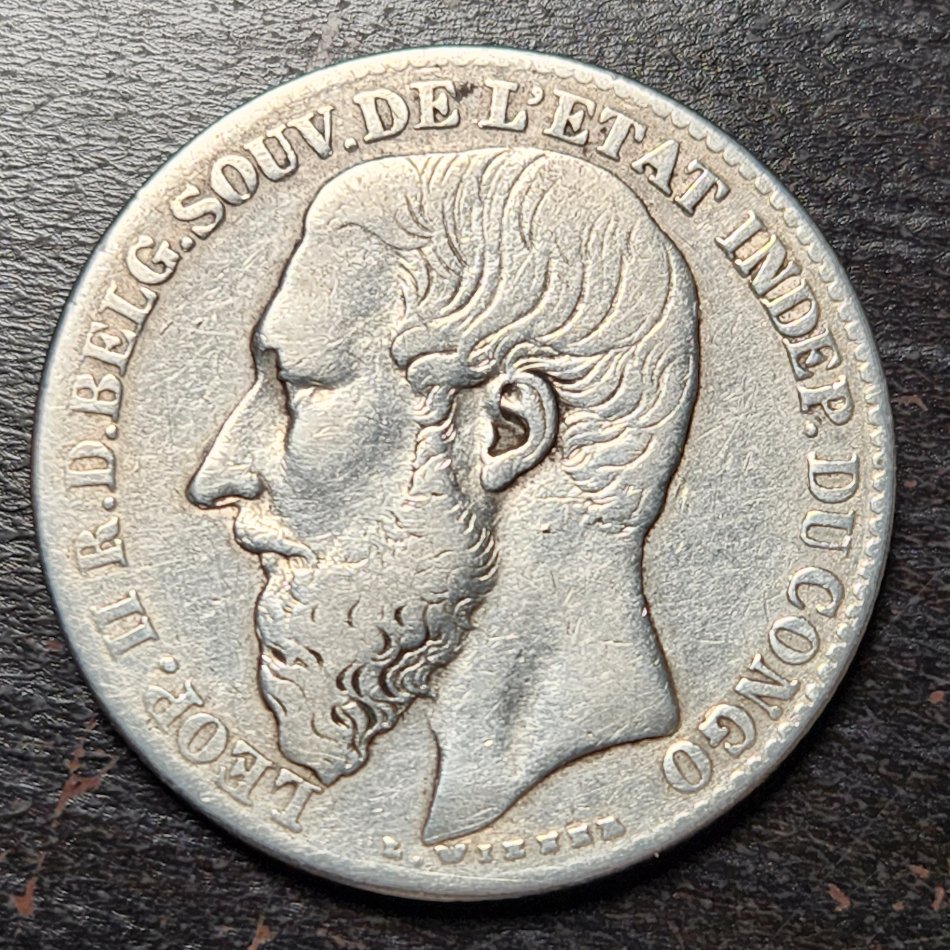
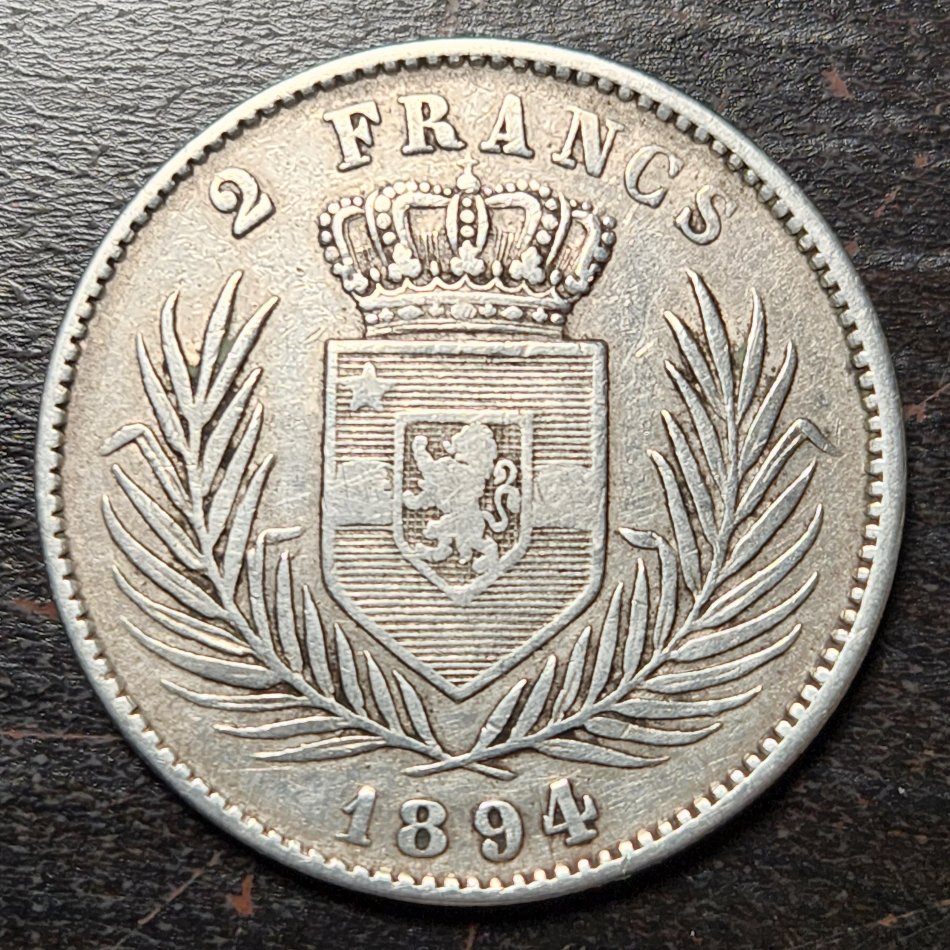
1894 Congo Free State 2 Francs

To participate in the forum you must log in or register.
Author Previous TopicReplies: 4 / Views: 680Next Topic  
Valued Member
newguy22's Avatar
United States
277 Posts
 Posted 03/27/2022  01:49 am Show Profile   Bookmark this topic Add newguy22 to your friends list Get a Link to this Message Number of Subscribers
1894-Congo-Free-State-2-Francs

An 1894 Congo Free State 2 Francs silver piece.

Congo Free State, French etat Independant du Congo, former state in Africa that occupied almost all of the Congo River basin, coextensive with the modern Democratic Republic of the Congo. It was created in the 1880s as the private holding of a group of European investors headed by Leopold II, king of the Belgians. The king's attention was drawn to the region during Henry (later Sir Henry) Morton Stanley's exploration of the Congo River in 1874-77. In November of 1877 Leopold formed the Committee for Studies of the Upper Congo (Comite d'etudes du Haut Congo, later renamed Association Internationale du Congo) to open up the African interior to European trade along the Congo River. Between 1879 and 1882, under the committee's auspices, Stanley established stations on the upper Congo and opened negotiations with local rulers. By 1884 the Association Internationale du Congo had signed treaties with 450 independent African entities and, on that basis, asserted its right to govern all the territory concerned as an independent state. At the Berlin West Africa Conference of 1884-85, its name became the Congo Free State, and European powers recognized Leopold as its sovereign.

Leopold extended his military control over the interior in the early 1890s. The Arab slave traders of the Lualaba River region succumbed in 1890, when their leader Tippu Tib left for Zanzibar. Katanga, rich in copper and other minerals, fell in 1891 after Leopold's troops shot the ruler, Msiri. Later rebellions were repressed. Transportation links to the interior were established with the construction (1890-98) of a railway to bypass the Congo River rapids below Stanley (now Malebo) Pool; the upper course of the river and its tributaries were all navigable by steamboat.

The regime, under Leopold's unrestrained personal control, became notorious for its treatment of the Congolese. Forced labor was used to gather wild rubber, palm oil, and ivory. Beatings and lashings were used to force villages to meet their rubber-gathering quotas, as was the taking of hostages: one method employed by Leopold's agents was kidnapping the families of Congolese men, who were then coerced into trying to meet work quotas (often unattainable) in order to secure the release of their families. Rebellious actions by the Congolese elicited swift and harsh responses from Leopold's private army, the Force Publique (a band of African soldiers led by European officers), who burned the villages and slaughtered the families of rebels. Force Publique troops were also known for cutting off the hands of the Congolese, including children. This mutilation not only served as a punishment and a method to further terrorize the Congolese into submission, but it also provided a measure (the collection of severed hands) by which the soldiers could prove to their commanding officers that they were actively crushing rebellious activity. Brutality was widespread in mines and on plantations. The population of the entire state is said to have declined from some 20 million to 8 million.

If only coins could talk...

Source: https://www.britannica.com/place/Congo-Free-State

Pillar of the Community
triggersmob's Avatar
Australia
9400 Posts
 Posted 03/27/2022  06:01 am  Show Profile   Bookmark this reply Add triggersmob to your friends list Get a Link to this Reply
I like the coin, Not sure I like Leopold after reading that.
Pillar of the Community
oriole's Avatar
Canada
5239 Posts
 Posted 03/27/2022  11:57 am  Show Profile   Bookmark this reply Add oriole to your friends list Get a Link to this Reply
I doubt that the native Congolese saw much of this coin.
Valued Member
newguy22's Avatar
United States
277 Posts
 Posted 03/27/2022  5:25 pm  Show Profile   Bookmark this reply Add newguy22 to your friends list Get a Link to this Reply
@oriole I've always wondered how these coins were used in the colony. The mintage numbers are pretty high (in the tens to hundreds of thousands) for many of the coins in the series. I've contacted one of the experts on this subject and he told me that there were only a couple hundred European officials in the colony at any given time (would need a source on that however). I highly doubt that all the coins made would have been used by these few individuals. Maybe perhaps many just sat in storage, which is why many higher graded examples can be found today? I wonder if a few would have been used to pay the Force Public soldiers (native police force) the colony hired to carry out the dirty work? A lot more research is needed to definitively know about the subject, but the coins made for there are a fascinating witness to what happened nonetheless.
Pillar of the Community
oriole's Avatar
Canada
5239 Posts
 Posted 03/27/2022  8:05 pm  Show Profile   Bookmark this reply Add oriole to your friends list Get a Link to this Reply
@newguy, yes it is worth researching. While there may have only been a few hundred officials, might there have been a lot more people of all nationalities just trying to get "a piece of the action"? Perhaps many adventurers, etc, kind of like the people described in Joseph Conrad's book "Heart of Darkness"?
  Previous TopicReplies: 4 / Views: 680Next Topic  

To participate in the forum you must log in or register.


Disclaimer: While a tremendous amount of effort goes into ensuring the accuracy of the information contained in this site, Coin Community assumes no liability for errors. Copyright 2005 - 2026 Coin Community Family- all rights reserved worldwide. Use of any images or content on this website without prior written permission of Coin Community or the original lender is strictly prohibited.
Contact Us  |  Advertise Here  |  Privacy Policy / Terms of Use

Coin Community Forum © 2005 - 2026 Coin Community Forums
It took 0.2 seconds to rattle this change. Forums


