| Author |
 Replies: 18 / Views: 3,742 Replies: 18 / Views: 3,742 |
|
New Member
United States
3 Posts |
I, over the past two years, have grown very interested in Spanish colonial coins. I have purchased a few and it has been brought to my attention that some may not be genuine. I am still just beginning to learn about these coins and figured I could use some help. 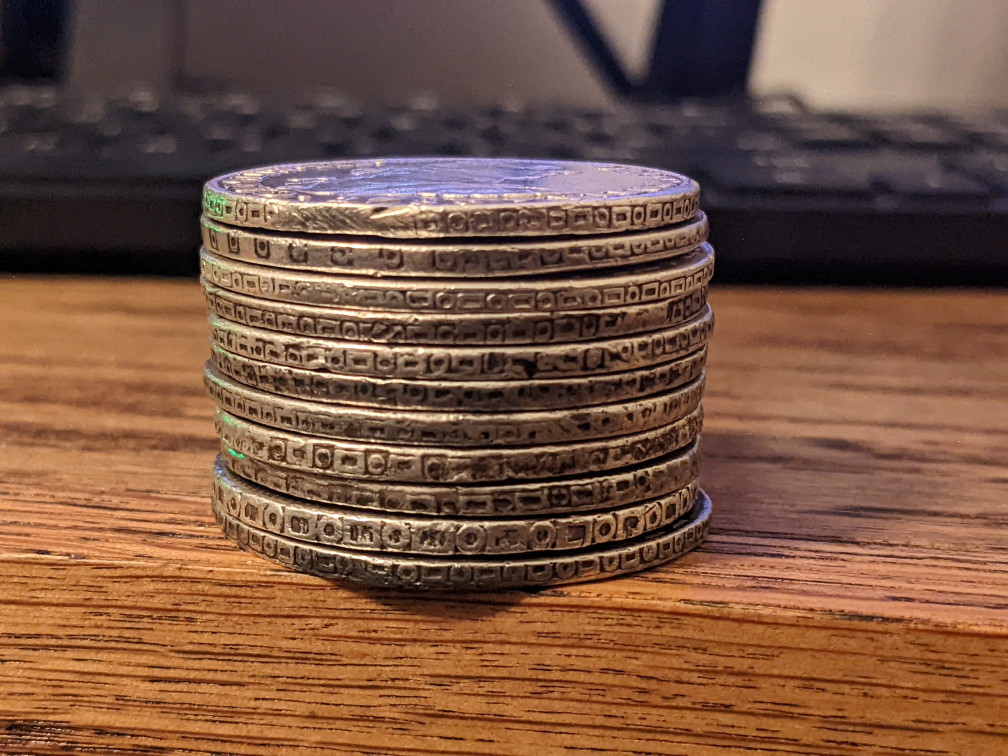 Rotated 180 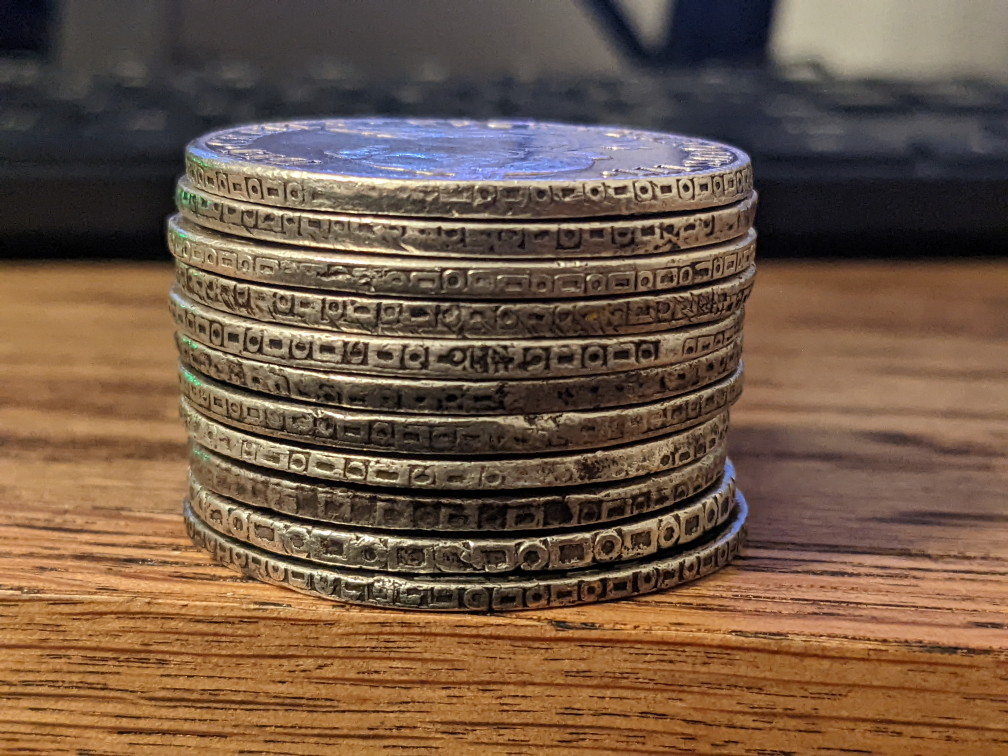 In order top (top left) to bottom (bottom right) 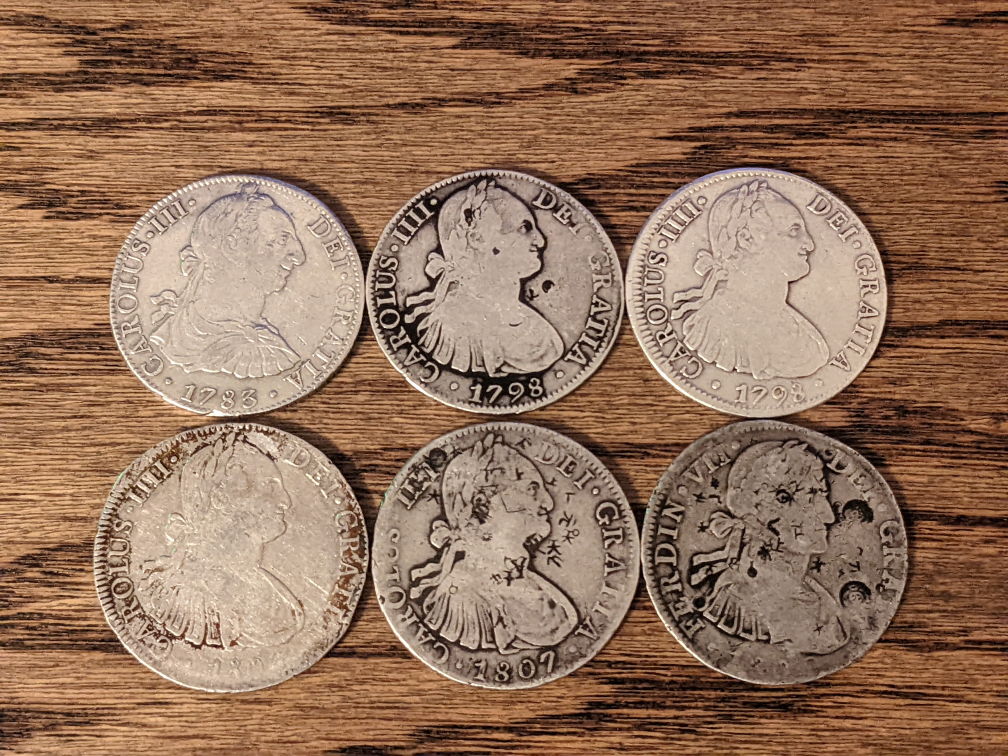 Also the reverse 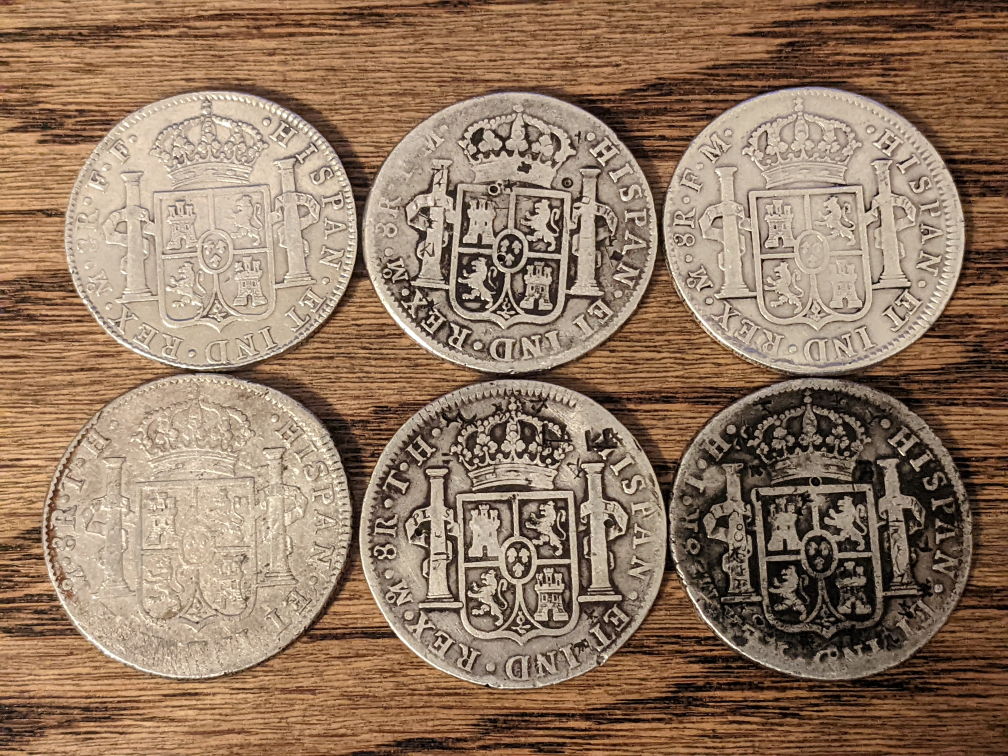 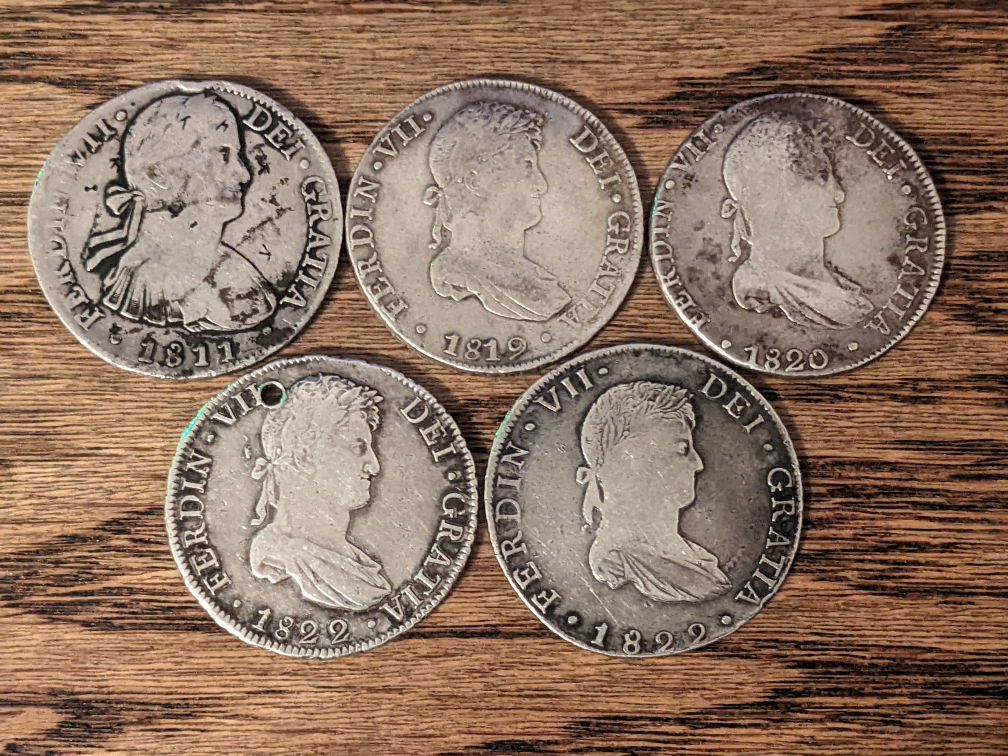 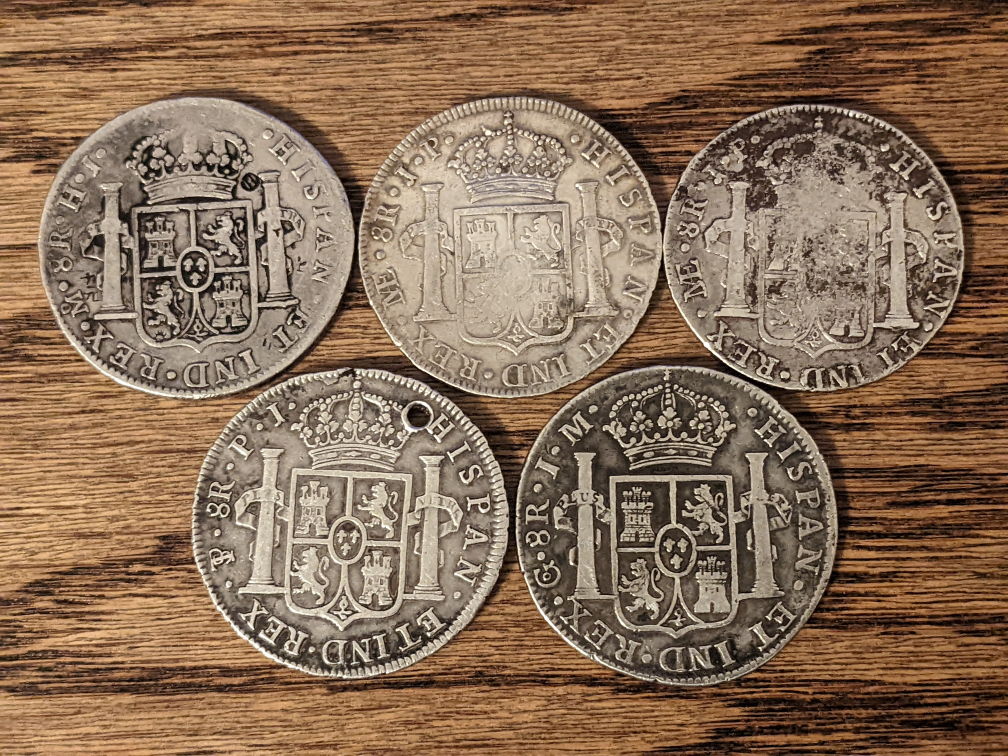 It won't hurt my feelings if any are fake. Just a part of learning I suppose. |
|
|
|
Moderator
 United States
195823 Posts |
 to the Community! |
|
Moderator
United States
56855 Posts |
. While you wait for the pros,feel free to use the search box upper left of page. We get a lot of these every year. John1  |
|
Moderator
United States
34553 Posts |
@act, first welcome to CCF. Second, while it is super cool to show us a stacked group of 11 pieces like this, I think that it is going to be hard to get an opinion on any specific one due to the decreased size of each coin in these group photos. Better would be to start a new thread for each coin and number your threads in the title so that folks understand quickly what you are trying to do. For sure, including weight and specific gravity info for each piece would also be helpful.
"If you climb a good tree, you get a push."
-----Ghanaian proverb
"The danger we all now face is distinguishing between what is authentic and what is performed."
-----King Adz
|
|
Pillar of the Community
United States
1915 Posts |
Reminds me of when I bought a somewhat similar stack in Chicago. I began back in the shop with weights, measures, magnet slide, microscope, photos, then specific gravity.
I enjoyed the challenge to learn what was right and what was wrong with each piece followed by entry into the binder with each data sheet. I composed several styles of spreadsheets to keep track of observed & measured details. The OP looks to have a wonderful stack of interesting coins to figure out. I really enjoy spending time doing that with my hobby.
|
|
New Member
 United States
3 Posts |
While I would like to give weight and SG and any other details, I can't. I don't have a scale. The best I would be able to come up with is measurements. They all react properly to a magnet. I had someone say a few looked fake from the same pictures I posted. I have had others say they all looked correct. I basically don't know enough about them yet.
|
|
Pillar of the Community
United States
1915 Posts |
Makes it difficult to test suspect coins without having the right equipment. This is my hobby, and I've documented hundreds
Could not do that if I had not spent the money for good equipment.
However, there are members here that can probably tell at a glance of the photos if they lean towards good or bad.
|
|
Pillar of the Community
United States
1962 Posts |
Before starting, "ActualMammal" (picturing a 'possum typing on a laptop in a Starbucks or something)... if you read some archived messages on here, forum member swamperbob has for years exposed the forgotten occurrence of full silver (or close) later 1800s illicit "restrikes" (aka counterfeits) of portrait 8R made for the China trade where they were preferred. Picking Bob's "Class II" from original regal strikes is something I leave to him, as it can be quite challenging to differentiate - Bob himself often has doubts on particular coins. I focus on spotting modern numismatic forgery. Anyway, "most" of these pieces appear to be kosher - not modern fakes. The 1809 has those somewhat curious chops in the R obv. field, but I don't see anything else to condemn the coin. The (2) pieces that jump out are the (2) 1798 pieces, mainly because of how the denticles look. The flat, even tone is also suspect on 1st glance for the 2nd of the 1798s shown. However, full disclosure, that 2nd 1798 looked familiar, and sure enough, it IS a known modern fake that has been observed a number of times. Amusingly, that same 1798 obverse has been found paired with a Guatemala mintmark reverse. See the montage below and study for points to pick up on: 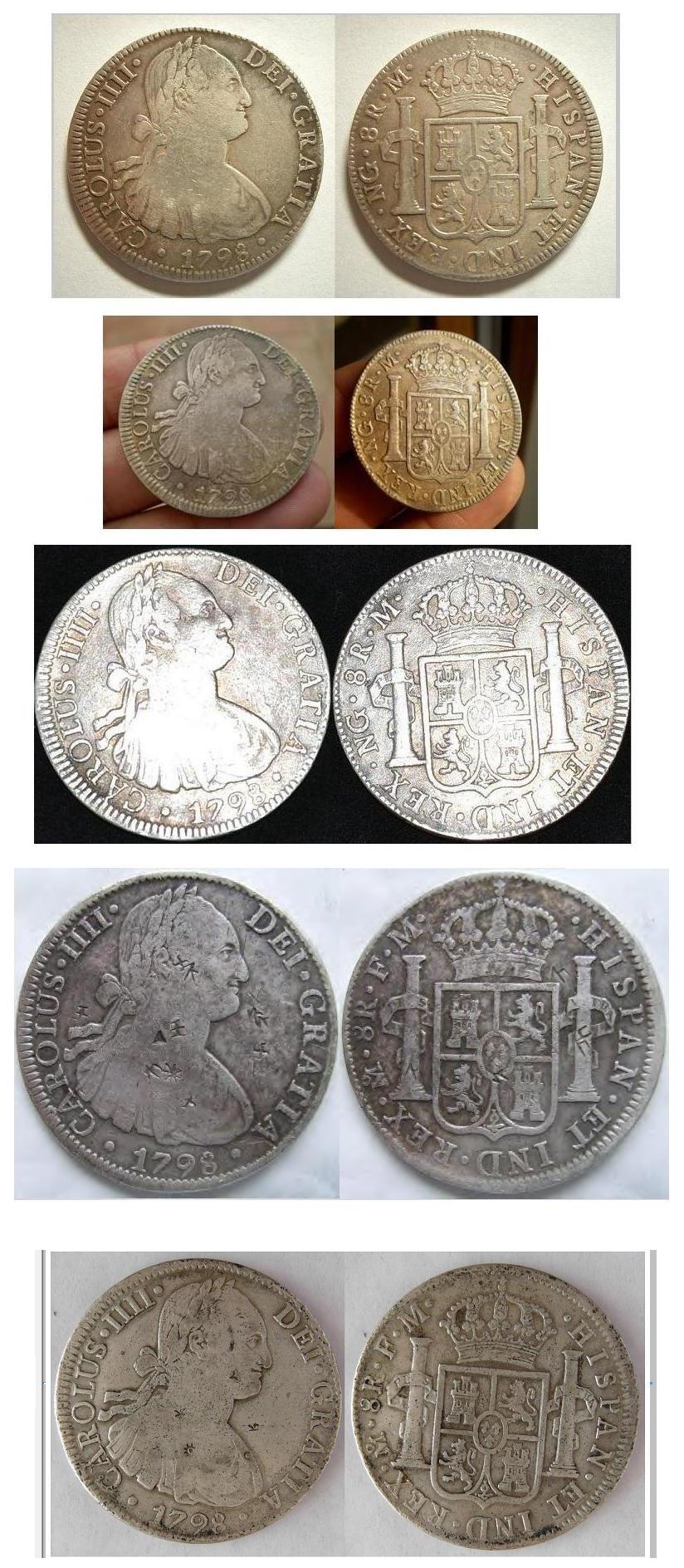 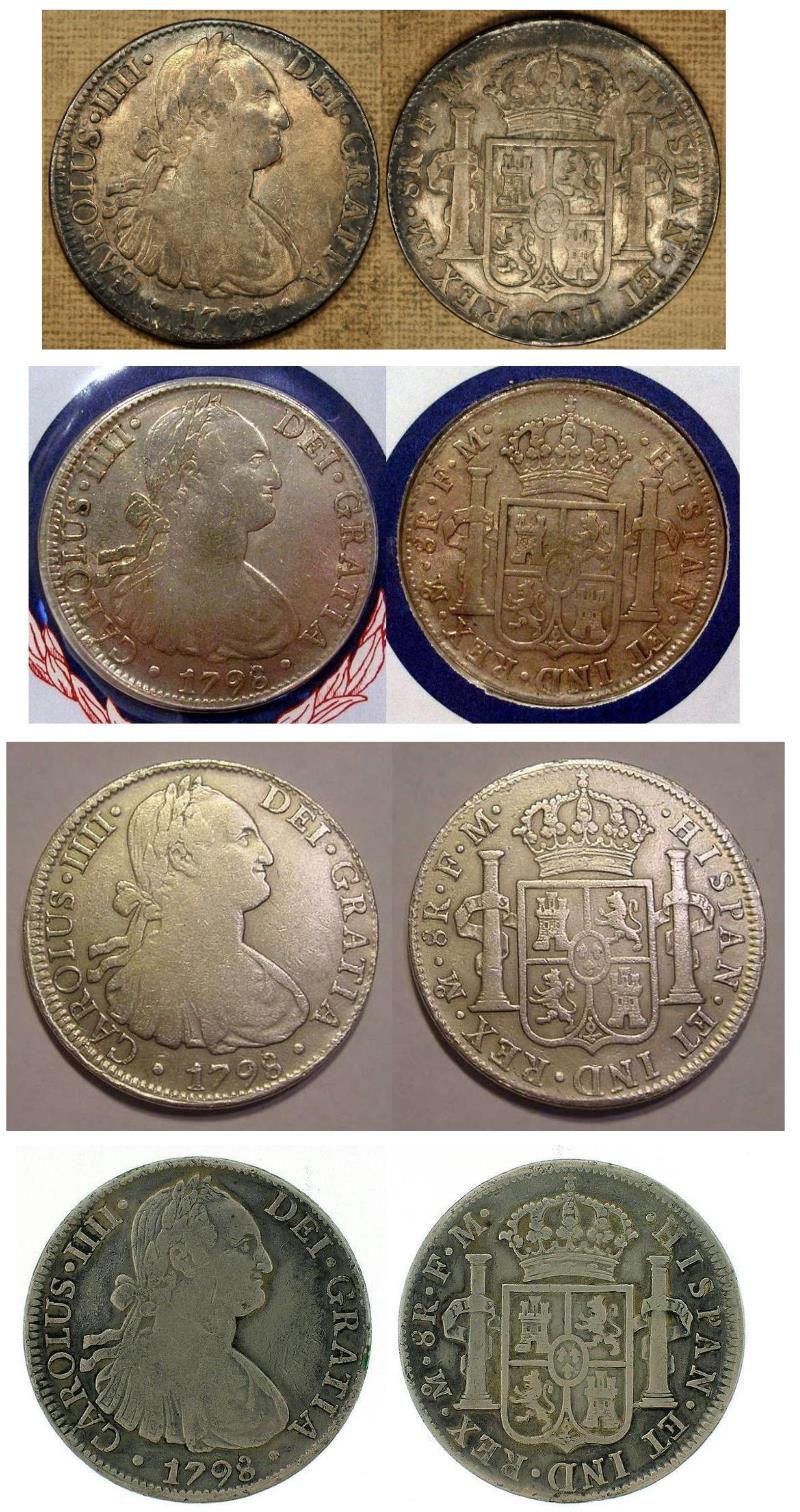 |
|
New Member
United States
3 Posts |
Thanks realeswatcher! The 1798s were on the list of possible forgeries. The 2nd one I was convinced was fake for a long time, but two more knowledgeable people said it looked good. I can see from your pictures that it is a knockoff.
Albert, I know I need to buy a good scale, but I keep finding loads of reasons to buy other things instead. I think I will actually pick one up now though.
|
|
Pillar of the Community
Czech Republic
803 Posts |
Some of my thoughts:
The edge on the first 1798 is odd. Looks like it could have been edged with 2 parallel dies, but one of the dies had damaged rectangles? How does that happen?
Incomplete denticles above CAROLUS in the second 1798 are pretty damning.
The 1822 Potosi edge looks off to me, as well. The design looks larger than what I'm used to seeing (granted I'm mainly a Mexico City guy). Also, the edge design shows signs of being edged at least twice, but I can't see the any overlaps.
1783 Mexico and 1822 Guanajuato appear to be nice original coins to me. The rest would require more tests.
|
|
New Member
United States
10 Posts |
Seeing the stack leads to another question - how much variation is there in diameter? In a post above it is stated that the 1783 Mo and 1822 Go are real, and they represent one of the smallest diameter (1783 Mo) and the largest diameter (1822 Go). Most of mine are similar diameter, but I have an 1802 Mo that is like that 1822 Go, noticeably larger diameter and thinner. The weight is correct (26.24 gr), it has the correct ring to it, nothing in the strike makes me suspicious, and I can see the overlap on both sides. The only thing different is the larger diameter.
|
|
Pillar of the Community
United States
1156 Posts |
A weight of 26.24g is not likely to be genuine.
|
|
New Member
United States
10 Posts |
Why do you say that it is not authentic at that weight? The standard was 27.07g, and this coin is G condition. I have a number of circulated milled 8 reales of various dates, in G to VG condition, weight range is 26.20 to 26.70g. As a comparison, I weighed an 1884S Morgan dollar in AG/G condition and it came out at 25.65g, while the standard weight should be 26.73g. I do not feel that this weight discrepancy is an indicator of not being genuine, due to weight loss from wear. And in case you are wondering, I weighed them on an analytical balance (0.1mg sensitivity) that is calibrated weekly with traceable standard weights. Edited by lambertiana
05/07/2022 02:25 am
|
|
Pillar of the Community
United States
1156 Posts |
Since you don't believe my opinion on how much weight loss can be attributed to wear then go check the opinion of others. swamperbob has posted about this in this forum and the are plenty of other's on other coin forums.
Edited by jgenn
05/07/2022 1:29 pm
|
|
New Member
United States
10 Posts |
You are most likely correct for coins with little wear, and I would also be suspicious of one that is 0.8g light if it is in high grade condition. But these are low grade well circulated coins. As I demonstrated with my well circulated Morgan dollar, it is completely feasible to be a gram low for a well circulated coin. Has anyone weighed well circulated authentic 8 reales pillar or portrait coins (VG or lower grade) and demonstrated that they are still close to the 27.07g standard? I would like to see that. The coin in question right now is probably G grade, maybe barely VG. Everything I see on this forum and other coin forums says that weight loss for circulated coins is not appreciable until you get to low grade coins, VG or lower, and that is exactly what I have. Edited by lambertiana
05/07/2022 5:11 pm
|
|
New Member
United States
10 Posts |
I would also still like to know if anyone has information on the variability of diameter. As noted above, the two coins that were said to be genuine in the opening post have significantly different diameters.
|
| |
Replies: 18 / Views: 3,742 |







 Posted 04/05/2022 4:49 pm





