The first Missouri State Fair took place in 1900. For the State's Centennial year (1921), the State Fair Board desired to link the annual State Fair with a Centennial Exposition and developed "a plan to stimulate Missouri's future growth."
In a promotional brochure for the Fair/Exposition, the Board stated, "We want new citizens -- new capital -- new industries. The way to get them is by showing the wonderful resources and possibilities of the State."
"The Four-fold Purpose to be Accomplished [by the Missouri Centennial Exposition and State Fair]:
1) It will advertise Missouri to all Missourians, to the United States and Canada, and probably in some foreign countries.
2) It will encourage the immigration of desirable citizens, industries and capital—all of which are badly needed.
3) It will stimulate the development of Missouri's latent agricultural, mineral, manufacturing and industrial possibilities.
4) It will observe Missouri's hundredth birthday with fitting ceremonies; generate a love of country and of State; and teach loyalty to America's and Missouri's traditions. The history of our State will be made vital and concrete in the minds of the people, thus fostering patriotism and stimulating State pride."
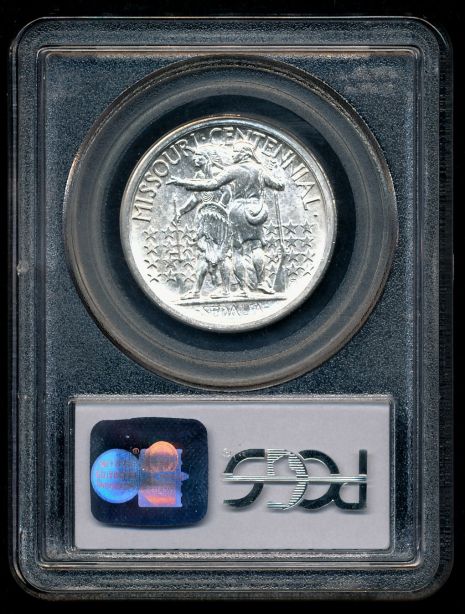
The Missouri Centennial Exposition and State Fair was held in Sedalia, MO from August 8-20, 1921; it was financed by the State vs. a private corporation. A quick look at the reverse of the Missouri half dollar reveals the inclusion of "SEDALIA" in the exergue at the bottom of the design, linking it to the Exposition/Fair via reference to its location. (Sedalia is the county seat of Pettis County, MO.)
The Exposition was definitely approached with optimism. In the Introduction to the Official Program of the Exposition, Arthur M. Hyde, then Governor of Missouri and President of the Missouri Centennial Commission, stated, "We view Missouri today in her
youth of a hundred years; not in her age of a century. She stands on the threshold of an era of development, infinite possibilities stretching out before her. Missouri's Centennial will suggest this future as well as survey her past."
The Philadelphia Mint struck 50,000 of the half dollars in July 1921, in time for sale/distribution at the Exposition/Fair; up to 250,000 coins were authorized. Only the Plain variety was sold at the Exposition; the 2*4 variety was released later. The original selling price of the coins (either variety) was $1.00. Overall, sales of the coin were disappointing, and no additional coins beyond the original 50,000 were struck. In fact, approximately 30,000 unsold coins were returned to the Mint to be melted.
There were some pre-Exposition reports that stated the coins would be given out as change at the entrance gates to the Exposition, but such reports do not appear to have been accurate. Giving them out at face value would have defeated the fundraising purposes of the coins.
The Exposition, however, was a success. It featured a nighlty presentation of the historical pageant "The Pageant of Missouri" - with a cast of roughly 5,000! - that traced the history of the State, an exhibit hall with historical displays presenting items gathered from across the state and a "Homecoming" celebration for former Missouri residents who came home for the Exposition. And, of course, it included the usual array of agricultural and live stock exhibits typical of a State Fair, along with entertainment attractions.
Missouri Statehood Centennial, Plain Variety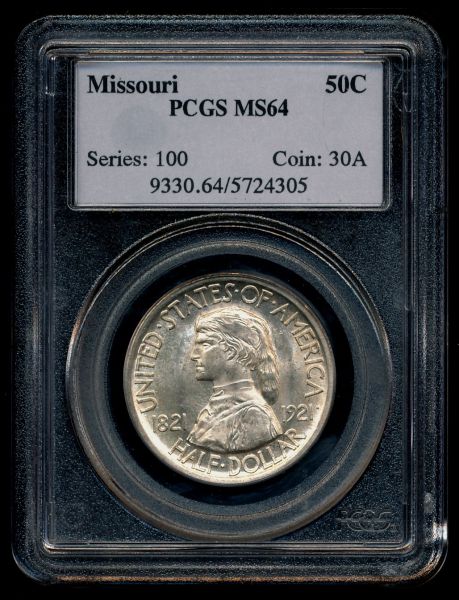
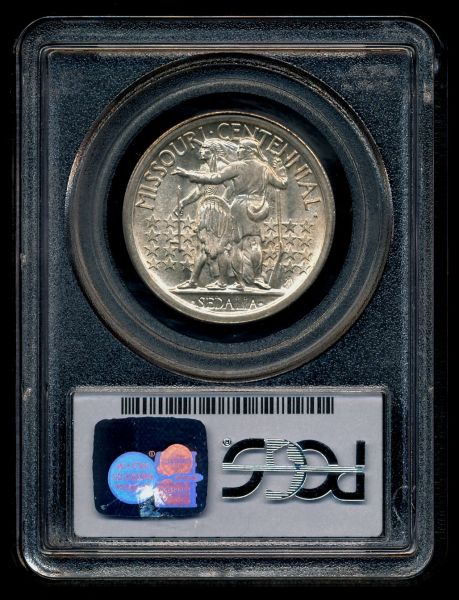 Missouri Statehood Centennial, 2*4 Variety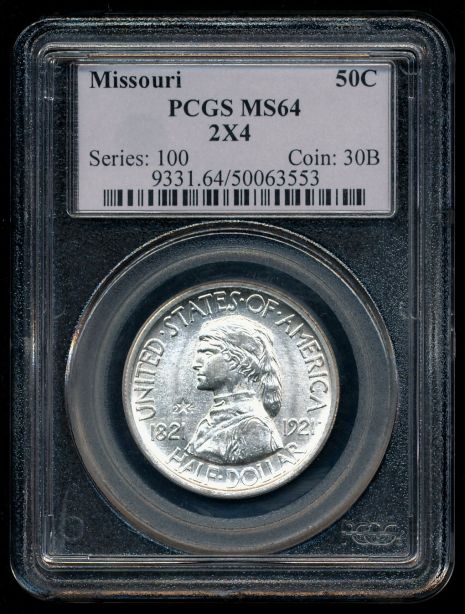

 Front Cover of Centennial Exposition and State Fair Program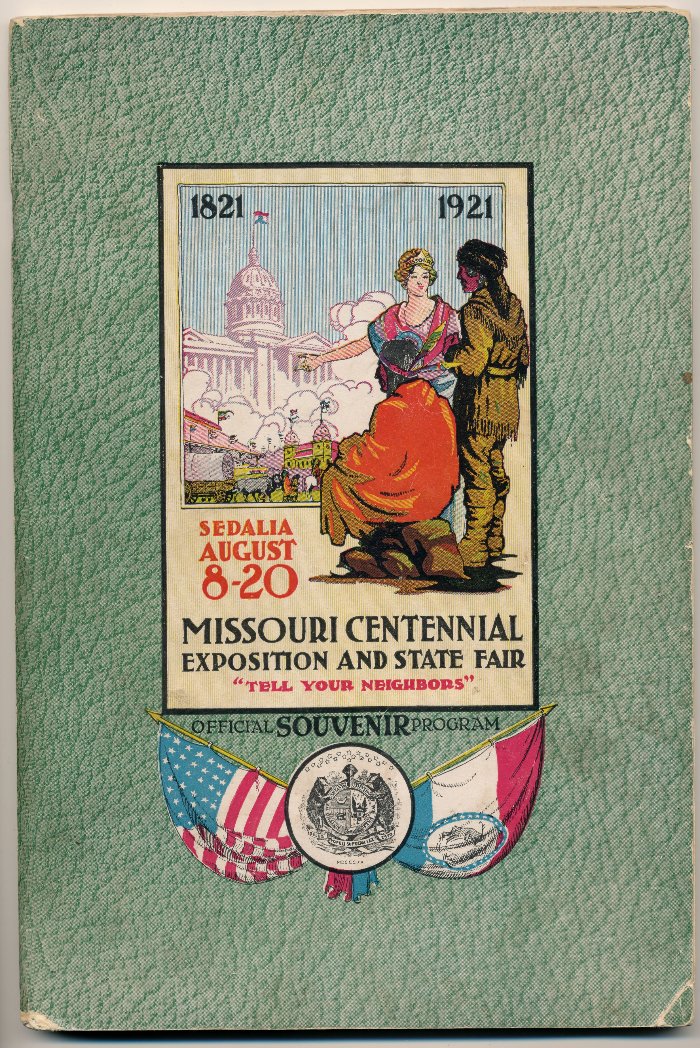
For other of my posts about commemorative coins and medals, including more on the history of the 1921 Missouri Statehood half dollar, see:
Commems Collection.






 Posted 04/22/2022 8:11 pm





